
Justice, Peace, Integrity
of Creation
Justice, Peace, Integrity
of Creation
By John Paul Pezzi, Mccj
Justice, Peace, Integrity
of Creation
By John Paul Pezzi, Mccj
Justice, Peace, Integrity
of Creation
By John Paul Pezzi, Mccj
Justice, Peace, Integrity
of Creation
By John Paul Pezzi, Mccj
In Butembo, learning a Trade to Rediscover Hope
Butembo 15.11.2026 Gian Paolo Pezzi, mccj Translated by: Jpic-jp.orgSaint Joseph Vocational Training Centre: a school for young people whom poverty, war and the hardships of life threaten to leave without a future.
When Childhood Loses Its Way
In Butembo, in North Kivu, war is not merely a succession of battles, population displacements and situations of insecurity. It is a daily reality that deeply affects family life, particularly the lives of children and adolescents.
For years, armed conflicts, growing poverty and forced displacement have weakened the social fabric. Families find themselves without resources; children lose their parents, while others are forced to leave their homes and schools. Some become displaced persons or refugees in their own country. Others, seeing no way out of their situation, spend their days on the streets, looking for odd jobs or something to eat. Some even resort to inhaling fumes from wood glue to forget their hunger and pass the time.
Behind these situations lie deeply painful personal stories: war orphans, abandoned young people and children from families unable to provide for their needs. They are sometimes regarded as a problem, whereas, above all, they are young people to whom society has failed to give the means to build their future.
It is precisely these young people whom the Saint Joseph Vocational Training Centre (CFP-SJ), an educational initiative of the Comboni Missionaries in Butembo, seeks to serve.
A School that Welcomes and Supports
The Centre was originally established under the name of Saint Joseph Workshop School, thanks to the initiative of a few Comboni Missionaries and the financial support of the non-profit organisation Congoskill. It was founded on a simple conviction: even when young people have been through difficult experiences, they still possess abilities and potential that deserve to be recognised and developed.
Its main target group consists of vulnerable young people, particularly those living on the streets, orphans, displaced persons and children from particularly deprived families. For various reasons, these young people often cannot access secondary education or have not even completed primary school. Vulnerability is therefore the primary admission criterion. The aim is not to select the best pupils from among those who have enjoyed a good educational background, but to give a chance to those who need it most.
This approach represents a real educational challenge. Young people whose schooling has been irregular sometimes struggle to follow theoretical lessons, keep to a timetable or adapt to the discipline required in a workshop. Yet learning a trade calls for patience, responsibility and constant attention to safety regulations.
That is why the Centre does not wish to limit itself to passing on technical knowledge. It aims to provide a comprehensive human education: learning to live with others, respecting the rules of communal life, looking after personal hygiene, accepting responsibility and reflecting on one's own life project. In other words, before training a good carpenter, the aim is to help a young person become someone capable of taking charge of their own life.
With this in mind, the programme also includes lessons devoted to life education, computer skills and the basic principles of managing a small business.
Learning a Trade to Earn a Dignified Living
Vocational training is primarily focused on carpentry. It combines theoretical lessons with practical exercises in the workshops, where young people gradually learn how to use hand tools and industrial machinery correctly.
The organisation of the courses reflects this dual requirement: acquiring knowledge and developing the practical skills essential to the exercise of a trade. Students must learn to measure, draw, cut, assemble, plane, sand and gradually produce items that meet the needs of individuals and society.
From the outset, the Centre provided for small groups of no more than twenty trainees, aged between 12 and 18, in order to ensure sufficiently personalised support and the safe use of equipment. Classes were held six days a week, from 8.30 am to 3 pm.
Particular attention was paid to the pupils' material needs. They were provided with a midday meal and a uniform for practical activities. The objective, however, went far beyond obtaining a certificate or qualification. At the end of their training, those who successfully completed the course received a toolkit enabling them to start their own independent professional activity, open a small carpentry workshop and earn a living through their work. They could then, in turn, pass on what they had learnt to other young people. Training thus became the starting point of a genuine chain of solidarity and skills-sharing.
An Initiative to Rebuild and Relaunch
Following a combination of external factors (Ebola and Covid-19) and internal difficulties (management and governance problems), the Centre had to suspend its activities in 2022. In 2025, the Comboni Missionaries took responsibility for it in order to relaunch its activities. This revival was made possible thanks to the generous financial support of CUORE AMICO, a humanitarian organisation from my home city of Brescia, Italy.
The first step was to repair and renovate the premises and the teaching equipment. Only the computers intended for the students still need to be serviced. The administrative and educational organisation has also been redesigned, with an entirely new team capable of supporting the young people with competence and dedication.
The Centre has now received renewed official recognition from the Ministry of Education of the Democratic Republic of the Congo under the name Saint Joseph Vocational Training Centre, within the Department of Arts and Crafts.
At present, classes are held for half a day, five days a week. The midday meal has been replaced by breakfast. In addition, a contribution is now requested from parents, guardians or the young people themselves. As a local proverb reminds us, things obtained free of charge are rarely appreciated at their true value.
This is a transitional stage, for which I have assumed responsibility, with the aim of consolidating the institution and preparing the conditions for sustainable management. Actually, young people, as well as their parents or guardians, sometimes prefer to receive immediate assistance or go straight to work in a workshop rather than commit themselves to an educational programme. As a result, the first two teaching modules, organised under the new government-approved system, attracted only a small number of participants. In a context where every day needs are pressing, this attitude is understandable. But learning a trade takes time, consistency and perseverance. Young people and their families therefore need help to understand the value of this investment in their future.
Nevertheless, our confidence in young people and our perseverance are beginning to bear fruit. Today, 15 of the 20 available places are occupied, while other young people have had to be turned away because they applied too late.
Training Young People Also Means Serving Society
This vocational training does not merely respond to the individual needs of a few young people. It represents an investment in the future of the entire community. In a town where the consequences of armed conflict are visible even in the streets, giving an adolescent the opportunity to learn a trade is a practical way of combating exclusion. By acquiring a qualification, young people discover their own abilities, can begin to earn a living and gradually regain their place in society.
This prospect is particularly important for adolescents exposed to recruitment by, or the influence of, armed groups and certain politically motivated pressure groups. Among the young people living on the streets, some have experienced this reality, either directly or indirectly. Offering them an opportunity for training and social reintegration is therefore also a contribution to their protection and to social peace.
Saint Joseph Centre thus wishes to be an educational presence of the Church among the most disadvantaged groups. It forms part of the social and humanitarian activities of the Diocese of Butembo-Beni and can become a useful partner for initiatives aimed at supporting young people on their path towards social and professional reintegration.
It is not enough to tell young people to leave the streets or give up violence. They must also be offered a concrete alternative, an opportunity to live differently and to build something with their own hands.
Building the Future: An Act of Charity and Hope
This way of looking at young people and accompanying them has its roots in the Gospel. Jesus welcomes the little ones, draws close to those on the margins and restores their dignity. 'Let the children come to me' (Mk 10:14) is not merely an invitation to welcome the youngest among us; it is also a call to recognise their value and their place in the community. In the parable of the Good Samaritan (Lk 10:25–37), Jesus reminds us that love of neighbour is expressed through concrete actions, closeness and responsibility towards those in need.
Saint Joseph Centre also draws inspiration from the charism of Saint Daniel Comboni: believing in the abilities of African peoples, giving them the means to become active participants in shaping their own future, and never abandoning those whom society leaves by the wayside. The aim is not simply to distribute aid or provide technical training, but to accompany young people so that they can recover their dignity, take responsibility for their lives and play an active part in building their community. This confidence in people and in their ability to take their destiny into their own hands remains at the heart of the Comboni mission.
There is something deeply symbolic about the work of a carpenter. In an apprentice's hands, a piece of raw timber becomes a table, a door or a chair. Something that seemed to have no use, or was perhaps destined only for the fire, takes on a new shape. In the same way, a young person whose circumstances seemed to condemn them to abandonment discovers their abilities, regains confidence in themselves and begins to build their own future.
The toolkit handed over at the end of the training course then takes on its full meaning: it represents not merely professional equipment, but the concrete possibility of beginning a new life, earning an honest living and perhaps one day opening the doors of a workshop to other young people in their turn.
In a region where war destroys so much, learning to build becomes, in itself, a way of resisting destruction. When a young person who seemed to have no future discovers that they can make something with their own hands and earn a dignified living through their work, it is not merely a trade that is reborn: an entire sense of hope comes back to life.
In a world that destroys, learning to build is already an act of hope.
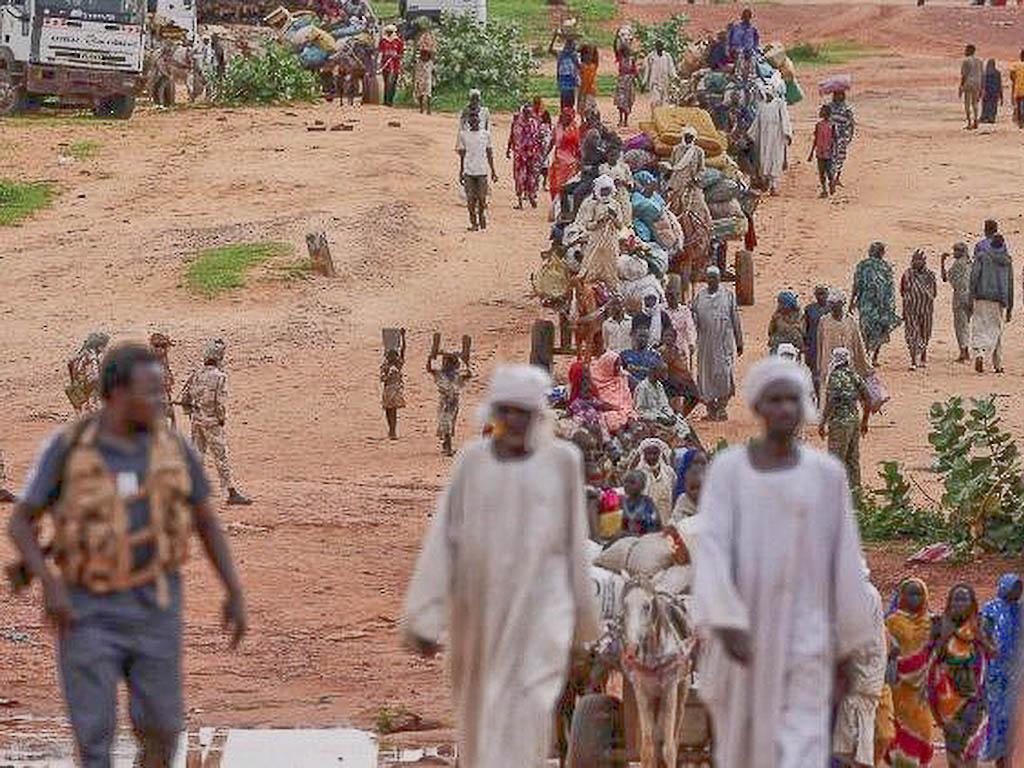 Those mornings—red earth and sand beneath bare feet, hunger’s ache in my stomach, my mother’s determined whisper that learning was freedom—have never left me. I have dwelled [...]
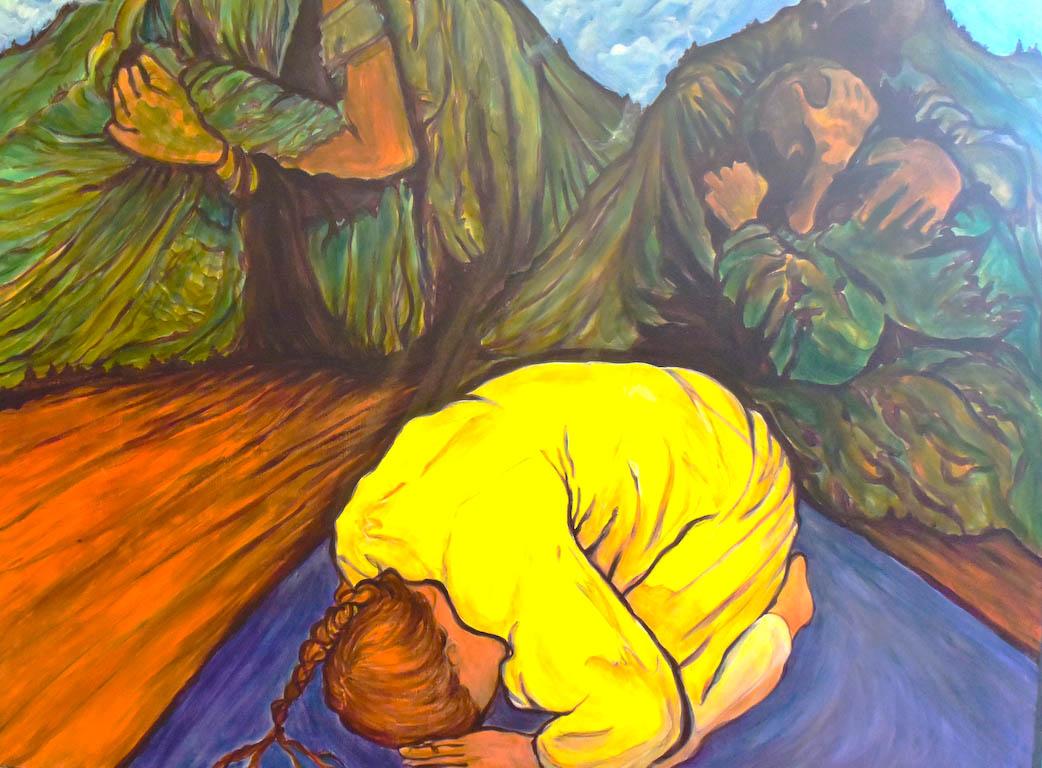 The recent military conflicts, especially the Russia vs Ukraine war, and the electoral propaganda in the USA—particularly the attack on former President Donald Trump—demand reflection on [...]
 Lesson 1: Prioritising personal well-being
Knowing how to take care of oneself is fundamental, a lesson that many underestimate until critical moments in their lives. Let us take a moment to [...]
Info
Email: jampypezzi@gmail.com - tel. +39 328 732 6990 / +243 991 457 856
This blog is made in 4 languages: it en fr es


 EDitt | Web Agency
Leave a comment