Justice, Peace, Integrity
of Creation
Justice, Peace, Integrity
of Creation
By John Paul Pezzi, Mccj
Justice, Peace, Integrity
of Creation
By John Paul Pezzi, Mccj
Justice, Peace, Integrity
of Creation
By John Paul Pezzi, Mccj

Justice, Peace, Integrity
of Creation
By John Paul Pezzi, Mccj
Deep Disorder and the Virtue of Prudence
Avvenire 19.10.2025 Mauro Magatti Translated by: Jpic-jp.orgAnancient term, “prudence” often misunderstood, denotes a quality very different from mere caution or fear. It does not consist in withdrawing, but in knowing how to act while taking complexity into account.

For several years now, the world has been living in a state of profound disorder. It is as though it had entered an entropic phase: order no longer regenerates spontaneously, connections multiply without producing cohesion, and societies oscillate between fear and disorientation.
In this climate, it is hardly surprising that security should appear as the absolute value of our time: health, energy, digital, military and financial security. Demands for protection proliferate, as do surveillance systems and both physical and symbolic barriers. Every threat, real or perceived, becomes a justification for restricting spaces of freedom, legitimising control and consolidating power.
The logic of security is grounded in fear of the other and in the belief that disorder can only be neutralised by erecting barriers or strengthening armies. Yet what this produces is not peace, but a condition of permanent suspension: a static, defensive equilibrium that freezes life instead of allowing it to regenerate.
Security, understood as the elimination of risk, entails a renunciation of action. If every step may be dangerous, the most obvious response is not to move at all. But a society that does not act, that exists solely to protect itself, is destined to implode. Action, as Hannah Arendt reminded us, is the constitutive dimension of the human condition: it opens the world, renews it and gives it existence over time.
When action is replaced by mere reaction, history stalls and paralysis sets in. This is why the obsessive pursuit of security, however understandable, ultimately fuels the very disorder it seeks to guard against: it immobilises vital energies, extinguishes desire and erodes trust.
What we truly need, in fact, is prudence — an ancient word, often misunderstood, denoting a virtue quite distinct from caution or fear. Prudence (from the Latin prudentia, derived from providere, “to foresee”) does not consist in withdrawal, but in knowing how to act while taking complexity into account. It is the capacity to discern, to assess consequences and to weigh the various factors at play without reducing them to a single dimension.
Aristotle regarded it as the practical virtue par excellence, enabling ethical principles to be translated into concrete action in uncertain and shifting circumstances. Prudence is thus a form of practical knowledge, an embodied intelligence that recognises both the limits and the possibilities of reality.
Unlike security, which seeks to abolish risk, prudence consciously embraces it. It does not deny the world’s uncertainty but learns to navigate it. It is the virtue of those who are not paralysed by fear, yet do not imagine they can master everything through technology or force.
Prudence is not the virtue of the powerful, but of the wise: those who understand that life is fragile and must therefore be protected without being enclosed. It means moving through the world with attentiveness, but also with trust; recognising dangers without renouncing the future.
Today, in an age dominated by algorithms that calculate every probability and by powers that promise total protection, rediscovering prudence is both a political and a spiritual act. It is to acknowledge that the future is not built by avoiding shocks, but by confronting them with discernment. The idea of security tends to fix the present; prudence, by contrast, opens the way to a future that does not yet exist.
The prudent do not merely react: they imagine, anticipate and guide. They are capable of decisions grounded not only in calculation, but also in proportion, balance and respect for the living complexity. In this sense, prudence is the virtue of generativity: of those who know that every choice involves risk, but also the possibility of bringing forth something new.
A prudent society is not one that withdraws into itself, but one that learns to care for its path, to reflect on the consequences of its actions and to intertwine freedom with responsibility. Where security immobilises, prudence sets things in motion; where security closes, prudence opens. History shows that periods of profound transformation — such as the one we are living through — require precisely this virtue.
In a world of global disorder, what is needed is not new walls or an arms race, but new forms of discernment: the ability to recognise what truly matters, to distinguish the essential from the superfluous, and to compose differences rather than erase them. Prudence ultimately means making room for an intelligence of limits, against the illusion of omnipotence.
It is the virtue that allows us to inhabit the world without destroying it, to act without devastating, to choose without fear. Today more than ever, we need a prudence capable of becoming a shared cultural framework — within institutions, politics, the economy and everyday life. A prudence that is not merely individual, but civic and collective, helping to hold together freedom and responsibility, innovation and care, security and openness. Only in this way can we emerge from disorder, not by retreating into control, but by rediscovering the meaning of human action.
See, Il profondo disordine e la virtù che serve: la prudenza
The comments from our readers (1)
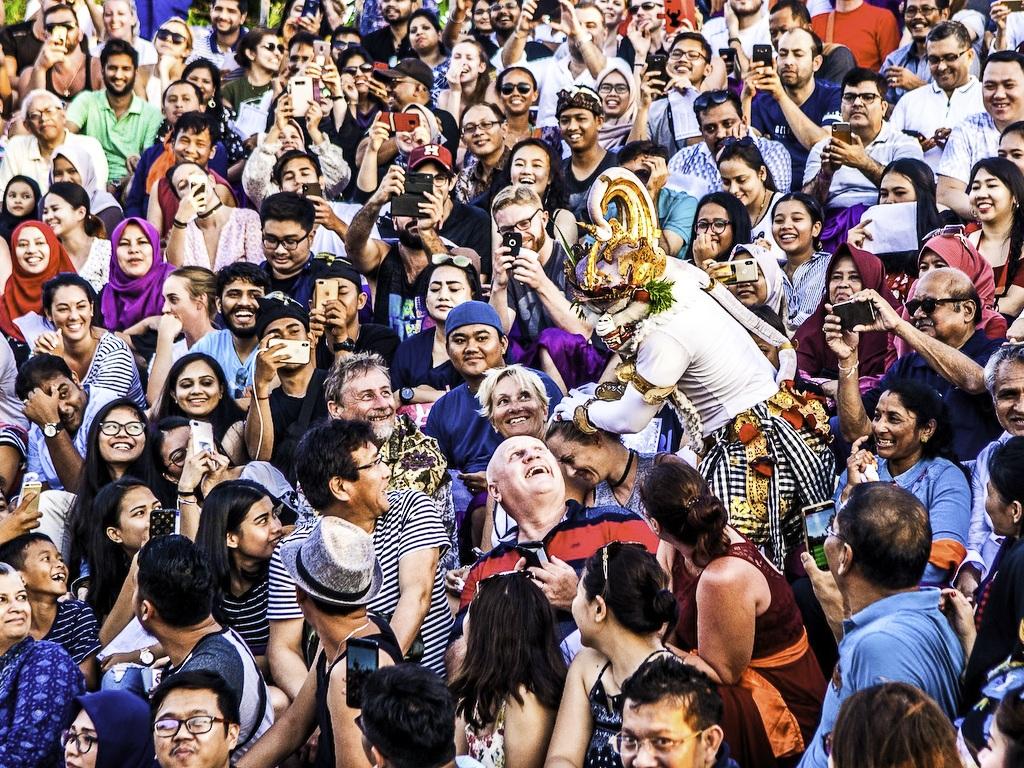 All of Pope Leo XIV’s preaching for peace and justice, which has become increasingly urgent as his pontificate has progressed, and which had already denounced in the cathedral of Bevanda, [...]
 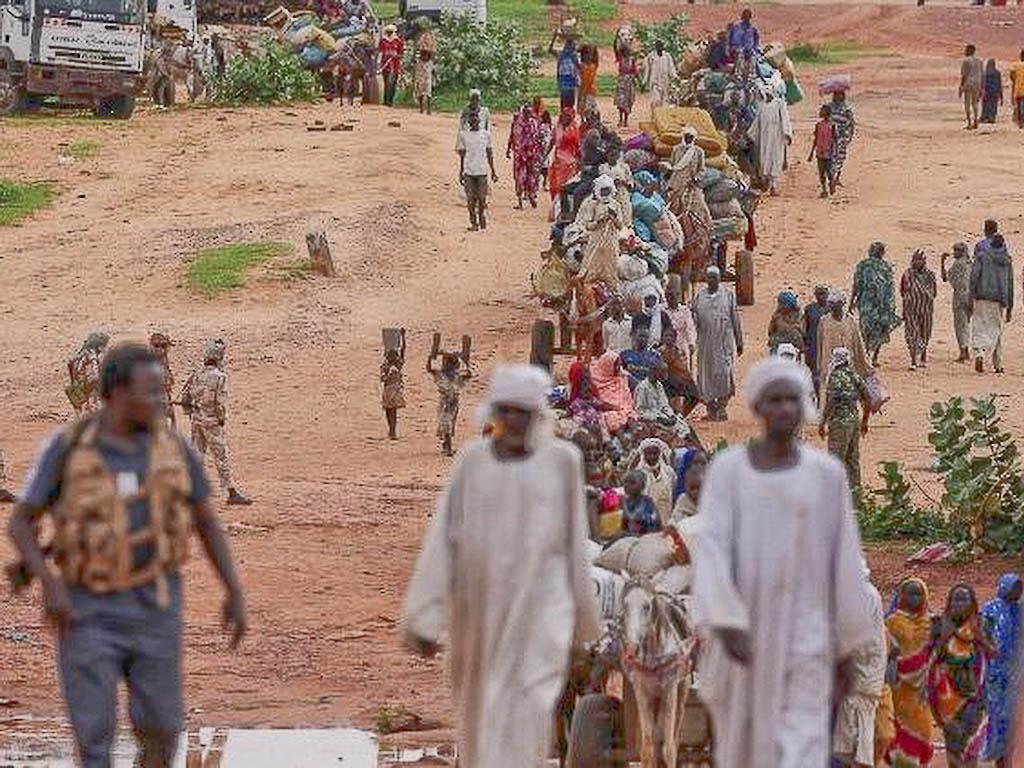 Those mornings—red earth and sand beneath bare feet, hunger’s ache in my stomach, my mother’s determined whisper that learning was freedom—have never left me. I have dwelled [...]
 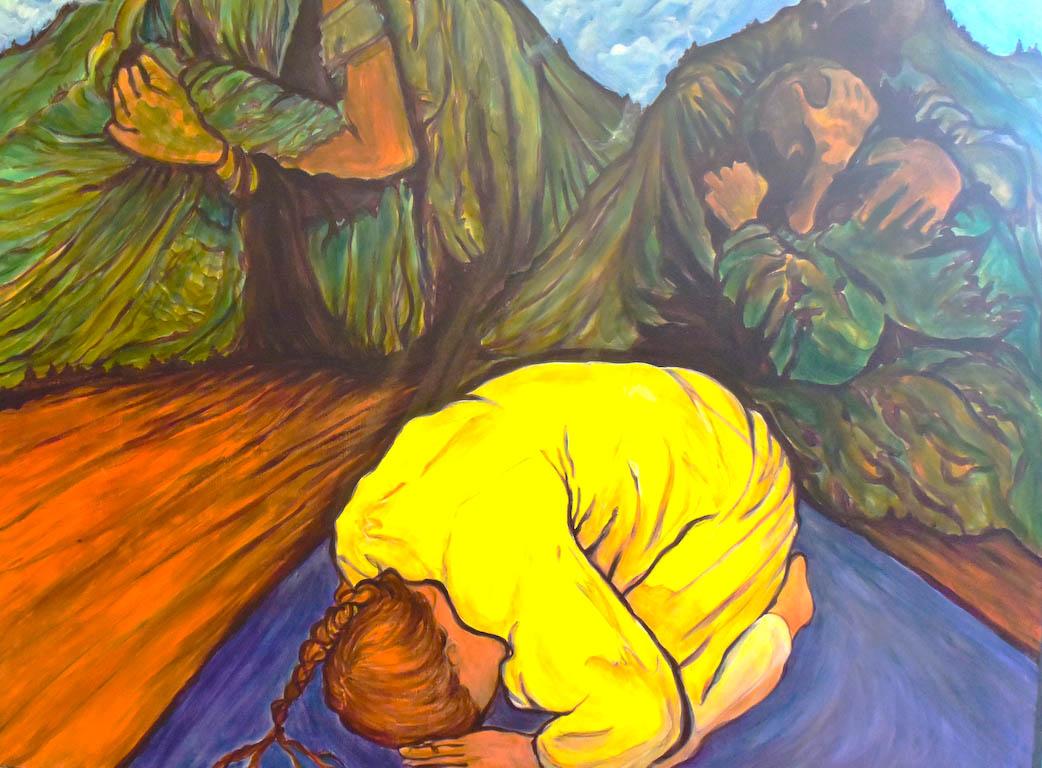 The recent military conflicts, especially the Russia vs Ukraine war, and the electoral propaganda in the USA—particularly the attack on former President Donald Trump—demand reflection on [...]
  Lesson 1: Prioritising personal well-being
Knowing how to take care of oneself is fundamental, a lesson that many underestimate until critical moments in their lives. Let us take a moment to [...]
Lesson 1: Prioritising personal well-being
Knowing how to take care of oneself is fundamental, a lesson that many underestimate until critical moments in their lives. Let us take a moment to [...] Info
Email: jampypezzi@gmail.com - tel. +39 328 732 6990 / +243 991 457 856
This blog is made in 4 languages: it en fr es



 EDitt | Web Agency
Leave a comment