Justice, Peace, Integrity
of Creation
Justice, Peace, Integrity
of Creation
By John Paul Pezzi, Mccj

Justice, Peace, Integrity
of Creation
By John Paul Pezzi, Mccj

Justice, Peace, Integrity
of Creation
By John Paul Pezzi, Mccj
Justice, Peace, Integrity
of Creation
By John Paul Pezzi, Mccj
The Caricature of Peace
http://www.settimananews.it 30.11.2025 Giuseppe Savagnone Translated by: Jpic-jp.orgThe tragedy of Palestine has almost disappeared from the front pages of newspapers and from television news programmes. Public opinion too — which had expressed its outrage through demonstrations of a scale unseen for many years — now seems to have left it behind. This is the effect of the entry into force of the peace plan through which Donald Trump narrowly missed the Nobel Prize and nonetheless received unconditional international praise, to the point of being compared to Cyrus the Great, the “instrument of God” in the liberation of the Jews.
All’s well that ends well? The triumphant scenes of the signing of the treaty in Sharm el-Sheikh, in the presence of more than twenty presidents and prime ministers from across Europe and the Arab countries, took on, in the eyes of the world, the meaning of a happy conclusion to the humanitarian drama that had increasingly troubled consciences and placed governments under strain.
Even the vast majority of commentators, who had tenaciously defended Israel’s right to defend itself, were beginning to feel uncomfortable in the face of the scenes of massacres and devastation broadcast live every day (often at the cost of their lives) by Palestinian journalists. They too were therefore able to breathe a sigh of relief, hailing the peace plan as the fair solution that finally closed the issue, giving each side what it was due.
This perception was confirmed by the approval, on 17th November, by the UN Security Council, of the resolution which, in line with the Trump plan, entrusts control of the Gaza Strip for two years to the American president through a body known as the “Peace Council”, whose members will be chosen directly by the president himself.
The merit unanimously attributed to the President of the United States was that of having finally put an end to a bloodbath that had lasted for two years. Many spoke of a miracle, of which Trump would be the author thanks to a peace proposal that no one before him had dared to put forward.
Some counter-current misgivings
In this climate of beatification of the Tycoon, almost no one dared to point out that this achievement depended on the fact that the massacre under way in Gaza was supported politically and militarily by the United States, and that therefore only the American president was in a position to stop Netanyahu. It would thus have been legitimate to ask why he had done so only now, at the cost of the lives of thousands of innocent people.
Likewise, almost no one questioned the solidity of a peace signed over the heads of a people rigorously excluded from the negotiations, including their legitimate representatives, namely the Palestinian National Authority, which has long recognised the Jewish state (without reciprocity). Because — as was instead recalled with regard to the analogous American peace plan for Ukraine — for there to be a true peace it is not enough that it should put an end to the war; it must also be just.
For this reason, the same governments and the same journalists who had enthusiastically welcomed the end of the massacres in Gaza without asking further questions, considered Trump’s latest proposal on Ukraine unacceptable, both because it did not respect the Ukrainian people and because it had not been agreed with their legitimate representatives. Once again confirming the double standard of Western diplomacy, and in particular European diplomacy, in relation to these two conflicts.
An optical illusion
The fact remains that the Gaza crisis is now considered resolved, even though there are still some pending issues to be addressed in the so-called “phase two”, and that the world’s attention is now focused exclusively on Ukraine.
In reality, we are facing one of those optical illusions that the media apparatus, in the service of specific political interests, is capable of generating at the public level. Even if a few isolated voices have been raised to expose it. Such as that of Lorenzo Kamel, professor of International History at the University of Turin and adjunct professor at the LUISS School of Government, who, after the UN resolution, spoke of “a great day for Netanyahu, Hamas and Trump”, and of “a bad day for the long-term security of the State of Israel, for Palestinian self-determination, and more generally for the many decent people in our world.”
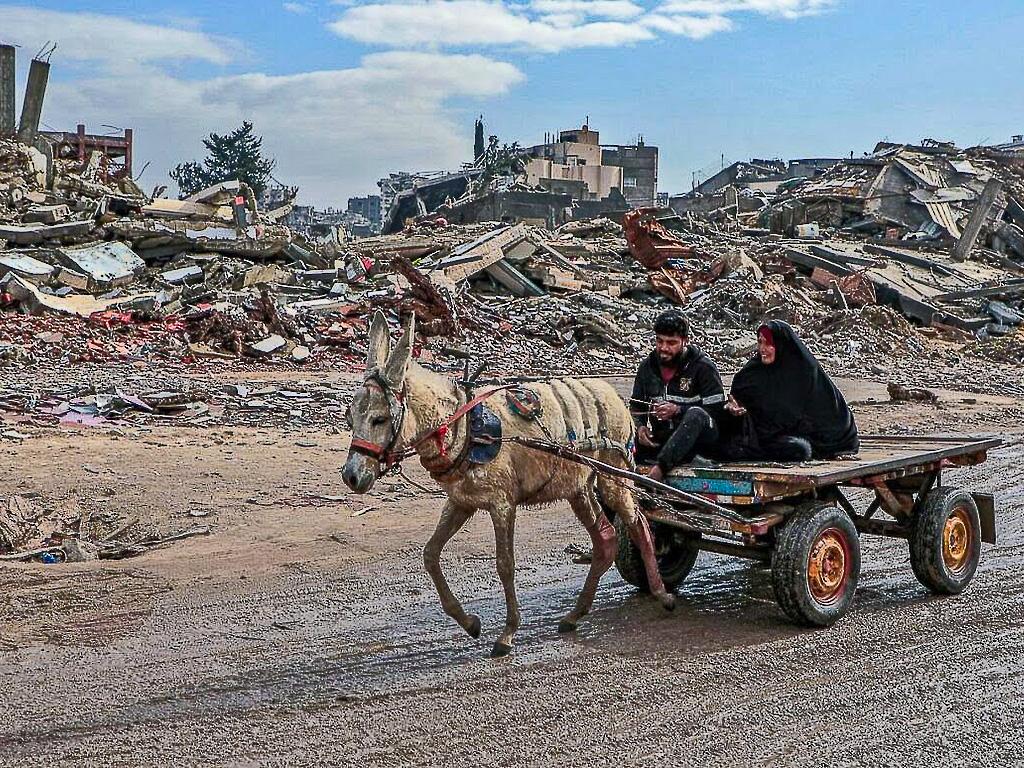
Because it is true that with this supposed peace the number of innocent deaths has greatly decreased. But this has been paid for by drawing the curtain over the disastrous conditions of a people of more than two million Gazans, whose homes, hospitals and mosques have been systematically razed to the ground by the Israeli army, and who continue to depend on the changing arbitrariness of their oppressors as regards the opening or closing of the crossings through which food supplies should arrive.
For two years they were treated like a herd of animals by Israel, which deported them from one place to another at will, uprooting them from where they lived and depriving them of every point of reference. Now they are abandoned, still like animals, in the terrifying non-place to which Gaza has been reduced.
The tragedy is further compounded by weather conditions and flooding. Men, women and children wade through the mud under makeshift tents, searching for something to eat, hoping that Netanyahu will decide to reopen the crossings. And winter is drawing ever closer.
No one answers for all this. An Italian journalist who dared to ask at a press conference whether Israel should not compensate for the damage caused over these two years was dismissed by the news agency he worked for. What has happened over these two years, of which the current disaster is the result, is now erased, removed. The radiant future opened up by peace conceals the disaster of the present.
But in reality the future too is extremely uncertain. Because of Hamas, which refuses to hand over its weapons, but also because the prospect of the much-vaunted Palestinian state — which both the Trump plan and the UN resolution mention in a very vague and hypothetical manner — is firmly ruled out by the Israeli government, which states that it is not prepared to yield to any pressure on this point. As Netanyahu recently made clear: “Our opposition to a Palestinian state in any territory has not changed. Gaza will be demilitarised and Hamas disarmed, in the easiest way or the hardest way. I do not need reinforcements, tweets or sermons from anyone.”
And the behaviour of the Israeli army during these weeks of “peace” remains that of a military occupation and confirms a pattern of systematic violence towards a people who are not treated as a possible partner, but as a defeated population whose human dignity is not recognised.
Silence on the West Bank
Making the mirage of a future Palestinian state even more problematic is the situation in the West Bank, which according to the 1947 UN resolution should, together with Gaza, constitute the territory of that state.
Only a few weeks ago, Israeli Finance Minister Bezalel Smotrich, who is also responsible for civil administration in the West Bank, approved a new settlement plan — yet another since the shift that followed the Six-Day War (1967) — providing for the construction of 3,400 housing units for settlers. Its implementation, Smotrich explained with satisfaction, “will bury the idea of a Palestinian state.” And, consistently with this logic, settler violence has multiplied in recent weeks: Palestinians’ olive trees cut down, crops burned, farms demolished. With the support of the Israeli army, which thus complies with the 2018 Basic Law stating: “The State views the development of Jewish settlement as a national value and shall act to encourage and promote its development and consolidation.”
It is no coincidence that Trump’s peace plan says nothing about the fate of the West Bank, with the evident intention of leaving it to the current balance of power, which is completely skewed in favour of the Israelis. Even though, for reasons of decency, the White House pressured for the annulment of the decision by which the Knesset, at the end of July, had passed by a large majority a motion sanctioning the annexation of the West Bank — a motion also opposed by Prime Minister Netanyahu, who nevertheless wants that annexation, but considers it inappropriate at this delicate moment.
But it is clear to everyone that it is only a matter of time.
Is this really in Israel’s interest? Faced with the picture we have outlined, there will once again be no shortage of those who cry antisemitism.
An accusation rendered ridiculous by the fact that, in addition to an authoritative independent UN commission of inquiry, many Jewish figures such as Anna Foa, and Israeli figures such as David Grossman, have forcefully denounced Israel’s crimes, clearly branding them as genocide. Being opposed to the policies of Netanyahu and his government does not mean opposing Jews; on the contrary, it testifies to esteem and respect for them.
Moreover, Israeli Jews themselves are expressing their disappointment with these policies, which in the end are damaging first and foremost to the Jewish state. On the Italian Jewish portal Pagine ebraiche of 27 November, an article is titled: “One quarter of Israelis are thinking of leaving the country”.
“The survey, conducted in April this year,” the article states, “shows that 26% of Jews and 30% of Israeli Arabs are considering the possibility of emigrating.” It continues: “The figure emerges from the annual report of the Israel Democracy Institute, which portrays a widespread state of mind (…). The reasons for the malaise are the rising cost of living (…), followed by concern for children’s future and by prolonged instability in national security.” The phenomenon mainly affects young people.
The truth is that this war, unleashed in the name of a fundamentalist messianism that claims to make Israel safer, has produced an unprecedented climate of violence and hatred, laying the groundwork for a chain of retaliations whose end cannot be foreseen. Above all, it has disfigured Israel’s image, internationally, but also in the eyes of many Jews in the diaspora and of its own citizens.
And this peace, which covers up the wounds but refuses to acknowledge them, let alone heal them, does not overcome them, but rather prolongs them permanently — something to which anyone who truly loves peace cannot resign themselves. Because, as Pope Leo recently said in a speech, “peace asks us above all to take a stand. In the face of injustice and inequality, where human dignity is trampled upon, where the voice of the vulnerable is taken away: to take a stand.”
If there is today a situation of injustice and inequality in which human dignity is trampled upon and the voice of the vulnerable is silenced, it is that of the Palestinians. Closing one’s eyes to all this does not promote peace, but the caricature of peace.
The comments from our readers (1)
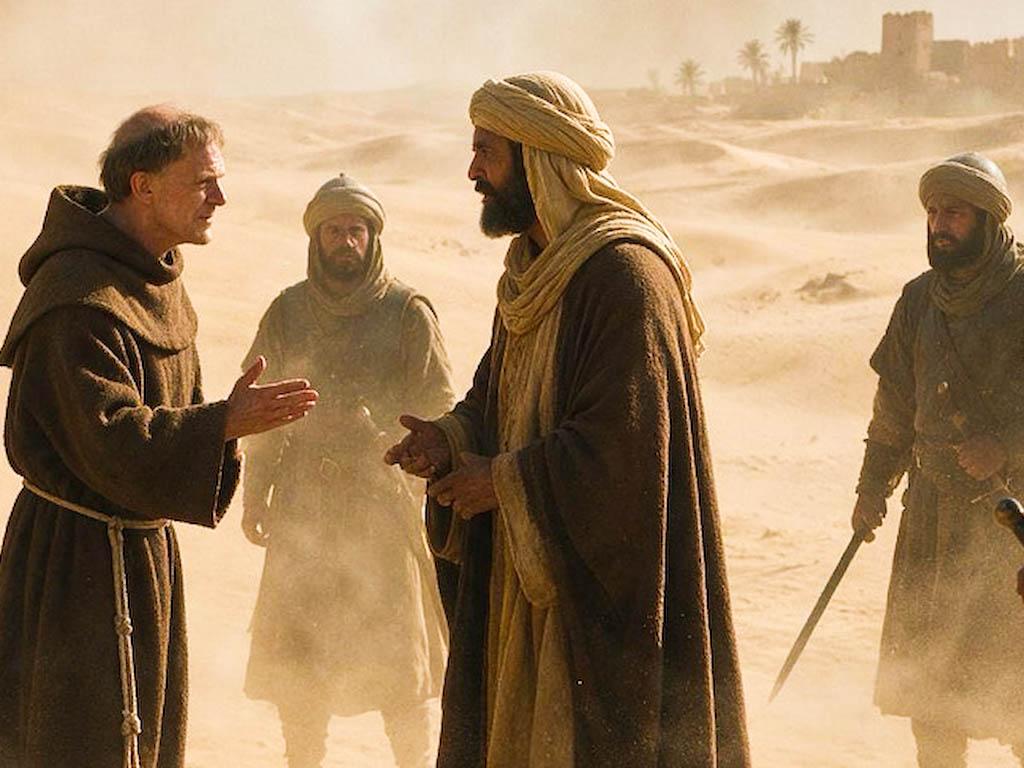 Two stories, two faiths that meet, speak to one another and do not demonise each other. They part with mutual respect, and the Sultan offers gifts. Among them is the ivory horn still preserved today [...]
 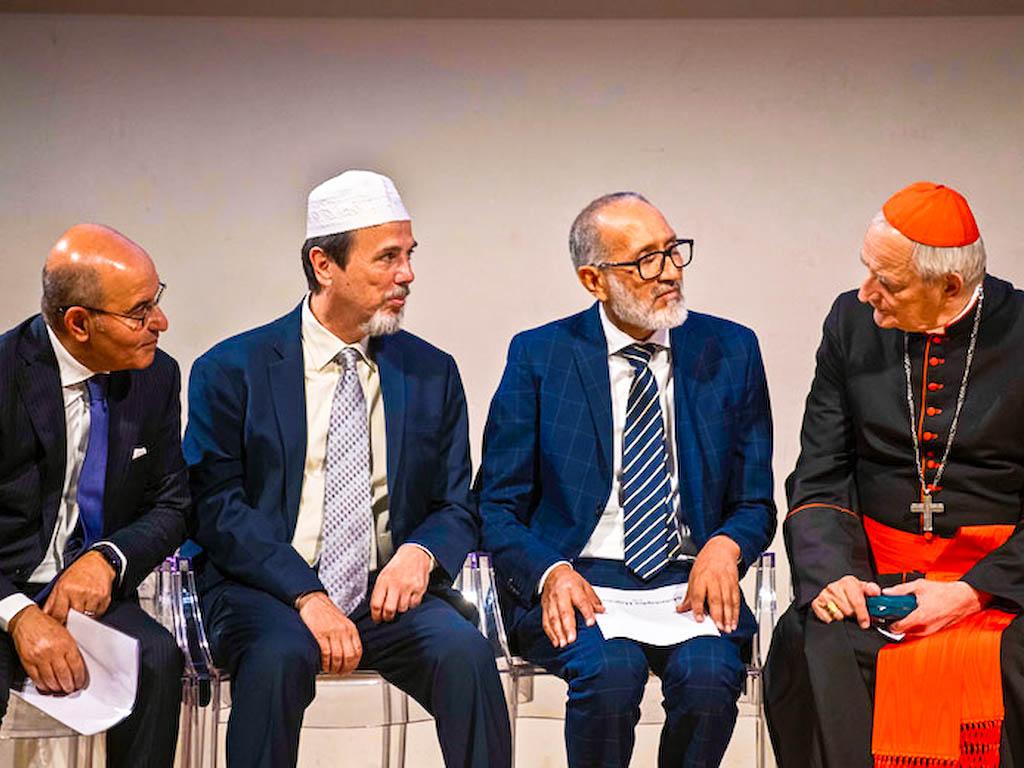 Seated side by side were Catholics, Hindus, Buddhists, Jews, Orthodox Christians and Muslims. At the centre, in the place of honour, lay a document signed by them all which, at this historical moment [...]
 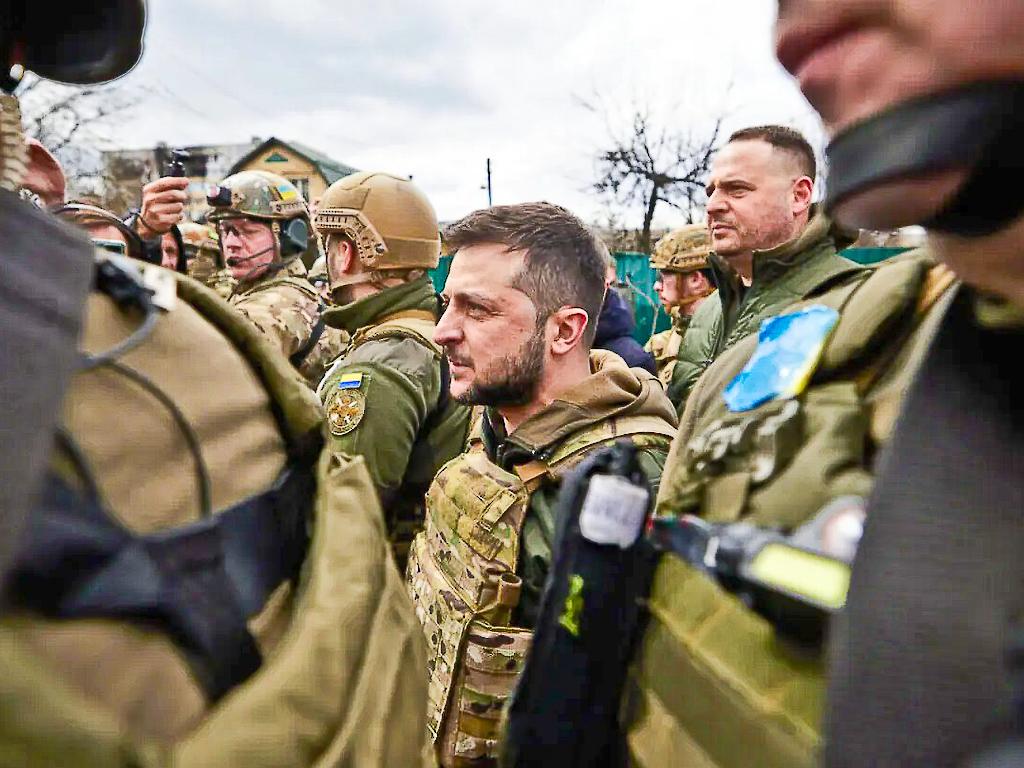 Russia’s invasion of Ukraine has affected Africa and its people very directly—and in many different ways. From the thousands of citizens from African countries who have gone to fight on [...]
 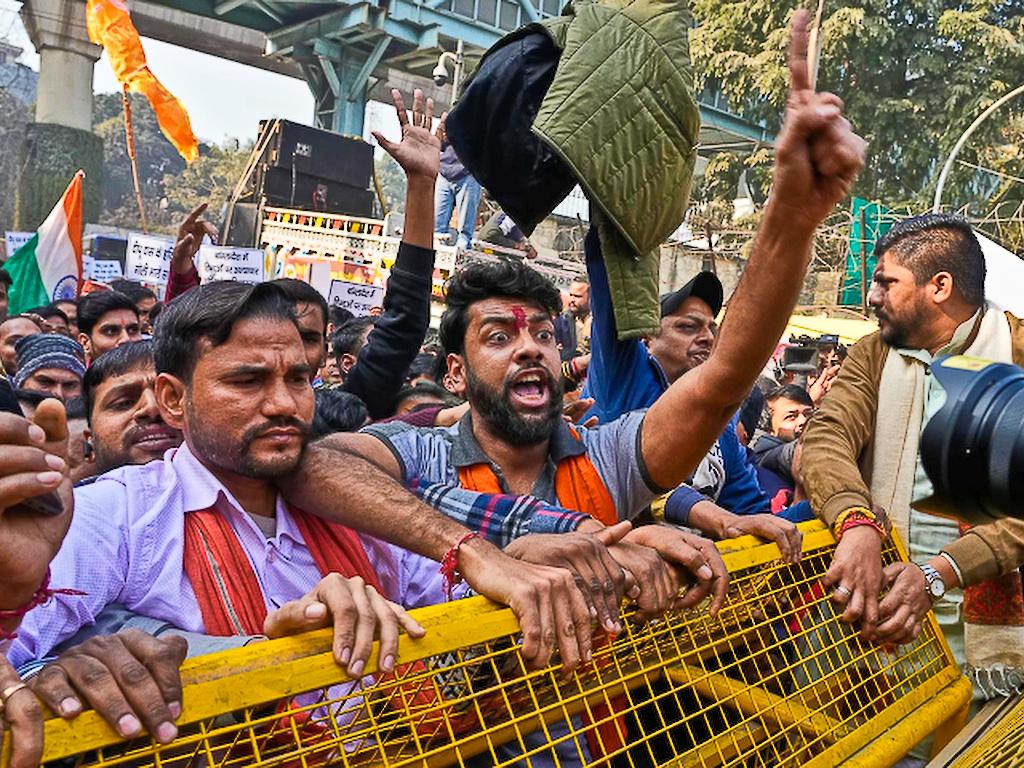 The pastor and his family had been attending a prayer meeting in a private residence together with other families in the village of Parjang, in Dhenkanal district, when a group of around twenty [...]
  Sudan has been at war since April 2023. The conflict was sparked by two generals, Mohamed Hamdan Dagalo and Abdel Fattah al-Burhan, once allies, now vying for control of the country and determined to [...]
  Few people take responsibility for two sins of omission in recent history: education in the common good and fraternity, fundamental for a just and united society; the failure to foresee the future [...]
  We live in a time of war. And it is no coincidence that the main seats of power are occupied by strongmen. It is not only the most mediatised cases. The delirious declarations of Donald Trump on [...]
  In Sudan, the war that broke out two years ago has caused the most serious humanitarian crisis in the world and in recent decades. 30 million people out of a total population of 50 million are in [...]
 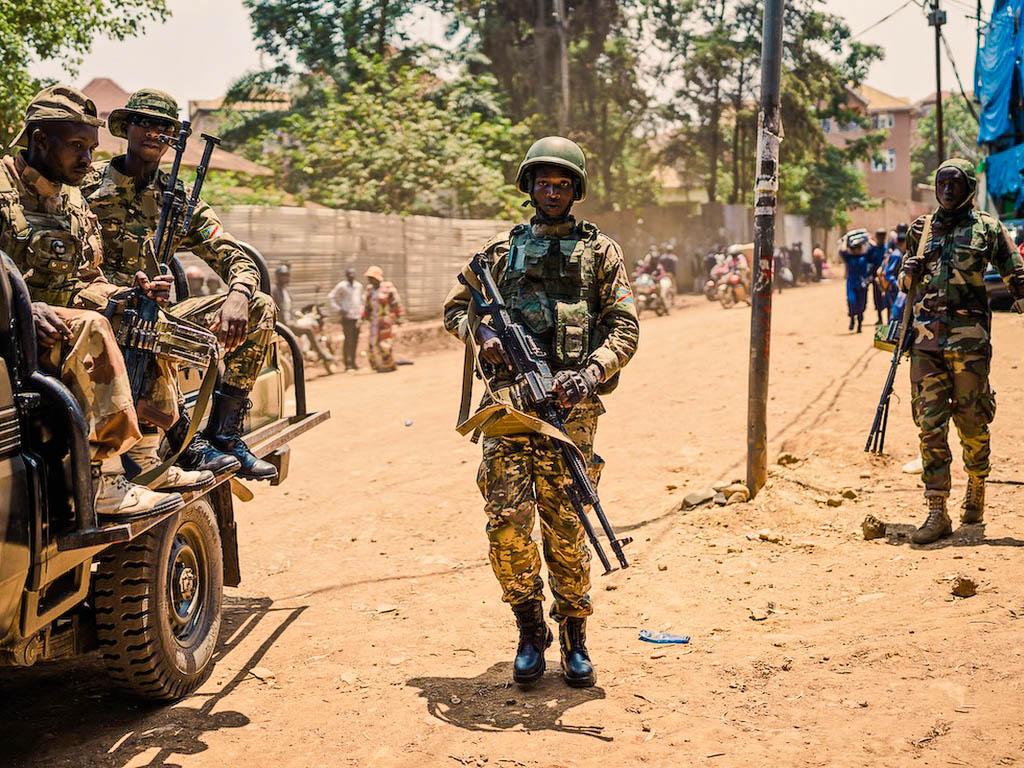 In an interview last week, responding to repeated accusations that the Congolese armed group M23 includes thousands of Rwandan soldiers, its political leader Corneille Nangaa stated: “I [...]
 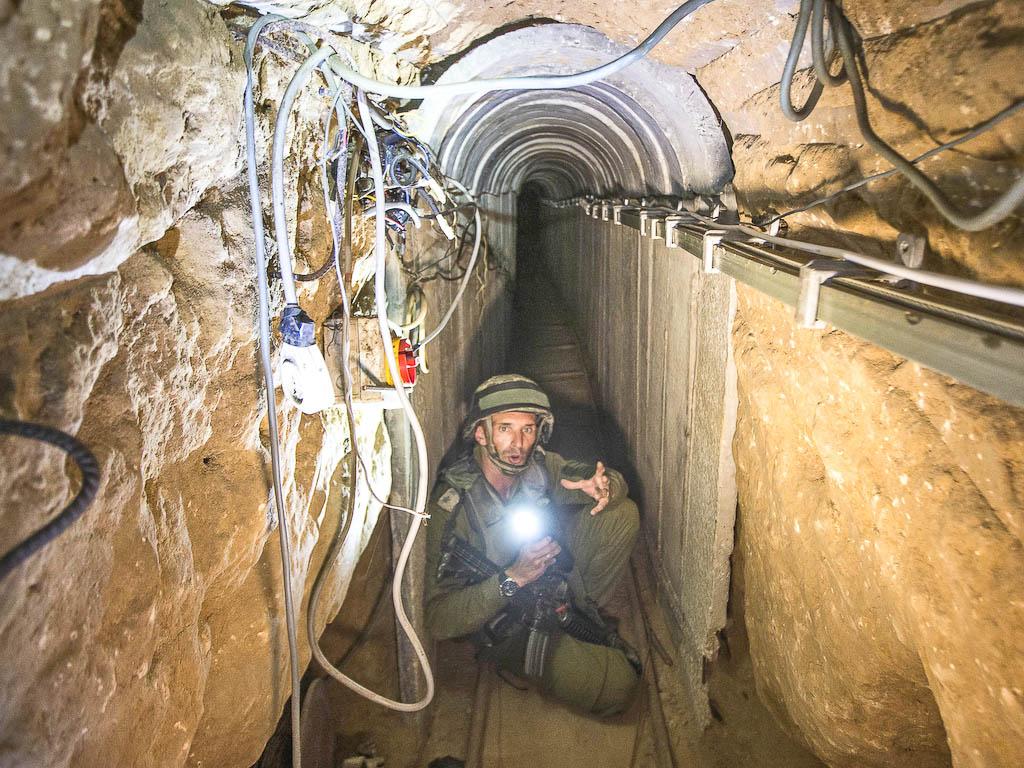 In his investigation, the New York Times reveals that the head of Hamas had a secret police force at his disposal to repress dissent in Gaza. This secret police force, called the General Security [...]
 Info
Email: jampypezzi@gmail.com - tel. +39 328 732 6990 / +243 991 457 856
This blog is made in 4 languages: it en fr es



 EDitt | Web Agency
Leave a comment