Justice, Peace, Integrity
of Creation

Justice, Peace, Integrity
of Creation
By John Paul Pezzi, Mccj
Justice, Peace, Integrity
of Creation
By John Paul Pezzi, Mccj
Justice, Peace, Integrity
of Creation
By John Paul Pezzi, Mccj

Justice, Peace, Integrity
of Creation
By John Paul Pezzi, Mccj
The False Promise of De-growth
Ethic 27.12.2025 Manuel Alejandro Hidalgo Translated by: Jpic-jp.orgDe-growth, although motivated by legitimate environmental concerns, ultimately reveals itself as a proposal laden with economic and social risks and serious threats to democratic stability, by institutionalising scarcity and creating conditions conducive to conflict and authoritarianism. However, there is another, far more promising alternative.

Economic growth is not a statistical abstraction; it is the most powerful lever humanity has ever known for the tangible improvement of well-being. Over recent decades, its impact has been transformative: according to World Bank data, the share of the world’s population living in extreme poverty fell from over 35% in 1990 to approximately 8.5% before the pandemic, meaning that more than one billion people escaped the worst forms of misery.
This era of expansion has also brought spectacular advances in other crucial indicators: global life expectancy has risen significantly, infant mortality has dropped dramatically, and literacy rates and access to education have reached unprecedented levels. To ignore this record of verifiable progress would be to turn a blind eye to the most effective tool we have had to combat suffering and expand human opportunity.
Beyond historical hindsight, the need for growth remains an urgent imperative, especially for developing countries. For billions of people in Asia, Africa and Latin America, economic growth is not a debate about consumerism, but the only realistic pathway to adequate nutrition, clean drinking water, decent housing, healthcare and an education that enables them to build a better future.
From this global perspective, de-growth proposals originating in affluent nations carry the serious risk of perpetuating existing inequalities, by denying lower-income countries the opportunity to reach the levels of development already enjoyed by the West. Imposing an “ecological austerity” on them would not only be profoundly unjust, but could also be interpreted as a new form of colonialism that obstructs their legitimate right to development.
At its core, de-growth is a school of thought which, driven by a genuine concern for the planet’s ecological limits, advocates a planned and equitable reduction in production and consumption in so-called rich economies. Its proponents argue that only by shrinking the material scale of the economy can crises such as climate change or biodiversity loss be mitigated. However, beyond its intentions, rigorous analysis shows that de-growth as an active strategy entails economic, social and practical risks of enormous magnitude, which could prove counterproductive.
The chimera of “planned contraction”
The first danger lies in the direct economic risks. A deliberate policy of economic contraction bears a dangerous resemblance to a prolonged recession, a phenomenon historically associated with a severe deterioration in well-being. The most likely consequences would be a sharp rise in unemployment, falling household incomes, reduced business investment and a significant decline in tax revenues, weakening the state’s capacity to finance essential public services. The notion of an “equitable distribution” of scarcity ignores the social tensions and conflicts that would inevitably arise when sharing an ever-shrinking economic pie.
The unfeasibility of a “planned contraction” in democratic societies represents a formidable obstacle. Centrally managing the coordinated reduction of multiple economic sectors would require a level of state intervention verging on authoritarianism, eroding fundamental freedoms. Alternatively, an unplanned contraction would unleash instability and the potential collapse of value chains, without any guarantee of achieving environmental objectives in an orderly manner. The history of centrally planned economic growth is littered with failures; attempting it under conditions of deliberate contraction is an even greater chimera.
Beyond economic risks, de-growth poses fundamental dangers to social cohesion and democratic stability. History shows that periods of sustained economic contraction erode democratic consensus and polarise societies. In a scenario of deliberate de-growth, where resources become progressively scarcer, competition for access to jobs, services and opportunities would intensify dramatically, generating tensions between social groups and fuelling mutual resentment.
This artificial scarcity could nourish extreme populist movements that promise simple solutions to complex problems. The experience of twentieth-century crises demonstrates that when societies face the prospect of collective impoverishment, they tend to seek scapegoats and authoritarian leaders. By institutionalising austerity as a permanent norm, de-growth would risk creating a society in perpetual crisis, in which democratic mechanisms are constantly called into question.
Moreover, “equity in the distribution of scarcity” is extremely difficult to achieve without resorting to coercive mechanisms. Who would decide what is “enough” for each family? Systematic rationing regimes tend to generate black markets, corruption and unequal access, undermining trust in institutions. De-growth would threaten to create a society divided between “regulators” and the “regulated”, where a planning elite sets limits for everyone else, breeding resentment towards institutions.
Finally, de-growth would threaten to undermine the very engine of solutions: innovation. Technological progress, particularly green innovation, depends crucially on continuous investment in research and development. A de-growth scenario, marked by shrinking markets and bleak prospects, would strongly discourage the investment in spending on R&D (Research and Development) needed to accelerate the ecological transition. By stifling innovation, de-growth would leave us with fewer tools to confront environmental challenges.
“Absolute decoupling”
In the face of this bleak outlook, a far more promising alternative emerges: the pursuit of economic growth compatible with environmental sustainability and capable of actively driving it forward. This vision is grounded in humanity’s capacity to innovate and in growing evidence that economic development can be decoupled from resource use and environmental impact.
The goal is to achieve “absolute decoupling”, in which the economy grows while resource consumption and pollutant emissions decline. Encouraging examples already exist: many developed countries have succeeded in reducing their CO₂ emissions while their economies continued to expand, thanks to improvements in energy efficiency and the transition towards clean energy sources.
This decoupling is driven by key technological advances. In the energy sector, the renewable energy revolution is emblematic. The costs of solar and wind power have fallen by more than 80–90%, making them the cheapest sources of energy in many parts of the world. This transition not only decarbonises our economies, but also creates new industries and jobs.
At the same time, agricultural innovation offers sustainable solutions: precision agriculture, biotechnology and alternative proteins have the potential to drastically reduce pressure on land, water and biodiversity.
Another fundamental pillar is the transition to a circular economy. In contrast to the linear model of “extract, produce, use and discard”, the circular economy seeks to redesign productive systems to eliminate waste from the outset, keep products and materials in use for longer, and regenerate natural systems. This involves innovating in the design of durable and recyclable products, developing business models based on shared services, and creating efficient markets for secondary materials.
However, this innovative potential will not materialise spontaneously at the speed required. The role of smart public policies is crucial to accelerate this transformation. Instruments such as carbon pricing, public support for R&D in green technologies, the removal of subsidies for polluting activities, and stable regulatory frameworks that encourage private investment in sustainable solutions are essential. This synergy between technological innovation and visionary policies is key to a future in which economic prosperity and planetary health advance together.
As has been argued, the path towards a future that combines human prosperity with planetary health does not lie in abandoning growth, but in profoundly transforming it. De-growth, although motivated by legitimate environmental concerns, reveals itself as a proposal fraught with economic and social risks and serious threats to democratic stability, by institutionalising scarcity and creating conditions for conflict and authoritarianism. By contrast, the evidence and the potential of current advances offer us a hopeful path: smart, inclusive and genuinely sustainable growth.
The tools to decouple well-being from environmental impact are within our reach. The key lies in cultivating pragmatic optimism and urgently implementing policies that accelerate this transition. The challenge is complex, but human ingenuity, guided by a global commitment to truly green and equitable growth, will enable us to build a future in which both humanity and nature can flourish.
See, La falsa promesa del decrecimiento
Illustration: Óscar Gutiérrez
The comments from our readers (1)
 Approximately two hundred euros, at purchasing power parity: this is what, on average, is spent on the education of a child in Sub-Saharan Africa every twelve months. In Europe, the figure is around [...]
  Right and left presupposed a common space: constitutional democracy, the rule of law, and the mutual recognition of political actors as legitimate opponents. The current crisis, by contrast, operates [...]
 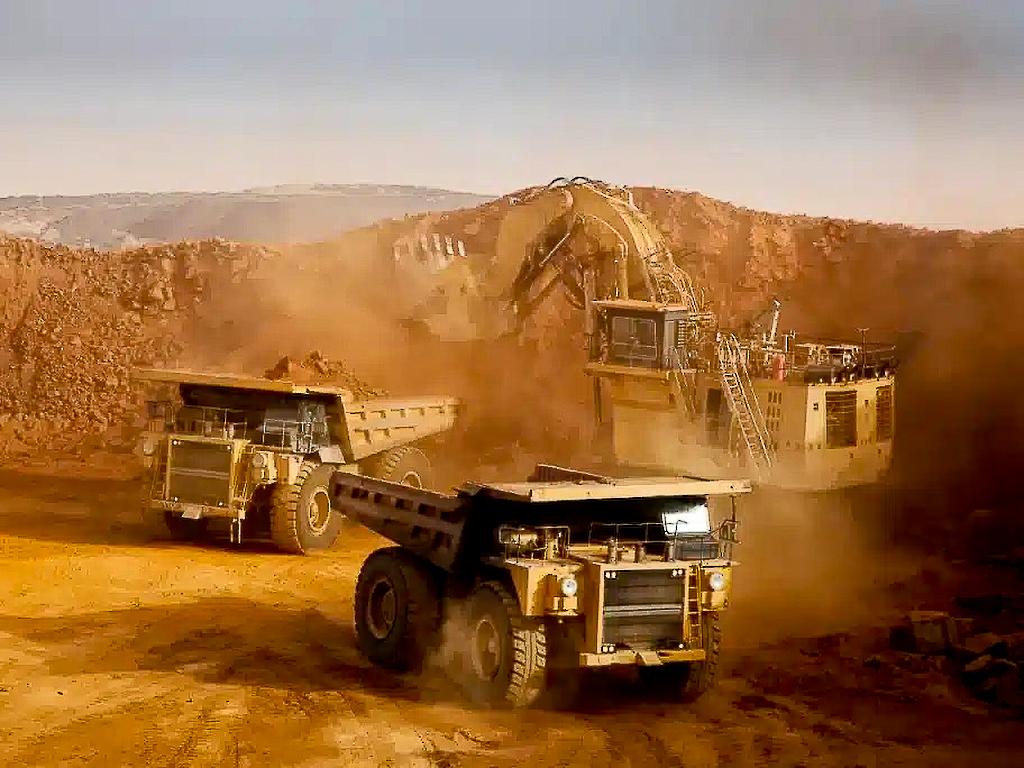 Did you know that Saudi Arabia and the United Arab Emirates, despite their deserts, import millions of tonnes of sand every year? Why do they rely on imported sand for their mega-projects? [...]
 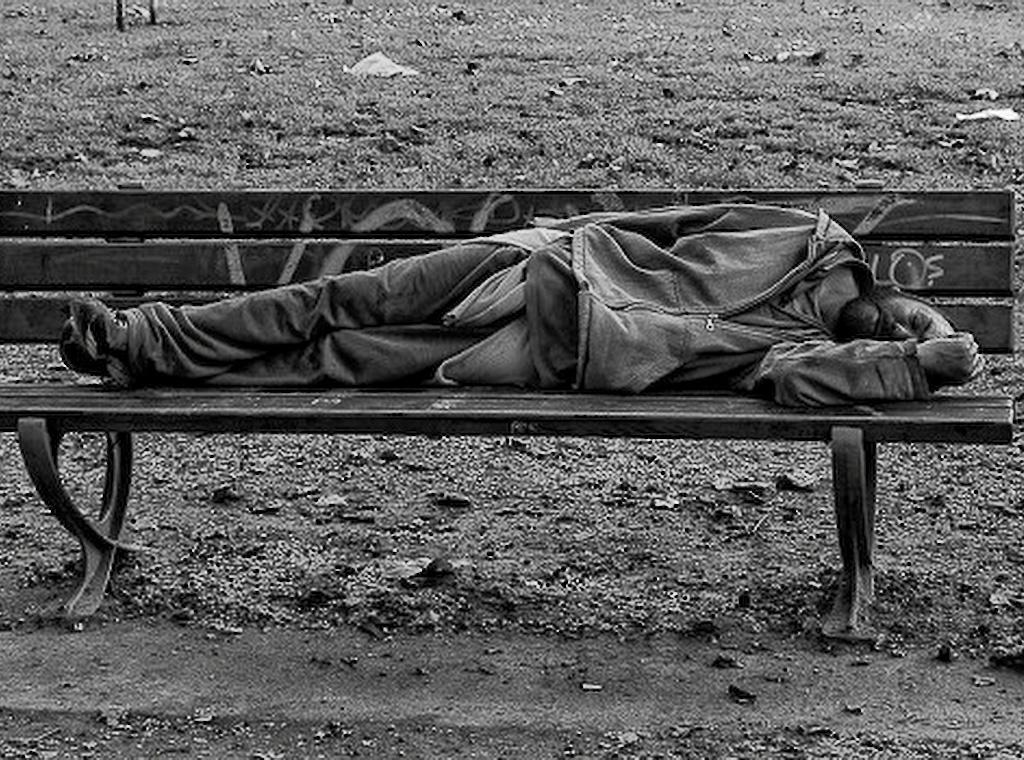 In a report presented on 19th January 2026 at the opening of the World Economic Forum in Davos, the British organisation Oxfam reported that global billionaires’ fortunes increased by 16% in [...]
 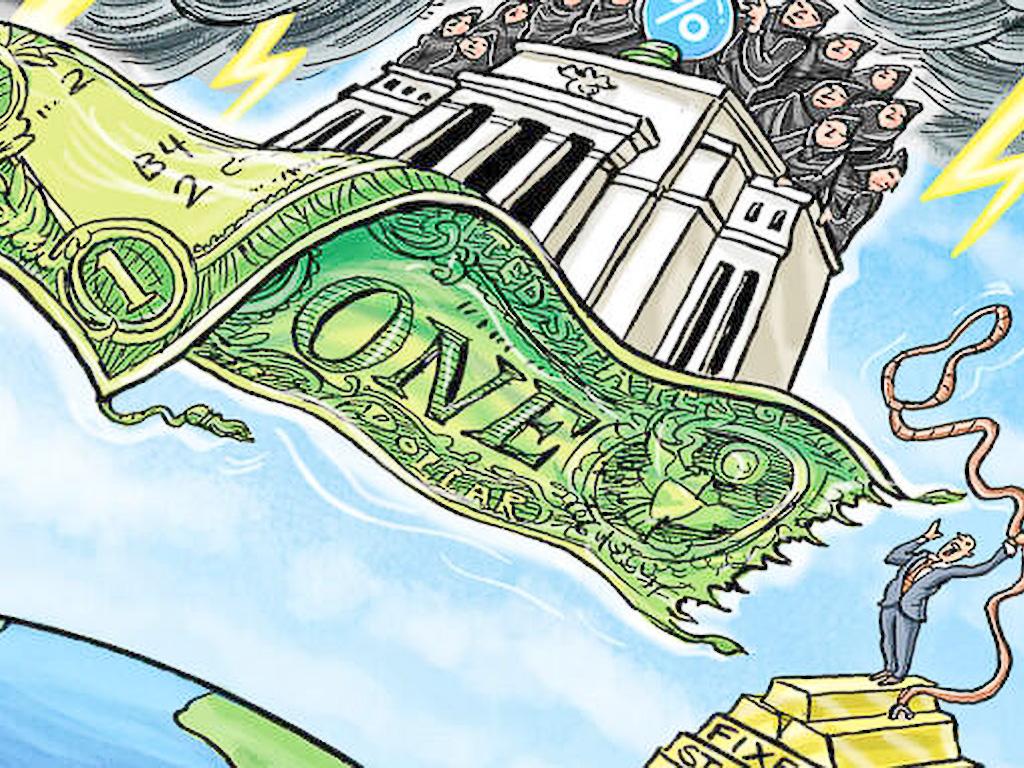 Undoubtedly, there has never been an era of true free trade. International trade has always been only partially and unevenly free and, in most cases, regulated. Most so-called neoliberal advocates [...]
  In an age marked by individualism, social fragmentation, and a crisis of human bonds, rediscovering the value of the common good is not just a cultural exercise, but an ethical and political [...]
 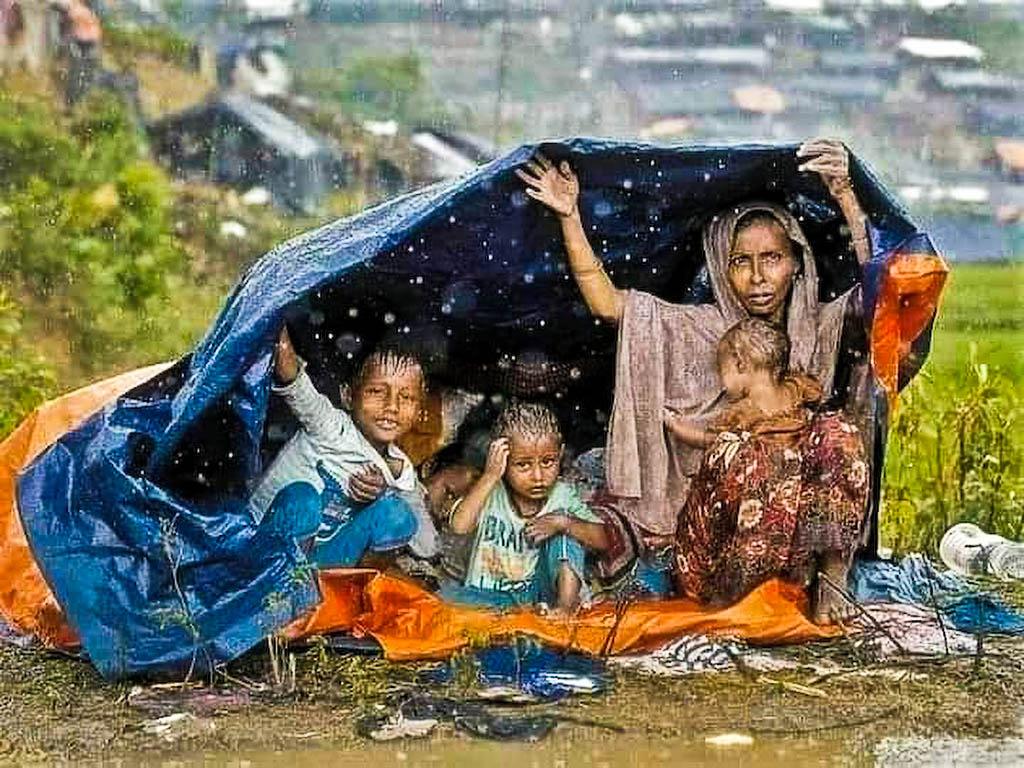 Liberalism is a doctrine that does not claim to have answers for everything, unlike Marxism, and welcomes divergence and criticism within its framework, based on a small but unmistakable core of [...]
  Despite the apparent variety of brands on supermarket shelves, much of the food and drink we consume every day is controlled by a small group of large multinationals. According to an analysis made [...]
  In your most recent book, Power and Progress, you mention that we are at a critical moment regarding the relationship between technology, equality and democracy. What consequences do you foresee if [...]
  The economic gerontocracy is in control of the planet. The numbers sparkle like diamonds in a jeweller's window. The infinitely cited BRICS (Brazil, Russia, India, China and South Africa), [...]
 Info
Email: jampypezzi@gmail.com - tel. +39 328 732 6990 / +243 991 457 856
This blog is made in 4 languages: it en fr es




 EDitt | Web Agency
Leave a comment