
Justice, Peace, Integrity
of Creation
Justice, Peace, Integrity
of Creation
By John Paul Pezzi, Mccj

Justice, Peace, Integrity
of Creation
By John Paul Pezzi, Mccj

Justice, Peace, Integrity
of Creation
By John Paul Pezzi, Mccj

Justice, Peace, Integrity
of Creation
By John Paul Pezzi, Mccj
The Real Danger of the Algorithm
Vita.it 31.01.2026 Paolo Venturi Translated by: Jpic-jp.orgThe danger of the algorithm is not that it will take our jobs, but that it will take our humanity. The real issue is not technical power, but the power of influence that those who control data exercise over the construction of social reality, over collective imaginaries, and over the solutions that become thinkable, legitimate and inevitable. One field where this mechanism is particularly evident is social policy, and even more clearly the link between migration and security. Civil society may be the only real antidote to this drift, but on one condition: it must grow in awareness and competence.

Public debate on the use of data and algorithms is surprisingly poor, especially when compared with the real power these tools exert. The discussion continues to be reduced to the now almost ritual issue of Artificial Intelligence that “steals jobs”, as if the problem were merely employment-related and as if it were enough to regulate its side effects. This is a convenient simplification, but a deeply misleading one. The real issue is not technical power, but the power of influence that those who control data exercise over the construction of social reality, over collective imaginaries, and over the solutions that become thinkable, legitimate and inevitable. One field where this mechanism is particularly evident is social policy, and even more clearly the link between migration and security. Here we are not merely facing the risk of fake news, but the systematic production of genuine fake truths: coherent narratives supported by dashboards, indicators, maps and predictive models that end up appearing objective, scientific and indisputable. It is in this space that the use of data and technology becomes explosive, because it does not merely describe the world, but constructs it.
The case of Palantir Technologies is emblematic. The use of its platforms by governments, particularly in the United States for border control and migration policy, clearly shows that technology is never neutral. Tools that aggregate, cross-reference and visualise enormous quantities of data incorporate not only a logic of efficiency, but also a precise vision of the world. Complex social phenomena are translated into public order problems; people become risk profiles; migration turns into flows to be intercepted, blocked or pushed back. In this process, the political, social and humanitarian dimension is progressively emptied of substance, absorbed into a technical grammar that appears self-evident.
The crucial point is that these technologies do not merely support decisions, but aim to re-educate institutions. They accustom administrations and decision-makers to reading reality through predefined categories, metrics and scores. They narrow the range of alternatives, pushing towards pre-packaged solutions, often security-driven and seemingly inevitable. Thus technology becomes a powerful instrument for reducing complexity and emptying the thinking and political role of communities: what is a value choice is presented as an objective necessity, what is controversial as neutral, what is conflictual as inefficient. This is where a game is being played that goes far beyond legal rules.
The risk is that the influence of big tech executives, increasingly moving from corporations into strategic roles within the public apparatus, will end up redesigning the very space of the social sphere, redefining its priorities, meanings and boundaries. The result is a weakening of the role of communities, democratic deliberation, and the collective capacity to imagine different responses. It is precisely in this space that the third sector and civil society can no longer afford to remain marginal. The idea of powerlessness, according to which these issues are too large, too global, too technical to be addressed, is itself part of the problem. Civil society may be the only real antidote to this drift, but on one condition: it must grow in awareness and competence. It must move beyond instrumental debates and reposition itself as a subject capable of critically analysing the use of data, dismantling its implicit narratives, and proposing alternative visions based on rights, relationships and contexts. In every country, this should become a central axis of public debate. Not to demonise technology, but to remove it from the aura of inevitability that surrounds it. Data and algorithms build possible worlds: deciding which worlds we want to inhabit is a profoundly political and collective question. Without a cultural awakening and without serious investment in the critical skills of the third sector and the social economy, the risk is that the perimeter of meaning and value will gradually be rewritten in “technical language”, losing humanity and transformative capacity.
See, Il pericolo dell’algoritmo non è che ci rubi il lavoro, ma che ci rubi l’umanità
Photo. Markus Spiske on Unsplash
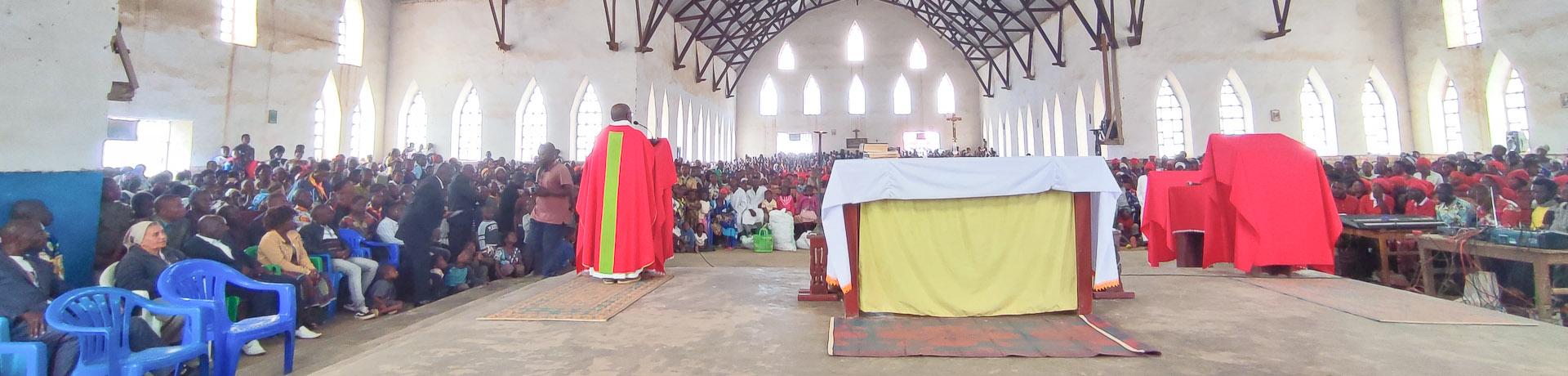
 All of Pope Leo XIV’s preaching for peace and justice, which has become increasingly urgent as his pontificate has progressed, and which had already denounced in the cathedral of Bevanda, [...]
 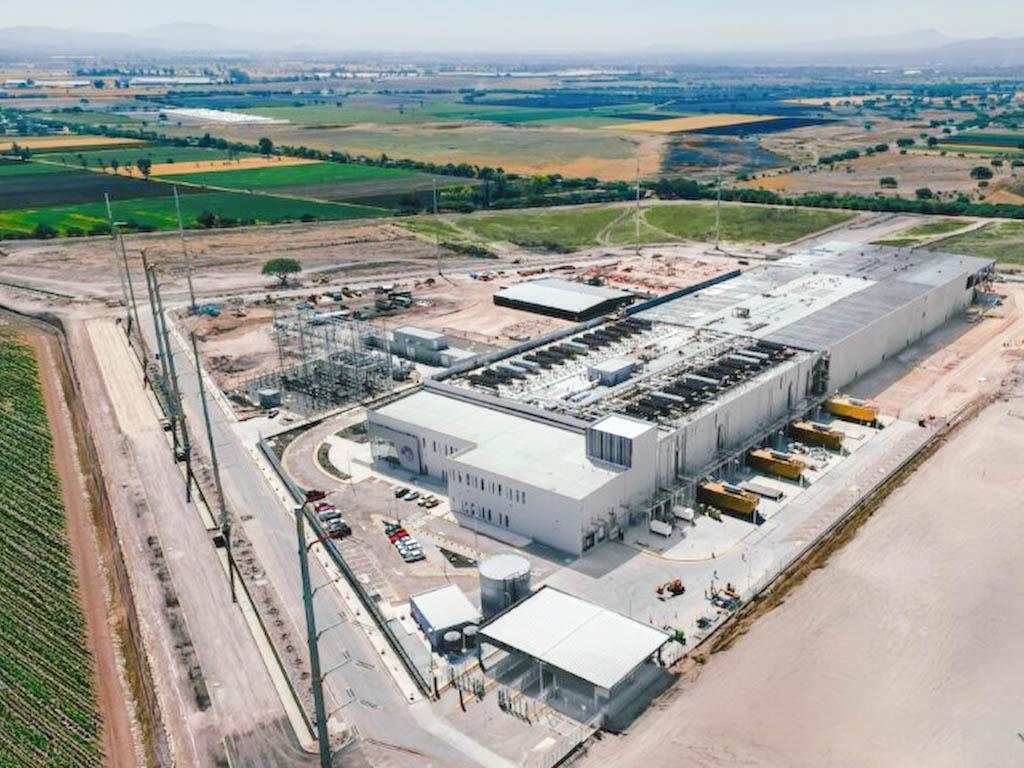 Several of the world's leading investment hubs for artificial intelligence (AI) data centres, including Rio de Janeiro in Brazil and Querétaro in Mexico, are emerging as climate risk [...]
  Artificial intelligence, like ourselves, functions only if it has a heart. It is not true that we are born as a tabula rasa; rather, we are systems of relationships and data. I would, however, like [...]
  Beyond geopolitics, the single most decisive factor in explaining the behaviour of stock markets over the past two to three years has been investors’ bets on the potential of artificial [...]
  Data centres are becoming larger and more powerful. They are the engines driving digital evolution, but they face two major problems. The first is well known: they consume an enormous amount of [...]
 Info
Email: jampypezzi@gmail.com - tel. +39 328 732 6990 / +243 991 457 856
This blog is made in 4 languages: it en fr es






 EDitt | Web Agency
Leave a comment