
Justice, Peace, Integrity
of Creation
Justice, Peace, Integrity
of Creation
By John Paul Pezzi, Mccj

Justice, Peace, Integrity
of Creation
By John Paul Pezzi, Mccj

Justice, Peace, Integrity
of Creation
By John Paul Pezzi, Mccj

Justice, Peace, Integrity
of Creation
By John Paul Pezzi, Mccj
China's electricity grid – The world's largest emitter of the most powerful greenhouse gas
RFI 03.11.2026 Yang Mei Translated by: Jpic-jp.orgLittle known to the general public, sulphur hexafluoride (SF6) has a greenhouse effect 25,000 times more powerful than CO2. Used to insulate power lines, it is present throughout China's electricity grid, which has expanded considerably in recent years. The 'clean' electrification of the world was expected to be at the heart of the COP31 negotiations, which opened on Monday 9 November in Turkey. An interview with a Chinese expert on greenhouse gases.

Recently, the American climate news website Inside Climate News published an article on China's greenhouse gas emissions. Its headline is striking: 'The super-pollutant emitted by China's power grid is making the planet boil'. Journalist Phil McKenna's analysis explains that China's electricity grid conceals a closely guarded secret: although China is the world leader in renewable energy development, it is also the world's largest emitter of the most powerful greenhouse gas on the planet.
Sulphur hexafluoride, abbreviated to SF6, belongs to the family of fluorinated gases and is recognised as a greenhouse gas alongside the others (CO₂, CH₄, N₂O, HFCs, PFCs and NF₃). It is a man-made gas that does not occur naturally. It was synthesised more than a century ago by two French chemists. The gas is colourless, odourless, non-toxic and difficult to ignite.
However, it is also a climate killer: its global warming potential is 25,000 times greater than that of the same quantity of carbon dioxide, and once released into the atmosphere, it remains there for more than 1,000 years.
It is used primarily as an insulating gas in electricity networks, particularly high-voltage systems. It is also used in the semiconductor industry. Its current emissions are negligible, but leaks do occur, and the electrification of the world is increasing its use.
The article calls into question the claim by China's Ministry of Ecology and Environment that the country already has the capacity to recover 90% of used SF6, estimating that the actual recovery rate may be as low as 30%. The author believes that electricity companies could, at modest cost, genuinely raise this rate to around 90%, thereby significantly reducing greenhouse gas emissions.
China's SF6 emissions have doubled in ten years
A study published in 2024 in the scientific journal Nature Communications showed that China's SF6 emissions doubled between 2011 and 2021, as the country's electricity grid underwent a massive expansion. In 2021, expressed in CO2 equivalent, these emissions were comparable to the total emissions of a country such as the Netherlands or Nigeria.
The international team of researchers included members of the prestigious Massachusetts Institute of Technology, Fudan and Peking universities in China, the University of Bristol in the United Kingdom, and the Meteorological Observation Centre of the China Meteorological Administration.
The scientists warned that, without concrete control measures by the Chinese government, progress towards the country's 2060 carbon neutrality target could be jeopardised. 'Any increase in SF6 emissions during this century will effectively alter our planet's radiative budget (the balance between incoming energy from the Sun and outgoing energy from the Earth) far beyond the several-decade time horizon of current climate policies,' said Ronald Prinn, director of the programme at MIT and co-author of the study. 'That is why it is imperative that China and all other countries take immediate action to reduce and ultimately eliminate their SF6 emissions.'
Since 1 January 2026, the European Union has banned the use of fluorinated gases in medium-voltage electricity networks. A new regulation on fluorinated gases came into force in March 2024, with the aim of phasing them out by 2050. The EU also plans to achieve an additional reduction of 40 million tonnes of CO2 equivalent by 2030, and 310 million tonnes by 2050.
The use of SF6 has declined in industrialised countries over the past 30 years, as the gas was already included in the 1997 Kyoto Protocol among the six categories of greenhouse gases whose emissions were to be limited. At the time, however, only developed countries were covered. The governments of the United States, the European Union, the United Kingdom and Japan adopted a series of reduction measures.
China, however, is not included in the list of industrialised countries drawn up by the United Nations Framework Convention on Climate Change (UNFCCC, Annex I) in the 1990s, which requires greenhouse gas emissions to be reduced. It is therefore not subject to the same obligations as European and other industrialised countries.
RFI interviewed Sun Xiaopu by telephone. She is a senior researcher responsible for policies aimed at reducing greenhouse gas emissions other than CO₂ at the Institute for Governance and Sustainable Development (IGSD), in Washington.
Is it generally necessary to strengthen controls on SF6?
A/. Yes, for several reasons. First, if we look only at the tonnage emitted, the amount is not very significant. However, it is an extremely powerful greenhouse gas with a very long atmospheric lifetime. Secondly, it deserves priority attention because reduction measures are concentrated in a single sector: in China, it is mainly used in electricity networks, which makes this a particularly promising area for emissions reduction.
Finally, many institutions are now focusing on electricity grids and energy supply because energy represents an opportunity for development for everyone, as well as an opportunity to strike a balance in that development. As electricity networks expand, the question is how to provide a cleaner grid.
Furthermore, these installations, particularly high-voltage equipment, have a very long service life, often several decades. The gas introduced into the equipment therefore remains stored inside it. If it is not managed effectively, it will leak when the equipment is decommissioned, and there will be no effective way of recovering it. We need to seize this opportunity now, before electricity networks expand on a large scale. The sooner the problem is addressed, the better.
At what stage do SF6 leaks occur? During installation, maintenance or at the end of the equipment's service life?
A/. They need to be managed throughout the entire life cycle, but research data show that emissions are concentrated mainly during maintenance and the removal of equipment, particularly when equipment is decommissioned.
The first requirement is to have a comprehensive emissions monitoring system, and then to cross-check and validate the data against atmospheric observation records. By measuring emissions, we can establish the actual figures: where the gas is being released in each country, each region and each piece of equipment.
For the time being, we can, of course, make rough estimates, but from a research perspective, we cannot oversimplify these data. We must emphasise the importance of emissions monitoring data.
What measures has the US government taken to reduce SF6 emissions?
A/. At federal level, the new administration has brought about a setback. However, California continues to impose regulatory limits on SF6 emission rates.
It also adopts a phased approach based on voltage levels, although its voltage thresholds differ from those of the EU, as does its timetable. I consider this entirely reasonable, because each country and region must establish its own timetable according to the circumstances of its industrial sectors, its needs, its climate and its topography, and above all, the maturity of its technologies.
The next step is to proceed according to voltage levels: medium- and low-voltage equipment is replaced as a priority, since the technology is more mature, while the replacement of high- and extra-high-voltage equipment comes later.
California's regulations are very effective: penalties accumulate for every day that an infringement continues. China's environmental law operates on the same principle. This provides a very strong deterrent for companies and makes the cost of non-compliance extremely high. In fact, many countries and regions have adopted measures of this kind.
In terms of volume, China's emissions account for more than half of those of all the countries in the world. The Chinese government has now included SF6 emissions reduction in its 15th Five-Year Plan. Does this plan provide for specific strategies, a timetable, or incentive or punitive measures?
A/. Yes. First, the methodology of the voluntary greenhouse gas emissions reduction system, which targets electrical equipment operating at voltages above 66 kV, requires the recycling, purification and reuse of SF6 during the maintenance and decommissioning of such equipment. The aim is to use economic incentives to encourage the adoption and use of this technology.
At the same time, the 15th Five-Year Plan has set an objective of strengthening the capacity to reduce greenhouse gas emissions other than CO₂, such as SF6.
Several measures have been proposed, including the development and implementation of an SF6 control plan. In recent years, several measures to reduce greenhouse gases other than CO₂ in China have taken the form of such plans. Examples include the methane emissions reduction plan for 2023 and the industrial oxygen and nitrogen oxide emissions reduction plan for 2025.
I therefore hope that a comprehensive national governance and supervisory system for SF6 reduction can be established, bringing all these different components into a coherent framework.
Inside Climate News questions the claim by China's Ministry of Ecology and Environment that Chinese electricity companies are able to recycle 90% of used SF6, estimating that the actual rate is much lower, at only around 30%. The author believes that companies could raise this rate to 90% at modest cost, thereby significantly reducing emissions. In your view, why are Chinese electricity companies not stepping up their efforts to recycle sulphur hexafluoride?
A/. I acknowledge that the emissions reduction benefits of SF6 recycling are very substantial, and that it is extremely important to raise the question of whether recovery is necessary. However, for companies, the cost of recycling and purification is considerably higher than the price of new gas.
Furthermore, the centralised recovery method adopted in China requires used gas to be transported from different locations to another site for treatment, which raises safety concerns during transport.
There is also the question of the quality of the purified gas when it is reused. If a problem arises and damages high-voltage electrical equipment, the cost to the company could be enormous.
Unless these aspects are taken into account, it will be difficult to translate the desired emissions reductions into reality and prevent further SF6 leaks in the decades ahead. There are many technical issues involved.
If there were internationally harmonised rules, this would also help other countries in the Global South, for example in Africa, where many data centres will need to be built. It is difficult to imagine how SF6 emissions could be avoided without a clean electricity grid.
Is it technically possible to replace this fluorinated gas with other materials?
A/. Yes, alternative technologies already exist. The main trend is to replace it with vacuum technology or environmentally friendly gases.
The central theme of the 31st UN Climate Conference, in November 2026, was how to build an efficient, safe and low-carbon electricity grid. Electricity networks will continue to expand, and the use of this insulating gas will increase. Shouldn't we start promoting these alternatives before emissions rise?
A/. This is a crucial issue, and now is the time to act. If the sector has the necessary technical capacity, the sooner it takes part in drawing up international rules and standards and securing mutual recognition of them, the more far-sighted that approach will be.
If we fail to act now, the effects will be felt for decades, just as with air conditioners: an air conditioner is used for ten to fifteen years, and the refrigerant put into it today will eventually be released. We must therefore replace it now and gradually reduce its use.
See: Pourquoi le réseau électrique chinois est le premier émetteur du plus puissant gaz à effet de serre
Photo: Chinese workers installing electricity infrastructure near the China World Trade Centre tower in Beijing
 COP31 concluded without the adoption of the Antalya Pact, the comprehensive political text proposed by the summit's presidencies. Disagreements over fossil fuels, climate finance and the ambition [...]
 Debt for Climate describes itself as a “movement of movements”, led by the Global South and active in 25 countries. It calls for the total and unconditional cancellation of the financial [...]
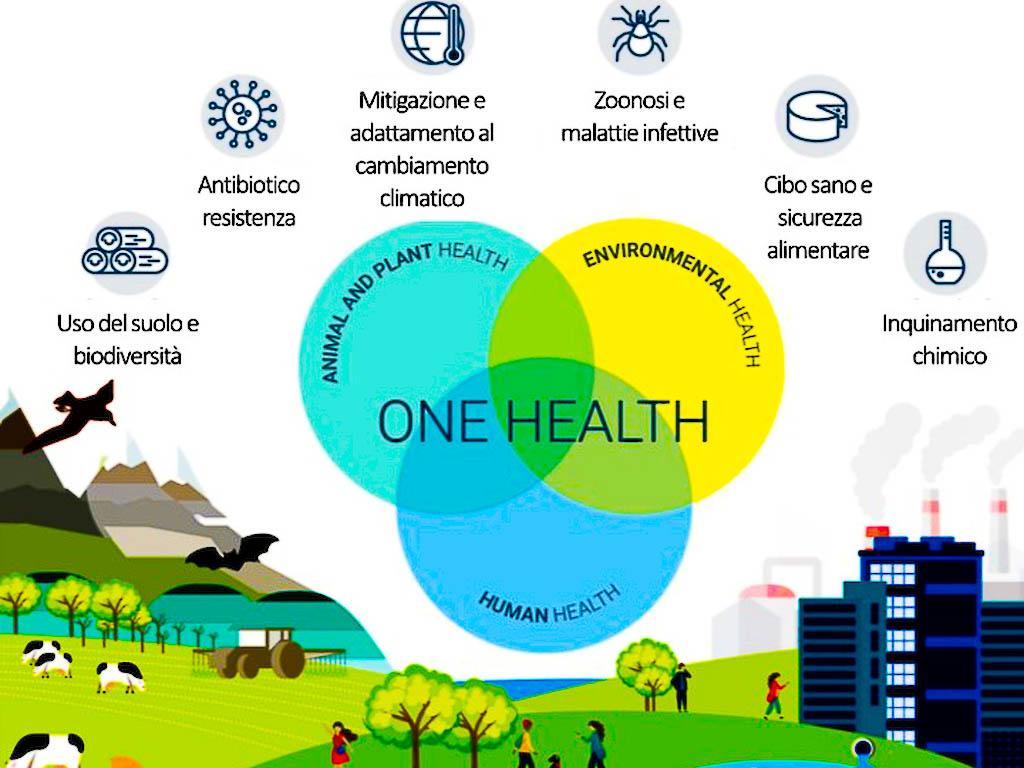 The conception of folly expressed by Erasmus partly diminishes the role of rationality in human existence, provided that one “does not consider anything human as alien to oneself.” But [...]
 The year 2024, the hottest ever recorded worldwide, marked a crucial stage in the climate crisis. It was the first calendar year in which the global average temperature rose more than 1.5°C above [...]
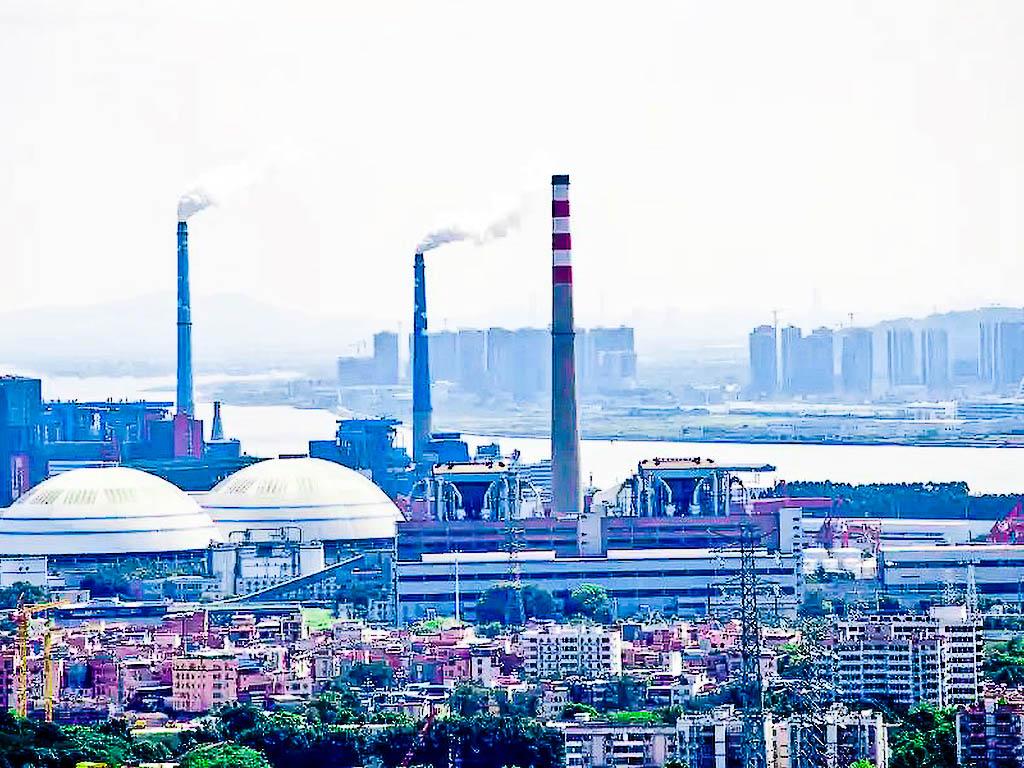 It is Saturday, 13 November 2021 and, with a one-day delay on the agenda, the 26th UN Climate Change Conference closes with the Glasgow Pact. A document that formally sets down the commitment to [...]
 The richest 1% of humanity has already consumed its 2025 carbon budget, according to a new report by the NGO Oxfam. The carbon budget refers to the amount of climate-altering gases humanity as a [...]
 “Over the past 30 years, the world's forest area has shrunk by more than 420 million hectares. At a rate of about 4.7 million hectares per year since 2010.” The capacity of forests in [...]
 Global warming is nothing new, but in 2024, the tone is more serious than ever in this highly alarming report: The African continent is sinking, both climatically and economically, and the [...]
 But we didn't believe it. We didn't listen. We have not acted, or have acted only marginally, and we have entered a serious, unimaginable and irreversible phase of our human presence on the [...]
 Who pays for the damage caused by the climate crisis? This is the question that inspired a groundbreaking study just published in the peer-reviewed journal One Earth. A question that is also [...]
Info
Email: jampypezzi@gmail.com - tel. +39 328 732 6990 / +243 991 457 856
This blog is made in 4 languages: it en fr es






 EDitt | Web Agency
Leave a comment