Justice, Peace, Integrity
of Creation
Justice, Peace, Integrity
of Creation
By John Paul Pezzi, Mccj
Justice, Peace, Integrity
of Creation
By John Paul Pezzi, Mccj
Justice, Peace, Integrity
of Creation
By John Paul Pezzi, Mccj

Justice, Peace, Integrity
of Creation
By John Paul Pezzi, Mccj
The history of humankind is a history of migrations
Ethic 14.03.2026 Sergio del Molino Translated by: Jpic-jp.orgWhoever clings to a pure past is either a cynic or a naïve person who fails to understand that their life is made up of the pebbles and grains of sand carried in the shoes of millions of wanderers along the road. A reflection from a Spanish person.
“Follow the money,” the investigators in the series The Wire used to say, drawing inspiration from the plot of All the President’s Men. Follow the trail of money and you will reach the mafia boss. That is how tax inspectors and sociologists proceed, and it is how we ought to proceed in matters of identity. We lose ourselves in ontological and metaphysical debates about national being, about what it means to be a foreigner or what constitutes a country, yet the confusion quickly clears up if we follow the money. In essence, that is what Karl Marx told Hegel: forget about phenomenology and follow the money. Only then will you understand how the world works.
By following the money, the roots of Basque nationalism become clear, for instance. Aranism —political and cultural doctrine developed by Sabino Arana (1865-1903) in defence of Basque cultural identity — at the end of the nineteenth century was obsessed with ethnic purity, which it believed to be threatened by the massive arrival of peasants from the central plateau and from southern Spain who came to work in the steel mills. Alarmed by the influx of so many poor labourers covered in soot, the Aranists entrenched themselves in a sense of caste — from which the adjective castizo derives — justified by the supposed purity of blood: The Basques were an immaculate people, impermeable to the Latin of the Romans. Sabino Arana was not the first to invoke this ancestral virginity. The lords of Biscay had already shaped the myth in the age of the Counter-Reformation. When the Inquisition was pursuing heretics and converts throughout Spain, the Biscayan nobles claimed that neither Moors nor Jews had ever reached their lands and boasted of being the only “Old Christians” in a country of newcomers and mixed lineages.
It was not religious fervour that motivated them but money. The certificate of purity of blood was an indispensable document for taking part in the plunder of conquest. Neither encomiendas nor sinecures in the lands seized from the Moors or in the Indies were granted to individuals of doubtful lineage. The Christian purity of the Biscayans guaranteed them a monopoly over imperial administration; hence the place names of the Americas are filled with Basque-sounding names and many of the Creoles who led the independence of the American republics — and whose descendants still occupy parliamentary seats and presidencies — bore more than eight Basque surnames.
Anyone who wishes to understand why identity is so important need not dig into the feelings of poets or be deceived by the nostalgia of emigrants. It is enough to follow the silver that travelled down the Río de la Plata from Potosí to Buenos Aires and was then loaded onto galleons bound for Cádiz. Dodging English corsairs and tropical storms, the expedition arrived safely at the ports of Sabino Arana and at the green, red and white colours of the ikurriña, the official flag of the Basques. Today, as then, the aim is to keep the gold and not share it with the neighbouring tribe, who are accused of being vile and impure — in short, unworthy of prosperity.
Purity is a myth used to justify conquests or to preserve privileges perceived as threatened. Consolidating such myths requires considerable coercion and propaganda, for everyday experience tells us that we are made up of millions of mixtures. Pure forms exist only in the abstractions of geometry and in the lofty heights of theory. To live is to live together. And to live together is to become stained, to allow oneself to be influenced by the other. Endogamy is the surest path to extinction and intellectual decline.
There is no society that is not the result of hybridisations. There is no language — not even the ancient Basque tongue — that is not made up of others that preceded it, surrounded it, degraded it or displaced it. In Spain we speak a Latin into which Iberian and Celtic words were embedded (balsa, vega), already well worn by Etruscan (anchor, onion) and Greek (theatre, bodega). It was later impregnated with the primitive Germanic spoken by the Visigoths (war, clothing), with Basque (left, beret, scrap metal, cod) and, of course, with Arabic (almohada, pillow, half of Spain’s place names, thousands of words including hopefully from ojalá), but also with Nahuatl (chocolate, tomato, chewing gum), Maya (patatús, campechano) and Quechua (cancha, chiripa, china in the sense of “little stone”), among many other languages with which Castilian has copulated in a perpetual linguistic orgy. We speak with very ancient words that were already heard in Iberia before the Phoenicians, but also with many others left behind by the conquered, the conquerors and all the wanderers who moved back and forth for a thousand reasons.
The same happens with food: every cuisine is fusion. When we eat a traditional stew, we are tasting the broth of Jewish adafina - traditional stew of Sephardic Jewish cuisine, prepared especially by Jews of the Iberian Peninsula before the expulsion of 1492-, the Christian olla podrida and Maghrebi couscous. Without the Americas, the broth would not have that red tint of paprika, nor would the “chorizo of my village”, celebrated with such chauvinistic pride, even exist. Neither the tomatoes of Barbastro nor the potatoes of Galicia actually come from those places, just as Argentine asado is made from European cattle that emigrated there. There is not a single traditional dish that is not the result of invasions and crossings of other traditions which themselves are mixtures of many more. Are sushi and kebab not already part of Spanish gastronomy, as everyday as gazpacho? There was a time when gazpacho itself was exotic cuisine in Burgos. In a hundred years, only scholars will remember that sushi originated in Japan.
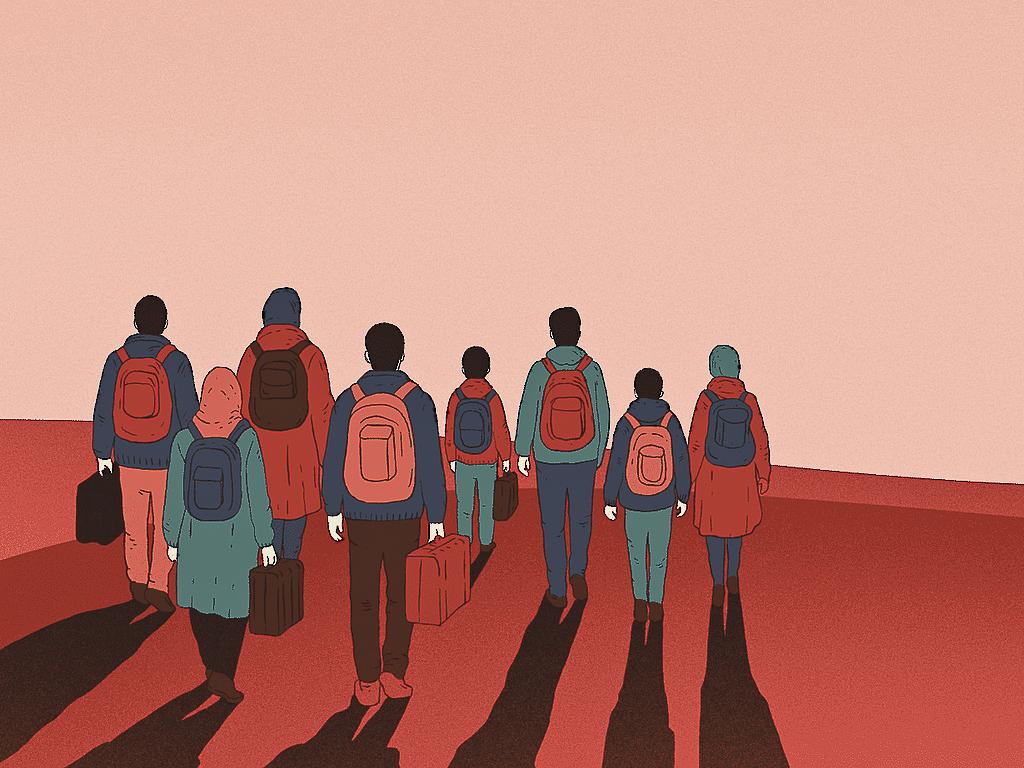
Against the national image of a static and perennial community persisting century after century, identical to itself, we must set the idea of a dynamic world — an unstoppable Foucault pendulum of masses moving back and forth, challenging the myth of sedentary life. The fact that Homo sapiens tilled the soil and founded cities during the period we call the Neolithic — the origin of modern states — does not mean that individuals abandoned their nomadic habits. We have never stopped moving from one place to another with our belongings in tow. Sometimes as invaders and settlers. At other times as poor immigrants seeking to prosper within the richer tribe, often by washing its dishes and cleaning its latrines. Always as wanderers searching for a place in the world and rarely finding it — or finding it only for a brief time, until their children or grandchildren set off again.
Whoever clings to a pure past is either a cynic — like the lords of Biscay in the sixteenth century who wished to keep the silver of the Indies for themselves — or a naïve person who fails to understand that their life is made from the pebbles and sand carried in the shoes of millions of wanderers. And one does not need to adopt a global or pan-historical perspective to see it.
Alberto Núñez Feijóo owes his leadership of the People’s Party to his previous role as president of the Xunta of Galicia. In that capacity he inherited the legacy of a people shaped by emigration, to the point that a metonymy emerged: Spaniards in Argentina and Uruguay are often called “Galicians”. Feijóo has campaigned in Buenos Aires and approved subsidies to maintain the Galician houses in Havana or Zurich, sending folklore groups, poets and pulpeiras – those women who specialize in preparing and selling octopus dishes - there to soothe their morriña – the bittersweet nostalgia. In the biography of all Galicians lives the memory of mass emigration that still marks the urban landscape. One need only look at the schools built by indianos in the villages, paid for with emigrants’ money, or stroll through the gardens of Laxe in Vigo, where fashionable restaurants now occupy the premises of the old shipping companies that carried poor Galicians overseas. The ticket offices and fare boards are still preserved. Yet as a national leader the former president of Galicia promotes policies of re-tribalisation: while celebrating the legacy of Galician emigrants, he seeks to close the door to migrants who today aspire to live in Galicia and the rest of Spain.
Religions can be instruments of tribalism, but both Christianity and Islam began as ecumenical revolutions. The evangelical commandment to welcome those who flee and the proverbial Arab hospitality reveal an awareness that the world is always in motion and that tribal entrenchment runs counter to communal life and virtue. Migrants are welcomed because we ourselves may become migrants. To forget this is to surrender to the politics of fear, the first step towards turning foreigners into monsters.
Before becoming fanatics who massacred one another, the early Christian and Arab revolutionaries understood that cultural differences are superficial accidents easily crossed. Literature and art attain universality because through them we recognise one another beyond any trivial tribal distinction. There are no gods, languages, kings or oceans large enough to prevent us from understanding that stranger who resembles us so closely. He weeps for the same reasons. Perhaps he does not laugh at the same jokes — humour depends on context and immediacy — but he understands our sorrows and pleasures because human beings are made to understand one another at a glance.
In The Odyssey, many hecatombs are celebrated. If the translation is vivid enough, the reader easily imagines the banquets: they sacrifice oxen or lambs, roast the legs and cut them into small pieces to eat with unleavened bread and vegetables. In other words, they eat a kebab — the very meal that Jesus Christ shared with his apostles at the Last Supper.
When the soldiers of Hernán Cortés entered the square of Tenochtitlán, Bernal Díaz del Castillo described women crouching as they prepared maize cakes filled with meat and vegetables he could not identify but which clearly resemble tacos: today’s tourists encounter the descendants of those women selling very similar tacos in Mexico City’s Zócalo.
Once the initial surprise fades, by the second bite we recognise ourselves in other people’s food, because all cuisines are combinations of proteins, vegetables and carbohydrates far less different than they appear. An anchovy pizza, a taco al pastor, a salmon crêpe, a pork empanada, an English cucumber sandwich, a gyros with potatoes or a bao filled with tempura octopus are, at heart, the same thing, just as cultures are variations on a single human theme. That is why the Japanese also weep when listening to Bach’s Chaconne, as though they were eighteenth-century German Lutherans.
To fear the dissolution of one’s own culture in others is to fear humanity itself and to deceive oneself into believing there is something irreducibly original in our language or our fleeting customs, when they are nothing more than borrowings and reheated fragments of many others — leaves and shapes carried along by travellers, nothing more.
To embrace ecumenism means accepting our impurity and our hybrid nature. Renouncing illusions of nobility is a necessary imperative if the complex and open societies of Europe are to continue changing as they always have, sheltering within a democratic ideal that mosaic whose tesserae will inevitably fuse together until the seams disappear.
It will happen whether xenophobes like it or not, and it will be easier for everyone if they accept it from the outset rather than entrenching themselves, like Sabino Arana, to protect their little sandcastle from a rising tide that never ceases — a tide against which the only possible response is to swim.Haut du formulaire
Ilustration: Óscar Gutiérrez
 The idea of emptying Gaza of its population remains on the table in Israeli politics and will form part of the programme of a future far-right government. It has been put forward once again, with [...]
 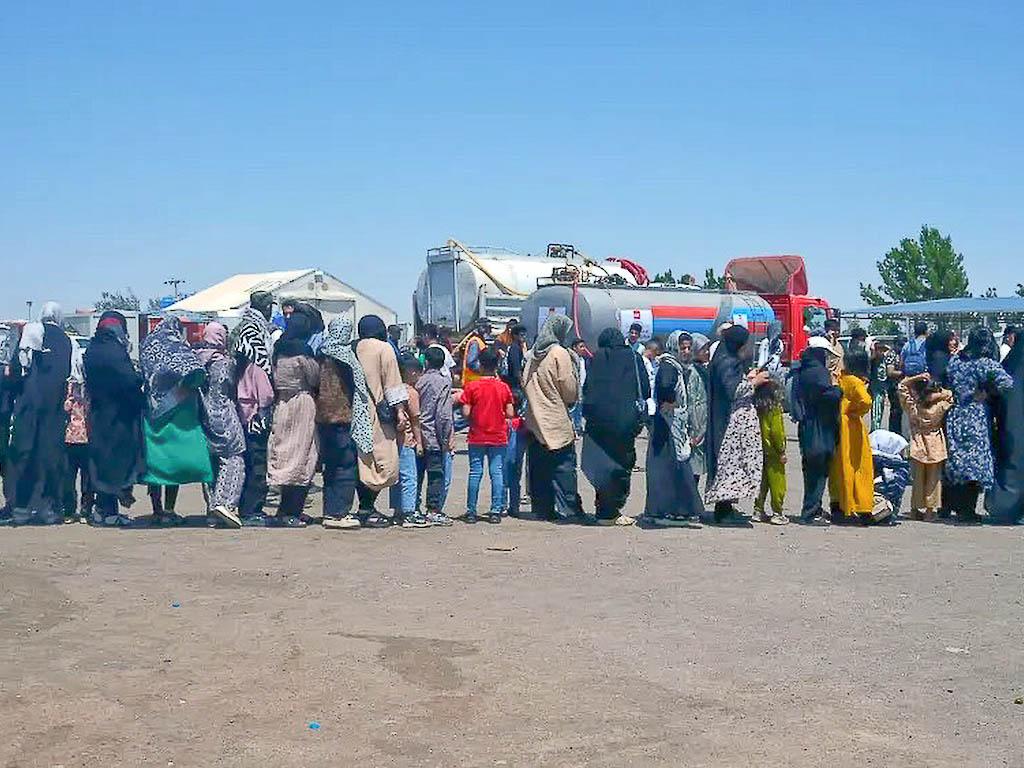 Afghan expulsions are ramping up in Iran. Over 256,000 Afghans have been deported since early June, and according to the International Organization for Migration (IOM), on June 25 alone, more than [...]
  More than a third of Africans want to move permanently to live elsewhere, according to a study by the US-based analysis and consulting company Gallup based on a 2023 survey. A result that marks a new [...]
 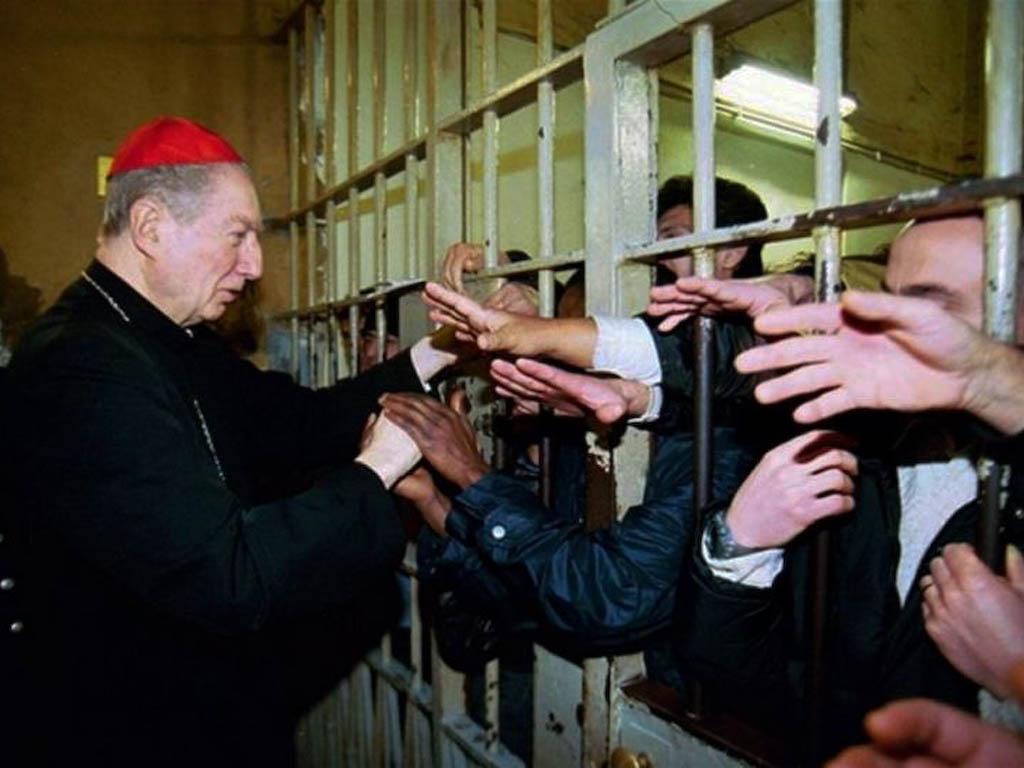 When it is said that we do not do enough for immigrants, it is always talking about governments and people of the countries of arrival. But when immigrants become “hostages” of [...]
 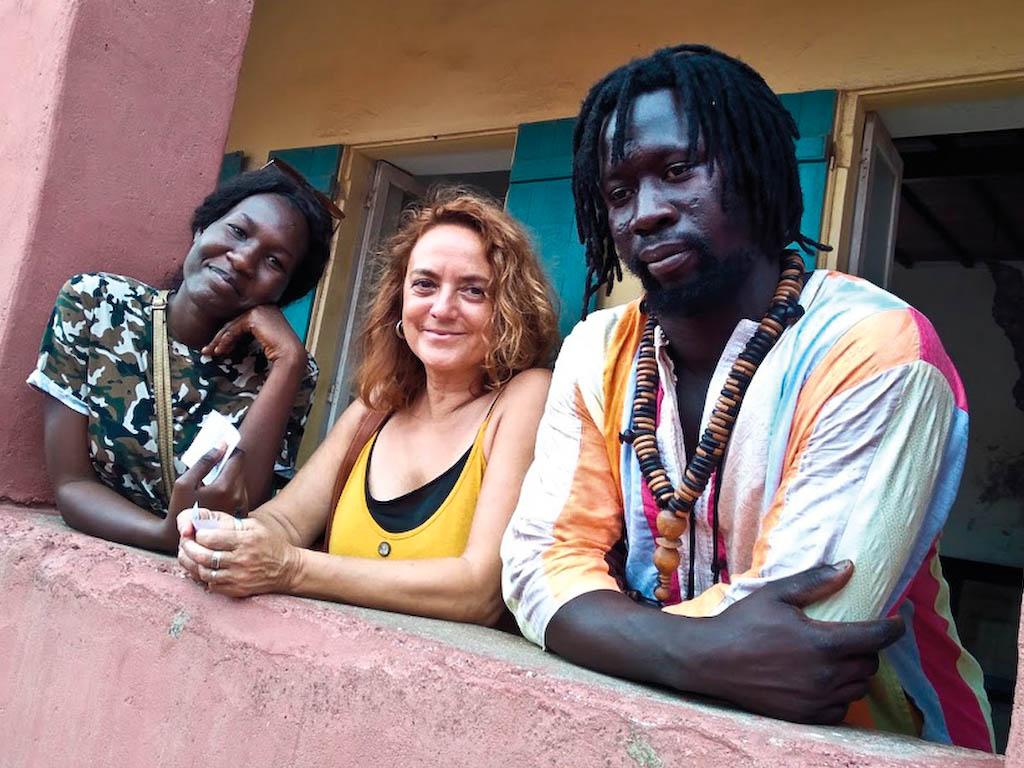 Not even this extreme situation has been able to put doors on the sea, to contain those who fight with the only thing they have, with their skin, hand to hand against the sea. The sea that fed them, [...]
 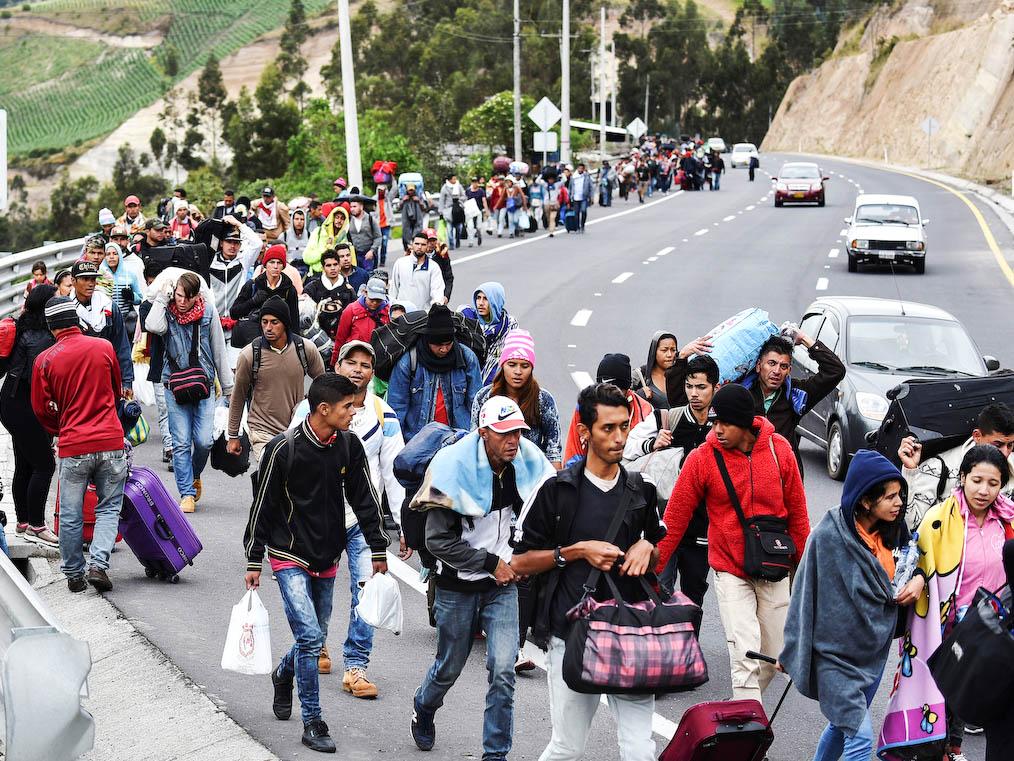 According to the Response for Venezuelans, which is a joint International Organization for Migration and UNHCR platform, the total number of migrants leaving Venezuela reached about 4.6 [...]
 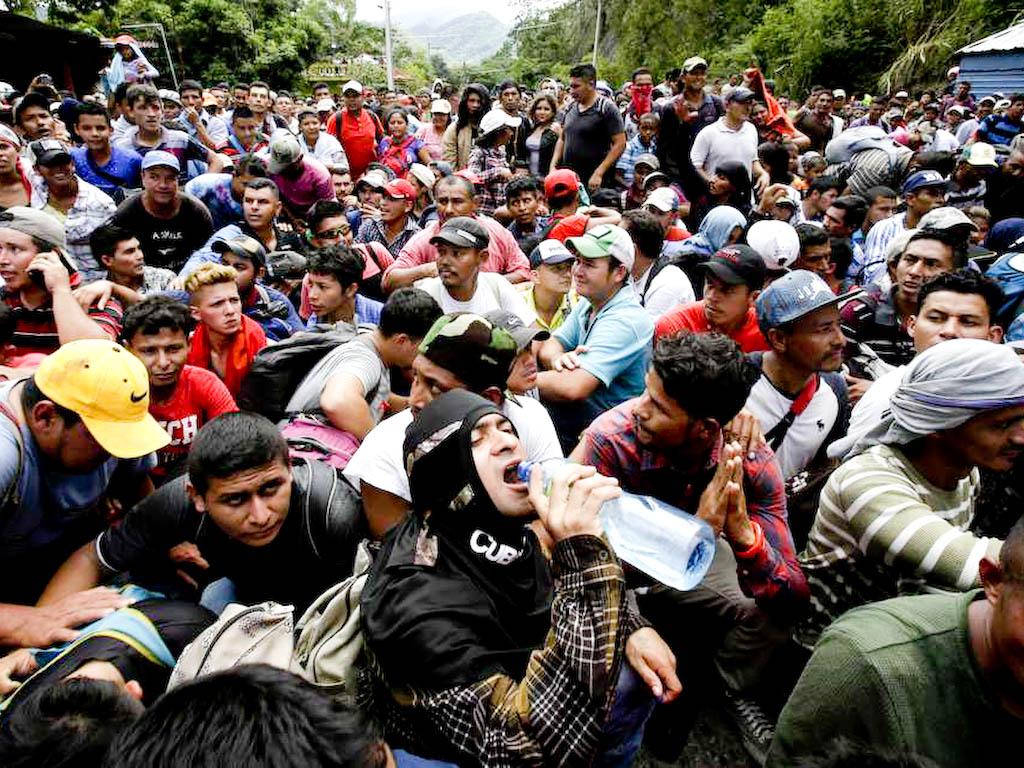 “Migration must be a voluntary act, and not a forced act. Poverty, hunger, climate change, insecurity - that is, severe underdevelopment - create a perfect storm in which thousands of people [...]
 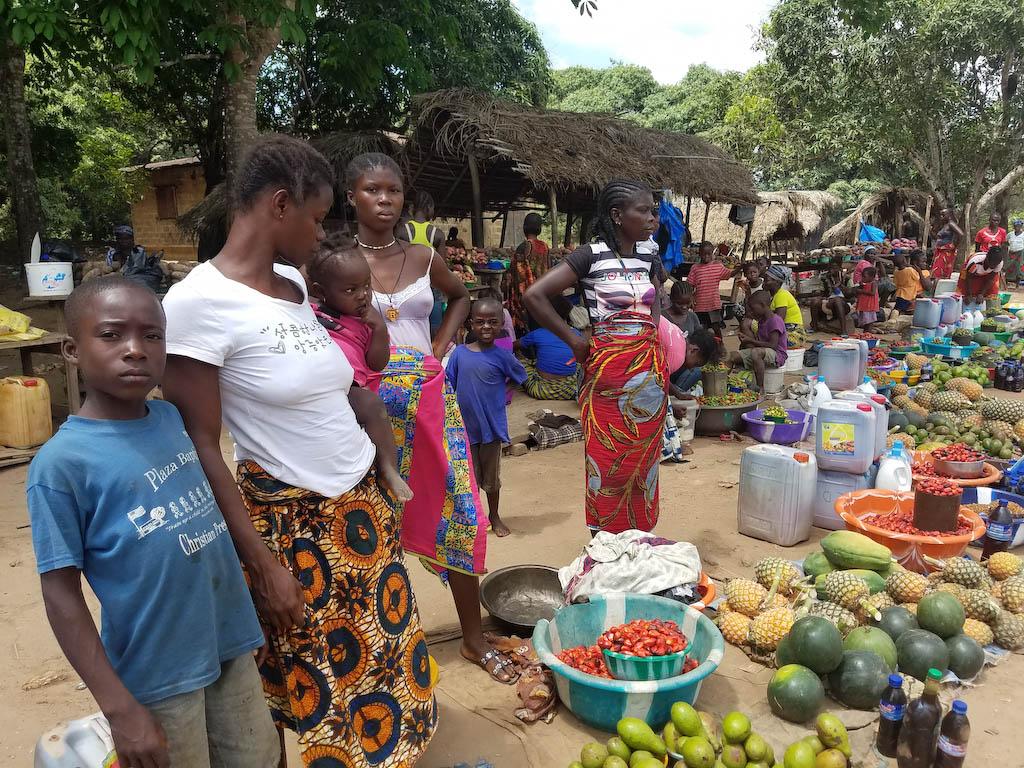 Pope Francis during the SFMM (Social Forum on Migrations - Mexico November 2018), sent a clear message: the refugees and the migrants are persons and no one has the right to think for them, judge [...]
  The high-level meeting was marked from the start by an unprecedented event: the absence of at least seven member states that canceled their participation almost at the last minute. The international [...]
  Having experienced detention first-hand, 26-year-old Sallah set up, Youths Against Irregular Migration, (YAIM) using the airwaves in his home country, as well as social media and road shows, to try [...]
 Info
Email: jampypezzi@gmail.com - tel. +39 328 732 6990 / +243 991 457 856
This blog is made in 4 languages: it en fr es




 EDitt | Web Agency
Leave a comment