Justice, Peace, Integrity
of Creation
Justice, Peace, Integrity
of Creation
By John Paul Pezzi, Mccj
Justice, Peace, Integrity
of Creation
By John Paul Pezzi, Mccj
Justice, Peace, Integrity
of Creation
By John Paul Pezzi, Mccj
Justice, Peace, Integrity
of Creation
By John Paul Pezzi, Mccj
The Social Question: A Test of Democracy and of the Heart of the Church
Settimana News 24.02.2026 Heiner Wilmer Translated by: Jpic-jp.orgIn 1967, Paul VI established the “Justice and Peace” Commission through the motuproprioCatholicam Christi Ecclesiam of January 6th 1967. This body was later elevated to the rank of Pontifical Council for Justice and Peace by Pope John Paul II and subsequently incorporated, at the will of Pope Francis, into the Dicastery for Promoting Integral Human Development. Paul VI entrusted this body with a prophetic function, declaring at the time of its inauguration: “This Commission must be like the rooster atop the bell tower, indicating the direction from which the wind blows.”
With this image, Paul VI meant that the body should remain attentive to the signs of the times, interpret the social, political and economic transformations of the world, and help the Church to orient itself and respond with clarity to the challenges of justice and peace. It is therefore appropriate to revisit the address delivered by Bishop Heiner Wilmer of Hildesheim, elected as the new President of the German Bishops’ Conference, during the closing session of the conference “Europe’s Solitude: The Churches and the Union”, devoted to several themes concerning Europe.
*****
When today we speak of the social question, we are speaking of the very heart of faith. For wherever human dignity is threatened, where people are exploited, forgotten or neglected, it is there that it is decided whether the Gospel is merely proclaimed or truly lived.
The German Bishops’ Conference expressed it in these terms (1980): “The social question is a question of faith. It concerns the human being as a creature of God and society as a place of mutual responsibility.” The social question, therefore, is not a secondary issue. It is central; it is the concrete test of our belief in God made man.
Origins: from Leo XIII to Leo XIV
The social question did not arise in academic circles, but in the streets of the nineteenth century, in factories, in workers’ homes, in their toil and in their misery.
Pope Leo XIII witnessed this suffering and in 1891 wrote the encyclical Rerum novarum, a text that changed history. He affirmed that the human person can never be reduced to a mere instrument of the economy or of profit. Each person possesses a dignity that no one can take away. He spoke of a just wage, of solidarity, and of the responsibility of the State for the common good.
In doing so, Leo XIII laid the foundations of the Church’s social doctrine. Upon this basis, an entire tradition has developed:
- Quadragesimo anno (1931, Pius XI)
- Mater et magistra (1961, John XXIII)
- Populorum progressio (1967, Paul VI)
- Laborem exercens (1981, John Paul II)
- Caritas in veritate (2009, Benedict XVI)
- Fratelli tutti (2020, Pope Francis)
Pope Francis spoke of a “culture of fraternity” and invited us to build an economy of life, not of exclusion. This line, which runs from Leo XIII to Francis, today finds spiritual continuity in Pope Leo XIV. He places at the centre the interior dimension of the social question: the vulnerability of the human person, the spirituality of responsibility, and the link between spiritual life and social life.
Leo XIII defended workers, Francis global justice, and Leo XIV now calls us to a mysticism of responsibility: a way of life that transforms the world socially because it first understands it spiritually.
Thus a great arc is drawn: from the factory of the nineteenth century to the spiritual consciousness of twenty-first-century Europe.
The social question today: Europe needs a soul
Europe stands at a decisive moment. We have peace, we have prosperity, we have democracy, yet we sense that something has fractured. The German Bishops’ Conference writes regarding Europe – gestalten und verantworten (2014): “Europe needs more than institutions and markets. It needs a soul. This soul arises from respect for human dignity, openness to God, and awareness of mutual responsibility.”
Europe must not be merely an administrative community, but a community of values. Democracy does not live by procedures alone, but by deep convictions.
Pope Benedict XVI stated at the Bundestag (2011): “Democracy does not live solely by majorities, but by criteria that are greater than man himself.” And I would add: a democracy without God becomes totalitarian. A democracy without transcendence, without openness to heaven, becomes radical because it loses its measure. Yet the opposite is also true: a democracy can instrumentalise God. We have seen, in Europe and in the United States, how religious symbols have been misused, how the cross has become a sign of power rather than of peace.
The German Bishops’ Conference warns (2014): “Where religion becomes an instrument of power, it loses its peace. But where it places itself in the responsibility of freedom, it becomes a blessing for the community.”
Europe therefore needs a new spiritual balance: God as the source of freedom, not as an instrument of power.
A new attitude: humility and listening
As a Church, we must learn a new way of speaking and listening. There was a time when we were convinced that we knew what was right. We told people what they should or should not do. We instructed politicians on how they ought to act—sometimes with zeal, at other times with presumption.
And yes, there have been moments when the Church drew too close to political power, thereby losing its prophetic freedom. Today we need something else: humility, sobriety, and attentive listening. Pope Francis and Pope Leo XIV both insist: synodality is not a structural reform, but an attitude of the heart.
The German Bishops’ Conference speaks of a “culture of listening” (2023): “The Church is at the service of the world, not above it. It is called to translate the Gospel into the concrete questions of society, respecting the freedom of all.” For this reason, we must ask ourselves two questions: what do people need today—in their loneliness, in their fears, in their hopes? And what does the Gospel ask of us at this time?
From the encounter between these two questions arises the mission for the world—not from power, not from preaching, but from relationship.
From knowing to asking: a spiritual process
For a long time, we believed we knew all too well what was good for others. We explained it, preached it, sometimes imposed it. But we asked too little.
Today is the time for questions. And this is not a sign of weakness, but of maturity.
Democracy is nourished by dialogue. When voices cease to speak to one another, society weakens. The Church can help rediscover listening as a virtue that safeguards coexistence.
A Church that listens learns. And a Church that learns becomes credible.
The social question: a spiritual question
At its core, the social question is not economic, but spiritual.
What image do we have of the human person? The German Bishops’ Conference affirms in GemeinsameVerantwortungfüreinegerechteGesellschaft (1980): “Human dignity arises from being a creature. From this dignity flow rights, but also duties: mutual responsibility, solidarity with the weak, and the defence of life at every stage.” This means that social policy is theology. It is faith made flesh. Those who believe in God cannot ignore the human person.
Pope Leo XIV expressed it in a speech (2025): “The justice of faith does not consist in being right, but in creating relationships.” This is the heart of social doctrine today: to create relationships—between rich and poor, between humanity and nature, between heaven and earth.
Conclusion: Europe needs soul, truth and listening
The social question remains the decisive test of the Gospel.
Europe needs a Church that listens, not one that dominates. A Church that is humble, yet courageous. It needs Christians who assume responsibility—not to command, but to unite.
And it needs a democracy that does not lose its soul—remaining open to heaven, to God, and to the mystery of the human person.
The German Bishops’ Conference affirms (2014): “Europe will have a future only if it remains aware of its spiritual roots and recognises in them the foundation of its freedom.” Therefore, I say: a democracy without God loses its measure. A Church without humility loses its credibility. But where we know how to listen—to people, to the Spirit, to God—there the future is born. Then faith becomes responsibility, responsibility becomes justice, and justice becomes peace.
See, Questione sociale: prova della democrazia e del cuore della Chiesa
 Among the indirect lessons, the first is the failure of the major journalism media and the social networks to forecast victory. This is because nowadays the mass media speak only to their kindred [...]
  Through representatives in New York names and e-mails were obtained. The aim is to share a new initiative that would like to be implemented from the non government offices of the United Nations in [...]
  This week I will join our community in the parish of Saint Lucy in Newark, from where it will be easy for me to collaborate with the work of our NGOs at the United Nations.
 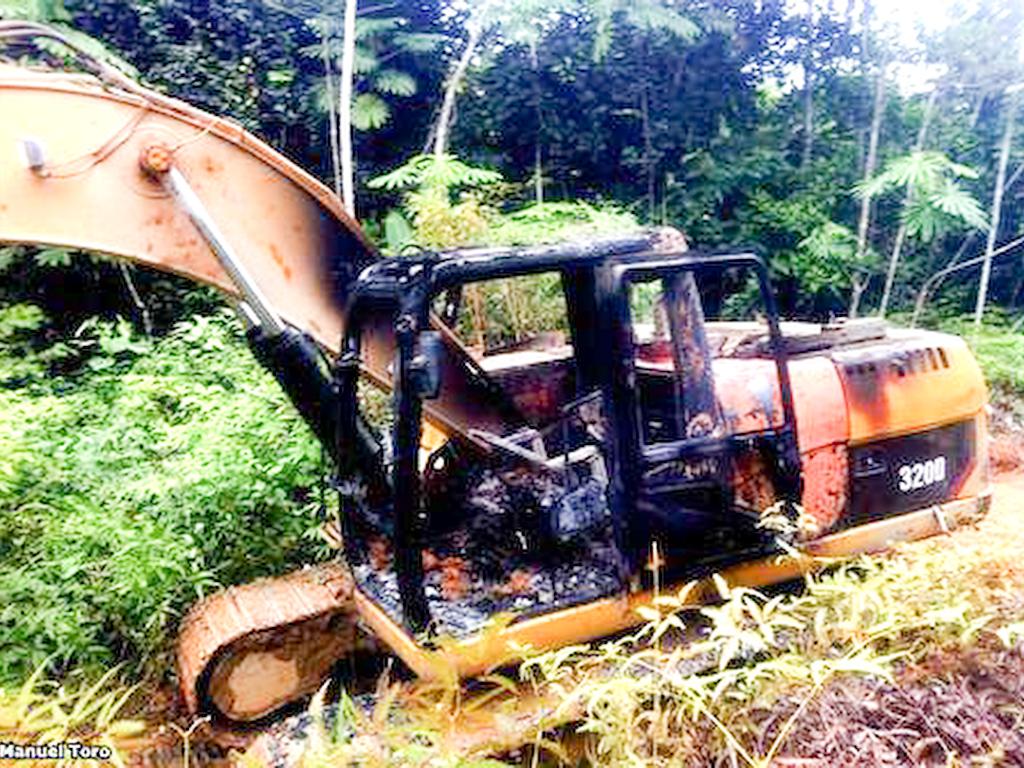 All of this is framed within questionable politics and violence, infiltrations across borders that imply the possibility of drugs. The news exploded in the most popular Ecuadorian newspapers last May [...]
 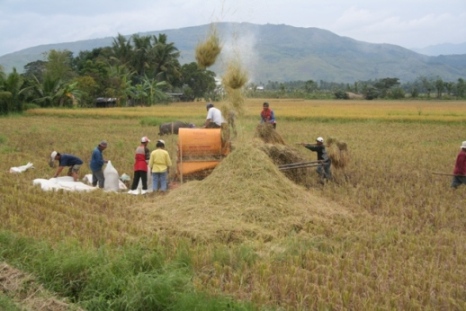 Perhaps, in no other country as in the Philippines is the dichotomy between justice and charity so evident – and scandalous, too, considering its often-proclaimed Christianity.
 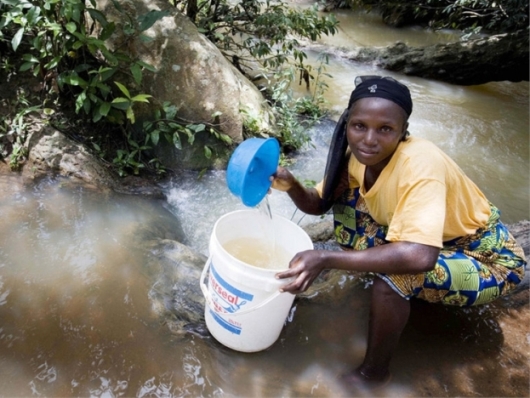 The USG-UISG JPIC Commission sends a questionnaire to reflect together on the influence and impact, importance and limits for the 1991 Synod and its document Justice in the World on Consecrated Life.
  We're not in a hurry, we have plenty of time but my taxi-driver rushes at breakneck speed, apparently not caring at all about the traffic which was already at this early hour of the morning clogging [...]
 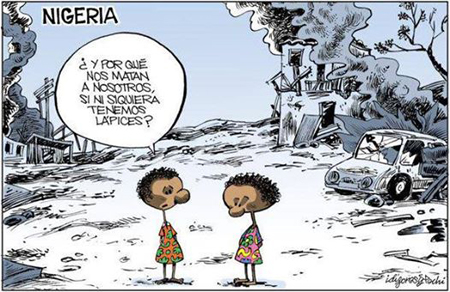 People were protesting against terrorism in the streets of Paris, while militants and the regular army were committing massacres in Nigeria, Pakistan, Syria and Iraq, and the terrorists of Boko Haram [...]
 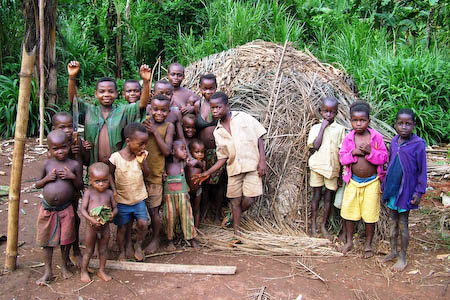 A few years ago, my brother and I took a trip through western Sumatra. It was my first time in a developing country, and the island we spent most of our time had been devastated by an earthquake a [...]
 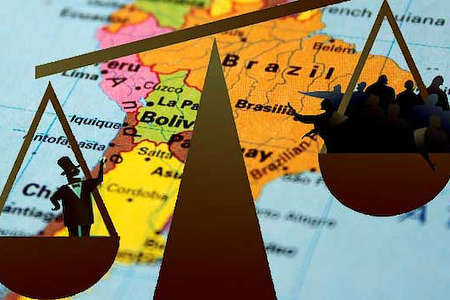 Justice in the World
(World Synod of Catholic Bishops - 1971)
Introduction
Gathered from the whole world, in communion with all who believe in Christ and with the entire human family, and o [...]
Justice in the World
(World Synod of Catholic Bishops - 1971)
Introduction
Gathered from the whole world, in communion with all who believe in Christ and with the entire human family, and o [...] Info
Email: jampypezzi@gmail.com - tel. +39 328 732 6990 / +243 991 457 856
This blog is made in 4 languages: it en fr es

 EDitt | Web Agency
Leave a comment