Justice, Peace, Integrity
of Creation
Justice, Peace, Integrity
of Creation
By John Paul Pezzi, Mccj

Justice, Peace, Integrity
of Creation
By John Paul Pezzi, Mccj

Justice, Peace, Integrity
of Creation
By John Paul Pezzi, Mccj

Justice, Peace, Integrity
of Creation
By John Paul Pezzi, Mccj
Crisis of Democracies and Predatory Sovereignty
Settimana News 09.04.2026 Domenico Marrone Translated by: Jpic-jp.orgThe crisis of contemporary democracies can no longer be understood through the political categories of right and left, which emerged in a historical context in which conflict revolved mainly around the distribution of resources, the role of the state in the economy, and the extension of social rights within a relatively stable state framework. Today, that framework has disappeared. The decisive question no longer concerns how to govern, but whether there still exists a shared order within which the exercise of power can be considered legitimate.
Right and left presupposed a common space: constitutional democracy, the rule of law, and the mutual recognition of political actors as legitimate opponents. The current crisis, by contrast, operates at a deeper level: it affects the very conditions that make democratic coexistence and international order possible. The line of fracture no longer separates ideological camps, but forms of power: limited power and unlimited power, responsible power and predatory power, sovereignty as self-determination and sovereignty as domination.
The case of Venezuela constitutes an emblematic example of this transformation. The declared intention of the Trump administration to “liberate” Venezuela should not primarily be read as a foreign policy operation motivated by democratic ideals, nor as an ideologically driven intervention. Rather, it should be interpreted as an act of re-articulation of hegemony: no longer the guarantee of a global order, but the direct exercise of an uncontested regional sovereignty.
Here, under new forms, a hierarchical conception of sovereignty re-emerges, according to which certain territories are effectively considered politically immature or structurally incapable of exercising full autonomy. Their legitimacy is not denied in principle, but subordinated to the assessment of the dominant power, which claims the right to decide whether and when it may be recognised. This is a logic that accompanied the great territorial expansions of modernity and which today is being reactivated in geopolitical terms. It does not matter who formally governs: what matters is that no alternative sovereignty is allowed to exist as truly autonomous or capable of competing with that of the regional empire.
This logic is neither “right-wing” nor “left-wing”. It is post-ideological, based on a functional conception of law and on the reduction of politics to a technique of controlling space and resources. International law is not abolished, but suspended; sovereignty is not denied, but emptied.
The same logic is at work in the invasion of Ukraine by Vladimir Putin’s Russia. Here too, traditional categories prove inadequate. To reduce the conflict to a confrontation between NATO and Russia, or to a Western provocation, is to miss the essential point: the denial of the right to the political existence of a sovereign state.
For the Kremlin, Ukraine is not a fully legitimate political subject, but a contested space, a historical periphery, a territory whose sovereignty is considered derivative, artificial and revocable. The invasion of 2022 is not merely a military act, but a founding gesture: war as an instrument for the reconstitution of imperial order. Here again, the principle is that of no man’s land: not in the sense of an absence of population, but in the sense of the absence of a sovereignty recognised as other and inviolable.
It is in this context that the dangerous ambiguity of part of Western public discourse becomes understandable, especially on the left, which tends to interpret Russian aggression as a comprehensible reaction to Western expansion. This interpretation, though animated by critical intentions towards imperialism, ends up justifying the unjustifiable: the transformation of force into a source of legitimacy. Once again, the error arises from the use of ideological categories incapable of grasping the nature of the ongoing transformation.
Venezuela and Ukraine, apparently distant, belong to the same geopolitical constellation: the regionalisation of world order. The United States, Russia and China no longer aim at a universal order, but at impermeable spheres of influence, within which international law is subordinated to strategic interests. What emerges is a world divided into territorial rather than ideological blocs, in which the sovereignty of smaller states is conditioned, negotiated, or simply ignored.
This transformation marks the end of the liberal illusion that economic interdependence and multilateral institutions would render war obsolete. On the contrary, war returns as an ordinary instrument of foreign policy, and with it returns an archaic conception of sovereignty, based on the ability to impose one’s will.
In this scenario, Europe appears dramatically devoid of an autonomous geopolitical grammar. Bound to an order that is dissolving and incapable of producing a new one, it oscillates between strategic dependence and normative impotence. It is significant that one of the clearest voices in defence of universal democratic principles does not come from a state, but from the Holy See.
The intervention of Pope Leo XIV on Venezuela, as well as his repeated statements on Ukraine, reaffirms a decisive point: sovereignty does not arise from force, but from the recognition of the good of peoples and of law. In this way, Vatican diplomacy occupies the empty space left by the collapse of international law, reminding the world that without common principles there is no balance, only domination.
The crisis of democracies is ultimately not a crisis of political alignments, but a crisis of foundations. Right and left do not disappear, but become secondary categories compared to the fundamental fracture of our time: that between a world governed by law and a world governed by force.
Ukraine and Venezuela show that what is at stake is not the victory of an ideology, but the survival of an order in which sovereignty does not coincide with the capacity to destroy. If this awareness is lacking, politics is reduced to partisanship, criticism to justification, and democracy to a fragile shell destined to break under the weight of powers that no longer recognise any limits.
In this sense, the true geopolitical alternative of our time is not between right and left, but between democracy as a universal principle and predatory sovereignty as the destiny of the world.
The comments from our readers (1)
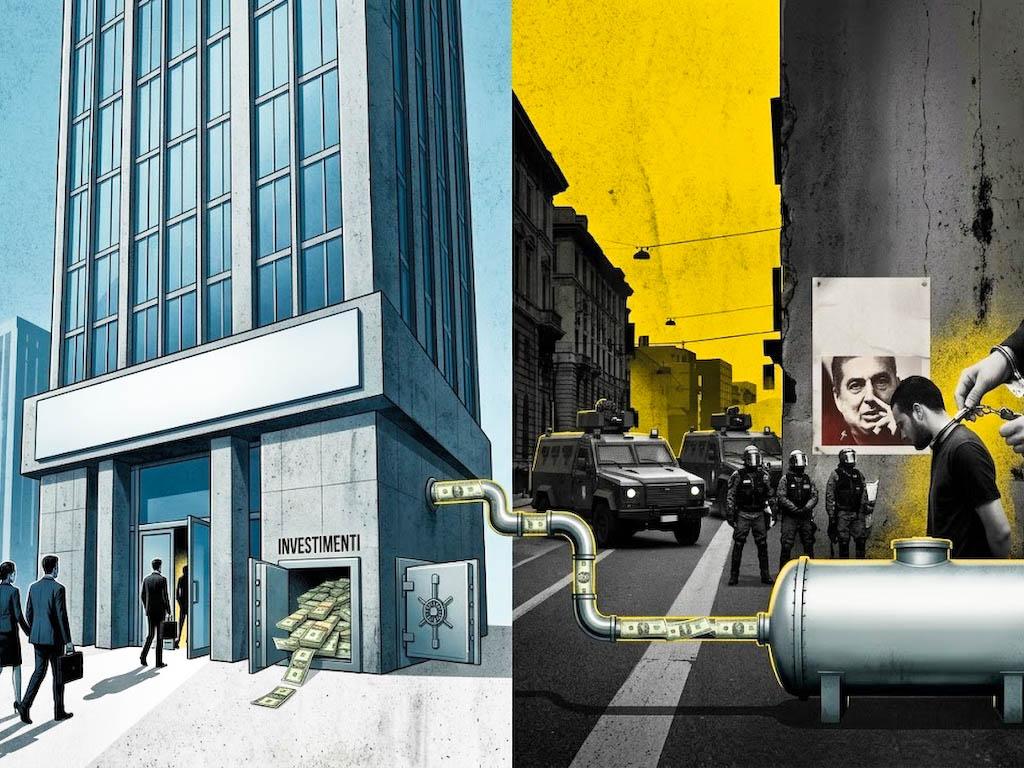 Global finance is not a neutral mechanism. Through loans, investments, index funds and speculative instruments, it can support repressive regimes, fuel conflicts, promote destructive production [...]
 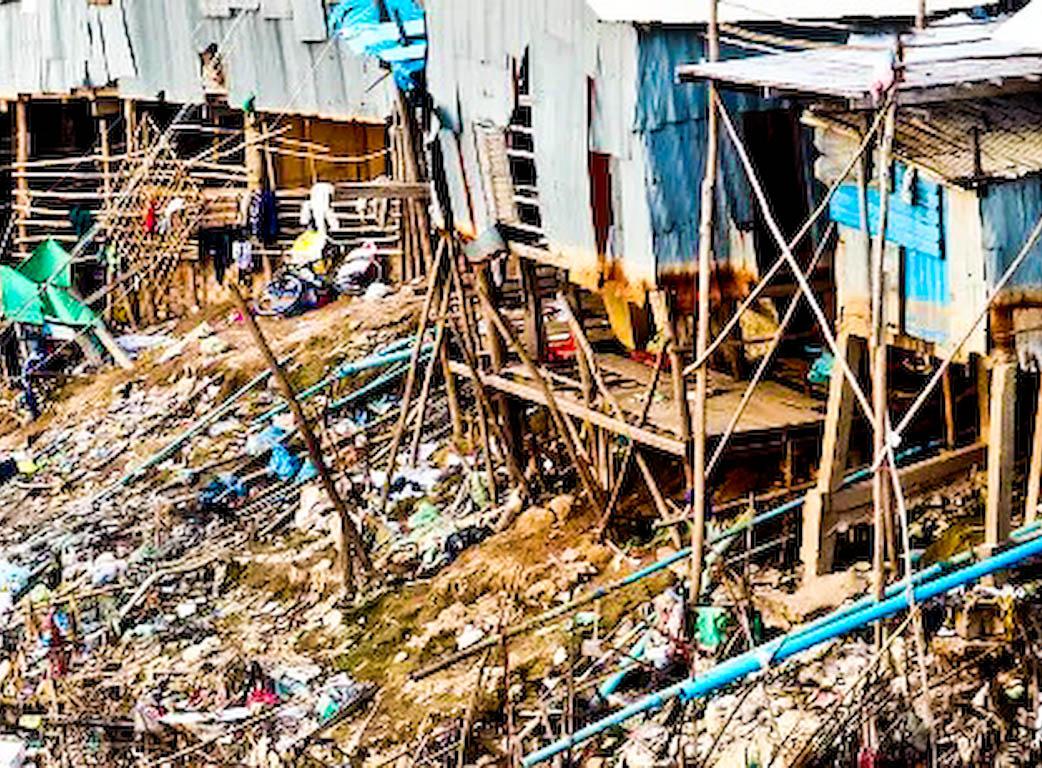 Approximately two hundred euros, at purchasing power parity: this is what, on average, is spent on the education of a child in Sub-Saharan Africa every twelve months. In Europe, the figure is around [...]
  Did you know that Saudi Arabia and the United Arab Emirates, despite their deserts, import millions of tonnes of sand every year? Why do they rely on imported sand for their mega-projects? [...]
 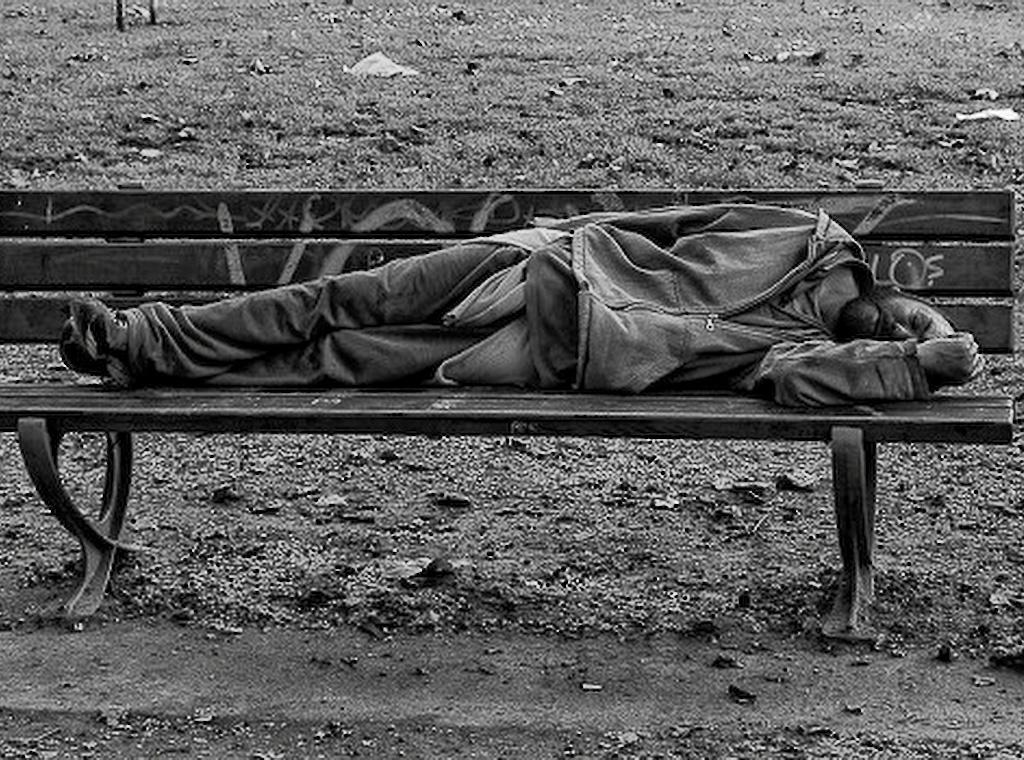 In a report presented on 19th January 2026 at the opening of the World Economic Forum in Davos, the British organisation Oxfam reported that global billionaires’ fortunes increased by 16% in [...]
  Economic growth is not a statistical abstraction; it is the most powerful lever humanity has ever known for the tangible improvement of well-being. Over recent decades, its impact has been [...]
 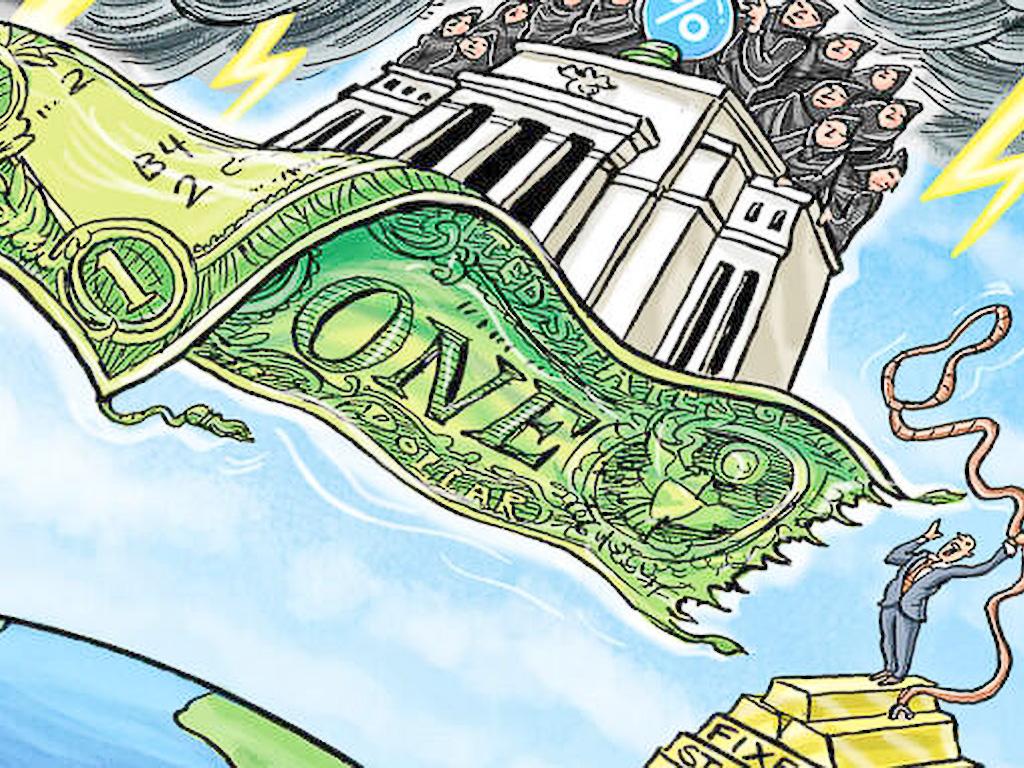 Undoubtedly, there has never been an era of true free trade. International trade has always been only partially and unevenly free and, in most cases, regulated. Most so-called neoliberal advocates [...]
 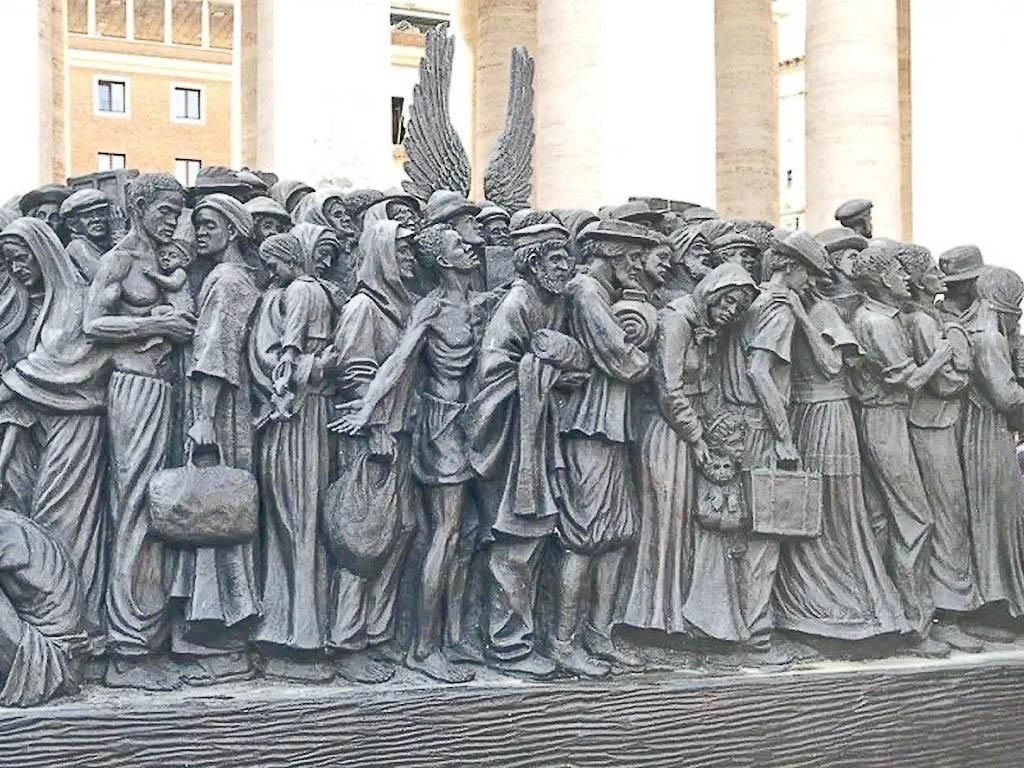 In an age marked by individualism, social fragmentation, and a crisis of human bonds, rediscovering the value of the common good is not just a cultural exercise, but an ethical and political [...]
 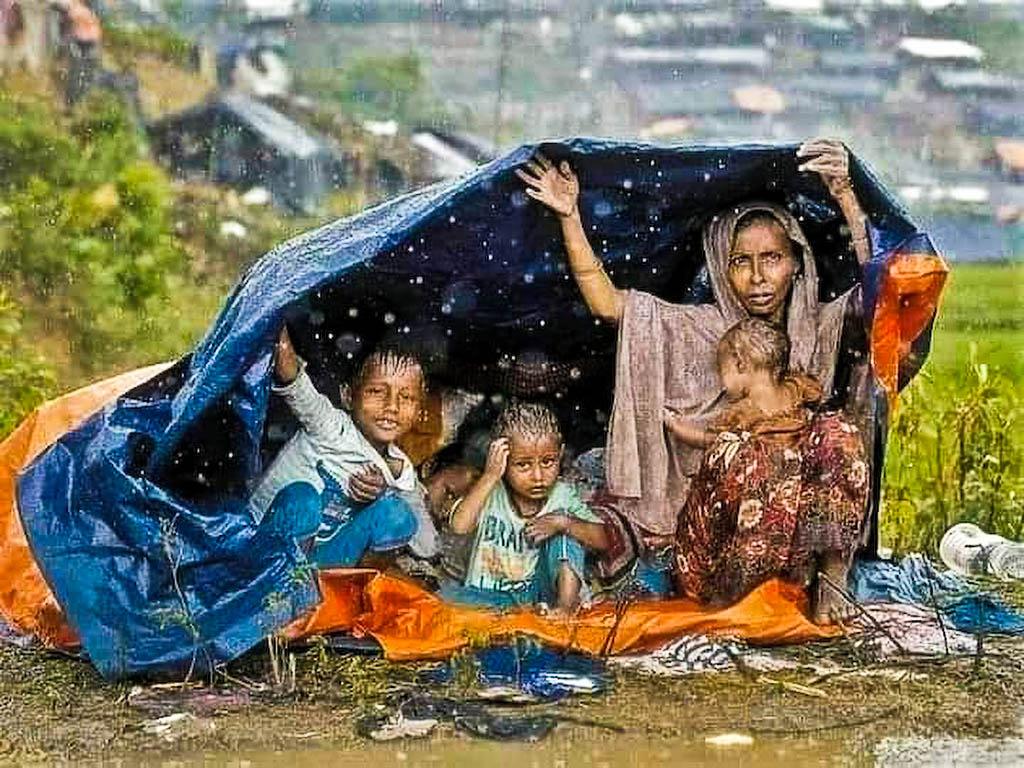 Liberalism is a doctrine that does not claim to have answers for everything, unlike Marxism, and welcomes divergence and criticism within its framework, based on a small but unmistakable core of [...]
 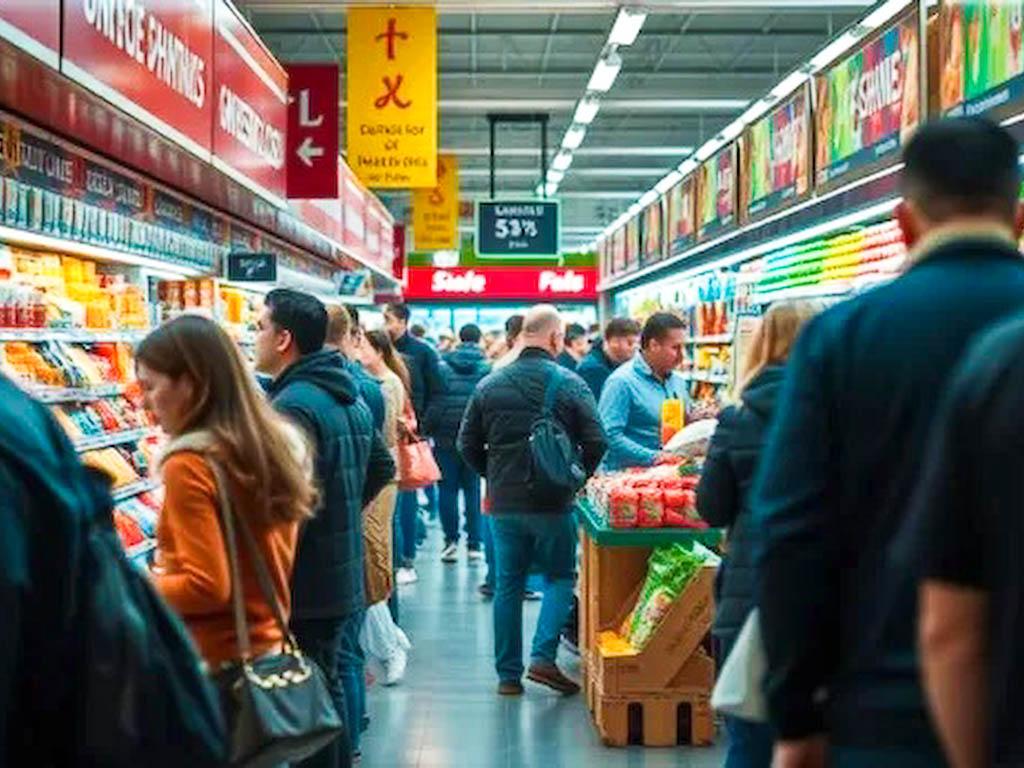 Despite the apparent variety of brands on supermarket shelves, much of the food and drink we consume every day is controlled by a small group of large multinationals. According to an analysis made [...]
  In your most recent book, Power and Progress, you mention that we are at a critical moment regarding the relationship between technology, equality and democracy. What consequences do you foresee if [...]
 Info
Email: jampypezzi@gmail.com - tel. +39 328 732 6990 / +243 991 457 856
This blog is made in 4 languages: it en fr es


 EDitt | Web Agency
Leave a comment