
Justice, Peace, Integrity
of Creation
Justice, Peace, Integrity
of Creation
By John Paul Pezzi, Mccj
Justice, Peace, Integrity
of Creation
By John Paul Pezzi, Mccj
Justice, Peace, Integrity
of Creation
By John Paul Pezzi, Mccj
Justice, Peace, Integrity
of Creation
By John Paul Pezzi, Mccj
DR Congo. War in the East changes its face
Rivista Nigrizia 08.01.2026 Redazione Translated by: Jpic-jp.orgAs the crisis in eastern Democratic Republic of the Congo (DRC) continues to worsen, the latest mid-term report by the United Nations Group of Experts (S/2025/858), released on 30 December, leaves little room for optimism. The document depicts a situation in which the boundary between internal rebellion and external aggression has effectively vanished, giving way to a multidimensional regional conflict that threatens the country’s territorial integrity and the stability of Central Africa as a whole.
“The territorial expansion of the Congo River Alliance/March 23 Movement (AFC/M23),” the report states, “has reached unprecedented levels, jeopardising regional stability.”
M23 and the institutionalisation of rebellion
The most alarming finding highlighted by the report concerns the evolution of the AFC/M23. According to the experts, the group is no longer a mere roaming militia, but a quasi-state structure exercising parallel governance over vast areas of North and South Kivu.
In the occupied territories — notably Rutshuru, Masisi, Goma and parts of Nyiragongo — the M23 has established a customs taxation system, appointed local administrators and set up its own courts. This “normalisation” of occupation is intended to entrench the group’s presence permanently, directly challenging Kinshasa’s authority not only militarily but also administratively, with the aim of isolating and economically strangling the central government.
The shadow of Kigali and technological escalation
The UN report unequivocally documents the direct involvement of the Rwandan Defence Forces (RDF). The experts gathered compelling evidence, ranging from the identification of senior Rwandan officers operating on the ground to the deployment of weaponry more sophisticated than that available to the Congolese regular army (FARDC).
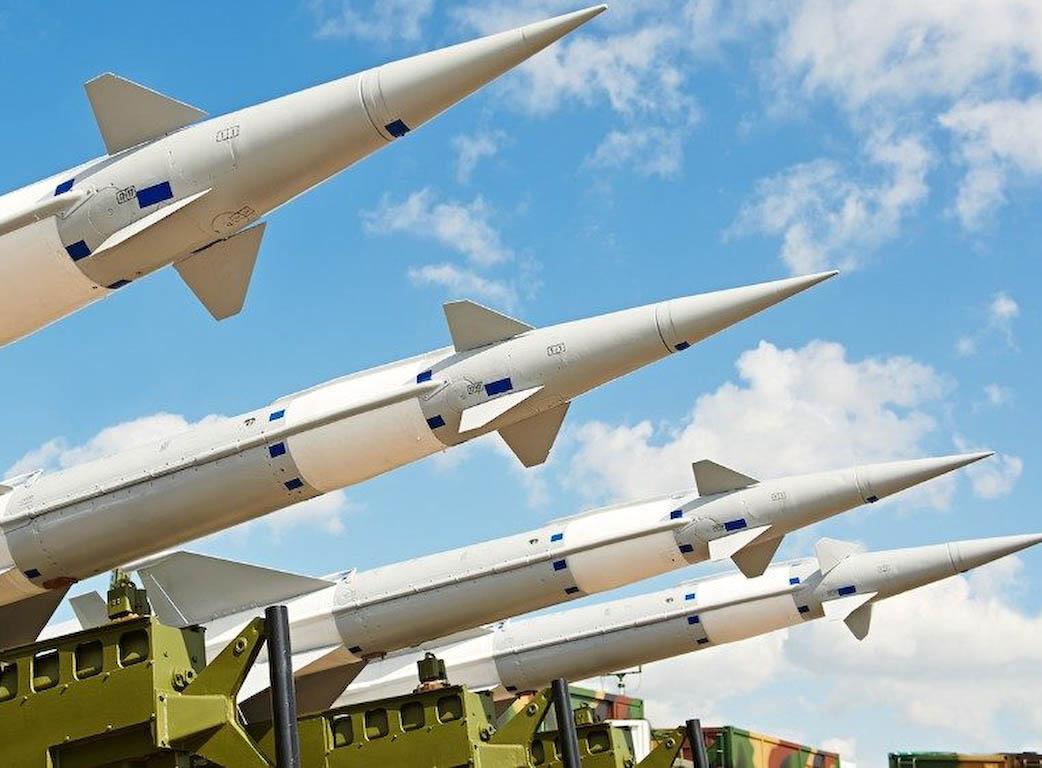
The introduction of armed drones and surface-to-air missile (SAM) systems has effectively “closed the skies” over the conflict zones, neutralising the air superiority that Kinshasa had sought to establish. This support is no longer sporadic but structural, transforming the M23 into a genuine operational arm of a regional power: Rwanda.
After consolidating territorial control, the report continues, the AFC/M23 and the RDF focused on neutralising the FDLR (Democratic Forces for the Liberation of Rwanda, Hutu rebels), conducting operations marked by heavy fighting and systematic, widespread attacks against civilians, particularly in the Bwito and Bwisha areas of Rutshuru territory.
The Wazalendo and the fragmentation of security
In response to the M23’s advance, the government of President Félix Tshisekedi has adopted a risky strategy: reliance on private security companies and support for the Wazalendo (“patriots”). These comprise a heterogeneous constellation of local militias operating in coordination with the national army. However, the report highlights how this “outsourcing” of defence is leading to an uncontrolled fragmentation of the security landscape.
The Wazalendo stand accused of extortion and systematic violence against civilians, creating an atmosphere of anarchy in which the population is often caught between opposing forces. Moreover, the persistent collaboration between elements of the FARDC and the FDLR continues to provide Rwanda with a casus belli to justify its interventions, “fueling the narrative of ethnic conflict and complicating peace efforts.”
Gold and coltan: the economic fuel of war
The economic engine of the conflict remains the exploitation of natural resources. The report precisely traces gold routes, from mining sites controlled by armed groups through Uganda and Rwanda, before being “laundered” and fed into international markets, with Dubai serving as a key hub.
Rwanda-backed troops deployed along multiple front lines — notably in Masisi, Walikale and Lubero — have enabled further territorial gains and consolidated access to South Kivu’s mineral resources, including the capture of the strategic mining locality of Nzibira and the industrial gold mine of Twangiza in Luhwindja. Through these operations, the M23 has gained control over nearly half of the region’s cassiterite and coltan production, as well as more than two-thirds of wolframite output.
Beyond gold, illegal taxation of coltan, tin and tantalum supply chains provides militias with steady revenues, rendering them financially autonomous and less vulnerable to international sanctions. The report notes that all armed groups, including the various Wazalendo factions, impose systematic levies on the production and transport of coltan and tin.
The war, therefore, is not merely a struggle for power but a profitable business for military elites and regional trafficking networks.
Diplomatic failure and humanitarian catastrophe
On the diplomatic front, initiatives undertaken in Luanda, Nairobi, and more recently in Doha and Washington are, according to the report, at a critical standstill. Despite formally signed ceasefires — the most recent under United States auspices — violations on the ground occur daily.
This political vacuum has devastating consequences. “Violations of international humanitarian law are systematic,” the experts write. “The number of internally displaced persons has reached record levels, exacerbating an already catastrophic humanitarian crisis.”
Millions of internally displaced people are living in inhumane conditions around Goma and Bukavu, with sexual violence systematically employed as a weapon of terror by all parties, alongside the recruitment of child soldiers. The UN mission (MONUSCO), currently drawing down its presence, appears increasingly powerless in the face of the scale of events.
Humanitarian agencies also warn that nearly 90,000 people who have fled to Burundi since 10 December, following the capture of Uvira by the M23, are facing dire conditions, with limited access to food and water.
Burundi now hosts approximately 200,000 refugees. According to UNHCR, women and children remain the most vulnerable groups there as well. Many live in makeshift shelters without protection from the elements, sleeping on the ground without blankets and receiving insufficient food. Overcrowding, the agency warns, is increasing the risk of outbreaks of cholera, measles and malaria.
Towards an uncertain 2026
The UN experts’ report serves as a final warning to the international community. Without coordinated pressure targeting illicit financing networks and without genuine political dialogue involving all regional actors, the Democratic Republic of the Congo risks descending into what many analysts already refer to as the “Third Congo War”.
Stabilisation will not be achieved through arms alone, but through dismantling the war economy that has turned instability into a strategic resource.
Recommendations: blocking arms and financial flows
In this regard, report S/2025/858 marks a crucial methodological shift. To halt the war in eastern Congo, fragile ceasefires are no longer sufficient; it is necessary to strike at the conflict’s “digital and financial core.” For the first time, the experts place unprecedented emphasis on the M23’s technological superiority, denouncing the use of armed drones and surface-to-air missile systems that have transformed Kivu into a theatre of modern warfare.
The recommendation is unequivocal: an immediate blockade of dual-use technologies fuelling the escalation is required.
At the same time, the report turns its focus to capital flows. The UN calls for sanctions not only against military leaders, but against the entire architecture of intermediaries and shell companies operating in global financial centres — explicitly naming hubs such as Dubai — used to “launder” conflict gold.
Peace, therefore, hinges on tracing bank transfers and auditing refineries. It is a call for a “smart embargo”: only by depriving the M23 and its regional sponsors of financial and technological oxygen can a crisis threatening the very sovereignty of the Democratic Republic of the Congo be defused.
See, Rd Congo. La guerra nell’Est cambia volto
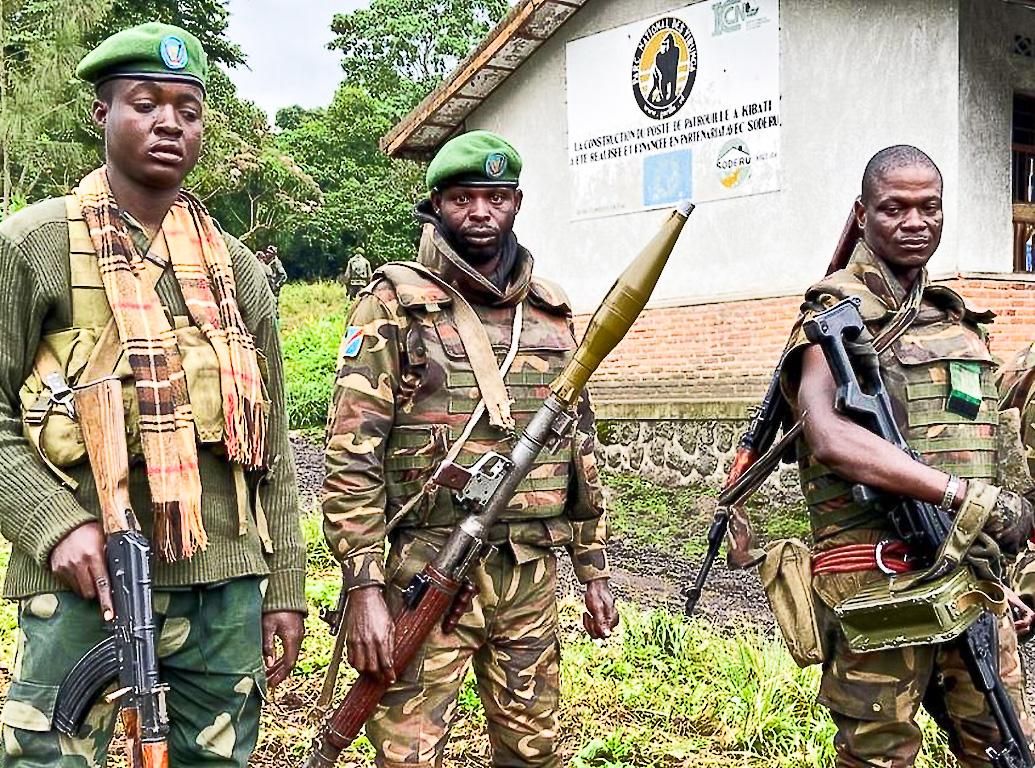
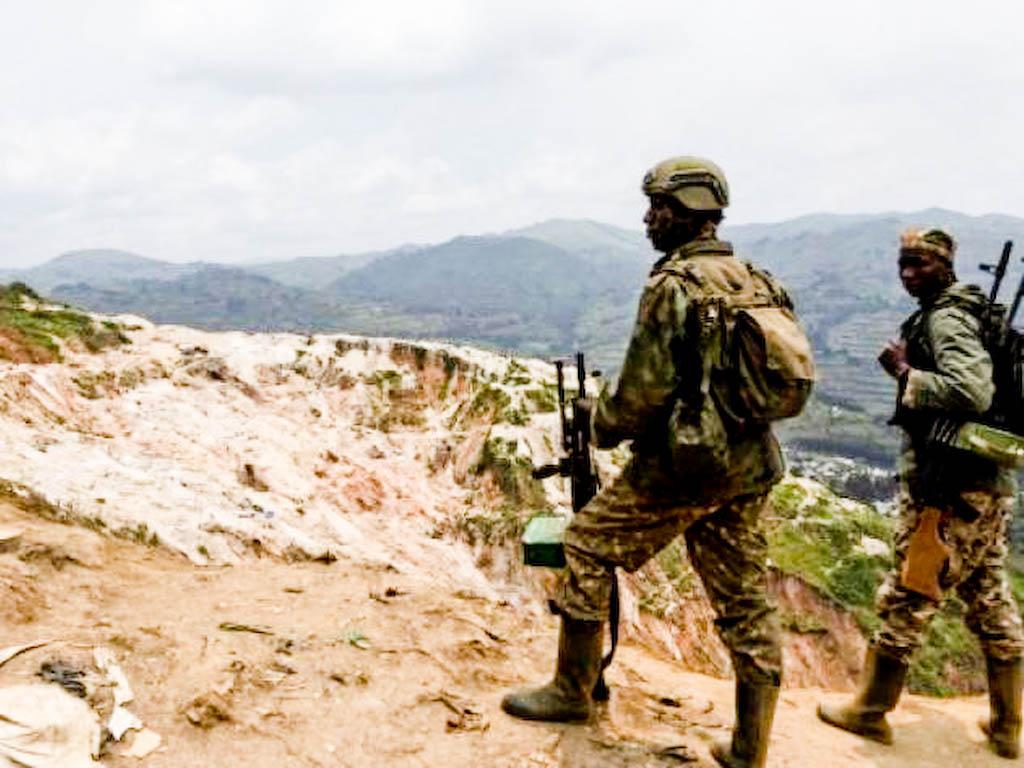
Photo: FARDC soldiers in Kibati, North Kivu
 We no longer seem capable of genuine dialogue. One reason is that we can no longer bear silence, which confronts us with ourselves even before it confronts us with others, and which is the [...]
  As Daniele Rocchetti clearly points out, Just War theory did not arise in order to justify war but rather to limit it. From its very beginnings, it sought to subject the use of armed force to strict [...]
  1. The Violence of the Allied Bombing
Every single darkened stone bears witness, in the most tangible way, to a deeply painful wound that has never fully healed, inflicted in February 1945. Only [...]
1. The Violence of the Allied Bombing
Every single darkened stone bears witness, in the most tangible way, to a deeply painful wound that has never fully healed, inflicted in February 1945. Only [...]  For several years, and through many public meetings, I have explained how meaningless it has become to speak of a “just war” after the atomic bombings of Hiroshima and Nagasaki. I have [...]
  “Thanks” to the war in the Middle East, the AFC/M23 movement, supported by Rwanda and occupying part of eastern Democratic Republic of the Congo, can no longer export smuggled gold to [...]
  On an ordinary morning in El Obeid, Azza al-Amin kneads bread dough in her narrow kitchen as a drone buzzes angrily in the distance. She keeps working. Hundreds of people are counting on her. [...]
  Global military spending has experienced a significant acceleration in recent years, reaching levels not seen since the end of the Second World War. The latest data from the International Monetary [...]
 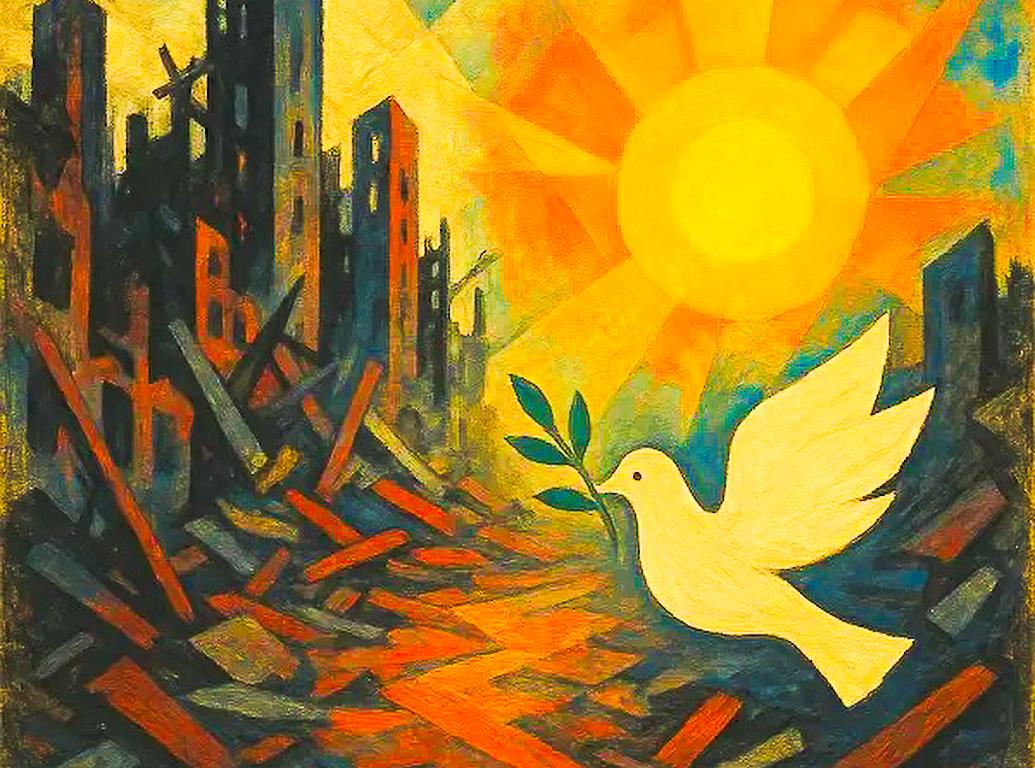 A small booklet published posthumously in 1933 by the biologist René Quinton, Maximes sur la guerre, appreciated and used by Mussolini, has at its core this sentence: “War is killing, to [...]
 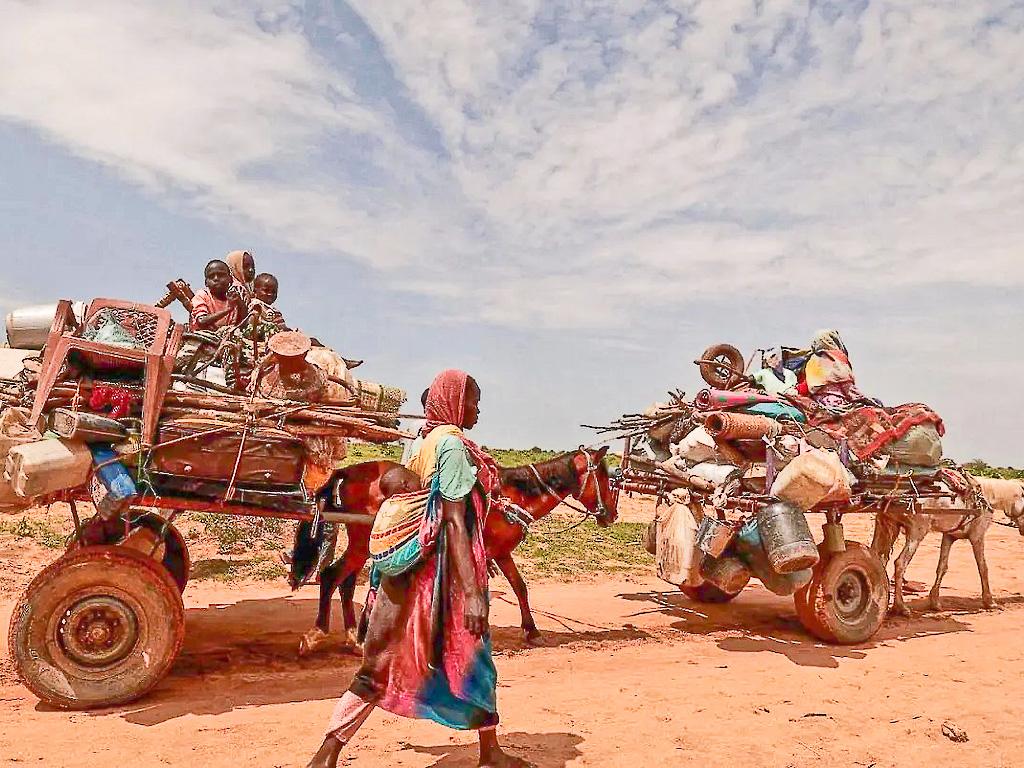 How can a soldier recite the Lord’s Prayer in battlefield liturgies? O reckless man!
You call God Father while you place the knife at your brother’s throat.
Hallowed be thy name. What [...]
How can a soldier recite the Lord’s Prayer in battlefield liturgies? O reckless man!
You call God Father while you place the knife at your brother’s throat.
Hallowed be thy name. What [...] 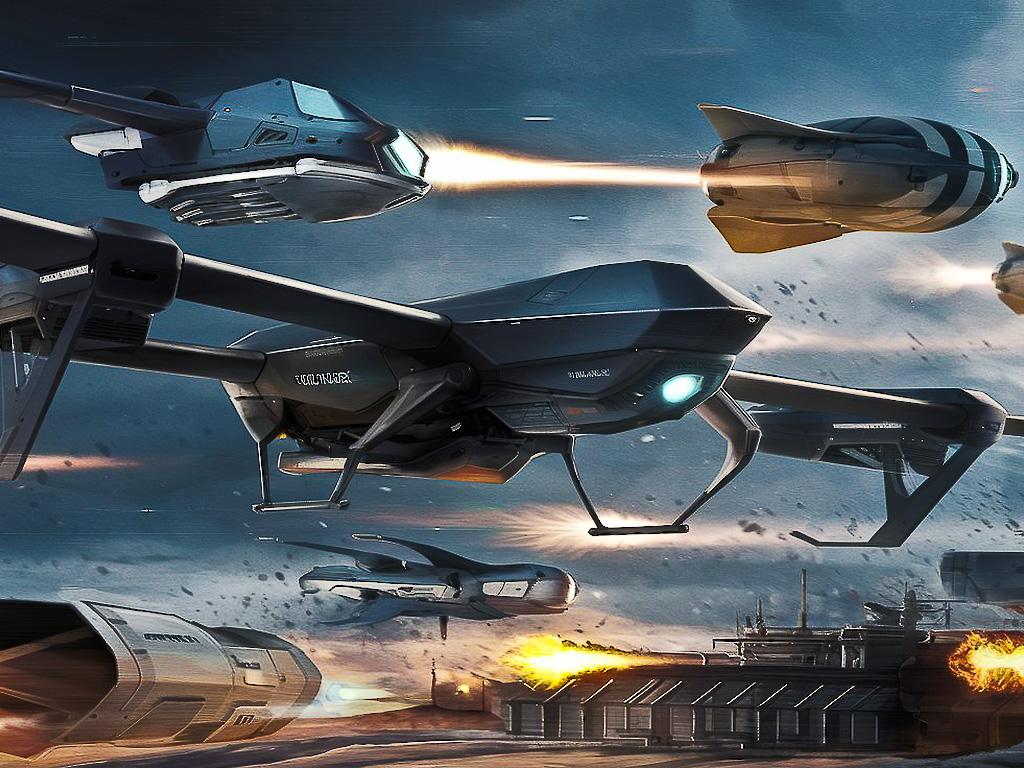 The list drawn up this year includes Amazon, Anduril Industries, Meta, Northrop Grumman, Palantir Technologies, Space Exploration Technologies and Vanguard. These computing and technology giants are [...]
 Info
Email: jampypezzi@gmail.com - tel. +39 328 732 6990 / +243 991 457 856
This blog is made in 4 languages: it en fr es


 EDitt | Web Agency
Leave a comment