Justice, Peace, Integrity
of Creation
Justice, Peace, Integrity
of Creation
By John Paul Pezzi, Mccj
Justice, Peace, Integrity
of Creation
By John Paul Pezzi, Mccj
Justice, Peace, Integrity
of Creation
By John Paul Pezzi, Mccj
Justice, Peace, Integrity
of Creation
By John Paul Pezzi, Mccj
If We Have Courage, War Will Not Prevail
Avvenire 14.12.2025 Andrea Riccardi Translated by: Jpic-jp.orgThose who sought peace in the twentieth century were often accused of weakness. The same occurs today with Ukraine, Gaza and Sudan. For change to occur, the victims must be heard. Summary of the chapter concluding Andrea Riccardi’s book Il coraggio della pace, published by Scholè. After the period that followed 1945, the wars in the Balkans, the Russian invasion of Ukraine and the eruption of the conflict in the Gaza Strip have rehabilitated war as a means of resolving disputes, contributed to the militarisation of public opinion and fuelled the arms race. Riccardi urges a rediscovery of the “sense of belonging to a global community of destiny” and a renewed space for dialogue and diplomacy. In order to make peace “the objective of politics.”
A small booklet published posthumously in 1933 by the biologist René Quinton, Maximes sur la guerre, appreciated and used by Mussolini, has at its core this sentence: “War is killing, to not being killed.” This is not propaganda, but a line of thought that presents itself as scientific regarding the connaturality between war and humanity. One can hear the echo of Darwin’s theories here, whose “struggle for nature” was initially described as a “war of nature”. In the intertwining of the cult of courage and anthropology, a dangerous mixture emerges. War is the destiny of humanity: it belongs to human nature. This is what Anne Frank, from another perspective and with her refined and adolescent sensitivity, seemed to suspect while hidden in Amsterdam as the Nazi hunt for Jews raged. She wrote in her diary: “There is in human beings an urge for destruction, for massacre, for murder, for fury, and until all humanity, without exception, has undergone a metamorphosis, war will continue to rage.”
The Charter of the United Nations and the Italian Constitution, after the war and the Shoah, expressed the conviction that such a metamorphosis was possible, indeed that it had already partly occurred. And today? In a recent essay, Gianluca Sadun Bordoni observes the end of the pax americana of the global era, the rise of Russian revanchism and China’s ascent, thus marking the close of a season in which peace was an ideal: “Every war,” he writes, “has a beginning and an end, but man’s aversion to man will never cease.” In the present age, he notes, we are witnessing two phenomena: “International relations show the return to war […] closing the brief interlude that followed the Cold War, and the anthropological sciences show us, in an irrefutable way, that militarised war is the development of a behavioural pattern rooted in the natural history of the species.” History, current affairs and anthropology would thus confirm that war is an ineliminable companion of life. Sadun Bordoni does not theorise determinism, but he invites us not to indulge in illusions. The historian and man of letters Alessandro Barbero, who declares himself opposed to war, writes: “The game of war is extremely widespread, at least among males. […] For a man, war still retains a certain appeal — not, I would say, primordial or visceral, but certainly very strong and engaging.”
The reality is that today war appears as destiny and peace as a parenthesis. Is the pursuit of peace, which runs throughout the twentieth century and found genuine recognition after the Second World War, a form of weakness? This accusation is frequently repeated: if one speaks of peace in the Russian-Ukrainian war, one is sometimes labelled cowardly or pro-Putin. The West is often accused of cowardice. Alexander Solzhenitsyn did so — not a mystic of death, but a great resister to Soviet totalitarianism who discovered spiritual freedom in the gulag. Exiled in the United States, he was invited to Harvard in 1978 and, before an audience of 20,000, chose to speak of the decline of courage in the West, of the loss of strength among ruling and intellectual classes: “A harbinger of the end.” After all, the United States had not defeated Hitler alone, but had needed Stalin, “a far worse and more powerful enemy”, in Solzhenitsyn’s words. What do you make of freedom? he asked an audience that had expected him to praise America, which had welcomed him with great empathy. The United States had abandoned Vietnam to the communist North in 1973 with the Paris Agreements. The West, according to Solzhenitsyn, was by then overwhelmed by a decline in courage. Strong words. Yes, a decline in courage — but what kind of courage in a global situation on the brink of the abyss?
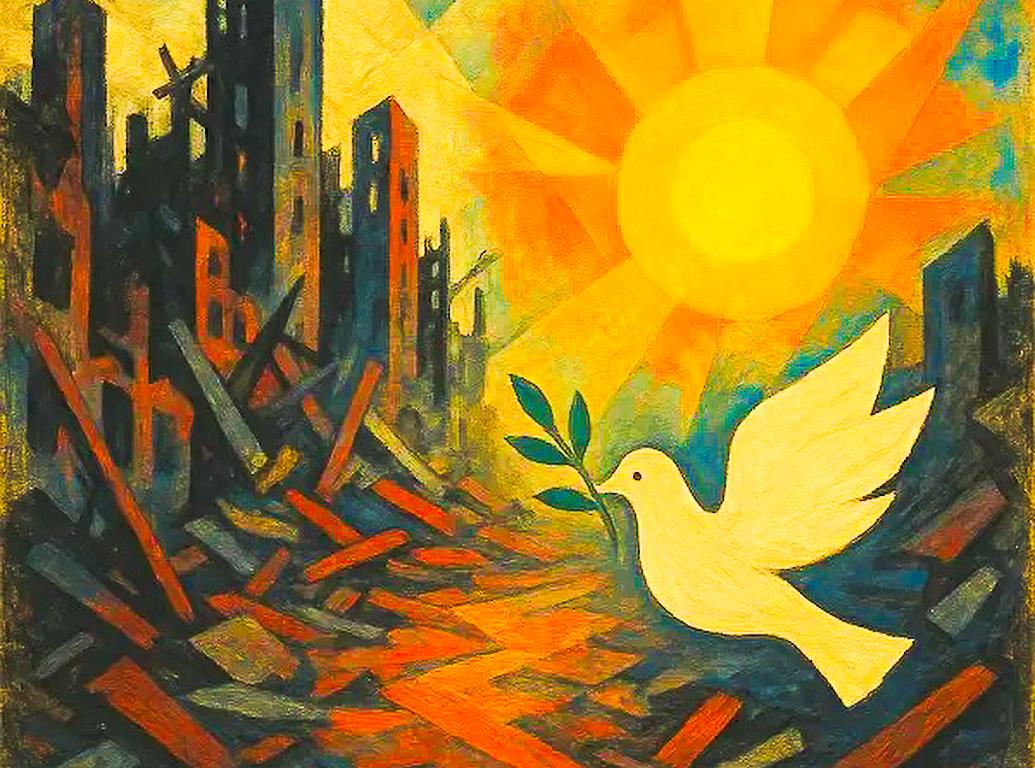
Let us look war in the face: the war that violates Ukraine, that has reduced Gaza to a heap of ruins, and that we scarcely notice in Sudan. How can one fail to share Pope Francis’s striking definition of war? “Every war leaves the world worse than it found it. War is a failure of politics and of humanity, a shameful surrender, a defeat before the forces of evil.” Here speaks a witness of history, inviting us to view war as a failure of humanity. He also proposes a method so as not to ignore wars: to approach them personally. “Let us not stop at theoretical discussions. […] Let us ask the victims. Let us pay attention to refugees, to those who have suffered atomic radiation or chemical attacks, to women who have lost their children, to children mutilated or deprived of their childhood […], let us look at reality through their eyes and listen to their stories with an open heart. Thus we shall be able to recognise the abyss of evil at the heart of war and we shall not be disturbed if we are treated as naïve because we have chosen peace.” The peace we still enjoy allows solidarity with those who are attacked. Indeed, it obliges us to rethink peace, so that war does not destroy this fragile global world by spreading everywhere. To think of peace means to foster a culture of peace, so that public opinion may remain free and vigilant, not captive to simplifications. So that war does not dominate us with its ruthless logic, which proves so difficult to halt. Out of responsibility towards those torn apart by conflicts. To reason, to reflect, to compare differing viewpoints on this subject is not a waste of time, but preparation for better times. One must never yield to the friend/enemy simplifications that relieve us of the burden of thinking.
The courage of peace is the courage to be. In his final interview before his death, Erich Fromm responded to the question concerning the decisive tasks for contemporary humanity as follows: “Courage, the courage to see what dangers lie before humanity and how dangerous the path it is following truly is.” And he added: “I believe the most important thing is […] the courage to say that for human beings nothing is more important than human beings themselves and that the highest aim of their action is their very survival — not only biological, but spiritual. […] If humanity no longer has hope, then it no longer has the possibility of being.” (…) Giorgio La Pira, a passionate man of peace, felt himself confronted with an apocalyptic drift between peace and war, more dramatic than was commonly thought. It was 1965. The apocalypse did not occur: instead, there were men and women who chose the path of coexistence and peace. Systems of war and the culture of conflict humiliate the person and their capacity to be and to act. Yet even the choice of a single individual carries weight and strength. La Pira wrote: “We must have the courage to choose peace and to act at all levels (international and domestic: military, scientific, technical, economic, social, cultural, political, religious) in accordance with that choice.” (…) A man, a woman is not destined to irrelevance if they have the courage to choose and not to remain indifferent. The word conflict will not become the title of the time we are living through if we do not allow hatred and ignorance to change us. As Pino Puglisi, who resisted the mafia with bare hands and was murdered in 1993, said: “If everyone does something, much can be done.”
See: Andrea Riccardi: Se abbiamo coraggio la guerra non vincerà
 We no longer seem capable of genuine dialogue. One reason is that we can no longer bear silence, which confronts us with ourselves even before it confronts us with others, and which is the [...]
  As Daniele Rocchetti clearly points out, Just War theory did not arise in order to justify war but rather to limit it. From its very beginnings, it sought to subject the use of armed force to strict [...]
  1. The Violence of the Allied Bombing
Every single darkened stone bears witness, in the most tangible way, to a deeply painful wound that has never fully healed, inflicted in February 1945. Only [...]
1. The Violence of the Allied Bombing
Every single darkened stone bears witness, in the most tangible way, to a deeply painful wound that has never fully healed, inflicted in February 1945. Only [...]  For several years, and through many public meetings, I have explained how meaningless it has become to speak of a “just war” after the atomic bombings of Hiroshima and Nagasaki. I have [...]
 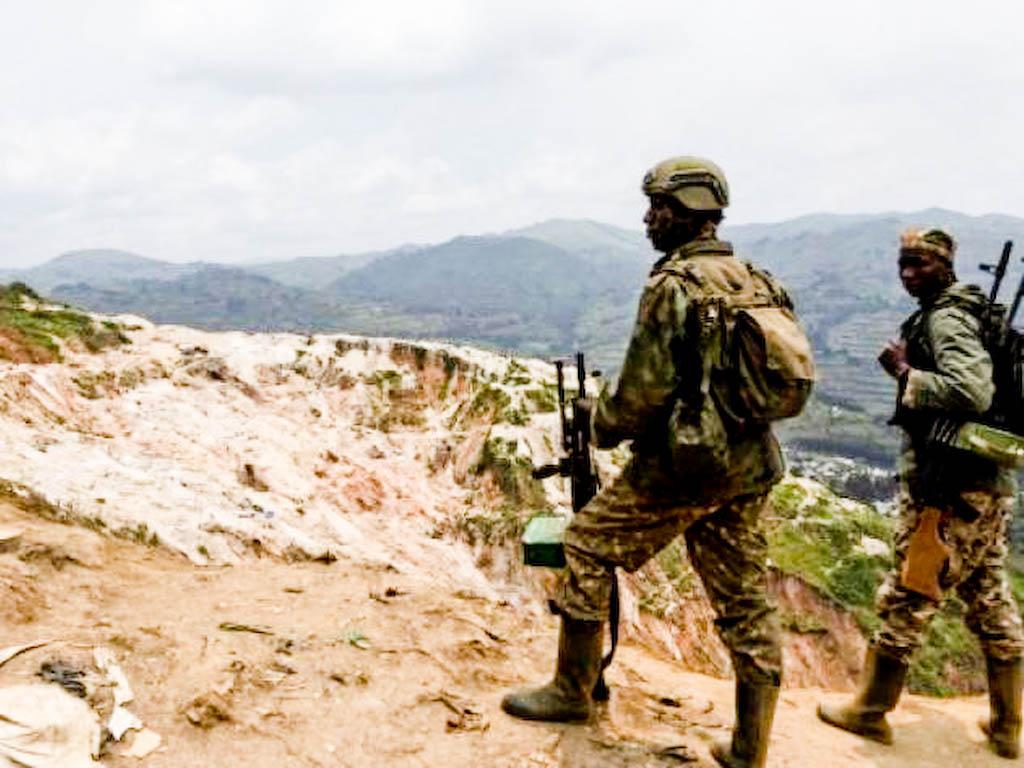 “Thanks” to the war in the Middle East, the AFC/M23 movement, supported by Rwanda and occupying part of eastern Democratic Republic of the Congo, can no longer export smuggled gold to [...]
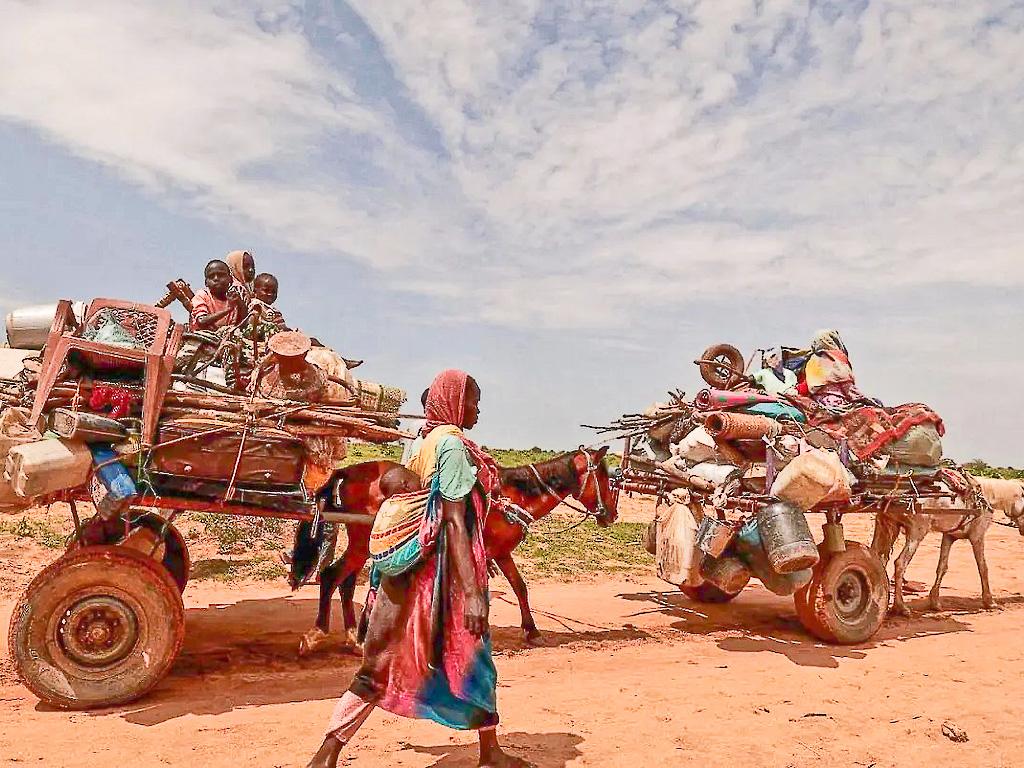
 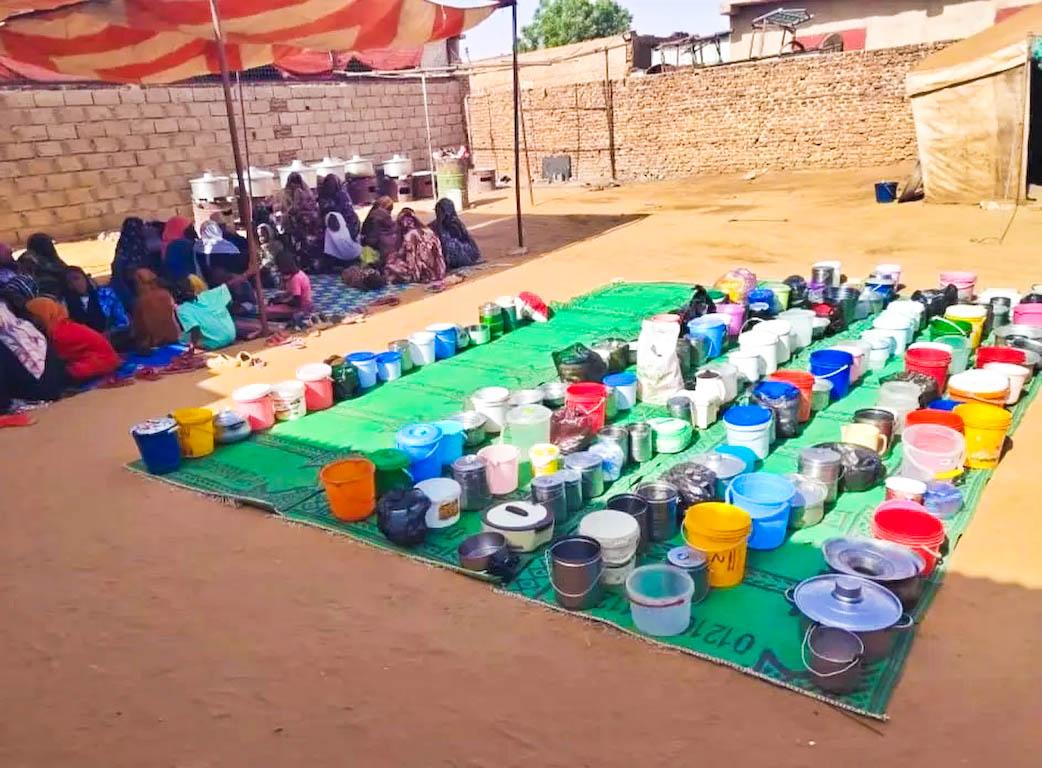 On an ordinary morning in El Obeid, Azza al-Amin kneads bread dough in her narrow kitchen as a drone buzzes angrily in the distance. She keeps working. Hundreds of people are counting on her. [...]
 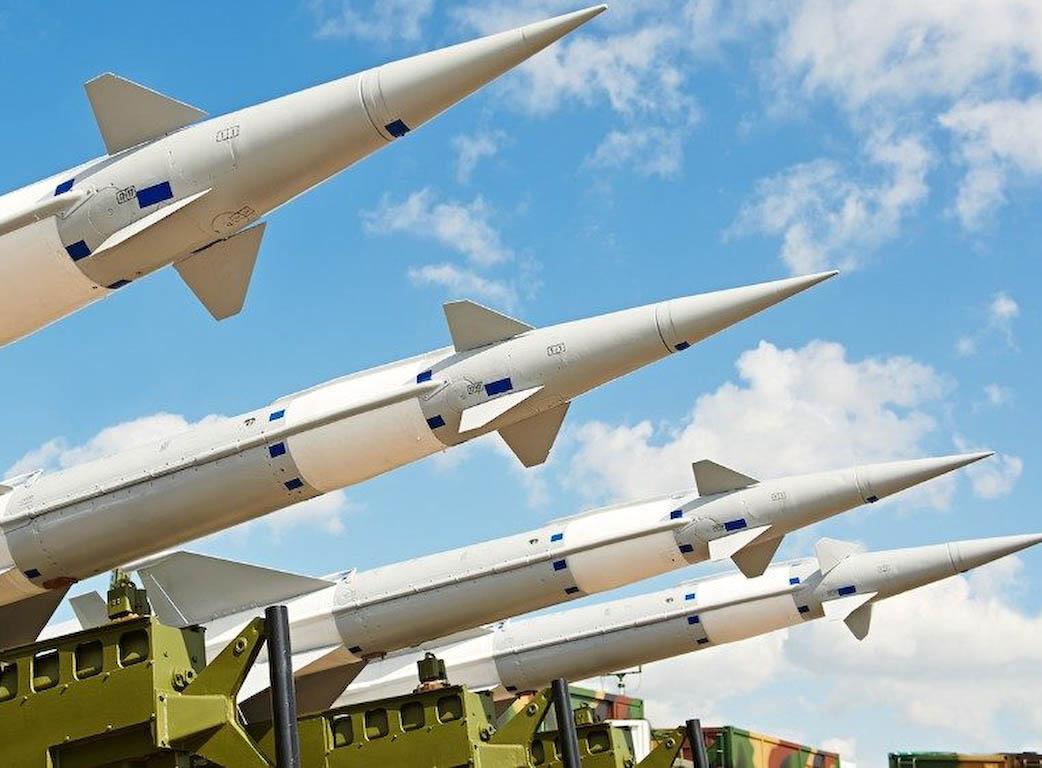 Global military spending has experienced a significant acceleration in recent years, reaching levels not seen since the end of the Second World War. The latest data from the International Monetary [...]
 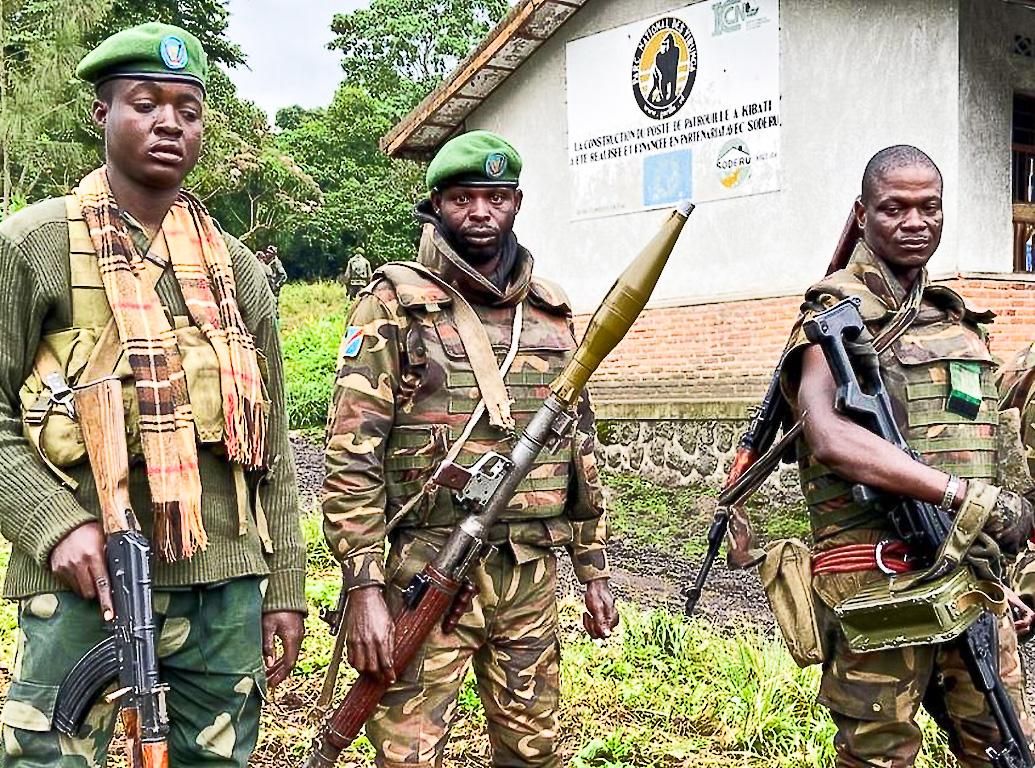 “The territorial expansion of the Congo River Alliance/March 23 Movement (AFC/M23),” the report states, “has reached unprecedented levels, jeopardising regional stability.” [...]
  How can a soldier recite the Lord’s Prayer in battlefield liturgies? O reckless man!
You call God Father while you place the knife at your brother’s throat.
Hallowed be thy name. What [...]
How can a soldier recite the Lord’s Prayer in battlefield liturgies? O reckless man!
You call God Father while you place the knife at your brother’s throat.
Hallowed be thy name. What [...]  The list drawn up this year includes Amazon, Anduril Industries, Meta, Northrop Grumman, Palantir Technologies, Space Exploration Technologies and Vanguard. These computing and technology giants are [...]
 Info
Email: jampypezzi@gmail.com - tel. +39 328 732 6990 / +243 991 457 856
This blog is made in 4 languages: it en fr es



 EDitt | Web Agency
Leave a comment