Justice, Peace, Integrity
of Creation
Justice, Peace, Integrity
of Creation
By John Paul Pezzi, Mccj
Justice, Peace, Integrity
of Creation
By John Paul Pezzi, Mccj
Justice, Peace, Integrity
of Creation
By John Paul Pezzi, Mccj

Justice, Peace, Integrity
of Creation
By John Paul Pezzi, Mccj
Enheduanna, the unknown author who preceded Homer
Futura 20.02.2026 Zaradat Domínguez Galván Translated by: Jpic-jp.orgLong before Homer, a woman in Mesopotamia was already signing her texts: Enheduanna, high priestess of Ur in the 23rd century BC, the first known author. Her work, preserved on clay tablets, reminds us that women participated from the very beginning in the intellectual, religious and political production of the earliest civilisations. Her erasure from literary history illustrates the enduring marginalisation of women in the transmission of knowledge.
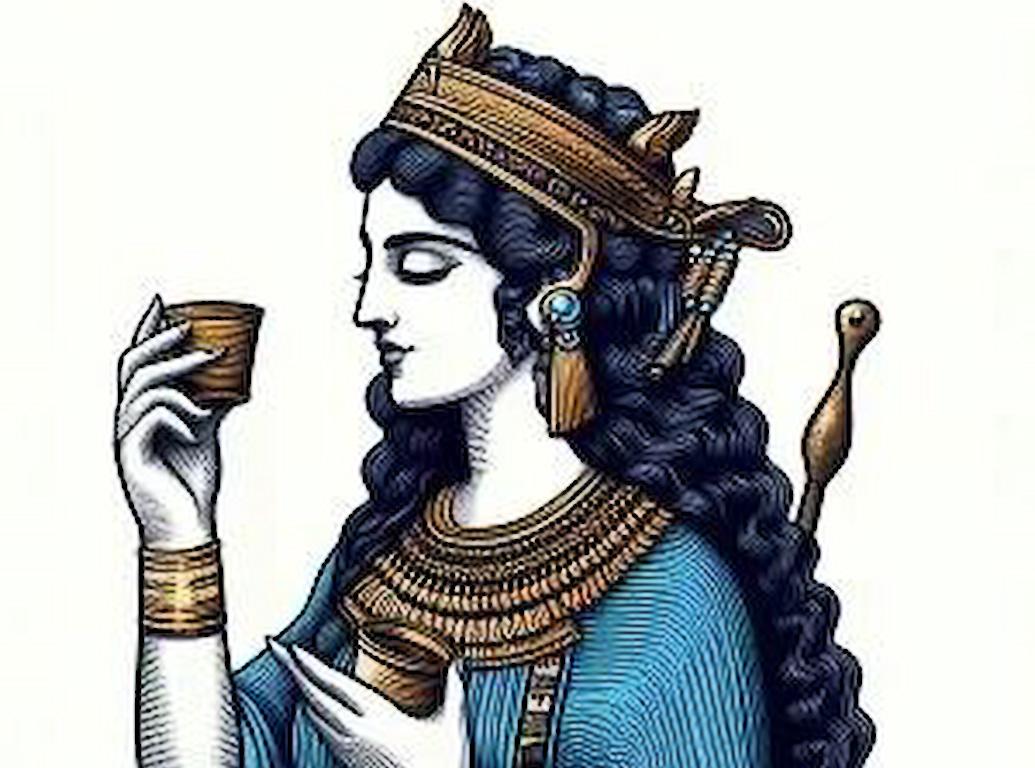
Long overshadowed by the canonical figures of the Western tradition, Enheduanna is nevertheless the first known author in history. More than 4,000 years ago, in Mesopotamia, this high priestess signed her texts, intertwining poetry, power and spirituality, and left behind a foundational body of work.
When one asks who the first writer in history was, Homer often comes to mind. The image of the blind poet of ancient Greece occupies the summit of the pantheon of Western literary tradition.
Yet, in reality, one must go much further back, beyond Greece, beyond even the alphabet, and turn our gaze towards the cradle of writing: ancient Mesopotamia. There, over 4,000 years ago, a woman signed her work with her own name: Enheduanna.
Who was Enheduanna?
Enheduanna lived around 2300 BC in the city of Ur, in what is now southern Iraq. Her figure stands out in several respects: she was the high priestess of the moon god Nanna, a role that granted her considerable political and religious authority. She was also the daughter of King Sargon of Akkad, founder of the first Mesopotamian empire, and, above all, the author of a literary corpus of remarkable theological, political and poetic depth.
Enheduanna was not her personal name but a religious title that can be translated as “high priestess, ornament of heaven”. Her true name remains unknown. What, however, is beyond doubt is her historical importance: Enheduanna wrote, signed her texts and claimed their intellectual authorship, making her the first known person, man or woman, to have left a literary work under her own name.
Writing, power and spirituality
Cuneiform writing had already existed since the mid-fourth millennium BC. It had emerged as an administrative tool, useful for keeping economic records, controlling taxation or counting livestock. However, in Enheduanna’s time it also began to be used to express religious, philosophical and aesthetic ideas. It was a sacred art, associated with the goddess Nisaba, patron deity of scribes, cereals and knowledge.
Within this context, the figure of this author is particularly revealing. Her work combines profound religious devotion with an explicit political message. Her poetry forms part of an imperial strategy: to legitimise Akkad’s domination over the Sumerian cities through the use of a common language, a shared faith and a unified theological discourse.
A major body of work
Several compositions by Enheduanna have come down to us. Among the most important is The Exaltation of Inanna, a long hymn celebrating the goddess of love and war, Inanna, in which the author implores her assistance during a period of exile. This text is often regarded as her most personal and most powerful work.
Also preserved are the Temple Hymns, a collection of forty-two hymns dedicated to different temples and deities of Sumer. Through them, Enheduanna composes a genuine spiritual cartography of the territory, highlighting the close link between religion and political power.
Finally, other fragmentary hymns survive, one of which is devoted to her god Nanna.
These examples are not merely religious texts: they are crafted with great sophistication, rich in symbolism, emotion and a genuine political vision. In them, Enheduanna appears as a mediator between the gods and humans, between her father, the emperor, and the conquered cities.
Why do we not know her?
It is striking that Enheduanna is absent from school textbooks and from most university literature curricula. Beyond specialists in ancient history or gender studies, her name remains largely unknown.
It is legitimate to ask whether Enheduanna’s obscurity reflects a systemic invisibilisation of women in cultural history. As art historian Ana Valtierra Lacalle points out, for centuries the presence of women scribes or artists in Antiquity was denied, despite archaeological evidence showing that they could read, write and manage resources.
Enheduanna was not an isolated exception: her existence demonstrates that women actively contributed to the development of Mesopotamian civilisation, both in the religious and intellectual spheres. The fact that she is the first known person to have signed a text with her own name should grant her a prominent place in the history of humanity.
She does not merely represent a foundational moment in literary history: she also embodies, with rare force, women’s capacity to create, think and exercise authority from the very dawn of written culture. Her voice, inscribed on clay tablets, reaches us intact across the millennia. With her, history does not begin only with words, but with a singular voice, a lived experience and a keen awareness of the act of writing — elements that fully deserve recognition.
“Enheduanna was not only an author, but also a high priestess and a political figure 4,000 years ago. Rediscovering her voice compels us to reconsider the history of literature and to acknowledge that women were excluded from it for centuries,” affirms Nastassia.
See: Elle a signé son œuvre 15 siècles avant Homère. Pourquoi personne ne connaît Enheduanna ?
The comments from our readers (1)
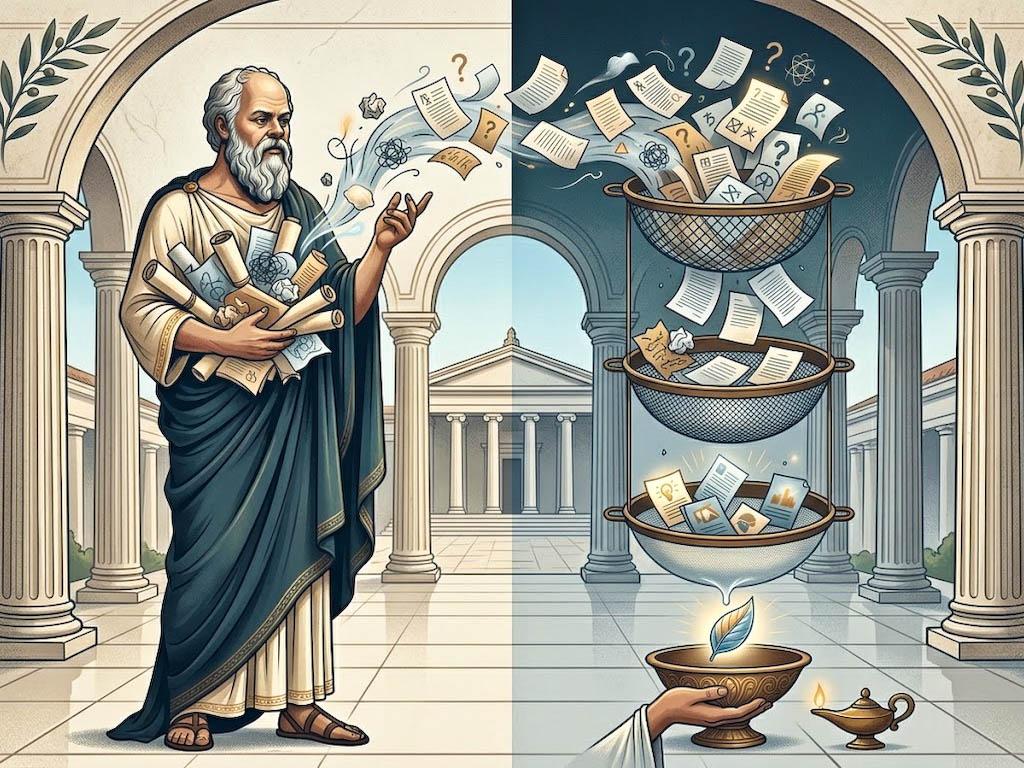 Faced with this avalanche of unverified information, how can we preserve our critical thinking and avoid becoming unwitting channels for spreading lies? The answer lies in an ancient wisdom that [...]
 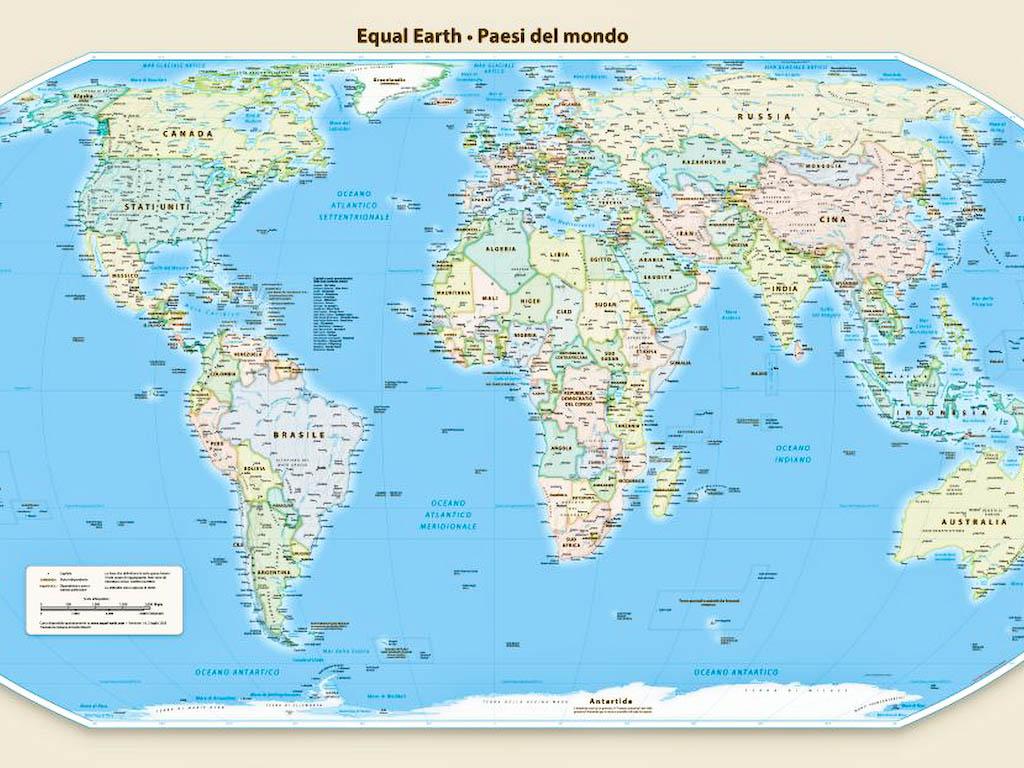 The African Union (AU) has officially endorsed a campaign to replace the Mercator map, widely used since the sixteenth century, with a geographically more accurate projection. According to the [...]
  One day, a man sat down beside his son and said to him in a solemn voice: “My boy, in our lives there is only one true crime: murder. Always stay away from that path. Never lay a hand on [...]
 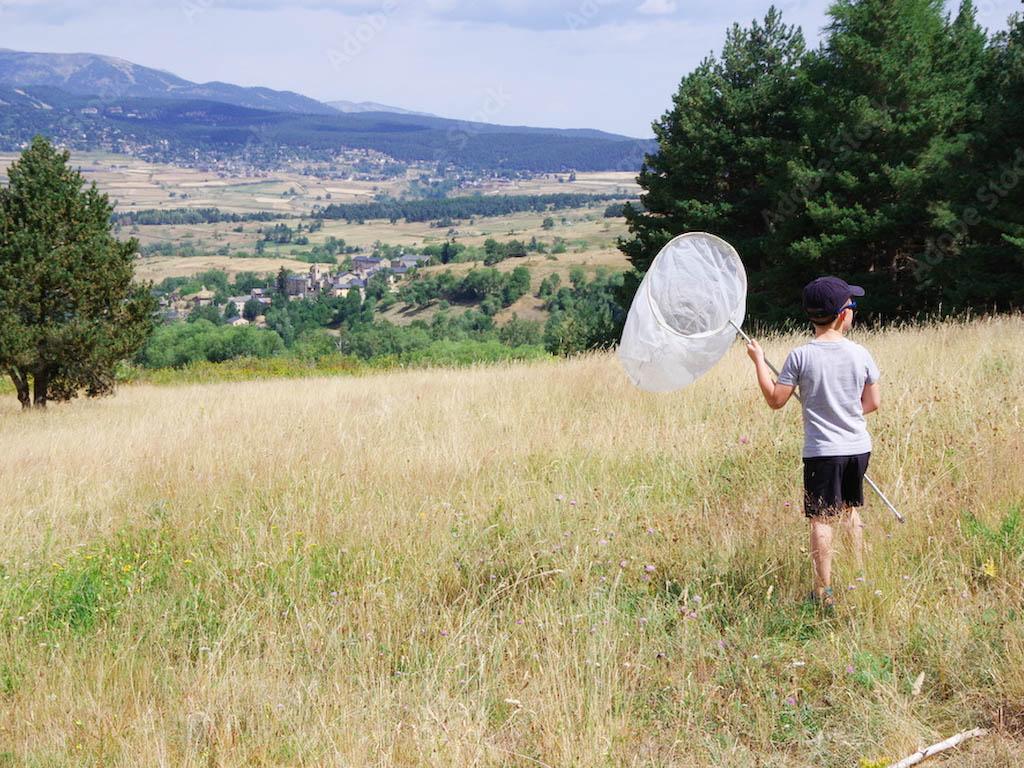 Once upon a time, in a village at the foot of a green mountain, there lived a boy called Elijah.
Elijah had a passion: butterflies. Not for studying them, nor for admiring them, but for keeping [...]
Once upon a time, in a village at the foot of a green mountain, there lived a boy called Elijah.
Elijah had a passion: butterflies. Not for studying them, nor for admiring them, but for keeping [...] 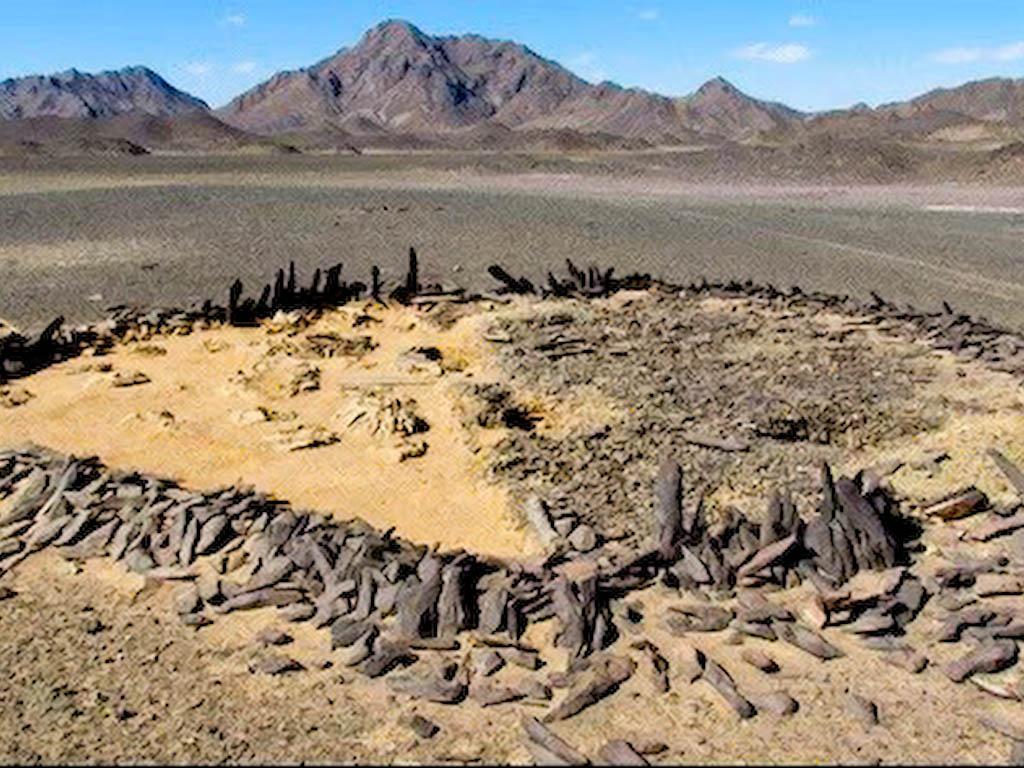 Between the Nile and the Red Sea lies the Atbaï Desert, one of the least explored regions of north-eastern Africa from an archaeological point of view. Long hidden beneath the sands, the remains [...]
  Once upon a time, in a small and peaceful village, there stood a carpenter’s workshop. Inside were many work tools: the saw, the plane, the hammer, the nails, the sandpaper, the file, the axe, [...]
  My friends, I am going to tell you a story that speaks to the heart, a story like clear water flowing gently through the soul, a lesson for a joyful life.
Once upon a time, there lived side by [...]
My friends, I am going to tell you a story that speaks to the heart, a story like clear water flowing gently through the soul, a lesson for a joyful life.
Once upon a time, there lived side by [...]  Let us listen carefully—both with intellect and discernment—to the story of the mwelele tree (a species of Ficus sycomorus) and the blind men in search of an elephant, for it is truly [...]
  For several years now, the world has been living in a state of profound disorder. It is as though it had entered an entropic phase: order no longer regenerates spontaneously, connections multiply [...]
  If I were to ask God for a gift, a single gift, a heavenly gift, I would ask Him, I believe without hesitation, to grant me the supreme art of the smile. It is what I most envy in certain people. It [...]
 Info
Email: jampypezzi@gmail.com - tel. +39 328 732 6990 / +243 991 457 856
This blog is made in 4 languages: it en fr es


 EDitt | Web Agency
Leave a comment