
Justice, Peace, Integrity
of Creation

Justice, Peace, Integrity
of Creation
By John Paul Pezzi, Mccj

Justice, Peace, Integrity
of Creation
By John Paul Pezzi, Mccj

Justice, Peace, Integrity
of Creation
By John Paul Pezzi, Mccj

Justice, Peace, Integrity
of Creation
By John Paul Pezzi, Mccj
The Dream of Immortality
Ethic 16.01.2026 Mariana Toro Nader Translated by: Jpic-jp.orgSince time immemorial, human beings have undertaken every possible effort to overcome death. Today, the quest for the elixir of eternal youth has taken the form of multi-billion-dollar investments in cellular reprogramming, senolytic drugs and biohacking. Where will Silicon Valley’s unbridled race towards longevity ultimately lead?

“No one has ever seen death’s face. No one has ever heard its voice. Yet, cruel as it is, death breaks men.” Inscribed on cuneiform clay tablets around 2150 BC, the Epic of Gilgamesh recounts the story of the king of Uruk who, terrified by the death of his friend Enkidu, embarks upon a journey in search of immortality.
It is no coincidence that the first recorded narrative in human history is a poem about existential anguish and the human impulse to evade death. Throughout history, human beings have devoted extraordinary efforts to uncovering the secret of longevity. In ancient China, the powerful Emperor Qin Shi Huang sent expeditions to find, once and for all, the potion of eternal life. In the Middle Ages, alchemists sought the philosopher’s stone and the elixir of life. In the modern era, countless explorers pursued the legendary fountain of youth. Centuries later, this enthusiasm is now shared by many of Silicon Valley’s most powerful magnates.
The Methuselah Question
One of the first to join the race to extend human life was Peter Thiel, co-founder of PayPal. In 2006, he pledged 3.5 million dollars to the Methuselah Foundation, a non-profit organisation dedicated to anti-ageing research with a focus on regenerative medicine and tissue engineering. Thiel was also an early investor in Unity Biotechnology, which develops drugs targeting senescent cells – damaged or ageing cells that do not die but release harmful substances. Furthermore, echoing the persistent legend surrounding Walt Disney’s supposed cryogenic preservation, Thiel reportedly has an agreement with the Alcor Life Extension Foundation, which specialises in cryonics.
In 2013, Google co-founder Larry Page launched the California Life Company (Calico Labs) to develop therapies for age-related diseases. This initiative has been credited as the forerunner of Altos Labs, a start-up specialising in cellular reprogramming and reportedly backed by Amazon founder Jeff Bezos as one of its major investors. Created by entrepreneur Yuri Milner, it is based on the research of Nobel Prize laureate Shinya Yamanaka, who discovered that adult cells can be reprogrammed to become pluripotent. Meanwhile, Sam Altman, CEO of OpenAI, invested around 180 million dollars of his personal fortune in 2022 in Retro Biosciences, whose mission is to extend human life expectancy by ten years.
At the same time, some of these tech entrepreneurs are contributing to scientific progress in various health fields. Sean Parker, co-founder of Napster, who suffers from a severe food allergy, and Sergey Brin, Google co-founder with a genetic predisposition to Parkinson’s disease, have both donated millions to research.
However, the most striking case is that of Bryan Johnson, a 48-year-old entrepreneur who claims to have the heart of a man ten years younger and the skin of someone twenty years his junior. His “secret”? Spending two million dollars a year on an anti-ageing odyssey including constant blood testing and medical evaluation, going to bed at eight in the evening, a strict diet prohibiting any food intake after eleven in the morning, consuming over one hundred supplements daily, receiving plasma transfusions from his own son and undergoing shockwave therapy to his penis. His flagship project, Blueprint, promotes products ranging from nutritional supplements to micro plastic detection tests and biological age assessments. Johnson, who considers himself “the healthiest person in the world”, summarises his philosophy in a single slogan: don’t die. Do not die, even if that means living under perpetual monitoring.
Meanwhile, the world’s richest man, Elon Musk, has little interest in the crusade for longevity. Despite investing millions in biotechnology through Neuralink, his brain-implant company, Musk argues that “if people did not die, we would be stuck with old ideas and society would not advance.” Unsurprisingly, he has openly ridiculed Johnson’s anti-ageing routine.
Immortality and the Battle Against Time
Ultimately, what these multi-billionaires are seeking to demonstrate is that what was once mere legend or science fiction may now become reality, with all the social and relational implications that a future populated by extremely long-lived individuals – or societies – would entail.
Yet, as witnessed with the attention crisis and surveillance capitalism, innovation in Silicon Valley consistently outpaces regulation and ethical reflection. Numerous experts have sounded the alarm over the concerns raised by biohacking and genetic editing.
One of the main criticisms is that this is a privilege reserved exclusively for those who can afford it. Moreover, many of these treatments have only been tested on mice, lack full scientific endorsement or rely on drugs originally developed to treat specific medical conditions – such as metformin, prescribed for type 2 diabetes, or rapamycin, an immunosuppressant used to prevent organ transplant rejection.
As renowned cardiologist and longevity researcher Eric Topol explains, “we do not need magic pills or futuristic treatments to slow ageing. It is enough to examine how we live, what we eat, how much we move, how we rest and with whom we spend our time.” In other words: less science fiction, more preventive medicine and healthier habits.
In just one century, global life expectancy has doubled. According to Our World in Data, humanity has gone from an average life expectancy of 32 years in 1900 to 73 years in 2023. It is likely that Silicon Valley’s colossal investments will help increase that figure further. However, as philosopher Costica Bradatan warns, “millennia of efforts to extend life have not bankrupted death.” For now, the advantage still lies with the clock.
See, El sueño de la inmortalidad
Ilustración: Óscar Gutiérrez
 One day, a man sat down beside his son and said to him in a solemn voice: “My boy, in our lives there is only one true crime: murder. Always stay away from that path. Never lay a hand on [...]
 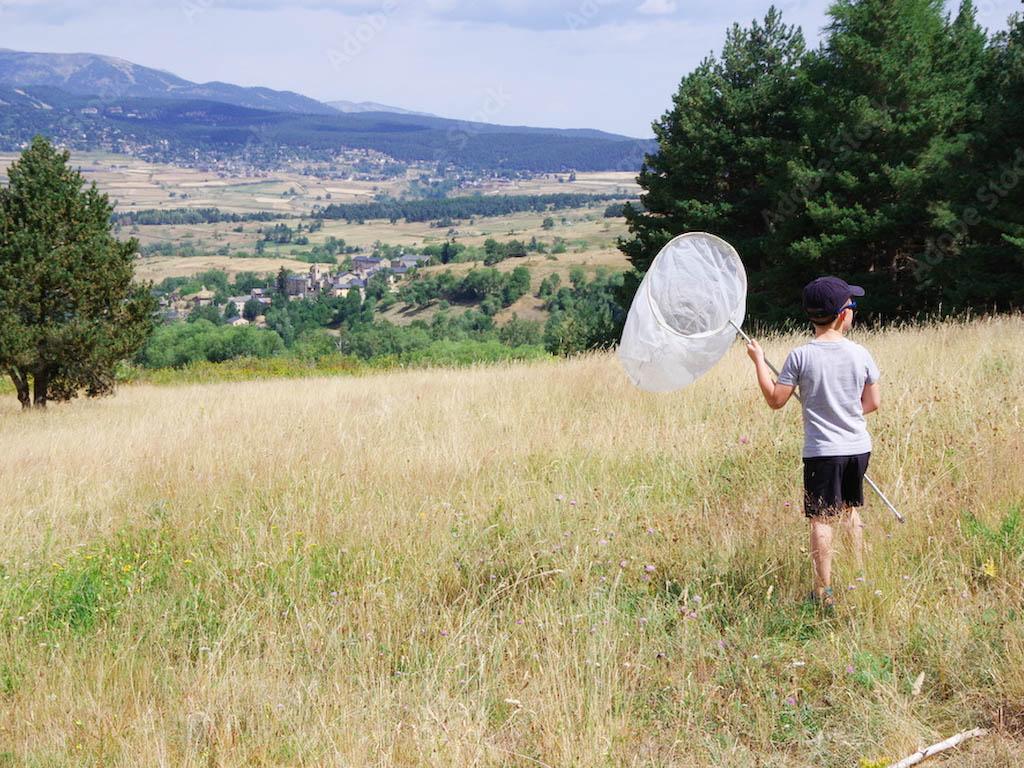 Once upon a time, in a village at the foot of a green mountain, there lived a boy called Elijah.
Elijah had a passion: butterflies. Not for studying them, nor for admiring them, but for keeping [...]
Once upon a time, in a village at the foot of a green mountain, there lived a boy called Elijah.
Elijah had a passion: butterflies. Not for studying them, nor for admiring them, but for keeping [...] 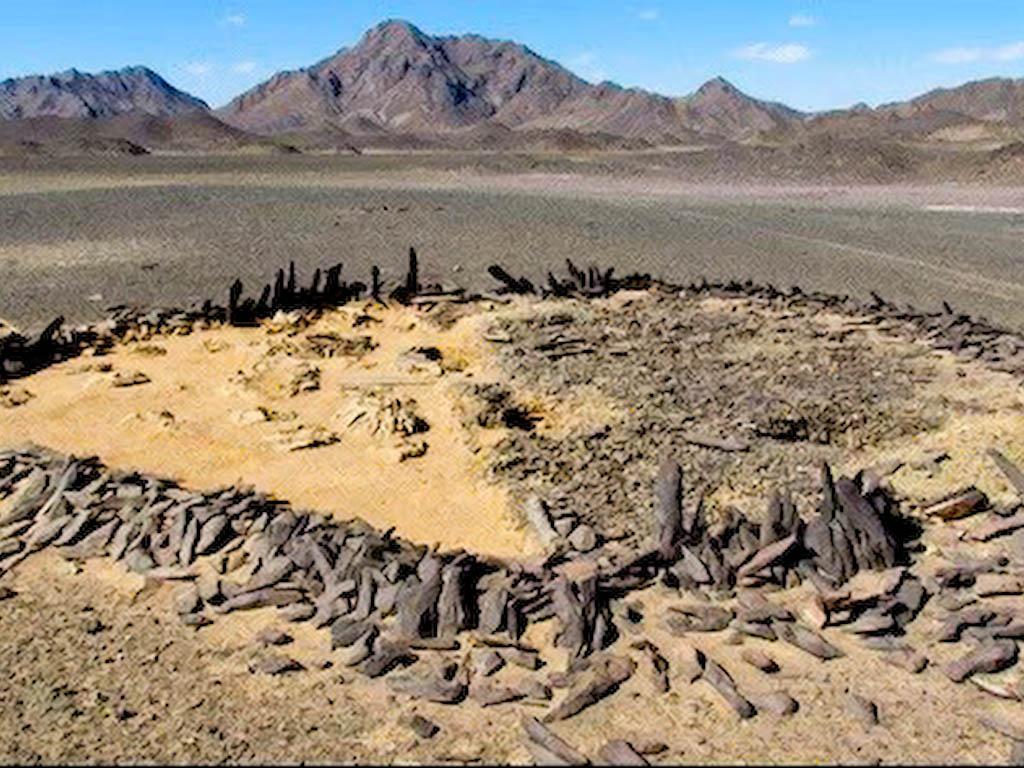 Between the Nile and the Red Sea lies the Atbaï Desert, one of the least explored regions of north-eastern Africa from an archaeological point of view. Long hidden beneath the sands, the remains [...]
  Once upon a time, in a small and peaceful village, there stood a carpenter’s workshop. Inside were many work tools: the saw, the plane, the hammer, the nails, the sandpaper, the file, the axe, [...]
  My friends, I am going to tell you a story that speaks to the heart, a story like clear water flowing gently through the soul, a lesson for a joyful life.
Once upon a time, there lived side by [...]
My friends, I am going to tell you a story that speaks to the heart, a story like clear water flowing gently through the soul, a lesson for a joyful life.
Once upon a time, there lived side by [...]  Let us listen carefully—both with intellect and discernment—to the story of the mwelele tree (a species of Ficus sycomorus) and the blind men in search of an elephant, for it is truly [...]
  If I were to ask God for a gift, a single gift, a heavenly gift, I would ask Him, I believe without hesitation, to grant me the supreme art of the smile. It is what I most envy in certain people. It [...]
 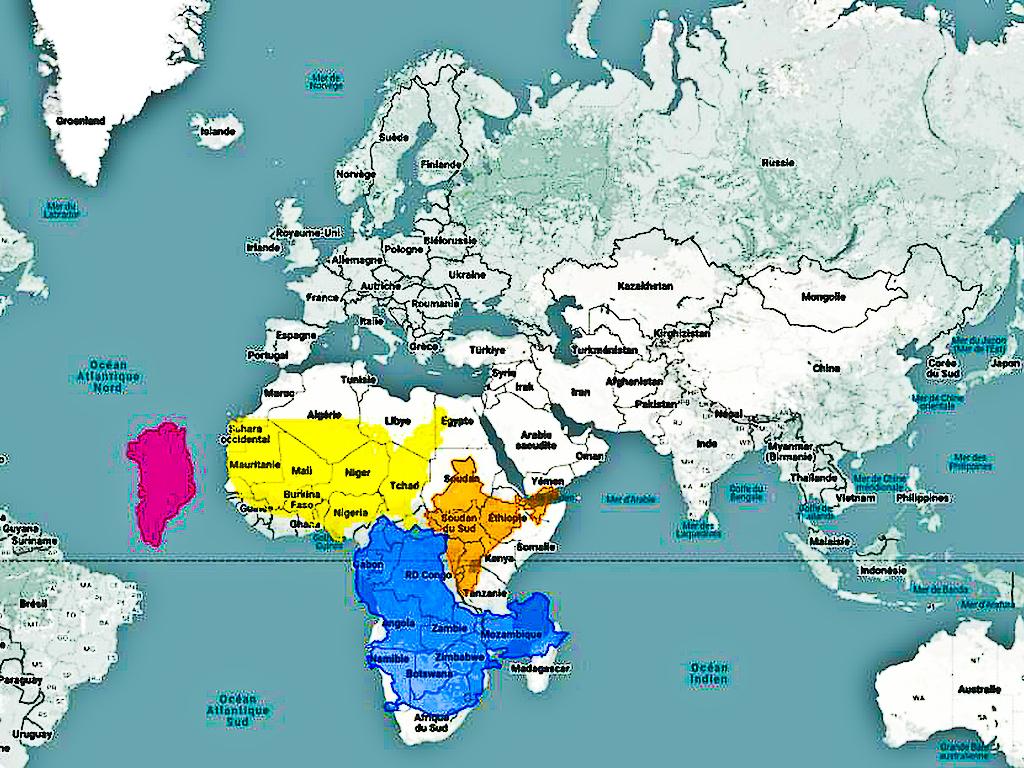 Greenland suffers from a serious case of the frog that wants to be as big as the ox. When you look at it on Google Maps, it parades with all the grandeur of a continent, appearing almost as large as [...]
  After many, many years spent alone, walking alone, singing alone and eating alone, Nasilele became bored with her loneliness and, one day, said to Nyambe: “I feel very sad and always feel like [...]
 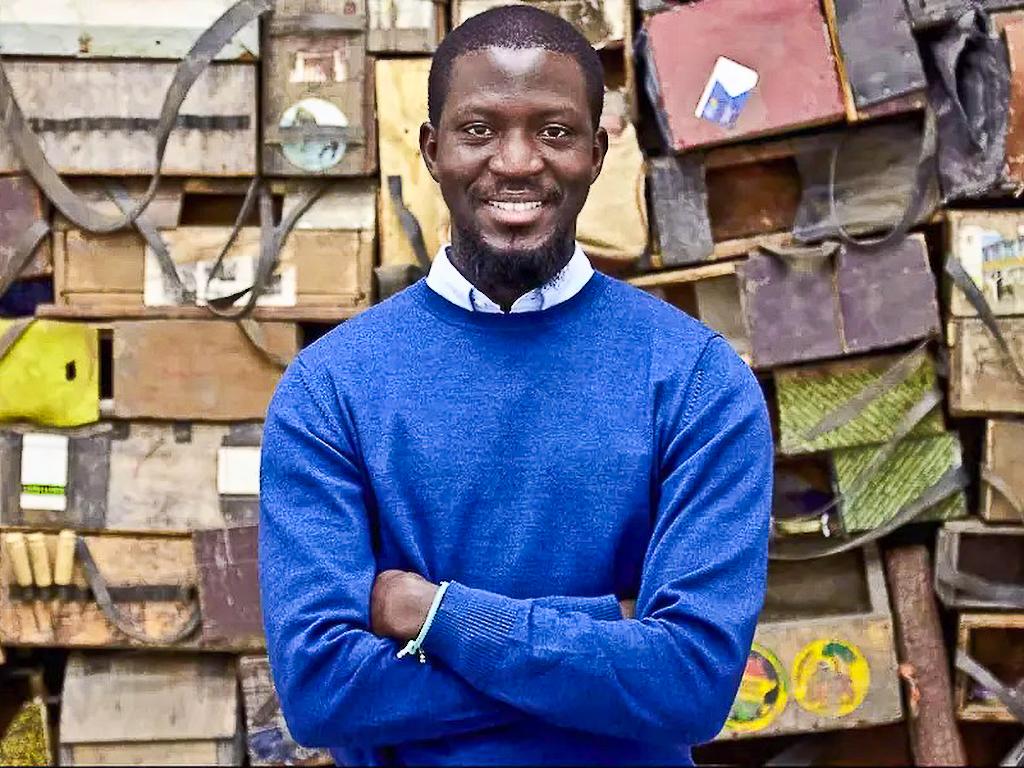 Contemporary African art is experiencing a period of significant international visibility, with artists reshaping the global landscape and bringing new perspectives, histories and identities from the [...]
 Info
Email: jampypezzi@gmail.com - tel. +39 328 732 6990 / +243 991 457 856
This blog is made in 4 languages: it en fr es





 EDitt | Web Agency
Leave a comment