
Justice, Peace, Integrity
of Creation
Justice, Peace, Integrity
of Creation
By John Paul Pezzi, Mccj
Justice, Peace, Integrity
of Creation
By John Paul Pezzi, Mccj
Justice, Peace, Integrity
of Creation
By John Paul Pezzi, Mccj
Justice, Peace, Integrity
of Creation
By John Paul Pezzi, Mccj
25 major achievements of this quarter century
Ethic 19.01.2026 Raquel C. Pico Translated by: Jpic-jp.orgAny of us would say that this first quarter of the century has been a period saturated with negative headlines: economic crises, wars, populism and an increasingly erratic international politics. Yet it is only fair to pause to recognise — and also, why not, to celebrate — the achievements we have secured over these twenty-five years, although, probably, not everyone will consider all of them as achievements.
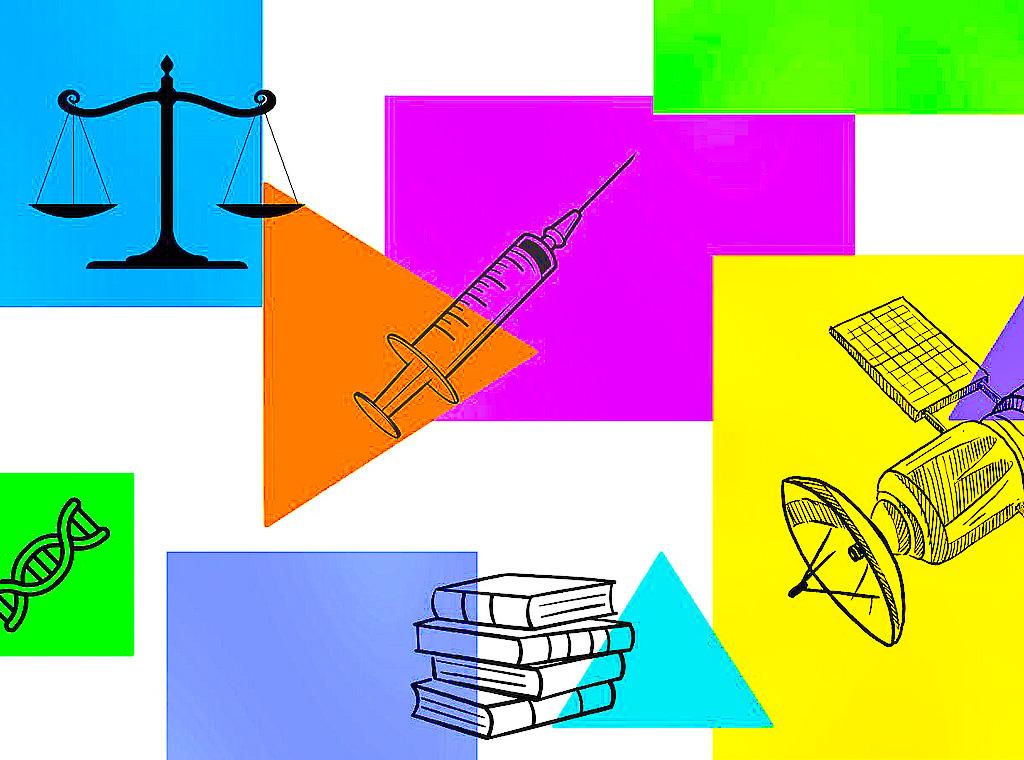
The twenty-first century has just reached its silver anniversary. At first glance, it is marked by several negative headlines: the attack on the Twin Towers, multiple economic crises, wars across the globe, a historic pandemic and the rise of populism. However, over the past 25 years, the world has also achieved significant environmental, educational, medical and social progress. These are some of them.
Literacy
Nine out of ten people in the world are now able to read and write. UNESCO statistics indicate that the global average literacy rate has reached 86%, a figure that far exceeds the 68% recorded in 1979 and demonstrates that efforts in basic education are yielding results.
The ozone layer
In the late 1980s and early 1990s, the ozone layer was losing density and an expanding hole had formed above Antarctica. Supranational agreements were signed and global protection measures were implemented. As a result, the twenty-first century has begun to reap the benefits. According to the World Meteorological Organization, in 2024 the hole was “the smallest in recent years” and, by the middle of the century, the situation is expected to be reversed. The ozone hole is now at one of the smallest levels recorded in recent years.
Decline in child mortality
Despite the persistence of significant gaps in access to healthcare systems, crucial vaccines and healthy nutrition, the twenty-first century has achieved a record reduction in child mortality. In 2022, the latest year for which data are available, 4.9 million children under the age of five died prematurely, representing a 51% decrease since 2000, according to United Nations data.
Reduction in extreme poverty
Extreme poverty figures have declined compared with the previous century. The twenty-first century began with a fairly rapid decrease, which allowed the global poverty rate to fall from 37.8% in 1990 to 11.2% in 2014, according to the United Nations. The figures are, however, mixed: from that year onwards, the decline became the slowest in three decades, a trend further exacerbated by the COVID-19 crisis. Although levels remain at historic lows, the World Bank warns that it may take a century to eradicate poverty completely.
Marriage equality
When Spain approved marriage equality in 2005, it became the third country to legislate on the matter, after the Netherlands and Belgium, which had done so in 2001 and 2003 respectively. Since then, the list has grown to 39 countries. This equalisation of rights is the most visible, but not the only one: the twenty-first century has been particularly dynamic in advancing equal rights for the LGTBIQ+ community.
Gender equality
Another major area of progress in equality has been gender, with significant changes in reproductive rights and equal rights legislation — or a greater social awareness of their importance. Although the first quarter of the century has entailed major advances, much remains to be done. According to Amnesty International, laws that discriminate against women still persist in 90% of countries. Thus, even in those that have made substantial progress, such as Spain, it is estimated that decades will still be required to close the gap in the labour sphere.
Paternity leave
Achieving a more equitable distribution of care responsibilities is one of the key pillars of gender equality. Undoubtedly, one of the major changes of this century has been the evolving perception of fatherhood and the expansion of its associated rights. Spain has equalised the duration of birth leave for both parents (compared with just two days at the beginning of the century), an example of the trend being set by leading countries.
Fewer road traffic deaths
In 2024, 19,800 people died in road traffic accidents in the European Union. In 2009 the figure was just over 35,000, and in 1999 it was nearly 42,000. Regulatory changes, greater public awareness and enhanced vehicle safety measures have produced a notable decline in road fatalities over recent decades.
More democracies
The twenty-first century began with a milestone: according to data from the Carnegie Corporation, the number of democracies exceeded that of dictatorships for the first time (98 versus 80). This achievement held for a time, although in 2019 dictatorships once again outnumbered democracies (92 versus 87) and populism began to threaten the latter. Even so, the shift towards democratic strengthening remains possible.
Connectivity and cultural diversity
The boom of the internet and technological advances have created a hyper connected world. Its drawbacks are often discussed more than its merits, yet connectivity has allowed many more voices to enter the global conversation. Popular culture has become more diverse, with a wider range of perspectives and focal points.
Reading rates
This century has also witnessed a revival in reading. Lockdown reconnected part of the public with books, and Generation Z has made its favourite novels go viral via TikTok. In 2024, Spain recorded its highest-ever percentage of the population reading in their leisure time (65.5%, rising to 75.3% among those aged 14 to 24), according to the Reading Habits Barometer. The global book market was valued at 150.99 billion dollars in 2024, according to Grand View Research, and could reach 192.1 billion dollars by 2030.
Cleaner air
We are still far from the targets of the Paris Agreement, yet improvements in air quality have been recorded over these two decades. Levels of particulate matter and carbon dioxide fell in Europe between 2003 and 2019, according to data from ISGlobal, which nevertheless stresses the need to continue working in this area.
River restoration
For decades, minnows, loach and chub had disappeared from the Manzanares River in Spain. Fish populations had vanished due to poor water quality. However, in 2021, reintroduction programmes began and the regeneration of its ecosystem within the Madrid Río framework has helped them to remain. The Madrid river is not the only one to have recovered its health. After a century-long ban due to toxicity, it is now possible to swim in the Seine in Paris or in the Chicago River.
Greening of cities
Thirty-one per cent of Paris’s urban surface is green, whether in the form of parks, green roofs or trees. Since 2020, 200 streets have been converted into landscaped areas. Its ambitious “greening” policy has become the emblem of a movement that extends far beyond the French capital. Cities are reclaiming green spaces in an effort to become more resilient to climate change and healthier for their inhabitants.
Species saved from extinction
In 2001, the IUCN Red List of Threatened Species classified the Iberian lynx as endangered. Its disappearance was considered plausible. Two decades later, the species was reclassified as vulnerable, the fear of extinction receded and the population of Iberian lynxes exceeded 2,000 individuals. It now stands as a clear example that species recovery is possible.
Renewable energy
Ninety-nine per cent of Costa Rica’s electricity and 71% of Portugal’s electricity are already generated from renewable sources. Globally, these energies surpassed coal-fired electricity production for the first time in history in the first half of 2025, according to data from Ember. Driven by the need to decarbonise the economy and enhance energy autonomy, renewables have advanced markedly since 2000 and now generate 40.9% of all global electricity.
Increase in life expectancy
Despite the shock caused by the COVID-19 pandemic, the twenty-first century has seen gains in global life expectancy. According to WHO estimates, the global average reached 73.3 years in 2024, that is 8.4 years more than in 1995. The United Nations projects that it will reach 77.2 years by 2050. Figures are higher in developed countries: in Europe, life expectancy stands at 81.7 years, and at 84 years in Spain.
Improved cancer survival rates
Cancer remains one of the major medical challenges, yet scientific advances in recent decades have improved treatments and recovery prospects. As noted by the Spanish Society of Medical Oncology, some tumours already have survival rates of 90%. Overall, patients’ quality of life and diagnostic efficiency have improved.
The human genome
Understanding the secrets of DNA represents a qualitative leap in grasping the essence of human biology. In 2003, the Human Genome Project succeeded for the first time in decoding the human genome, although certain shadow regions still remained. In 2022, the sequence was completed. This has opened the door to major scientific advances, from understanding why some people develop certain diseases and others do not, to the creation of personalised medicine and enhanced prevention.
Quality of life and chronic diseases
One of the great silent advances of the twenty-first century has been the improvement in the quality of life of chronic patients, thanks to new medicines and the shift towards a holistic vision of health. Likewise, pharmaceutical development has meant that diseases with high mortality rates in the twentieth century, such as HIV, have become chronic and not necessarily fatal.
Advances in vaccines
The coronavirus pandemic was one of the most complex crises of this century, but also the setting for one of its most powerful achievements. Instead of years, only months were needed to develop vaccines. Scientific collaboration, public sector support, the overlap of development phases and the use of messenger RNA accelerated the process of creating, testing and deploying vaccines.
Transplants
In addition to reducing organ rejection and improving the immunosuppressive drugs that transplant recipients must take, research is exploring alternatives such as the use of animal or artificial organs. This could significantly reduce patients’ waiting times.
Mental health
Mental health has emerged as a central issue of the twenty-first century, with society increasingly committed to dismantling long-standing taboos. Not only is mental health discussed more openly than before, but awareness of its importance and of the contextual factors that negatively affect psychological well-being has also increased. Thus, 62% of the Spanish population identify it as their main health concern, according to an Ipsos study.
Journey to Mars
Mars has long been a staple of literary and cinematic imagination. Today, however, imagination is no longer required to understand the red planet, as probes sent in recent decades have returned a vast amount of data. Indeed, the frontier no longer lies in gathering information but in travelling there. If the great space race of the twentieth century was the Moon landing, that of the twenty-first century will be reaching Mars. For instance, SpaceX expects to send the first humans to Mars in 2029.
The rise of artificial intelligence
Although we are increasingly aware of the risks and ethical challenges associated with AI, it is undoubtedly the major technological breakthrough of this first quarter of the century. Its potential benefits are immense: improving medical diagnostics, preventing natural risks, designing better products or supporting precision agriculture to obtain higher-quality food, among many others. And AI is not the final frontier: the next major technological leap is already on the horizon with quantum computing.
See: 25 grandes logros de este cuarto de siglo
Illustration - Mariana Toro
The comments from our readers (2)
 One day, a man sat down beside his son and said to him in a solemn voice: “My boy, in our lives there is only one true crime: murder. Always stay away from that path. Never lay a hand on [...]
  Once upon a time, in a village at the foot of a green mountain, there lived a boy called Elijah.
Elijah had a passion: butterflies. Not for studying them, nor for admiring them, but for keeping [...]
Once upon a time, in a village at the foot of a green mountain, there lived a boy called Elijah.
Elijah had a passion: butterflies. Not for studying them, nor for admiring them, but for keeping [...]  Between the Nile and the Red Sea lies the Atbaï Desert, one of the least explored regions of north-eastern Africa from an archaeological point of view. Long hidden beneath the sands, the remains [...]
  Once upon a time, in a small and peaceful village, there stood a carpenter’s workshop. Inside were many work tools: the saw, the plane, the hammer, the nails, the sandpaper, the file, the axe, [...]
  My friends, I am going to tell you a story that speaks to the heart, a story like clear water flowing gently through the soul, a lesson for a joyful life.
Once upon a time, there lived side by [...]
My friends, I am going to tell you a story that speaks to the heart, a story like clear water flowing gently through the soul, a lesson for a joyful life.
Once upon a time, there lived side by [...]  Let us listen carefully—both with intellect and discernment—to the story of the mwelele tree (a species of Ficus sycomorus) and the blind men in search of an elephant, for it is truly [...]
  If I were to ask God for a gift, a single gift, a heavenly gift, I would ask Him, I believe without hesitation, to grant me the supreme art of the smile. It is what I most envy in certain people. It [...]
 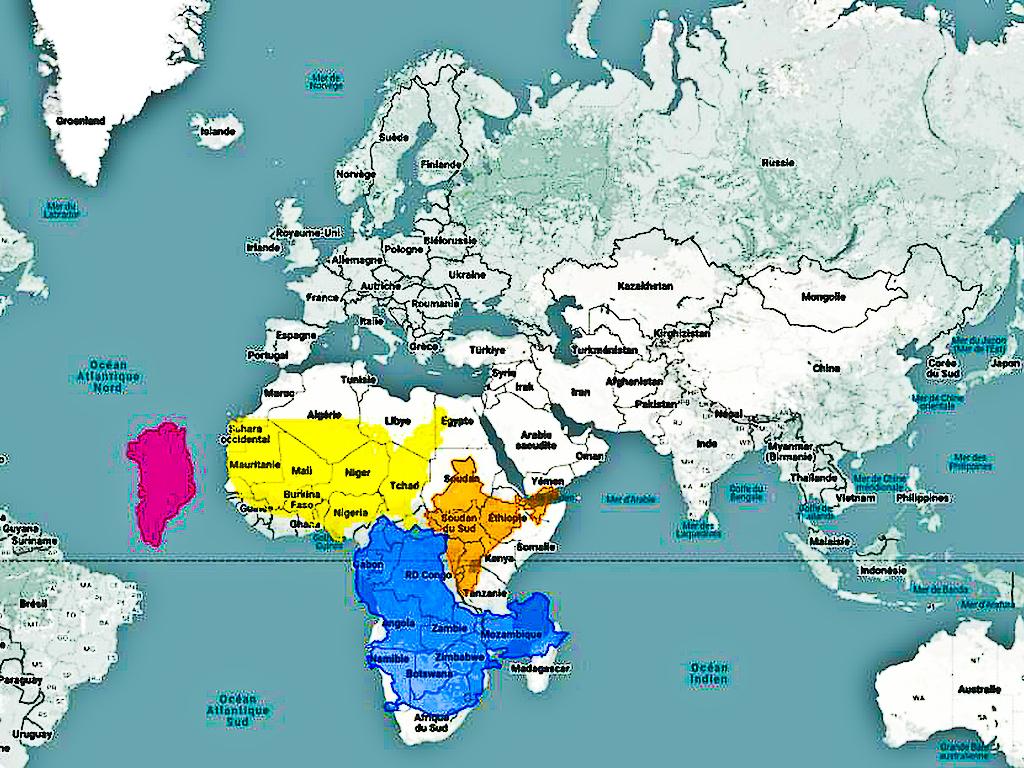 Greenland suffers from a serious case of the frog that wants to be as big as the ox. When you look at it on Google Maps, it parades with all the grandeur of a continent, appearing almost as large as [...]
  After many, many years spent alone, walking alone, singing alone and eating alone, Nasilele became bored with her loneliness and, one day, said to Nyambe: “I feel very sad and always feel like [...]
  Contemporary African art is experiencing a period of significant international visibility, with artists reshaping the global landscape and bringing new perspectives, histories and identities from the [...]
 Info
Email: jampypezzi@gmail.com - tel. +39 328 732 6990 / +243 991 457 856
This blog is made in 4 languages: it en fr es

 EDitt | Web Agency
Leave a comment