
Justice, Peace, Integrity
of Creation
Justice, Peace, Integrity
of Creation
By John Paul Pezzi, Mccj

Justice, Peace, Integrity
of Creation
By John Paul Pezzi, Mccj

Justice, Peace, Integrity
of Creation
By John Paul Pezzi, Mccj

Justice, Peace, Integrity
of Creation
By John Paul Pezzi, Mccj
Truth Has Many Facets
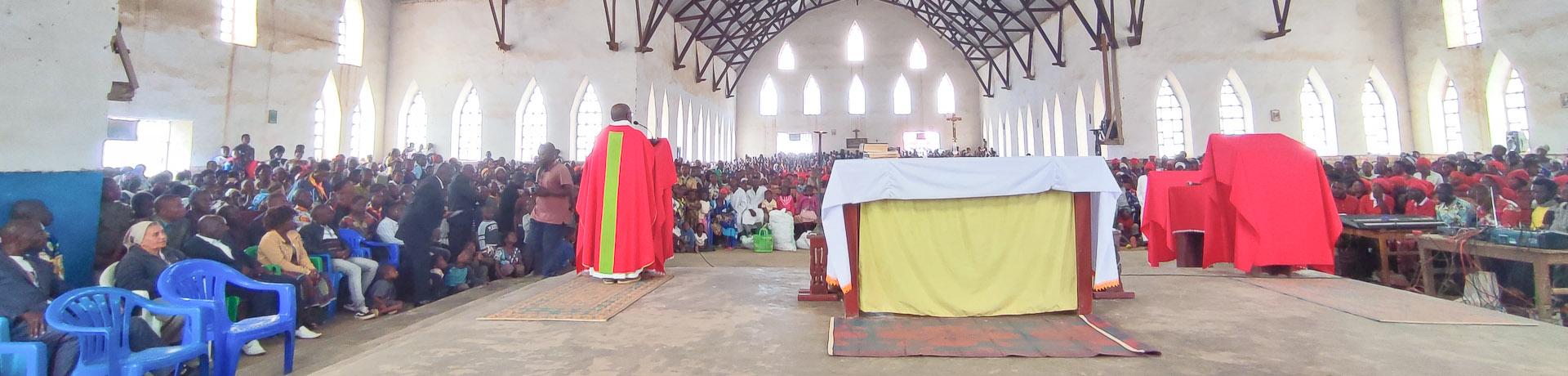
Butembo 10.05.2026 Jpic-jp.org Translated by: Jpic-jp.orgIn the era of post-truth, where perceptions outweigh facts and information circulates in fragmented form, popular wisdom urges us to seek the truth collectively, with humility and mutual attentiveness, beginning from shared narratives. This tale offers a strikingly contemporary lens of interpretation. As with fake news, each individual risks grasping only a fragment of reality and defending it as absolute.

Let us listen carefully—both with intellect and discernment—to the story of the mwelele tree (a species of Ficus sycomorus) and the blind men in search of an elephant, for it is truly remarkable: two small birds, six blind men and an elephant reveal how some possess eyes that see, yet remain blind at heart.
Long ago, on a mwelele tree, there lived two small birds. They were by no means physically blind—quite the contrary. Yet they were so full of pride that, in their minds, they had begun to close their eyes as well. One of them, perched on the highest branch, chirped and one day exclaimed joyfully: “Look how beautiful these leaves are, such a brilliant green!” The other, positioned slightly lower on a forked branch, replied irritably: “Do you even have eyes? These leaves are white! You need spectacles!”
The one above laughed arrogantly: “You are the blind one! The leaves are entirely green!” Their words inflamed tempers, and anger grew between the two disputants: who was right? At last, the one below said sharply: “I challenge you! Come down and see. If you are right, I will give you the feathers of my tail! You who understand nothing!”
Anger bristled their neck feathers as the one above swiftly descended, accepting the challenge. When they stood face to face, before coming to blows, they looked up at the fateful leaves—the subject of their quarrel—to confirm their certainty. Then the one who had descended was astonished: “Oh! But it is true… the leaves are white!” He then said to the other: “Now you come up to where I was.” They climbed to the highest branch and, looking downwards, declared together: “Oh! But from here they are indeed green!”
They looked at one another, laughed and reconciled. They understood that each possessed only a portion of the truth. As a proverb says: “If you wish to understand persons, live with them.” And again: “Do not judge someone until you have walked at least a mile in his shoes.”
Yet the story does not end there, for human beings often behave like those two little birds. On the other side of the savannah, not far from that mwelele tree, six blind men were arguing about what an elephant might be. They spoke rapidly, without understanding one another. At last, they said: “Arriving late does not mean not arriving at all. Let us not remain in ignorance! Let us go and discover what an elephant is!”
After a long wandering, they heard the trumpet of an elephant and approached it cautiously. The first stumbled and fell against the animal’s flank; he rubbed his hand along it and exclaimed: “Oh! An elephant is like the wall of a house!”
The second encountered a tusk and retorted: “No! An elephant is like a spear!” The third, who had grasped the trunk, cried out in annoyance: “What are you saying? An elephant resembles a snake!”
“You are all mistaken!” declared the fourth, clinging to one of the animal’s legs. “An elephant is like the tree trunk!”
The fifth, the tallest of them all, circling the elephant, bumped into one of its large ears: “No, fools, this animal is like a fan!”
The sixth, who had approached cautiously, came upon the tail and exclaimed with satisfaction: “Ah! An elephant is nothing but a rope!”
Upon their return, they began to argue, each defending his own view, born—each insisted—“from personal experience”. All were expressing their truth, yet it was an incomplete truth. Hence the proverb: “Truth is like an elephant: one cannot perceive it in its entirety through the eyes of a blind man.”
Young people, those two birds and those blind men teach us the same lesson: whoever sees only a part must not boast as though they had seen the whole. As a Greek sage once said: “The beginning of knowledge is to know that one does not know,” for “he who asks learns; he who believes he knows and does not ask remains in darkness.” True wisdom belongs to the one who recognises that they do not know everything, for genuine knowledge begins when a person acknowledges their own ignorance.
My dear young people, do not take pride in the little that you know. The world is so rich that each person carries within him/her a portion of truth, but also a portion of blindness. Let us listen to one another, learn from each other and remain humble. Even the sun of today does not know what tomorrow will bring.
Those two birds and those blind men teach us that each person can perceive only a part of the truth, and that what we hold to be true does not always coincide with reality. Without judging hastily or boasting of our knowledge, let us strive to understand the perspectives of others. The two birds quarrelled because, being in different positions on the tree, they perceived things differently; by exchanging places, they came to understand each other’s truth and were reconciled. Likewise, the blind men argued because each, having experienced a different part of the elephant, believed he possessed the whole truth.
Such is life: truth has many facets. Let us not quarrel hastily; rather, let us listen, shift our perspective, and accept that we do not know everything. In doing so, we move closer to genuine wisdom.
 One day, a man sat down beside his son and said to him in a solemn voice: “My boy, in our lives there is only one true crime: murder. Always stay away from that path. Never lay a hand on [...]
  Once upon a time, in a village at the foot of a green mountain, there lived a boy called Elijah.
Elijah had a passion: butterflies. Not for studying them, nor for admiring them, but for keeping [...]
Once upon a time, in a village at the foot of a green mountain, there lived a boy called Elijah.
Elijah had a passion: butterflies. Not for studying them, nor for admiring them, but for keeping [...] 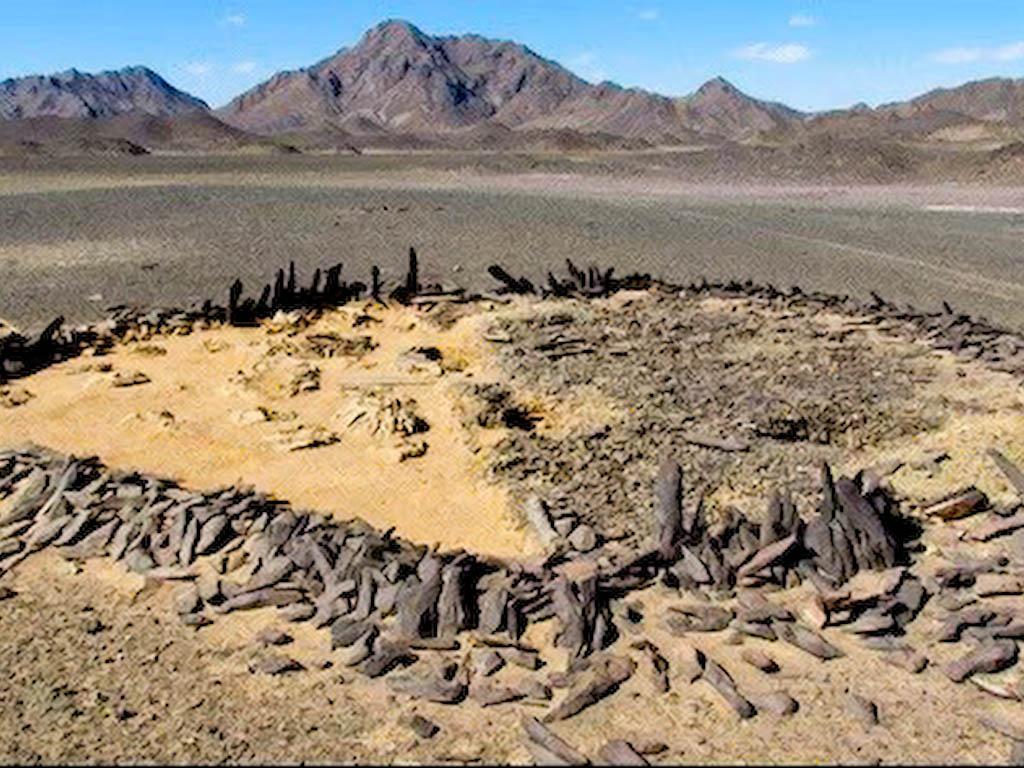 Between the Nile and the Red Sea lies the Atbaï Desert, one of the least explored regions of north-eastern Africa from an archaeological point of view. Long hidden beneath the sands, the remains [...]
  Once upon a time, in a small and peaceful village, there stood a carpenter’s workshop. Inside were many work tools: the saw, the plane, the hammer, the nails, the sandpaper, the file, the axe, [...]
  My friends, I am going to tell you a story that speaks to the heart, a story like clear water flowing gently through the soul, a lesson for a joyful life.
Once upon a time, there lived side by [...]
My friends, I am going to tell you a story that speaks to the heart, a story like clear water flowing gently through the soul, a lesson for a joyful life.
Once upon a time, there lived side by [...]  If I were to ask God for a gift, a single gift, a heavenly gift, I would ask Him, I believe without hesitation, to grant me the supreme art of the smile. It is what I most envy in certain people. It [...]
 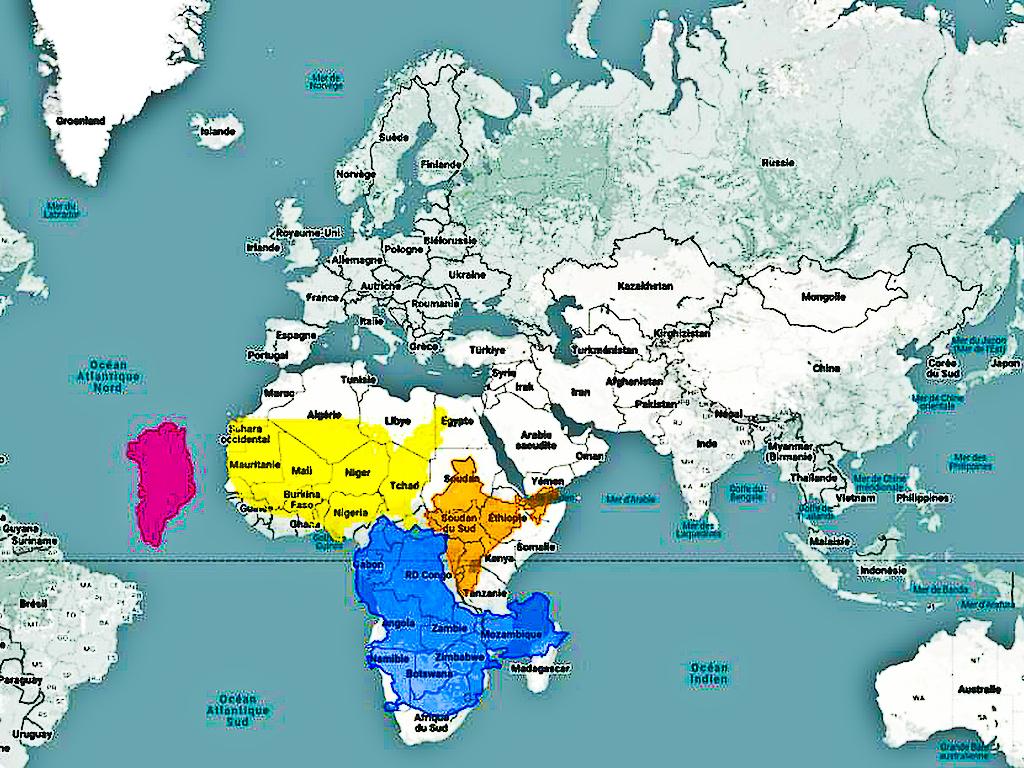 Greenland suffers from a serious case of the frog that wants to be as big as the ox. When you look at it on Google Maps, it parades with all the grandeur of a continent, appearing almost as large as [...]
  After many, many years spent alone, walking alone, singing alone and eating alone, Nasilele became bored with her loneliness and, one day, said to Nyambe: “I feel very sad and always feel like [...]
  Contemporary African art is experiencing a period of significant international visibility, with artists reshaping the global landscape and bringing new perspectives, histories and identities from the [...]
 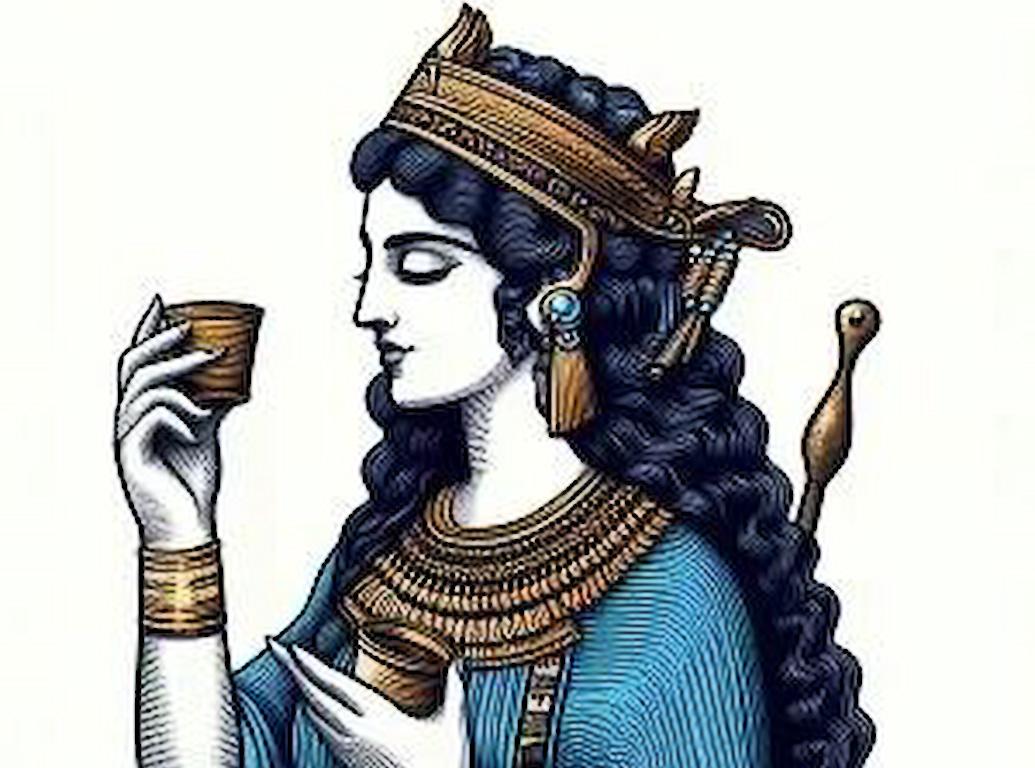 Long overshadowed by the canonical figures of the Western tradition, Enheduanna is nevertheless the first known author in history. More than 4,000 years ago, in Mesopotamia, this high priestess [...]
 Info
Email: jampypezzi@gmail.com - tel. +39 328 732 6990 / +243 991 457 856
This blog is made in 4 languages: it en fr es




 EDitt | Web Agency
Leave a comment