Justice, Peace, Integrity
of Creation
Justice, Peace, Integrity
of Creation
By John Paul Pezzi, Mccj

Justice, Peace, Integrity
of Creation
By John Paul Pezzi, Mccj
Justice, Peace, Integrity
of Creation
By John Paul Pezzi, Mccj

Justice, Peace, Integrity
of Creation
By John Paul Pezzi, Mccj
The Sacrament of the Smile
Butembo 10.04.2026 Editjpic-jp.org Translated by: Jpic-jp.orgAt Easter, the Christian tradition recalls that Christ, in His mercy, descended into hell to bring forth from there Adam and Eve, symbols of fallen humanity. This act is a victory over death and also the restoration of hope. We may imagine that Adam and Eve carried with them out of Paradise something that sin had not succeeded in destroying: the capacity to smile. The Easter smile is that redeemed smile, that fragile yet victorious smile, which humanity continues to bear as the memory of a lost joy and the promise of a future regained.
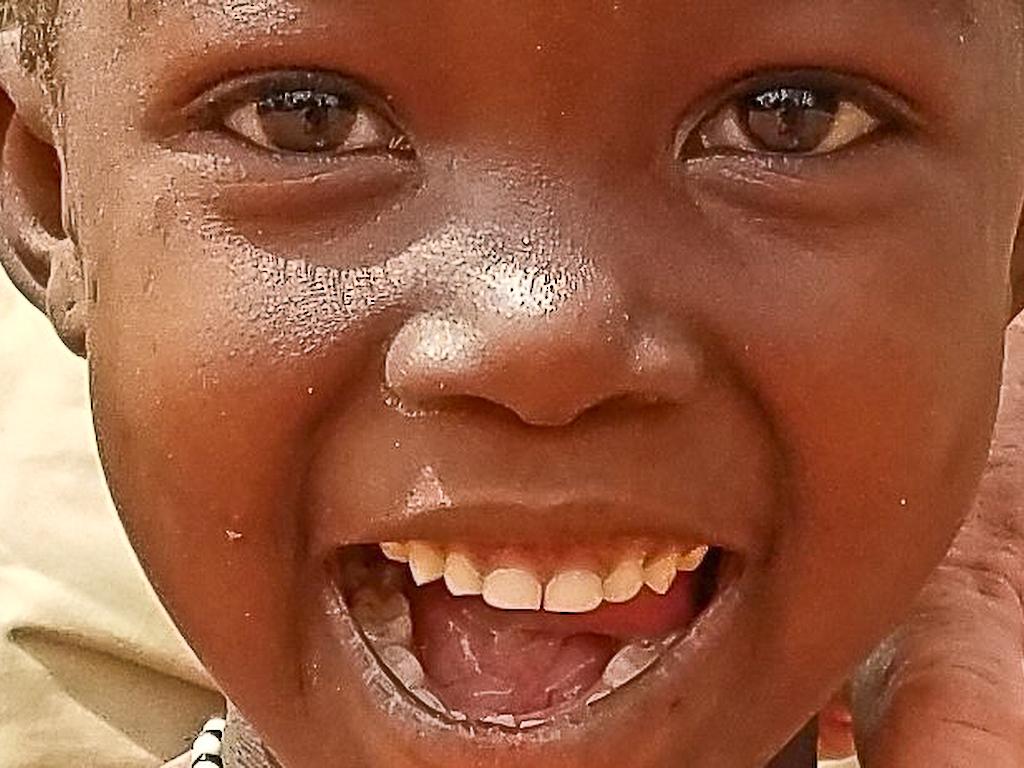
If I were to ask God for a gift, a single gift, a heavenly gift, I would ask Him, I believe without hesitation, to grant me the supreme art of the smile. It is what I most envy in certain people. It seems to me the most beautiful of human expressions.
There are, I know, deceitful, ironic, scornful smiles, and even those which, in Romantic theatre, were called “sardonic laughs”. These are the kinds of smiles of which Shakespeare said, in one of his comedies, that “one can kill with a smile”. It is not of such smiles that I speak. It is sad that even the smile can decay. But it is not worth dwelling on corruption.
I speak rather of those smiles that spring from an illumined soul, of those that are like the crest of a lightning flash in the night, of what one feels upon seeing a deer run, or of what the murmur of water from a fountain in a solitary forest produces in the ear; the smile that miraculously appears on the face of an eight-month-old child, and which some human beings — very few — manage to preserve throughout their entire lives.
It seems to me that this smile is one of the few things that Adam and Eve succeeded in bringing out of Paradise when they were expelled from it, and for this reason, when one sees a face that knows how to smile, one has the impression of returning, for a few seconds, to Paradise. Rosales expresses it wonderfully when he writes that “it is true that one may lose oneself in a smile as in a forest, and it is true that, perhaps, one may live for years and years without recovering from a smile”.
It is therefore very easy to fall in love with people who possess a beautiful smile. And how happy are those who are close by a loved one upon whose face that marvellous radiance so often appears!
But the great question is, it seems to me, how does one come to smile? Is it a pure gift from heaven? Or is it something that is built, like a house? I suppose it is a mixture of both, but with a predominance of the latter. A beautiful person, a clean and pure face, is already on the right path towards attaining a radiant smile. Yet we all know elderly men and women with extraordinary smiles. That is why I would say that a beautiful smile is more an art than an inheritance; something that must be built patiently and laboriously.
With what? With inner balance, with peace in the soul, with a love without boundaries. Those who love deeply smile easily, for the smile is, above all, a great inner fidelity to oneself. A bitter person will never know how to smile — still less a proud one.
It is an art that must be practised obstinately and constantly. One must not learn to make grimaces before a mirror, for the fruit of that kind of rehearsal is the mask and not the smile. One must learn in life, allowing inner joy to illumine all that happens to us each day, and impose upon each of our words the obligation not to reach the lips without first having been bathed in a smile, just as, in the morning, we require children to wash before leaving the house.
Everything may be said. There are no forbidden truths. What ought to be forbidden is speaking the truth with bitterness, with the desire to wound. When a single one of our sentences irritates others, it is not because they are selfish or unwilling to hear the truth, but because we have not known how to say it, because we have not had sufficient love to reflect seven times on how we are going to express that harsh truth. We ought to do so as we would when considering how to tell a friend that his mother has died. The practice of adding a few drops of smiling humour to all our verbal “cocktails” is generally unfailing.
For in every smile there is something of the transparency of God, something of great peace. That is why I dare to speak of the smile as a sacrament: because it is the visible sign that our soul is open.
(From Martin Descalzo – The Sacrament of the Smile).
The comments from our readers (2)
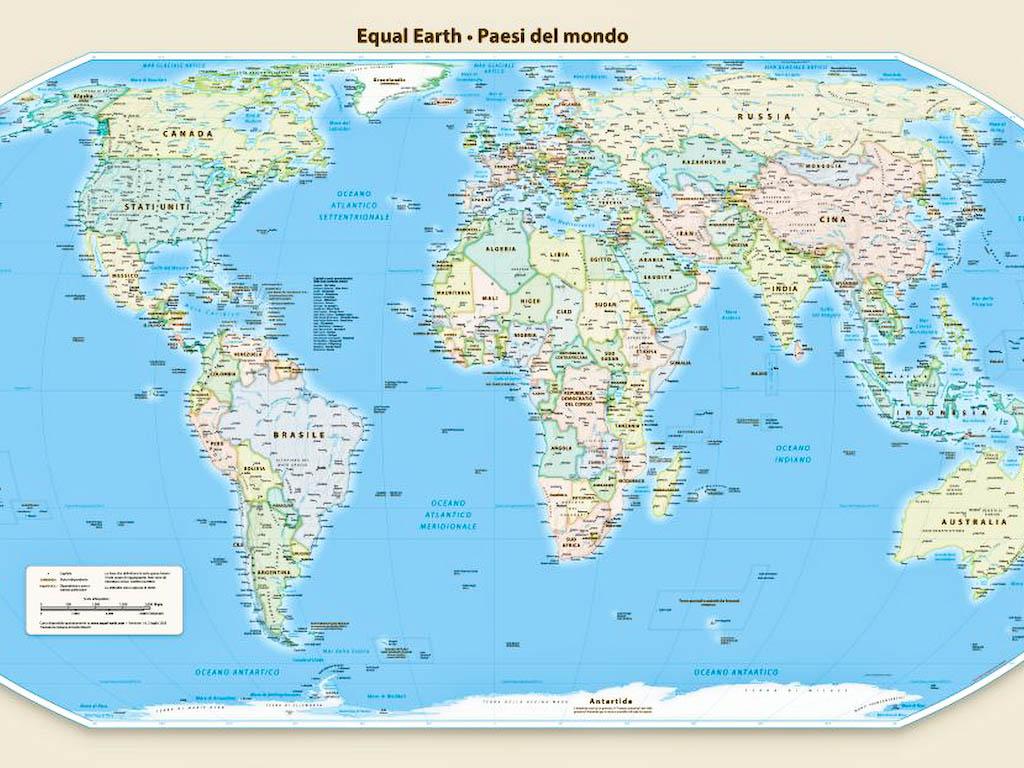 The African Union (AU) has officially endorsed a campaign to replace the Mercator map, widely used since the sixteenth century, with a geographically more accurate projection. According to the [...]
  One day, a man sat down beside his son and said to him in a solemn voice: “My boy, in our lives there is only one true crime: murder. Always stay away from that path. Never lay a hand on [...]
 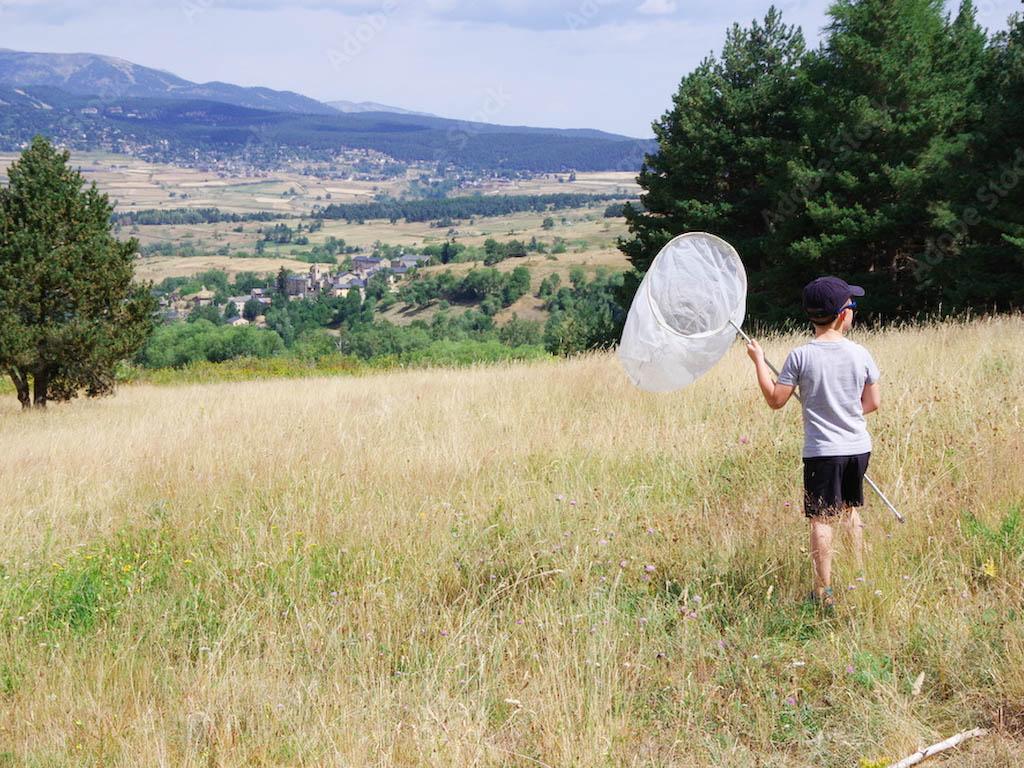 Once upon a time, in a village at the foot of a green mountain, there lived a boy called Elijah.
Elijah had a passion: butterflies. Not for studying them, nor for admiring them, but for keeping [...]
Once upon a time, in a village at the foot of a green mountain, there lived a boy called Elijah.
Elijah had a passion: butterflies. Not for studying them, nor for admiring them, but for keeping [...] 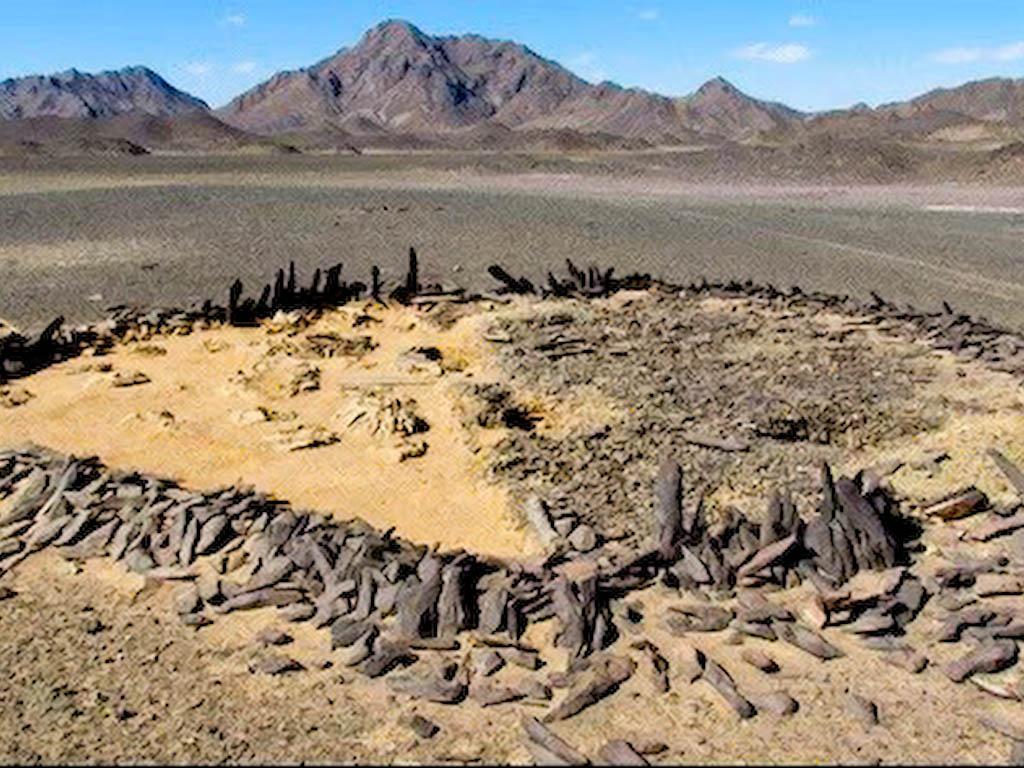 Between the Nile and the Red Sea lies the Atbaï Desert, one of the least explored regions of north-eastern Africa from an archaeological point of view. Long hidden beneath the sands, the remains [...]
  Once upon a time, in a small and peaceful village, there stood a carpenter’s workshop. Inside were many work tools: the saw, the plane, the hammer, the nails, the sandpaper, the file, the axe, [...]
  My friends, I am going to tell you a story that speaks to the heart, a story like clear water flowing gently through the soul, a lesson for a joyful life.
Once upon a time, there lived side by [...]
My friends, I am going to tell you a story that speaks to the heart, a story like clear water flowing gently through the soul, a lesson for a joyful life.
Once upon a time, there lived side by [...]  Let us listen carefully—both with intellect and discernment—to the story of the mwelele tree (a species of Ficus sycomorus) and the blind men in search of an elephant, for it is truly [...]
 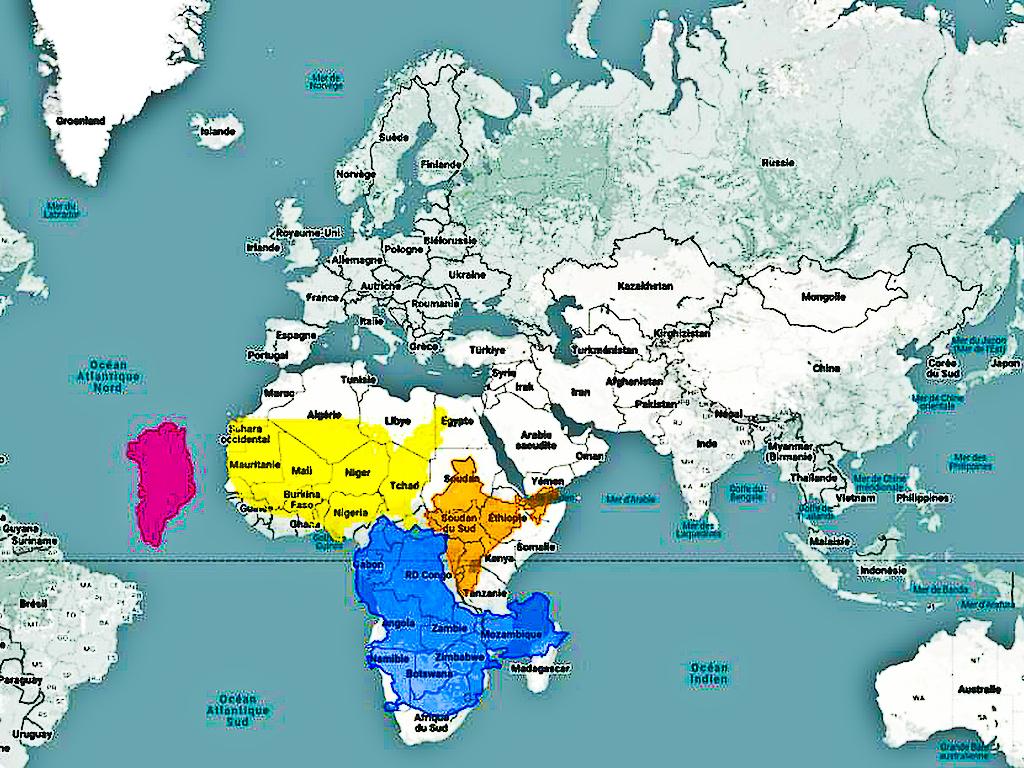 Greenland suffers from a serious case of the frog that wants to be as big as the ox. When you look at it on Google Maps, it parades with all the grandeur of a continent, appearing almost as large as [...]
  After many, many years spent alone, walking alone, singing alone and eating alone, Nasilele became bored with her loneliness and, one day, said to Nyambe: “I feel very sad and always feel like [...]
 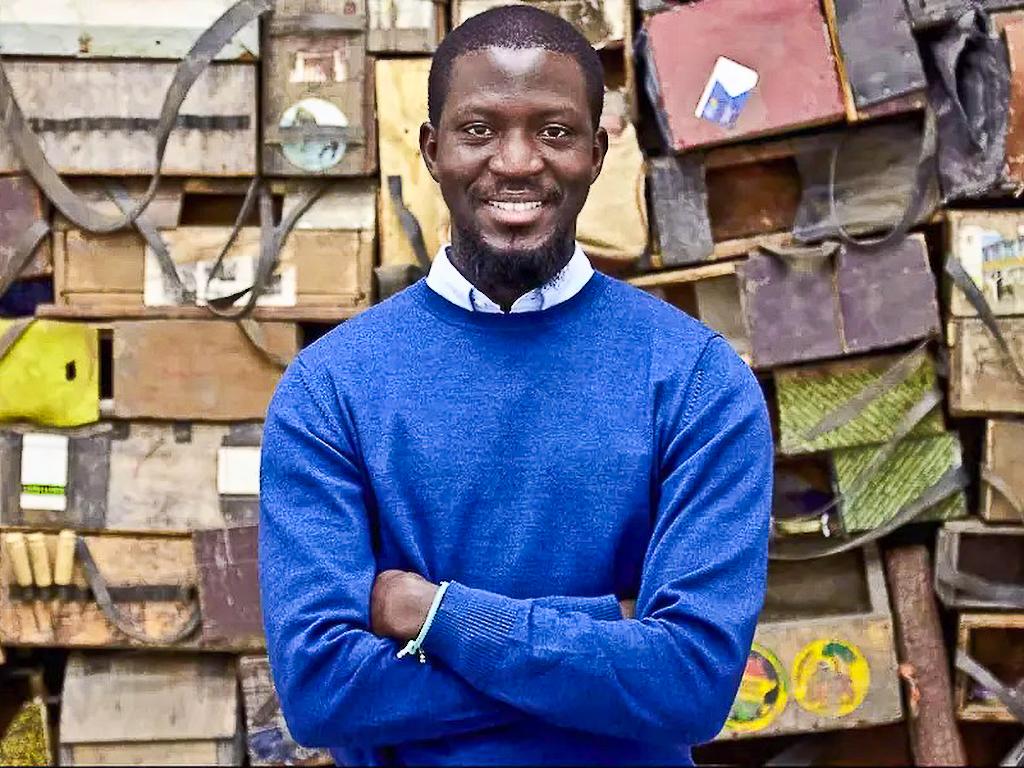 Contemporary African art is experiencing a period of significant international visibility, with artists reshaping the global landscape and bringing new perspectives, histories and identities from the [...]
 Info
Email: jampypezzi@gmail.com - tel. +39 328 732 6990 / +243 991 457 856
This blog is made in 4 languages: it en fr es





 EDitt | Web Agency
Leave a comment