Justice, Peace, Integrity
of Creation
Justice, Peace, Integrity
of Creation
By John Paul Pezzi, Mccj

Justice, Peace, Integrity
of Creation
By John Paul Pezzi, Mccj

Justice, Peace, Integrity
of Creation
By John Paul Pezzi, Mccj

Justice, Peace, Integrity
of Creation
By John Paul Pezzi, Mccj
“Intelligence keeps us alive”
La Stampa 19.03.2026 Vito Mancuso Translated by: Jpic-jp.orgThere is but one intelligence, namely natural intelligence, from which artificial intelligence derives: this is the thesis underpinning our conference, and one I fully endorse with conviction. It is what humanity, at its highest spiritual levels, has perceived since antiquity, referring to this single intelligence in turn as Logos, Nous, Sophia, Dharma, Tao or Maat, depending on languages and cultures.
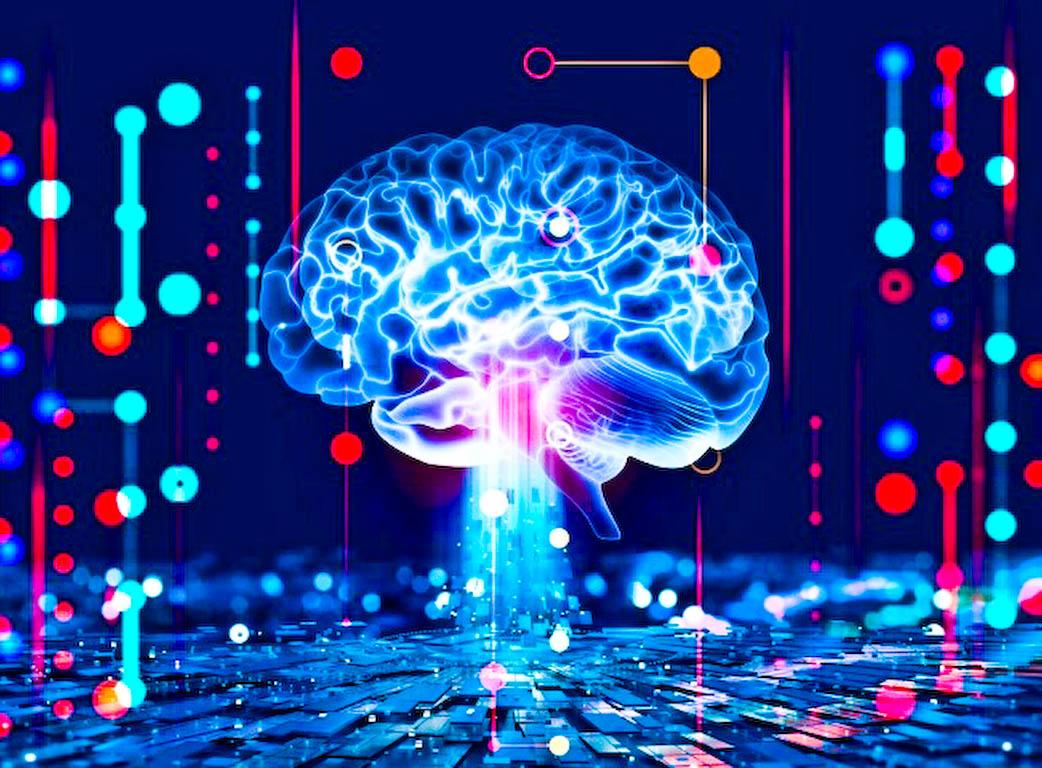
Artificial intelligence, like ourselves, functions only if it has a heart. It is not true that we are born as a tabula rasa; rather, we are systems of relationships and data. I would, however, like to draw attention to two points:
- The advance of artificial intelligence may diminish, divert and distort natural intelligence;
- The use of natural intelligence may be directed either altruistically or selfishly.
What enables us to distinguish between these different uses of intelligence? Intelligence itself, of course—but raised to a higher level. It is on these two aspects—the danger posed by artificial intelligence and the depth of natural intelligence—that I wish to dwell.
On the basis of the thesis that there is but one intelligence, I maintain that to say “life” and to say “intelligence” amounts to the same thing. Every living being lives by managing information: it acquires and processes it in order to respond to the two biological imperatives imposed by nature—nutrition and reproduction—and it does so thanks to an inner faculty called intelligence. Each of us has existed in this way from the very first day of life, when we instinctively sought our mother’s breast; thus it may be said that each of us lives by virtue of being intelligent.
We are by no means a tabula rasa, as some maintain; on the contrary, we are a teeming network of connections and exchanges of information among our molecules, our cells, our organs and our systems. Our entire organism is therefore a continuous processing of data through intelligence—intelligence being, as Latin etymology teaches, a capacity for relationship. For this reason, I hold that to say “life” and to say “intelligence” is one and the same thing. And this holds true for all living beings: wherever there is life, even in the smallest animal or plant microorganisms, intelligence is at work.
From this perspective, it is clear that our relationship with artificial intelligence must find its guiding criterion in the enhancement of natural intelligence. If machines, with their extraordinary computational capacity, serve the constitutive natural intelligence by which we live, they are to be welcomed and encouraged; if not, they must be limited, avoided and even opposed. But what is the reality? What is—and what will be—the effect of intelligent machines on human intelligence? Experts respond to this question in divergent and often contradictory ways.
Whom should we trust? How are we to choose between those who claim that artificial intelligence is the greatest resource for the future—and that opposing it is sheer folly—and those who argue the exact opposite, identifying it as the greatest threat to our humanity? Far from possessing certainties, I can rely only on intuitions. I am guided by the criterion of the ancient Romans: cui prodest—“who benefits?”—that is, an assessment of the concrete interests of those who speak.
In other words, if those who warn of the dangers of artificial intelligence have no personal interest in doing so—and indeed come from that very world, which they could have exploited to reap immense gains, but which they have chosen to leave in order to preserve their freedom of expression—then I am instinctively inclined to trust what they say. This is why I listen carefully to figures such as Geoffrey Hinton, Nobel Prize laureate in Physics in 2024 and a former AI developer at Google, who resigned precisely in order to raise the alarm. On 21 May 2025 in Berlin, he stated: “Artificial intelligence is like a tiger. When it is still a cub, it appears harmless—indeed fascinating. But it will grow. And unless you are certain it will not want to kill you, you should be concerned.” Hinton urges us to be concerned—and I am.
But why am I concerned? This brings me to the second issue. In other words: what compels me? And why did Hinton leave Google? What drove him to do so? Why do others like him speak out to safeguard human freedom?
In answering this question, something profoundly important—indeed decisive—is at stake: that higher level of intelligence which we call “conscience”, more specifically moral conscience. Here, our intelligence rises in degree: it is no longer merely an instrument for acquiring and processing information in order to sustain life and increase power; it becomes a faculty capable of judging reality according to another criterion—no longer self-interest, no longer natural selection, but justice and the good, the common good.
This means that so long as we remain concerned, there is still hope that our distinctive nature as free and thinking beings will not be lost.
There is but one intelligence, yet its highest fulfilment is not calculation. In matters of calculation, the ancient Egyptians were—and remain—unsurpassed, as demonstrated by the Great Pyramid of Giza, whose construction in roughly twenty years remains so enigmatic that some have even invoked extra-terrestrial intervention. Yet the Egyptians did not regard computational ability as the guiding criterion of human beings; rather, they saw it in the capacity for justice, as illustrated by the scene of the weighing of the heart: the deceased would appear before the divine scales, where the heart was weighed against the feather of Maat, the goddess of justice.
There is but one intelligence, indeed. But its seal is called the “heart”, and its highest expression the “intelligence of the heart”. If we follow this principle, artificial intelligence will never threaten us; on the contrary, it will become a precious ally.
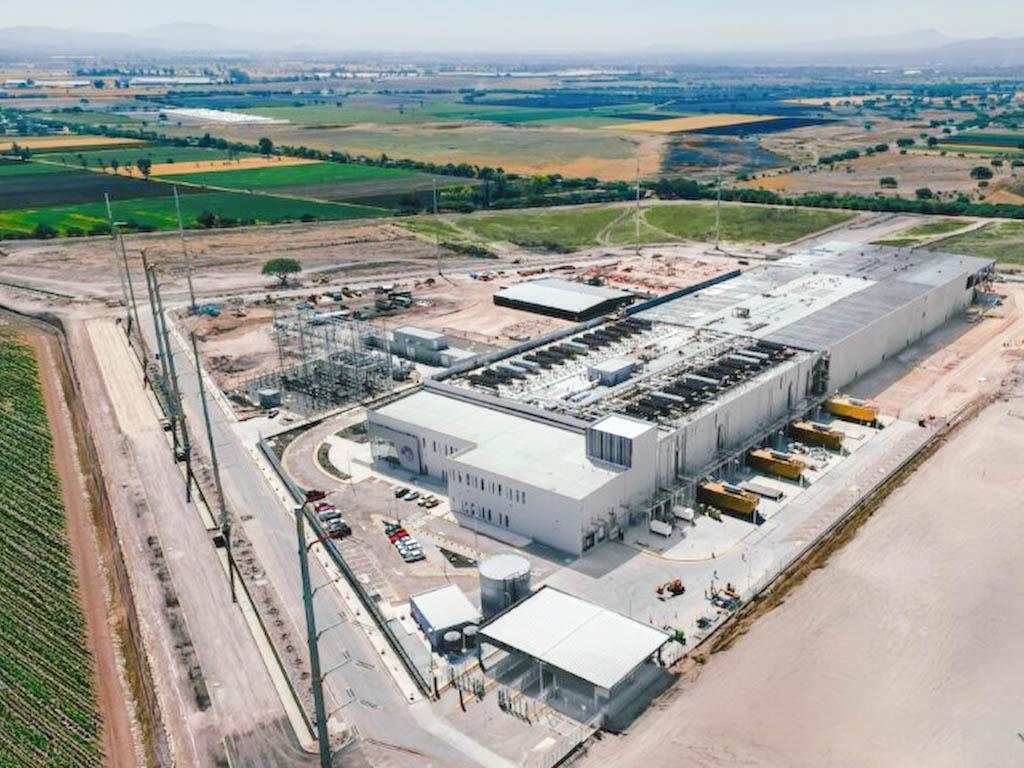 Several of the world's leading investment hubs for artificial intelligence (AI) data centres, including Rio de Janeiro in Brazil and Querétaro in Mexico, are emerging as climate risk [...]
  Public debate on the use of data and algorithms is surprisingly poor, especially when compared with the real power these tools exert. The discussion continues to be reduced to the now almost ritual [...]
  Beyond geopolitics, the single most decisive factor in explaining the behaviour of stock markets over the past two to three years has been investors’ bets on the potential of artificial [...]
  Data centres are becoming larger and more powerful. They are the engines driving digital evolution, but they face two major problems. The first is well known: they consume an enormous amount of [...]
 Info
Email: jampypezzi@gmail.com - tel. +39 328 732 6990 / +243 991 457 856
This blog is made in 4 languages: it en fr es




 EDitt | Web Agency
Leave a comment