Justice, Peace, Integrity
of Creation
Justice, Peace, Integrity
of Creation
By John Paul Pezzi, Mccj
Justice, Peace, Integrity
of Creation
By John Paul Pezzi, Mccj
Justice, Peace, Integrity
of Creation
By John Paul Pezzi, Mccj
Justice, Peace, Integrity
of Creation
By John Paul Pezzi, Mccj
Africa’s role in global security
Rivista Nigrizia 21.09.2026 Antonella Sinopoli Translated by: Jpic-jp.orgFrom responding to the oil crisis to safeguarding maritime trade and combating terrorism: African actors are no longer passive observers of global crises.
Africa’s role in international security is becoming increasingly evident. Far from being passive observers, African actors are having an ever-greater influence on decisions and on the outcomes of events.
The African Centre for Strategic Studies explores this issue by looking at examples of how certain challenges have been – and, above all, can continue to be – a stimulus for concrete countermeasures and for improving productive capacity. Let us start here.
Mitigating the oil crisis
In response to repeated closures of the Strait of Hormuz, resulting from the war in Iran initiated by the United States and Israel, African oil producers – accounting for around 10% of global production – have increased exports and supply volumes to international buyers.
Nigeria and Angola have been at the forefront of this effort. The Dangote oil refinery, inaugurated in Lagos in 2023, has helped ease global supply pressures.
The facility has become one of the world’s leading exporters of aviation kerosene, supplying markets in Europe and the United States. The industrial complex also produces urea, a widely used agricultural fertiliser, which is subsequently exported.
A new refinery, costing US$16 billion, will be built by the same group in Lamu, Kenya (the foundation stone is due to be laid on 30 September 2026), with the aim of supplying refined fuel to the entire East African Community.
Major financial institutions are also supporting business and trade. The African Export-Import Bank (Afreximbank), which specialises in trade finance, has established a US$10 billion emergency fund for African countries, enabling them to purchase fuel, fertilisers and medicines.
Maritime and trade security
Let us turn to maritime security. Individual states continue to devote considerable efforts to combating piracy (in the Gulf of Aden), illegal fishing (in the Gulf of Guinea), and drug and arms trafficking. However, these challenges extend beyond shipping lanes, national borders and regions, and the threats have now become transnational (as illustrated by the strategic importance of the Strait of Bab el-Mandeb, which lies just 26 km from Yemen).
In this context, information-sharing, coordination and joint surveillance are crucial. Two regional bodies, in particular, are working towards these objectives.
The first is the Yaoundé Code of Conduct. Established in 2013, it brought together 25 West and Central African countries to form a united front against maritime security threats in the Gulf of Guinea. This has contributed to a dramatic decline in piracy along the West African coast.
The second is the Djibouti Code of Conduct, which brings together 14 African countries and the Gulf states. Here, too, the aim is to combat piracy and armed robbery at sea, in this case along the eastern coast of Africa.
Today, these maritime routes are becoming increasingly important. Growing volumes of goods are being transported by sea along Africa’s eastern and western coasts to avoid threats in the Persian Gulf and the Red Sea.
One figure illustrates the trend. The Cape of Good Hope (South Africa) has become the world's third-busiest oil shipping route. The number of vessels passing through it each day has risen to 78, compared with around 40 in 2023. These transits account for 9.1 million barrels of oil and 11% of global seaborne oil trade.
The fight against terrorism
Let us now consider the African continent’s role in the fight against terrorism. Although Africa is at the centre of the global terrorist threat, with a significant presence of militant Islamist insurgencies concentrated in the Sahel, Somalia and the Lake Chad Basin, and nearly 24,000 deaths annually linked to these groups, the continent is also playing a decisive role in the fight against terrorist networks.
Eighteen African countries are members of the Global Coalition against Daesh. In 2025, the authorities in Puntland mobilised 3,000 members of their security forces as part of an international operation to drive the Islamic State out of a base in northern Somalia.
Uganda first intervened in Somalia in 2007, at a time when few countries were willing to take such a risk, given that much of Somalia and large areas of the capital, Mogadishu, were under the control of, or contested by, al-Shabaab terrorists.
Burundian, Djiboutian, Kenyan, Sierra Leonean and Ethiopian forces subsequently joined the effort, followed, this year, by Egypt. Although fragile, Somalia’s relative stabilisation is largely due to the efforts made by African troops.
Further north, military operations conducted by Egypt, Algeria, Tunisia and Libya have played a fundamental role in preventing the Islamic State from establishing a foothold in North Africa.
Peacekeeping
Another important task undertaken by African actors concerns peacekeeping and mediation operations. It may not be widely known, but African countries provide the largest number of troops for regional and international peacekeeping operations, with an average of around 70,000 soldiers deployed each year over the past decade.
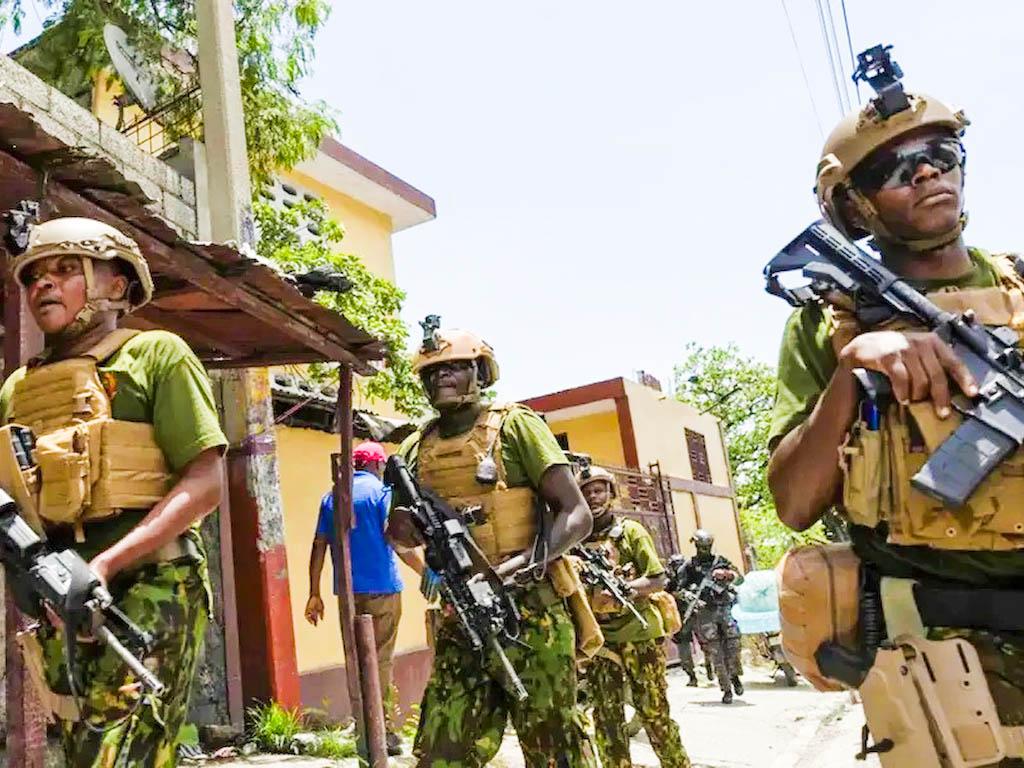
This also means that they suffer significantly higher combat casualties than any other region of the world. Among the most important and demanding missions are the Multinational Security Support Mission (MSSM) in Haiti, in which Kenya initially participated and which Chad is now supporting. At the continental level, there have been 27 peacekeeping operations since 2004, the year the African Standby Force (ASF) was established.
Conflict mediation
The role of mediator is even more challenging, although it does not always produce the hoped-for results. Nevertheless, it is clear that internal mediation is essential when attempting to resolve conflicts and disputes. According to one study, agreements reached through African mediation are much more likely to prove sustainable.
It should also be noted that African countries have played a key role in helping conflict-affected nations navigate the often complex and protracted transition towards stability, by providing support for governance and the reconstruction of institutions.
Health security
The continent is also playing its part in healthcare – an area clearly linked to security. This involves cooperation with international authorities (as in the case of Ebola in the Democratic Republic of Congo, for example), efforts to develop vaccine production, and a commitment by fourteen countries to contribute US$45 million to the World Health Organization’s investment round.
For once, then, it is worth looking at the glass as half full, while recognising that there is still a long way to go. Internal and external conflicts generate considerable tension and uncertainty about the future; terrorist organisations continue to expand and find increasingly sophisticated ways of sustaining themselves; and illicit trade remains a scourge. Yet it is precisely in these circumstances that concrete actions by African institutions and initiatives come into play, helping, in one way or another, to keep global insecurity in check.
See, Il ruolo dell’Africa nella sicurezza globale: tra energia, rotte e peacekeeping
Photo: Kenyan police officers on patrol in Haiti as part of the international mission against gangs.
The comments from our readers (1)
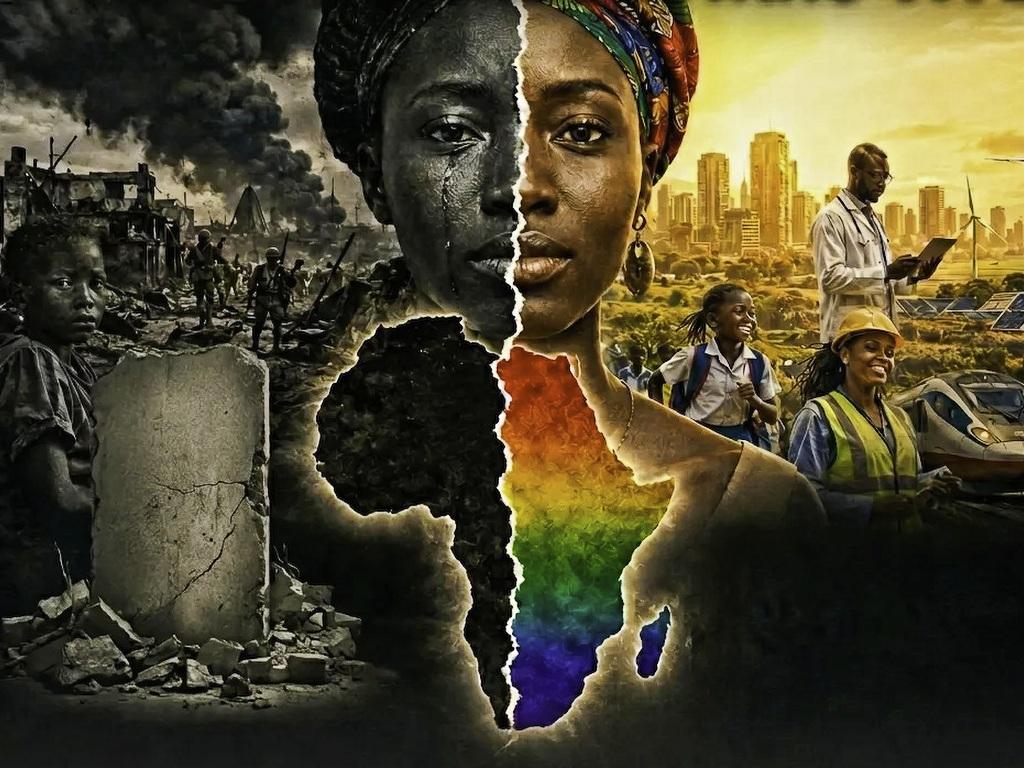 Africa pays an extraordinarily high price for negative stereotypes. According to the 2024 report The Cost of Media Stereotypes to Africa, by Africa No Filter and Africa Practice, the continent loses [...]
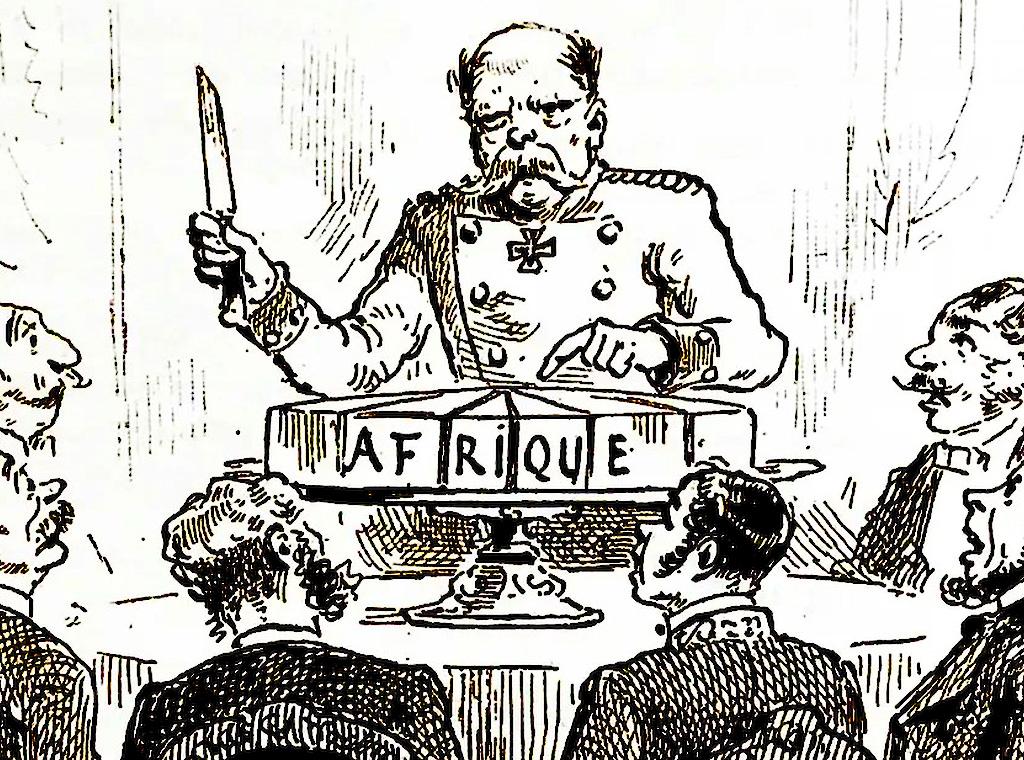 Borders are always imposed by political powers from the centre upon distant regions. The idea that African borders are solely the result of colonisation is, moreover, itself a colonial idea.
The [...]
 Brics or the Shanghai Cooperation Organisation? This is the question many observers are asking when considering Africa’s future, following the parade in Beijing last September. Within the [...]
 Soumaila Diawara, originally from Mali, is a writer, political activist, and refugee. Raised in Bamako, he became involved in student movements advocating democratic opposition. After the military [...]
 The book (Infinito Edizioni, 2024, pp. 101, € 14.00) by journalist Enzo Nucci, who for sixteen years was RAI's (Italian Radio & TV broadcasting) correspondent from Nairobi, is entitled [...]
 They resent political leaders deemed “corrupt,” “incompetent,” “in the pay of the West” (accused of imperialism and neo-colonialism). We have seen them parading in [...]
 The year 2023 on the African continent has seen the opening of many global construction agendas that deserve attention and much implementation work. There are at least three international events that [...]
 The complexity of Africa is rendered perhaps by the number of its languages: someone will have counted them. In Zimbabwe alone there are 16 official ones, while in South Africa there are 11. In this [...]
 All of this was blown to bits when Hamas launched an attack on Israeli territory from the Gaza Strip on 7th October 2023. The images were truly chilling, both for the number of deaths and the cruelty [...]
 The book King Leopold’s Ghost, by Adam Hochschild, is a book relating through its more than 360 pages “A story of greed, terror, and heroism in colonial Africa.” In fact, “It [...]
Info
Email: jampypezzi@gmail.com - tel. +39 328 732 6990 / +243 991 457 856
This blog is made in 4 languages: it en fr es

 EDitt | Web Agency
Leave a comment