
Justice, Peace, Integrity
of Creation

Justice, Peace, Integrity
of Creation
By John Paul Pezzi, Mccj

Justice, Peace, Integrity
of Creation
By John Paul Pezzi, Mccj

Justice, Peace, Integrity
of Creation
By John Paul Pezzi, Mccj

Justice, Peace, Integrity
of Creation
By John Paul Pezzi, Mccj
“In the 21st Century, It Is Unacceptable That We Have Not Eradicated Poverty”
Ethic 15.04.2026 Esther Peñas Translated by: Jpic-jp.orgThe philosopher Adela Cortina (Valencia, 1947) distrusts the ephemeral, the fleeting, the merely circumstantial. In contrast to emotions, born of impulse, feelings endure, evolve and are cultivated over time. In contrast to empathy — that fleeting understanding of another person — she places compassion, which not only recognises another’s suffering but also acts to relieve it. Hence the central importance of virtues in her thought: they commit those who uphold them. Her ethics are grounded in justice and in the human person, and she champions what she calls the “felicitous”: that which generates authentic happiness by fostering human relationships, solidarity and personal fulfilment.

Philosophy has examined, on the one hand, the need to preserve the individual and his or her identity and, on the other, the necessity of building and living within a community. How can the self and the collective be reconciled? When should one prevail over the other?
The best proposal for reconciling the self with the collective is personalism, centred on the reality of the person, who is an individual but one necessarily bound in relationship with others. Isolated individuals, entirely detached from one another, do not exist. That is a fiction which encourages extreme individualism, with disastrous consequences such as the glorification of selfishness.
Nor do naturally narrow-minded and insular communities exist, incapable of adopting a cosmopolitan outlook in order to understand the world. We are persons: individuals in relationship, in dialogue, belonging to different groups with which we share diverse identities, yet capable of rising to the level of universality.
It is true that, according to evolutionary anthropology and neuroscience, our brains retain tribal tendencies because, throughout the evolutionary process, we lived in closed groups that reinforced solidarity within the group and rejection of outsiders; we needed a sense of belonging in order to survive. Even today, this conviction — that we need to experience belonging to different groups — is being reinforced through shared symbols and ritual celebrations that lead us to feel part of a community.
Yet from this same need also emerged the tendency towards tribalism, which can degenerate into polarisation when polarising agents inflame tensions, whether political, ideological or emotional. Regrettably, this is precisely what is happening today, as polarising forces abound: some operate professionally, while others emerge spontaneously.
The good news is that a tendency is not an inescapable destiny. It does not inevitably lead to the construction of polarised societies charged with excessive emotionalism. The human brain is plastic and also possesses other tendencies capable of building a collaborative society.
What philosophical lessons should we apply in order to restore healthy coexistence, free from polarisation and perpetual confrontation, and to rebuild social bonds?
We should remember, with Aristotle, that we are social beings because we share the logos — reason and speech — which enables us to build together the “household”, meaning family life, friendship and the economy. But this is also the foundation of the polis, the political community, which gathers together different families and ethnic groups and distinguishes itself from them because it naturally tends towards the common good and should therefore strive to achieve it.
Private and public life alike are rooted in language, which is not a purely logical rationality devoid of emotions and feelings, but is permeated by them — by those “reasons of the heart” spoken of by Blaise Pascal, José Ortega y Gasset and Xavier Zubiri.
It would also be highly advisable to return to those philosophical traditions that made the defence of peace their principal concern, as exemplified by Marsilius of Padua, the author of Defensor Pacis, among many others. And in this year, 2026, it is fitting to recall with gratitude and pride the arrival of Francisco de Vitoria at the University of Salamanca in 1526.
To invoke Immanuel Kant’s Perpetual Peace at this point is both necessary and fitting, with its imperative of practical reason: there must be no war, because war is not the means by which anyone should seek justice for their rights. Yet peace must also be just — not built through coercing the weak into surrendering what rightfully belongs to them.
Cooperation is one of the guarantees that a common project will flourish: collective action directed towards a shared goal. In today’s world, what, in your view, should that common goal be?
There are many goals that we share, at least verbally, and that in itself is good news. But declarations must be transformed into concrete achievements. Among all these aims, I would choose two, in line with an intercultural tradition yet especially developed within Western philosophy: the construction of peace, to which I have already referred, and the eradication of poverty, which is the first of the Sustainable Development Goals.
It is not enough merely to alleviate poverty; it must be ended. In the 21st century, it is unacceptable that we have not eradicated poverty when the means to do so already exist and when humanity has a moral duty to achieve it.
In Aporophobia: Rejection of the Poor, I attempted to reconstruct the history of attitudes towards poverty, tracing the transition from viewing it as an evil to be eliminated in order to protect society, to understanding that empowering the poor is an unquestionable demand of justice, so that every human being’s right not to live in poverty is respected.
Can values such as solidarity, mutual support, attentiveness and respect — all essential to social harmony — be learned?
That is precisely the question from which ethics itself was born: can virtue be learned? If the answer were negative, then another question would inevitably arise: “What, then, is education for?”
The purpose of education should be to help people forge their character by cultivating the virtues that lead to happiness. The classical thinkers regarded these virtues as “excellences” that shape the individual and benefit the community.
I believe this remains true today: the task of education is to form excellent individuals, people who compete with themselves in order to develop their finest qualities and place them at the service of the community, thereby achieving a just and “felicitous” coexistence.
You have spoken of “cordial reason” as an ethical foundation. What role do moral emotions — such as compassion or empathy — play in building a genuinely collaborative community?
In truth, the ethical foundation — the reason why we should cooperate — lies in the value of persons and of nature. Yet this value becomes a driving force for action only when individuals perceive it and feel compelled to work for it. That is why compassion plays such an essential role; that is why I speak of a “cordial reason”, a compassionate reason.
Empathy is an emotion through which we are capable of placing ourselves in another person’s position, sharing in both their suffering and their joy, but in reality it obliges us to nothing. I often recall the observation that a torturer may possess great empathy towards the victim and therefore know precisely where and how to inflict the greatest harm.
Compassion, however, is also the ability to place oneself in the position of the suffering person, but it is joined to a commitment to help alleviate that suffering.
What role does education, on the one hand, and the media, on the other, play in the wellbeing of society?
The word “wellbeing” does not particularly appeal to me. Perhaps because there is a common Valencian proverb that says: el que estiga bé, que no es menege — “if someone is comfortable, let him not move” — and I find that saying deeply irritating.
On the one hand, because I believe people should dare to strive for happiness as a life project rather than merely settle for comfort; and on the other, because if we truly desire just societies, we will often have to sacrifice part of our personal or collective comfort.
As for the role of education in shaping just societies — societies that lay the foundations enabling every individual to pursue the life plans they have reason to value, to borrow the words of Amartya Sen — it is absolutely crucial.
As Immanuel Kant rightly stated: “Man is nothing other than what education makes of him.”
Among the agents involved in this educational task, the media play an essential role. Yet, in my view, with a few exceptions, they are currently “de-educating”. They promote what might be called the morality of the chameleon: “I adapt to whatever is necessary in order to prosper.”
Social media promised community, but often generates fragmentation instead. What conditions would be necessary for technology to foster genuine collaboration?
The very structure of social platforms would need to be radically transformed. They have become “toxic addictive machines”, to use the expression coined by Ronald Deibert, because their aim is not to create community but to keep as many users as possible trapped within their networks for as long as possible, in order to extract their data and transfer it to their real clients — not the users themselves, but private corporations or totalitarian states.
The strategy consists in creating dependency on these platforms so that people of all ages cannot detach themselves from them, and they are succeeding remarkably well. Associations such as Proyecto Hombre have already identified addiction to digital platforms as one of the major social problems of our time.
As Shoshana Zuboff explains, this is a new mode of production that turns users themselves into raw material. Kant’s imperative of treating human beings as ends in themselves is replaced by an extractive imperative — extracting the maximum quantity of data from the largest possible number of users — and by a predictive imperative, whereby future behaviours are designed and anticipated on the basis of those data. The effects are devastating, as is readily apparent.
Furthermore, these platforms give rise to a public opinion subject to what Elisabeth Noelle-Neumann termed the “spiral of silence”. The power of public opinion in governing societies is immense, and those who seek to shape it remain acutely aware of Alexis de Tocqueville’s insight: “Men fear isolation more than error.”
As a result, individuals align both their opinions and their life choices with narratives deemed politically correct. Valuable but minority viewpoints are consequently silenced and dissolved into invisibility.
I addressed these issues extensively in Ethics or Ideology of Artificial Intelligence?, because I believe this dynamic undermines both democracy and Enlightenment ideals by preventing citizens from having the courage to use their own reason.
Imperialist ambitions, environmental degradation, rampant consumerism, a society dominated by egotism… Every era, as Jorge Luis Borges observed, believes itself worse than those that preceded it. Yet never before have we possessed such awareness of the major problems confronting humanity, nor perhaps such willingness to solve them. Are you optimistic about the future?
Neither optimistic nor pessimistic — quite the contrary. Optimism and pessimism are fleeting emotions, dependent upon time, place and circumstance. They are too fragile to build anything enduring, whereas the challenges we face require far more robust materials: namely hope.
Hope is a moral virtue cultivated day by day through sustained effort, through the search for reasons to believe in a future that is just and, if possible, “felicitous” for all people, without exclusion. For human beings possess dignity, not merely a price.
See, «En el siglo XXI es inadmisible que no hayamos acabado con la pobreza»
 In Italy, one can say whatever one wishes against our civilization, and even when accusations and criticism are unfounded, those who make them suffer no consequences and are not held accountable. [...]
  Every age has had its principal social classes, those upon which peace, wars, wealth, poverty, rights and happiness depended. In the Middle Ages, they were the aristocrats and the serfs; during the [...]
  The Taliban have introduced new laws which, in practice, legalise domestic violence against women and children. Afghanistan’s supreme leader, Mullah Hibatullah Akhundzada, signed a decree in [...]
  Livelihoods – especially in the rural north – have become increasingly fragile, yet federal and state authorities have failed to provide effective responses to the growing vulnerability. [...]
  Inside, rusty shelves line the walls, empty soft-drink cans hanging on them add a splash of colour, and an old table covered with a worn cloth stands in a corner. To passers-by, the shopkeeper is a [...]
 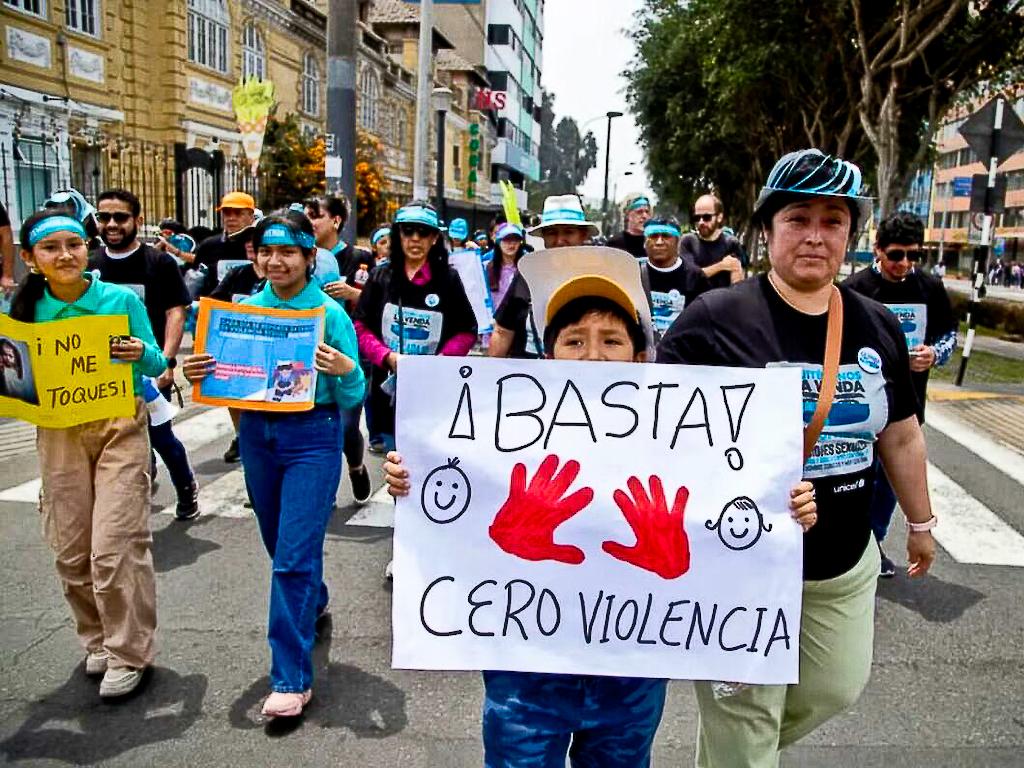 Over a seven-year period, between 2015 and 2022, 53,318 children and young people were killed in Latin America, evidence that violence continues to pose a serious threat to the lives and well-being [...]
 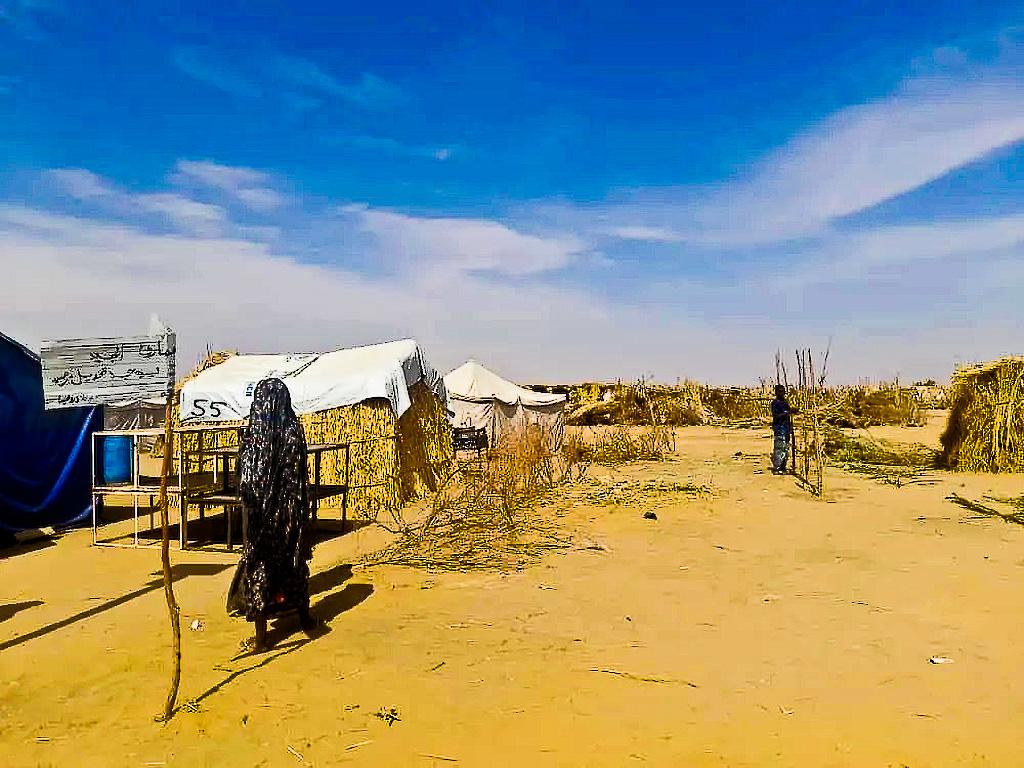 The camp hosts nearly 15,000 people from the western Darfur region who fled attacks by the UAE-backed Rapid Support Forces after the group seized the city of El Fasher on 26 October, killing [...]
  In Christian humanism, the range of the word poverty is very wide. It goes from the despair of those who suffer poverty because of others or through misfortune, to those who freely choose poverty as [...]
 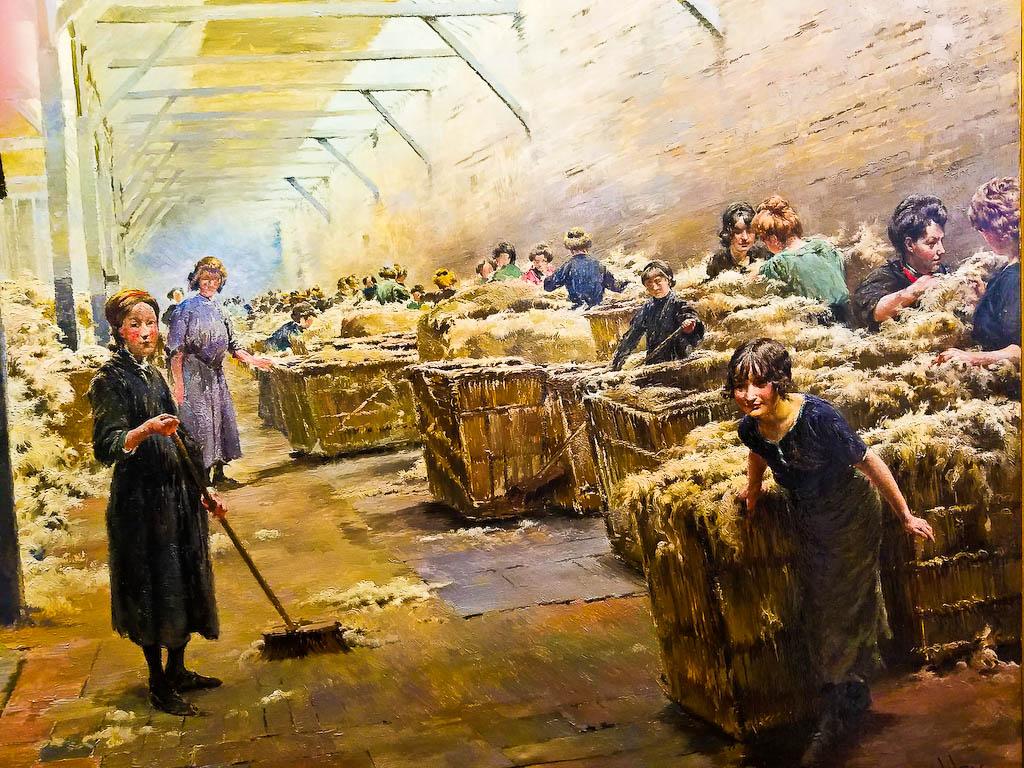 More than 49.6 million people (0.61% of the global population) are subjected to slavery worldwide. To put this grim fact into perspective, if enslaved people were to rally together, they would be the [...]
 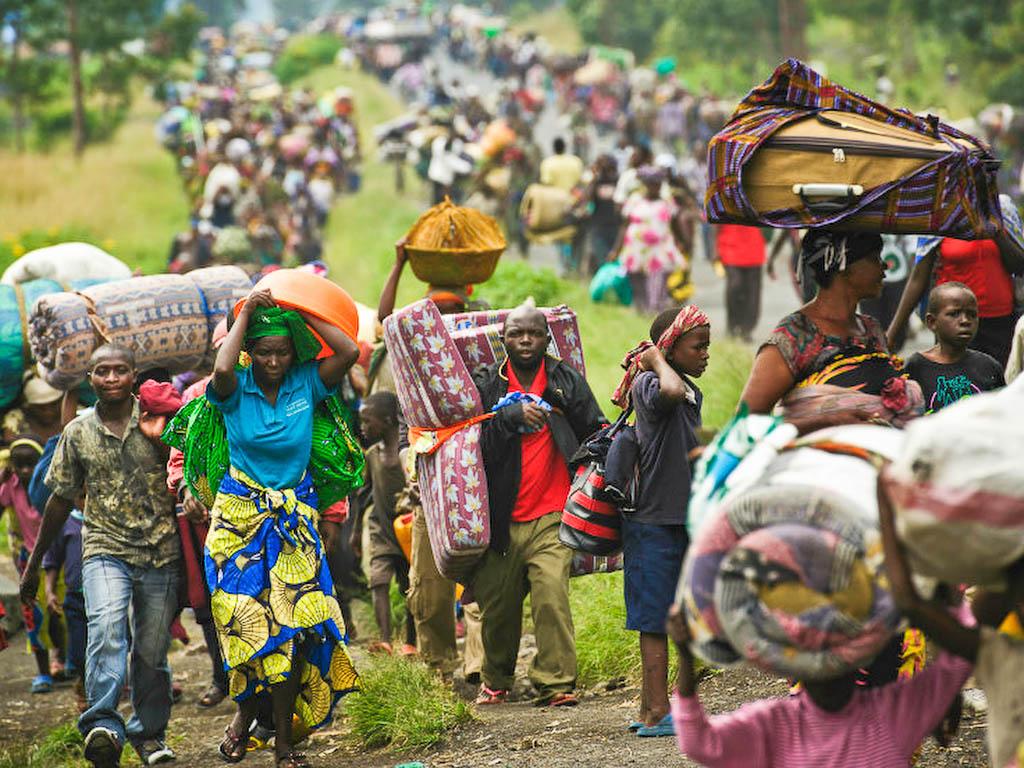 Massacres and Mass Graves. According to the United Nations (UN), around 3,000 bodies have been found strewn across the streets of Goma, still awaiting burial after the city fell to M23 and its allied [...]
 Info
Email: jampypezzi@gmail.com - tel. +39 328 732 6990 / +243 991 457 856
This blog is made in 4 languages: it en fr es





 EDitt | Web Agency
Leave a comment