Justice, Peace, Integrity
of Creation
Justice, Peace, Integrity
of Creation
By John Paul Pezzi, Mccj
Justice, Peace, Integrity
of Creation
By John Paul Pezzi, Mccj
Justice, Peace, Integrity
of Creation
By John Paul Pezzi, Mccj
Justice, Peace, Integrity
of Creation
By John Paul Pezzi, Mccj
Jihadist Terrorism in Africa: Ever More Victims, and Repression Makes Matters Worse
https://www.nigrizia.it 29.04.2026 Antonella Sinopoli Translated by: Jpic-jp.orgThe Africa Center for Strategic Studies takes stock: in 2025, the number of victims increased by a quarter, with 40% occurring in the Sahel, where the figures on state violence are particularly striking. The country in which this phenomenon claimed the highest number of lives was Somalia, while a new spiral of attacks is also affecting north-eastern Nigeria.
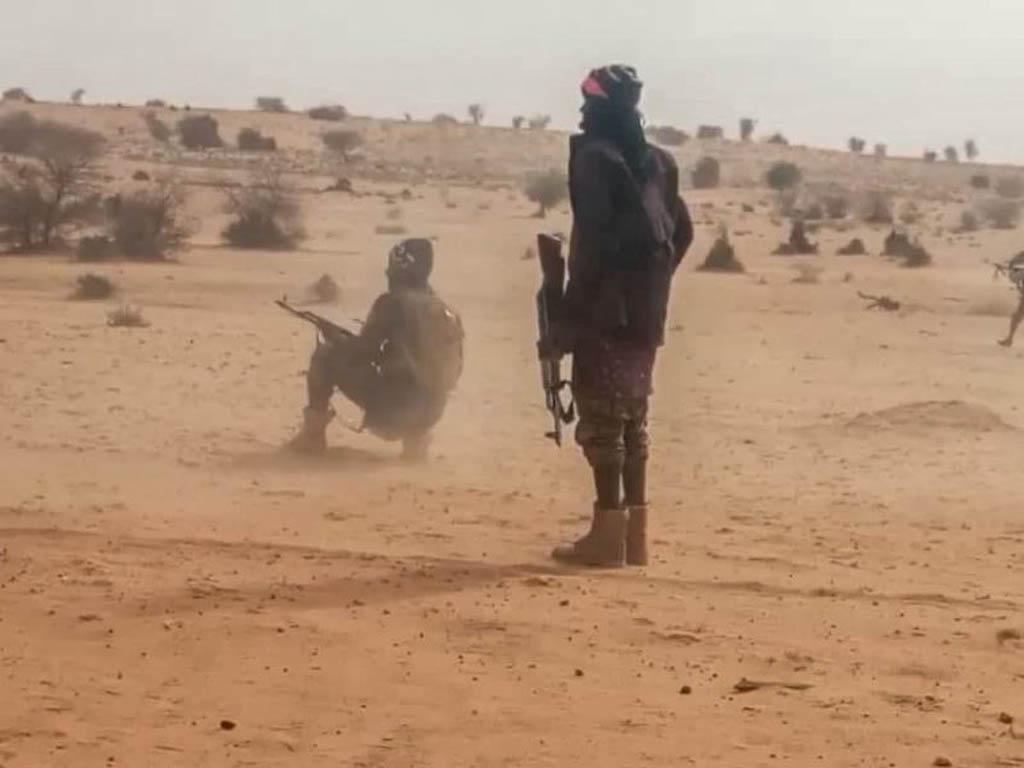
The latest events in Mali clearly demonstrate that militant Islamism remains the principal source of insecurity in Africa. However, state repression is also causing an increase in the number of victims rather than reducing the phenomenon. This is the conclusion of a comprehensive study by the Africa Center for Strategic Studies (ACSS), a renowned academic research institution attached to the United States Department of Defence and funded by Congress.
In 2025, the number of victims reached 23,968, representing a 24% increase compared with the previous year, across a total of 8,375 violent incidents, the highest figure ever recorded on the continent.
The Sahel continues to account for the highest number of victims linked to such groups of any region in Africa, representing 41% of the total. It has held this position for the past five years.
An Even More Violent State Response
This stands in stark contrast to the claims of one of the region's leading figures, Captain Ibrahim Traoré, the coup-installed President of Burkina Faso, who dismissed as false the recent Human Rights Watch report stating that more than 1,800 civilians had been killed in acts amounting to "crimes against humanity" during the three years since he seized power.
Two thirds of these deaths — 1,255 out of 1,837 victims, all of them civilians — are reportedly attributable to the armed forces and the Volunteers for the Defence of the Homeland (VDP), civilian militias established in 2020 by former President Roch Marc Christian Kaboré and subsequently expanded on a large scale by Traoré through mass recruitment campaigns.
These are said to have been retaliatory operations in response to terrorist activities. In short, the cure appears worse than the disease. Such repressive tactics not only continue to fuel jihadist recruitment but have also increased the number of civilian casualties caused by the armed forces and their allied militias.
With regard to Burkina Faso, this imbalance between the security forces and their allies on the one hand, and jihadist militias on the other, is also reflected in the ACSS report. According to the study, in 2025 the former carried out 540 attacks against civilians, while the latter were responsible for 310. The situation is different in Mali, where the overwhelming majority of violence was perpetrated by Islamist groups.
Overall, however, in both Mali and Burkina Faso, the number of victims caused by the armed forces and their allies exceeded the number of victims attributed to militant Islamist groups.
Record Increase in Somalia
In Somalia, where al-Shabaab and the Islamic State (ISIS) operate, clashes with the armed forces have intensified.
In this country, deaths attributed to militant groups reached 8,813 in the past year alone, representing a 93% increase compared with the previous year and accounting for 37% of the total number of victims. This is the highest number of fatalities recorded in any single country.
In the Lake Chad Basin, by contrast, the number of victims rose by 28% compared with the previous year, highlighting the continued threat posed by Boko Haram and the Islamic State West Africa Province (ISWAP), particularly in north-eastern Nigeria.
In the north-west of the country, the security threat is also worsening, involving both Boko Haram and Ansaru (the Vanguard for the Protection of Muslims in Black Lands), a splinter faction of Boko Haram formed in December 2011.
Overall, according to the analysis, the Sahel, Somalia, and the Lake Chad Basin account for 98% of all victims in Africa linked to militant Islamist groups.
The Sahelian Case
More specifically, the Sahel region affected by the violence of these groups includes Burkina Faso, Mali, and Niger, where violence is largely driven by the coalition Jama’at Nusrat al-Islam wal-Muslimin (JNIM), which was linked to 78% of victims recorded in the region over the past year.
Burkina Faso continues to record the highest levels of violence in the region, accounting for 50% of victims linked to Islamist militants. Mali accounts for more than 29%, while Niger accounts for 17%.
Niger’s share represents a sharp increase compared with the 7% recorded in 2023, the year in which a military coup overthrew the government of President Mohamed Bazoum.
In Mali, before the events of 25 April, which saw an unprecedented alliance between jihadists and the Azawad Liberation Front (FLA), a Tuareg separatist organisation, JNIM had carried out attacks against military bases from Timbuktu in the north to Bamako in the south, as well as in Kayes in the west and areas near the borders with Senegal and Mauritania.
Since September 2025, the coalition has also targeted fuel imports into the country along major economic corridors from Senegal and Ivory Coast.
According to analysts, these groups are not only able to move relatively freely across territories. JNIM, for example, has exploited repression and violence against civilians carried out by military juntas in Burkina Faso and Mali, as well as atrocities committed against civilians by Russian paramilitary groups aligned with those juntas, in order to boost recruitment.
Growing Rivalries and Alliances
In the past year, there has also been increasing competition between different terrorist groups, such as JNIM and the Islamic State in the Greater Sahara (ISGS), mainly based in western Niger and eastern Mali, with numerous clashes between these militant groups in western Burkina Faso and northern Mali.
Moreover, the southward expansion of Sahel-based Islamist militant groups continues to exert strong pressure on coastal West African states, including Togo and Benin.
Regarding Somalia, two points should be highlighted. The first is that the rise in casualties is also due to “remote violence” linked to the increasing use of drones and air strikes.
The second concerns the strengthening of ties between al-Shabaab and the Houthis in Yemen, alongside increased training and the acquisition of sophisticated weapons.
According to some sources, al-Shabaab allocates around a quarter of its operational funding to purchasing weapons from the Houthis and AQAP (Al-Qaeda in the Arabian Peninsula) in Yemen.
Concern Over the Nigerian Crisis
In the Lake Chad Basin, 2025, with a 28% increase in casualties, proved to be the deadliest year on record for the region. 87% of deaths linked to militant Islamist groups in this area occurred in Nigeria.
By contrast, Cameroon, Chad, and Niger recorded a decline in casualties. This region also sees rivalry between Boko Haram and ISWAP.
It should also be noted that numerous criminal gangs operate in these territories — such as the one that last December abducted 253 children from a Catholic school in Nigeria’s Niger State — and are increasingly imitating jihadist activities in the region.
At the same time, jihadists are adopting tactics from bandit groups, including cattle rustling, extortion, and looting.
Northern Mozambique is also part of this picture, where the group Ahl al-Sunnah wal Jama’a (ASWJ) operates, also known locally as al-Shabaab (though with no known links to the Somali organisation of the same name). In this region, casualties increased by 51% in 2025, with civilians accounting for roughly half of all victims.
The group has shown considerable resilience, despite being estimated to number no more than 350 fighters, organised into small cells spread across rural areas.
North Africa remains relatively calm, aside from sporadic incidents in Algeria and Libya.
In these countries, intelligence services dismantled four Islamic State cells whose activities included facilitating the movement of fighters from Europe via Libya towards the Sahel and Somalia, producing and spreading propaganda on social media, laundering funds to support a planned operation in Sudan, establishing sleeper cells in Libya, and generating profits through migrant smuggling.
See, Terrorismo jihadista in Africa: sempre più vittime, e la repressione fa peggio
Photo: Militants in the Tillabéri region of Niger. © Aharan Kotogo – Wikimedia Commons.
The comments from our readers (1)
 Qatar must be breathing a sigh of relief. Even as the sheikhdom’s plan to restore Hamas rule in Gaza is becoming troublingly visible, its prospects for its success are actually strengthening. [...]
  «Palestinian armed groups committed violations of international humanitarian law, war crimes and crimes against humanity during their attacks in southern Israel beginning on October 7, [...]
  First of all, let's set the record straight: just because someone calls himself a Muslim does not necessarily mean that he speaks in the name of Islam. A wise Muslim once said: ‘You want to [...]
  America blogs were flooded by jubilant reactions to the death of Bin Laden, slipping often in sickly jokes. Collective catharsis or loss of reality? The Christian does never celebrate the killing of [...]
  The problem is much deeper and unfortunately does not provide any short and simple solution. The damages, though not wrong to call them real crimes which the West has produced over the past two [...]
  That so many civilians enjoying an evening out should suddenly find themselves face to face with a virtual firing squad almost defies the imagination. It was an appalling attack on unsuspecting [...]
 Info
Email: jampypezzi@gmail.com - tel. +39 328 732 6990 / +243 991 457 856
This blog is made in 4 languages: it en fr es

 EDitt | Web Agency
Leave a comment