Justice, Peace, Integrity
of Creation
Justice, Peace, Integrity
of Creation
By John Paul Pezzi, Mccj
Justice, Peace, Integrity
of Creation
By John Paul Pezzi, Mccj
Justice, Peace, Integrity
of Creation
By John Paul Pezzi, Mccj
Justice, Peace, Integrity
of Creation
By John Paul Pezzi, Mccj
Sudan, the war and the extermination that do not make the headlines
https://lanuovabq.it 07.10.2025 Anna Bono Translated by: Jpic-jp.orgMedia silence surrounds the war in Sudan and the appalling siege of the city of el-Fasher. Yet it is the gravest humanitarian crisis in the world, with 150,000 dead and 14 million displaced.
Sudan has been at war since April 2023. The conflict was sparked by two generals, Mohamed Hamdan Dagalo and Abdel Fattah al-Burhan, once allies, now vying for control of the country and determined to fight to the bitter end, until the total defeat of their opponent and his allies. The former commands the RSF, Rapid Support Forces, a paramilitary militia comprising 100,000, perhaps 150,000 fighters. The latter, who is in effect the head of state, commands the national army, of roughly equivalent strength. The war is causing the worst humanitarian crisis in the world and of recent decades. Out of a population of 50 million, civilian deaths are estimated at 150,000, the displaced at 14 million, three million of whom are refugees in neighbouring countries, and 26 million people are in extreme need of assistance, most of them suffering from acute malnutrition.
The most severely affected region, where the population is paying the highest price, is Darfur, one of the nine provinces into which Sudan is divided. There, the war between the two generals is further intensified by tribal factors, the same that lay at the root of the conflict that began in 2003 and ended in 2020, with a toll of more than 300,000 civilians killed and three million displaced. Then, as now, the conflict was between tribes of African origin and tribes of Arab origin, and it was a markedly unequal confrontation because the Sudanese government armed, financed and provided technical and logistical support to the Arab tribes and their fighters, the janjaweed (“devils on horseback”), notorious and feared for the ferocity with which they were authorised to brutalise non-Arab populations. The then president, Omar al-Bashir, for having incited such violence, was reported to the International Criminal Court, accused of genocide, war crimes and crimes against humanity.
After 2020, the janjaweed were absorbed into the RSF. Once again, they are targeting populations of African origin, who have therefore sided with General al-Burhan. Darfur has for months been largely under RSF control. The only major urban centre where the government army has held out is el-Fasher, besieged by the RSF since May 2024. It is in this city that the most severe humanitarian tragedy in the whole of Sudan is unfolding. Around 260,000 people are trapped there, roughly half of them minors: all those who were unable to flee during the 17 months of siege. How many have died in the meantime is unknown and will probably never be known. Yet the causes of death are known: killed by shelling and gunfire, or victims of disease and hunger. In el-Fasher, some people have been reduced to eating leaves, grass and ultimately even earth, in the hope of deriving some nourishment from it. Others die from untreated wounds and illnesses, and from epidemics such as cholera, for months on end, until it subsided after claiming more than 2,500 lives.
People are dying in this way because almost all hospitals and clinics are inoperative and have long since run out of medicines, and because the RSF use starvation as a weapon of war: they block the entry of supplies, including food and medicines, and bar access to humanitarian organisations. Around the city they have erected walls to prevent aid and humanitarian workers from entering and to stop residents, effectively held hostage, from leaving.
This is the situation, worsening day by day in an escalation of atrocious crimes against civilians. For this reason, on 2 October, international representatives of the Catholic Church, including the Southern African Catholic Bishops’ Conference and Pax Christi USA, together with more than 100 civil and humanitarian organisations, published an open letter urgently calling for the protection of civilians and, above all, the opening of humanitarian corridors to allow aid to reach the population and for residents trapped in the city to leave, should they wish to do so, without risking being killed.
Interviewed by the agency ACI Africa, Telley Sadia, Sudan delegate of the Catholic Agency for Overseas Development, deplored the fact that the situation in el-Fasher and in Sudan as a whole is a war neglected by the international mass media despite its gravity. He therefore called for the country to be given space and a voice. Above all, he stated, timely and determined interventions are required that go beyond mere words of condemnation. There is a need for “decisive action by the international community to prevent the ongoing massacre of civilians trapped in el-Fasher. A humanitarian access plan must be urgently developed and implemented in accordance with international humanitarian law. Binding agreements between the parties to the conflict must be urged to ensure respect for and protection of civilians.”
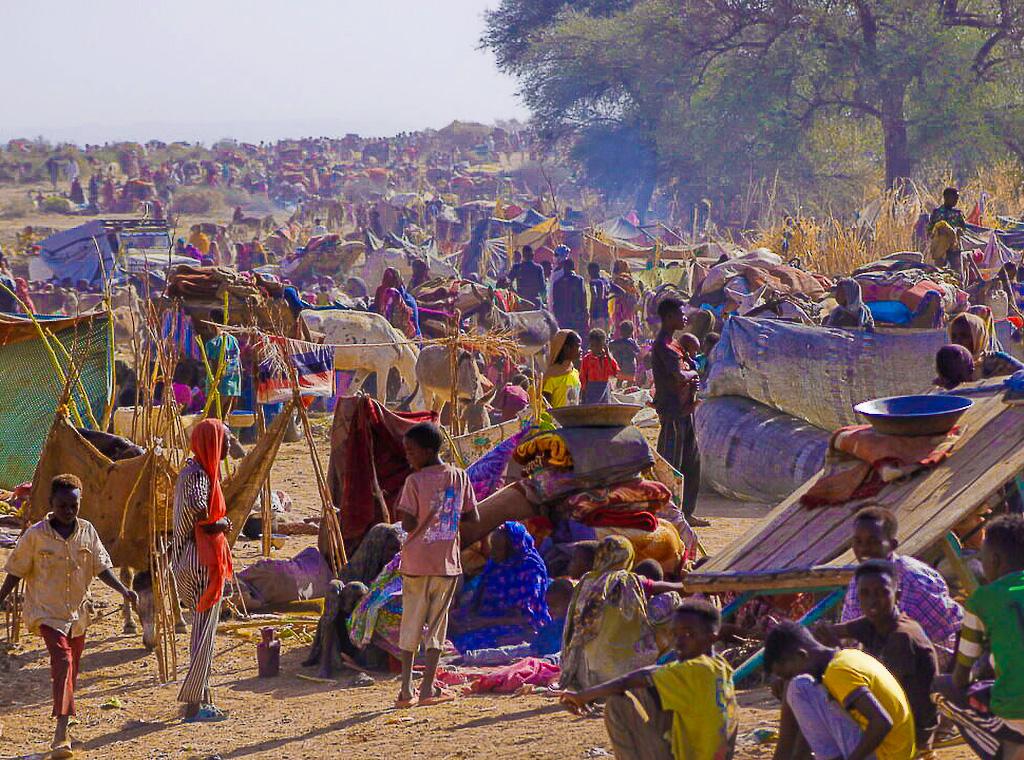
However, the warring parties will not heed these requests. One characteristic of the conflict, which makes it so bloody, is the willingness of both sides to target civilians living in territories controlled by the adversary: victims, therefore, not as collateral damage of war, but as a deliberate objective. Approximately 470,000 inhabitants of el-Fasher managed to flee the city, especially in the early months of the siege. They sought refuge in camps set up for them and for other displaced people in the region: at least safe, it was believed, albeit in conditions of extreme vulnerability due to acute malnutrition, very poor housing and hygiene conditions, and insufficient medical assistance resulting from restrictions imposed on relief efforts, often blocked for days and weeks. The largest camp, Zamzam, hosted more than 700,000 displaced persons when, in April 2025, the unimaginable occurred. The RSF attacked it and, after bombarding it, seized control, killing thousands of people. Hundreds of thousands of displaced persons, perhaps 400,000, fled and tried to reach safety, many travelling dozens of kilometres with nothing left at all. Many died along the way from hunger and thirst. On 13 April the camp was in RSF hands. Two days later, the United Kingdom, the African Union and the European Union convened a conference in an attempt to launch mediation between the parties. The representatives of the two generals did not even attend. On that same day, the RSF leader, General Dagalo, announced that he had established an alternative government to the one in office. “We are building,” he said, “the only realistic future for Sudan, a government of peace and unity, the true face of Sudan.”
But it is a face that Sudan, at war almost continuously since the year of its independence in 1956, has never had and will not have for a long time yet.
See, Sudan, la guerra e lo sterminio che non fanno notizia
A U.N.-backed fact-finding mission has concluded that the actions of Sudan’s Rapid Support Forces (RSF) during their siege and capture of El Fasher in North Darfur in October 2025 bear the “hallmarks of genocide.” Investigators documented mass killings, systematic sexual violence, and ethnically targeted attacks against non-Arab communities, particularly the Zaghawa and Fur, describing the campaign as organized and deliberate rather than incidental wartime violence.
According to U.N. findings, more than 6,000 people were killed within just three days during the final offensive, with atrocities including executions, rape, abductions, and the destruction of civilian infrastructure such as hospitals and displacement camps. The violence has been characterized as war crimes and possible crimes against humanity.
Following the fall of El Fasher — previously the last major Sudanese army stronghold in Darfur — the RSF consolidated control over large parts of the region, triggering massive displacement and worsening what aid agencies describe as the world’s largest humanitarian crisis. Communications blackouts and restricted humanitarian access have contributed to limited global media coverage despite the scale of atrocities.
U.N. officials and human rights investigators warn that the violence shows patterns of systematic ethnic persecution and exterminatory rhetoric, raising fears of ongoing mass atrocities if international action remains limited. As the wider Sudan war, which began in 2023 between the RSF and the Sudanese Armed Forces, continues, civilians in Darfur face daily killings, sexual violence, famine risk, and forced displacement on a massive scale.
RSF actions in Sudan's al-Fashir points to genocide, UN probe says
An article reconstructs the main actors involved and the causes of the conflict, with particular attention to the role of the Rapid Support Forces (RSF), which owe much of their strength to the financial and military support of the United Arab Emirates. Drawing on US intelligence data, United Nations reports, and international journalistic investigations, the article highlights the existence of a vast network of economic and geopolitical interests linked to gold extraction in Darfur and to the control of ports on the Red Sea, attributable on the one hand to the Emirates and on the other to the RSF. Understanding these deep dynamics, largely unknown to the general public, is an essential element in attempting to halt the most severe humanitarian crisis of our time and to lead the country towards lasting peace. See Le cause della guerra in Sudan e il ruolo degli Emirati Arabi Uniti and also The falcons and the secretary bird: Arab Gulf states in Sudan’s war
Photo. People displaced following Rapid Support Forces (RSF) attacks on Zamzam displacement camp shelter in the town of Tawila, North Darfur, Sudan April 15, 2025 © Picture alliance / REUTERS | Stringer
The comments from our readers (2)
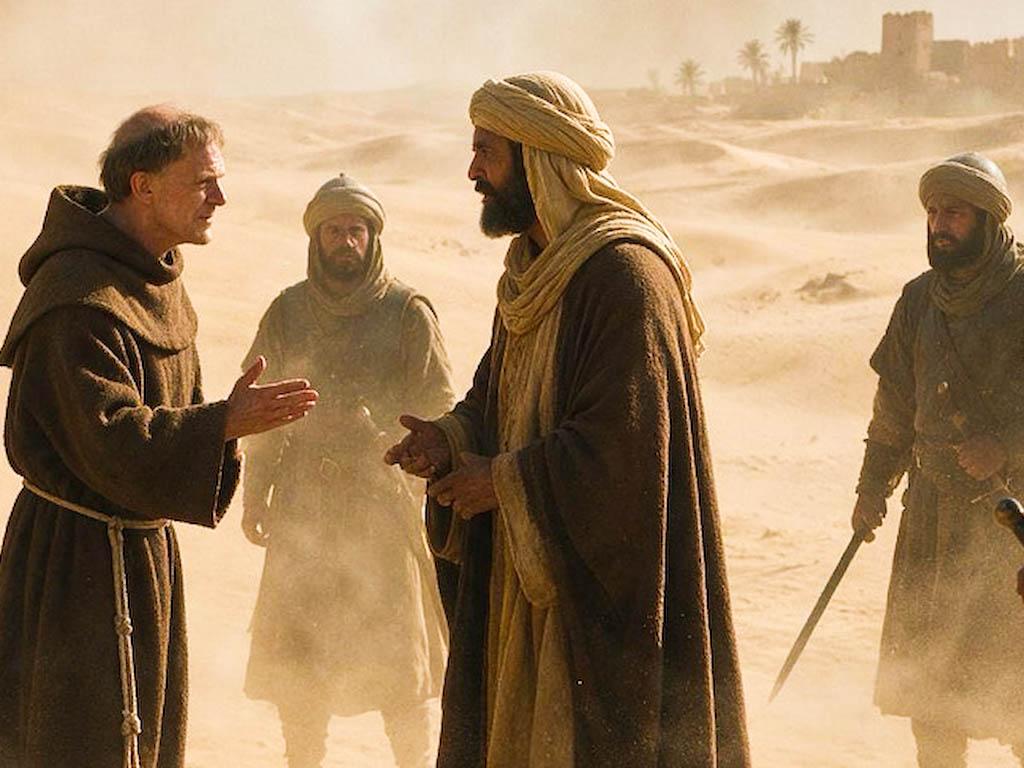 Two stories, two faiths that meet, speak to one another and do not demonise each other. They part with mutual respect, and the Sultan offers gifts. Among them is the ivory horn still preserved today [...]
 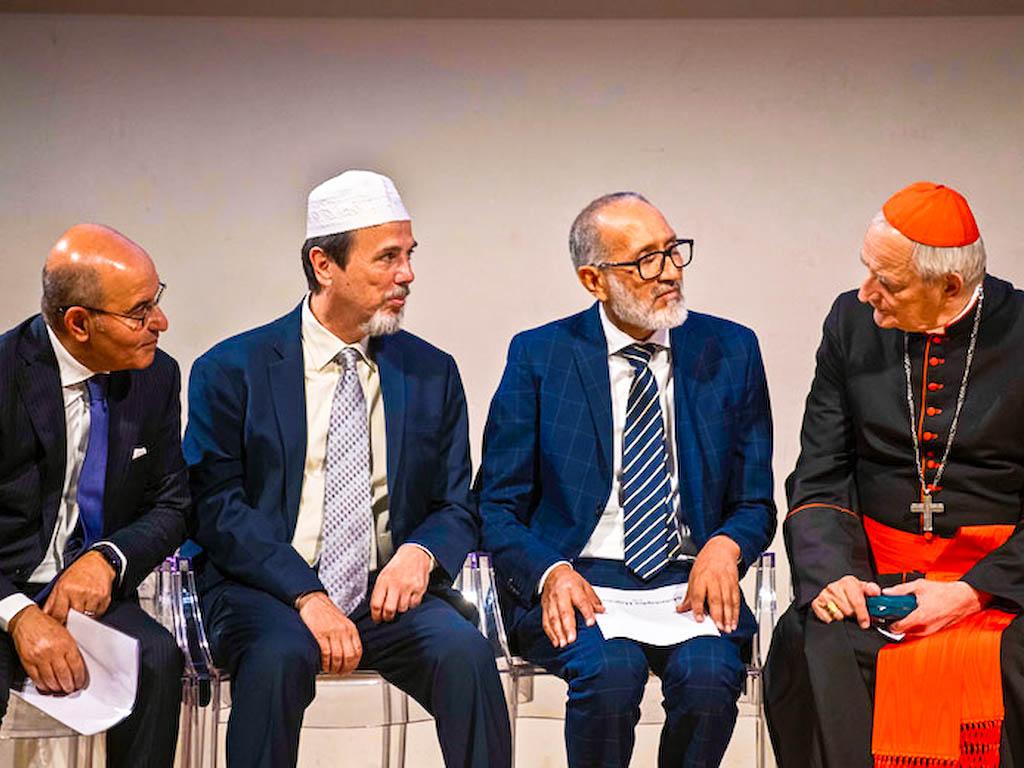 Seated side by side were Catholics, Hindus, Buddhists, Jews, Orthodox Christians and Muslims. At the centre, in the place of honour, lay a document signed by them all which, at this historical moment [...]
  Russia’s invasion of Ukraine has affected Africa and its people very directly—and in many different ways. From the thousands of citizens from African countries who have gone to fight on [...]
  The pastor and his family had been attending a prayer meeting in a private residence together with other families in the village of Parjang, in Dhenkanal district, when a group of around twenty [...]
  All’s well that ends well? The triumphant scenes of the signing of the treaty in Sharm el-Sheikh, in the presence of more than twenty presidents and prime ministers from across Europe and the [...]
  Few people take responsibility for two sins of omission in recent history: education in the common good and fraternity, fundamental for a just and united society; the failure to foresee the future [...]
  We live in a time of war. And it is no coincidence that the main seats of power are occupied by strongmen. It is not only the most mediatised cases. The delirious declarations of Donald Trump on [...]
  In Sudan, the war that broke out two years ago has caused the most serious humanitarian crisis in the world and in recent decades. 30 million people out of a total population of 50 million are in [...]
  In an interview last week, responding to repeated accusations that the Congolese armed group M23 includes thousands of Rwandan soldiers, its political leader Corneille Nangaa stated: “I [...]
  In his investigation, the New York Times reveals that the head of Hamas had a secret police force at his disposal to repress dissent in Gaza. This secret police force, called the General Security [...]
 Info
Email: jampypezzi@gmail.com - tel. +39 328 732 6990 / +243 991 457 856
This blog is made in 4 languages: it en fr es


 EDitt | Web Agency
Leave a comment