Justice, Peace, Integrity
of Creation
Justice, Peace, Integrity
of Creation
By John Paul Pezzi, Mccj
Justice, Peace, Integrity
of Creation
By John Paul Pezzi, Mccj
Justice, Peace, Integrity
of Creation
By John Paul Pezzi, Mccj
Justice, Peace, Integrity
of Creation
By John Paul Pezzi, Mccj
The Impact of Corruption on Democracy and Development in Africa
Rivista Nigrizia 09.04.2026 Antonella Sinopoli Translated by: Jpic-jp.orgAccording to the 2025 report by Transparency International, systemic corruption continues to hinder the continent’s development and, according to Afrobarometer data, citizens’ distrust in electoral institutions and the anger of young people are increasingly evident. Somalia and South Sudan are among the most corrupt countries in the world, not to mention Nigeria.
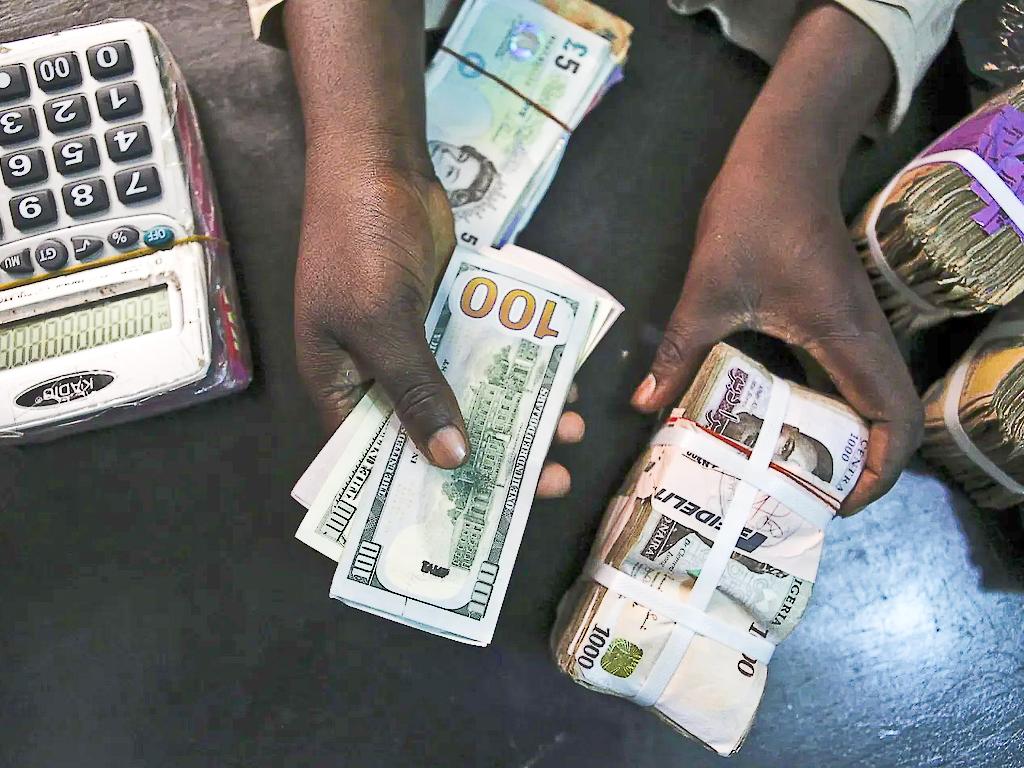
Corruption in Africa “remains a serious problem.” This is stated in the latest report by Transparency International, which shows that most countries in sub-Saharan Africa are ranked among the lowest positions in the global Corruption Perceptions Index.
The Corruption Perceptions Index (CPI) measures 182 countries and territories, analysing governance challenges, corruption trends and their impact on development and democracy. According to this analysis, 10 of the 49 countries in the sub-Saharan region recorded a significant deterioration, while only 7 improved, highlighting that current anti-corruption efforts are not producing the expected results.
The assessment is based on scores ranging from 0 (highly corrupt) to 100 (no corruption). With an average score of 32 out of 100 and only 4 of the 49 countries in the region scoring above 50, sub-Saharan Africa ranks as the lowest-performing region in the global index of 182 countries.
The Ranking of African Countries
Those with the lowest scores are Somalia and South Sudan (9 each), Eritrea (13), and Sudan (14). Very low scores are also recorded by Equatorial Guinea, Burundi, the Democratic Republic of the Congo, Guinea-Bissau and the Comoros.
With a score of 68, Seychelles ranked first in the region. However, the report highlighted growing concerns about the effectiveness of anti-corruption measures in the country, citing delays in investigations and prosecutions in a case involving the alleged laundering of 50 million dollars.
Seychelles is followed by Cape Verde with a score of 62, while Botswana and Rwanda scored 58 points. The position of Mozambique should be noted, with a score of 21, having recorded a drop of 10 points over the last decade.
The data cited in the report show that in the first quarter of 2025, 334 new corruption cases were recorded, with losses amounting to approximately 4.1 million dollars.
Madagascar and Angola
Other particular situations are also highlighted, including that of Madagascar (25), where serious and persistent corruption problems were a triggering factor in the Gen Z protests that led to the fall of the government in October 2025. Protesters denounced, among other things, the misuse of public funds, which caused chronic disruptions in water, electricity and other services, as well as the impunity enjoyed by corrupt officials.
Another situation emphasised in the report is that of Angola (32). Although the country has adopted measures over the years to combat corruption and appeared to have made progress over the past decade, it still remains in the lower part of the index. This means that many Angolans consider their government’s anti-corruption efforts insufficient.
The Impact on Governance
The data released by the CPI therefore show that corruption is a widespread and systemic problem rather than an isolated phenomenon. In Africa, persistently low scores are often associated with fragile state institutions, limited judicial independence, restricted civic space and prolonged political instability.
Countries at the bottom of the ranking often face multiple and overlapping governance weaknesses. These include politicised judicial systems, weak checks and balances, limited press freedom and inadequate protection for whistle blowers and civil society organisations.
In such contexts, corruption becomes deeply entrenched in public life, influencing how power is exercised and how state resources are distributed.
The consequences are far-reaching and range from the mismanagement of public finances and the decline of infrastructure to reduced investor confidence and the erosion of public trust.
Corruption, in essence, continues to be one of the most serious obstacles to development and a cause of growing inequality, factors that directly affect daily life.
It should also be remembered that, in a vicious circle, weak democracy generates armed conflicts, insecurity and increasing civil unrest. Conflicts which, in turn, contribute to the spread of corruption and the mismanagement of public funds. All of this occurs to the detriment of the most vulnerable populations.
Distrust in Institutions
To demonstrate how even the most important spaces of democracy are not perceived as sufficiently transparent, one can refer to the latest Afrobarometer study concerning elections.
The analysis shows that Africans want to choose their leaders through fair elections, but the majority distrusts the electoral management body responsible for ensuring fairness and transparency.
The report, based on 50,961 interviews conducted in 38 African countries in 2024/2025, nevertheless shows that a large majority of citizens declare that they participate in the electoral process. We are therefore speaking of active citizenship. Yet disappointment follows. If more than half of respondents believe that the last elections in their country were largely not free and fair, confidence in electoral integrity has weakened. In 28 countries consistently surveyed since 2014/2015, the perception of free and fair elections has declined by 7 percentage points.
Self-reported voting is higher among older age groups (82%), probably indicating that distrust is particularly strong among younger generations. Most respondents said they felt free to vote without pressure and to join political organisations. However, a significant number reported fearing violence or intimidation during the electoral campaign and doubting that their ballots were truly secret. Only about 4 Africans out of 10 (38%) say they trust their country’s electoral management body “somewhat” or “a lot”.
Another significant point is that the overwhelming majority of citizens say that elected representatives do not listen to or respond to the demands of the electorate. Only 17% say that their members of parliament “often” or “always” do their best to listen to what ordinary citizens have to say.
Valentina Giulia Milani, in an article of 18th February 2026 on Africa magazine, states that this Transparency International report “portrays a continent still far from the critical threshold of 50 points. Where corruption is higher, access to healthcare, education and water is more difficult, and it is always the poorest who pay the price.” The resulting picture is complex, with internal differences between sub-Saharan Africa and North Africa, but “overall marked by still high levels of perceived corruption.” “Sub-Saharan Africa confirms itself as the region with the lowest average in the world, at 32 points. In North Africa, scores also remain below the 50-point threshold: Tunisia 40, Morocco 37, Egypt 35, Algeria 34 and Libya 18. None of the North African countries exceeds the threshold that Transparency International considers indicative of a relatively low perception of corruption.”
The report links the perception of corruption to the quality of political and institutional systems. “Globally, full democracies have an average score of 71 points, flawed democracies 47, while non-democratic regimes stand at 32 points, the same value as the average for sub-Saharan Africa.” Without establishing automatic links between political categories and geographical areas, a correlation between judicial independence and lower levels of corruption nevertheless appears evident.
The report identifies another factor: countries, with “open” civic space, have an average CPI score of 68 points, compared to 32 in “repressed” contexts and 30 in “closed” ones. Restrictions on freedom of expression, press and association limit the ability to expose abuses and reinforce opacity in the management of public resources. “The report links corruption to the quality of public services and the sustainability of state finances: diversion of funds, inflated contracts and informal payments can compromise access to healthcare, education, water and energy, affecting low-income groups more severely and reducing the capacity of states to invest in infrastructure and social policies.”
See: Africa e corruzione: l’impatto su democrazia e sviluppo
The comments from our readers (1)
 One day, a man wearing an elegant suit and a fine tie made a striking entrance into a village.
Climbing onto a crate, he loudly announced to anyone willing to listen that he would buy every donkey [...]
One day, a man wearing an elegant suit and a fine tie made a striking entrance into a village.
Climbing onto a crate, he loudly announced to anyone willing to listen that he would buy every donkey [...] 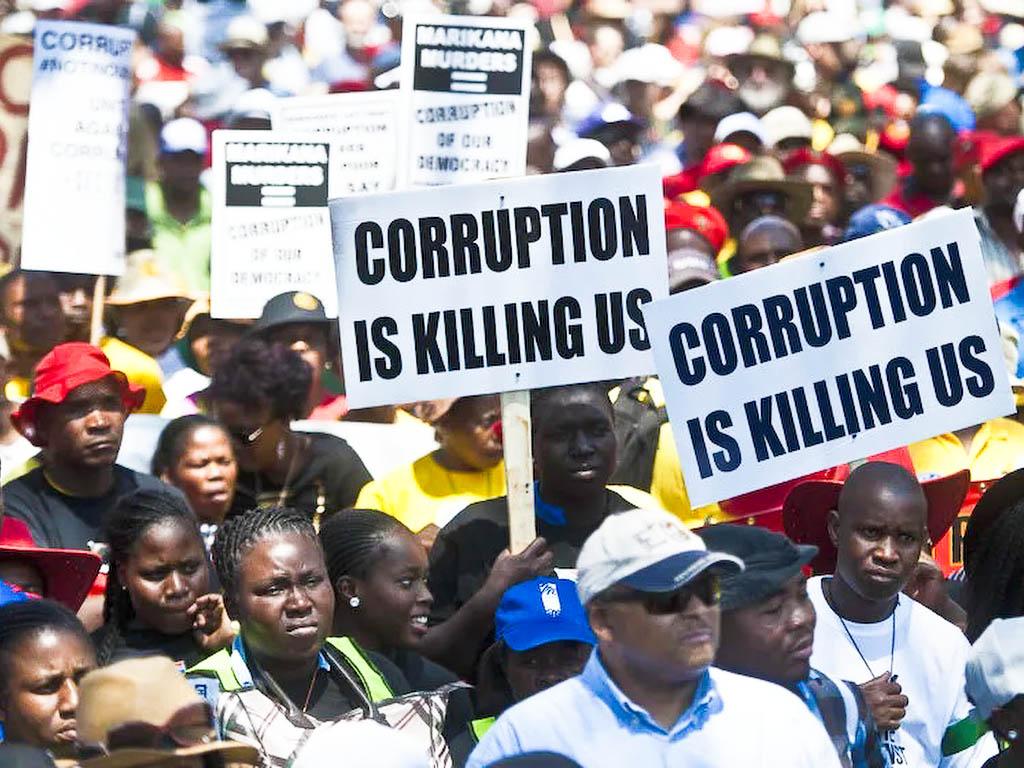 Africa is experiencing a clear economic paradox: it is the continent with the greatest need for resources for its development and, at the same time, it loses over $587 billion annually due to capital [...]
  A thousand people have been arrested in 19 African countries in a major operation against cybercrime, Interpol announced on 26 November 2024. The international criminal police organisation conducted [...]
 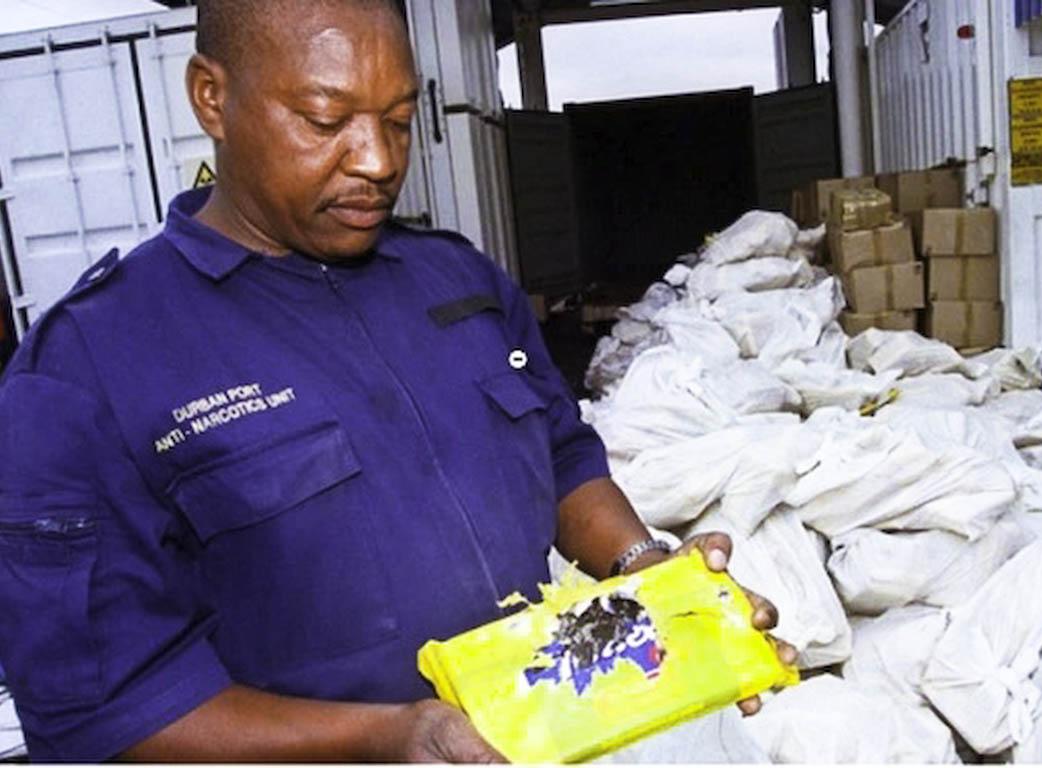 The African continent is still and above all a land of transit with respect to the diffusion of cocaine, but with significant increases also in domestic consumption.
After the partial deceleration [...]
The African continent is still and above all a land of transit with respect to the diffusion of cocaine, but with significant increases also in domestic consumption.
After the partial deceleration [...]  Research by the American think-tank The Sentry continues into the business and financial interests of Africa's most unstable countries, with the aim of understanding, and unmasking, those who [...]
  With such as data number, it is not surprising that the scandal affects rich people all around the world, including a few Africans. Specifically, the names of Uhuru Kenyatta, Denis [...]
 Info
Email: jampypezzi@gmail.com - tel. +39 328 732 6990 / +243 991 457 856
This blog is made in 4 languages: it en fr es

 EDitt | Web Agency
Leave a comment