Justice, Peace, Integrity
of Creation
Justice, Peace, Integrity
of Creation
By John Paul Pezzi, Mccj
Justice, Peace, Integrity
of Creation
By John Paul Pezzi, Mccj
Justice, Peace, Integrity
of Creation
By John Paul Pezzi, Mccj
Justice, Peace, Integrity
of Creation
By John Paul Pezzi, Mccj
Thousands of tonnes of weapons on the seabed of the Baltic Sea
EURONEWS 01.03.2026 Katarzyna Kubacka Translated by: Jpic-jp.orgBetween 40,000 and 60,000 tonnes of chemical weapons have been dumped on the seabed of the Baltic Sea since the end of the Second World War. Hundreds of thousands of additional tonnes consist of conventional weapons such as combat mines.
The seabed of the Baltic Sea is only one example of how wars have contaminated the oceans. After the Second World War, between 40,000 and 60,000 tonnes of chemical weapons were abandoned in the Baltic Sea alone. However, Dr Michal Czub, a biologist at the Laboratory of Contemporary Threats to Marine Ecosystems at the Institute of Oceanology of the Polish Academy of Sciences, told Euronews that vast quantities of conventional weapons are also present and may be potentially just as toxic. The exact impact of these compounds, however, has not yet been comprehensively studied.
“It is estimated that there were up to 200,000 naval mines in the Baltic Sea during the 20th century, each containing anything from several dozen kilograms of explosives to as much as a tonne,” he explains. “This therefore represents an enormous scale. Yet in terms of the sheer volume of sunken arsenals, these conventional weapons far exceed the chemical ones.”
Addressing the ecological consequences of today’s wars
Although the expert avoids describing seabed contamination as a “ticking time bomb”, the corrosion of weapons lying on the seabed — whether chemical or conventional — leads to the release of toxins into the water, contaminating marine organisms in the process. The full scale of the phenomenon, however, remains unknown. As the expert notes, it is not necessarily “the most abundant compounds that are potentially the most harmful; those present in smaller quantities may in fact be far more dangerous.”
Although the dumping of weapons at sea is now prohibited by a number of international treaties and conventions — including the 1972 London Convention, the 1971 Seabed Treaty, the 1993 Chemical Weapons Convention and the Helsinki Convention (HELCOM) — this does not mean that weapons no longer end up in the seas, the biologist emphasises.
“This is essentially a historical issue. In the Black Sea, for instance, there is currently a war, meaning that munitions are entering the marine environment either intentionally or unintentionally as a result of wartime bombardment. In that sense, we can say we are ‘fortunate’ that in the Baltic Sea we are studying a historical phenomenon. Despite the prohibitions, the world unfortunately remains what it is. We are investigating historical arsenals, and if the war around the Black Sea and Ukraine eventually comes to an end, this knowledge may help us mitigate the ecological consequences of the present conflict.”
Not all disasters are immediately visible
As the expert points out, “the Baltic Sea has effectively become the world’s testing ground, and much of the available knowledge originates here.” Thanks to seabed research — conducted, among others, by the Institute of Oceanology of the Polish Academy of Sciences in cooperation with international organisations — scientists are able to study the impact of weapon corrosion on marine organisms and ecosystems.
However, such research must be carried out over long periods and across large samples. Significant gaps in knowledge still remain, which scientists are striving to fill.
For instance, studies have demonstrated that “using distilled water in laboratory experiments, compared with the natural matrix of seawater and sediments, represents two completely different realities.” This challenges the assumption, widely held after the Second World War, that seawater neutralises the effects of chemical weapons.
“Moreover, we have unfortunately demonstrated that some degradation products may actually be more toxic in water than the original compounds. In other words, they have not been neutralised by immersion at all — which was one of the initial assumptions — and they can even lead to the formation of new compounds, often more toxic than the original substances.”
Similar dilemmas arise in research on fish contamination. In the context of chemical weapons, the expert recalls widely publicised cases of mustard gas burns suffered by fishermen near the island of Bornholm.
Toxins have already been detected in fish swimming in the Baltic Sea. However, as the biologist notes, “the difficulty is that they were detected in 10% of the fish samples tested from Bornholm, and the concentrations were very low.”
The expert also stresses how difficult it is to predict when — or even whether — the weapons left on the Baltic seabed might cause a disaster.
“It is something in between, because it is difficult to say. Contamination may already be occurring, but we do not yet fully understand what it is. Not all disasters are so obvious that everything dies immediately.”
Nevertheless, scientists have observed that rising sea temperatures accelerate the corrosion of weapons left on the seabed, leading to a faster release of chemical substances.
“We find objects that are completely corroded,” the biologist explains. “Those almost mythical barrels are, in my view, already entirely corroded, as we no longer find them on the seabed. Artillery shells would probably corrode the slowest because their metal casing is the thickest.”
Experts agree that weapons left on the seabed should be removed. However, discussions are ongoing about how this can be done safely and in an environmentally responsible manner.
As one expert notes, it is paradoxical that removing weapons from the seabed could itself constitute a violation of the Chemical Weapons Convention.
“In the era of chemical weapons non-proliferation, suddenly possessing such compounds once a chemical arsenal has been recovered may itself constitute a breach of international conventions.”
Research on chemical and conventional weapons in the Baltic Sea is still ongoing, and the full scale of the phenomenon remains unknown.
See, Des milliers de tonnes d'armes au fond de la mer Baltique
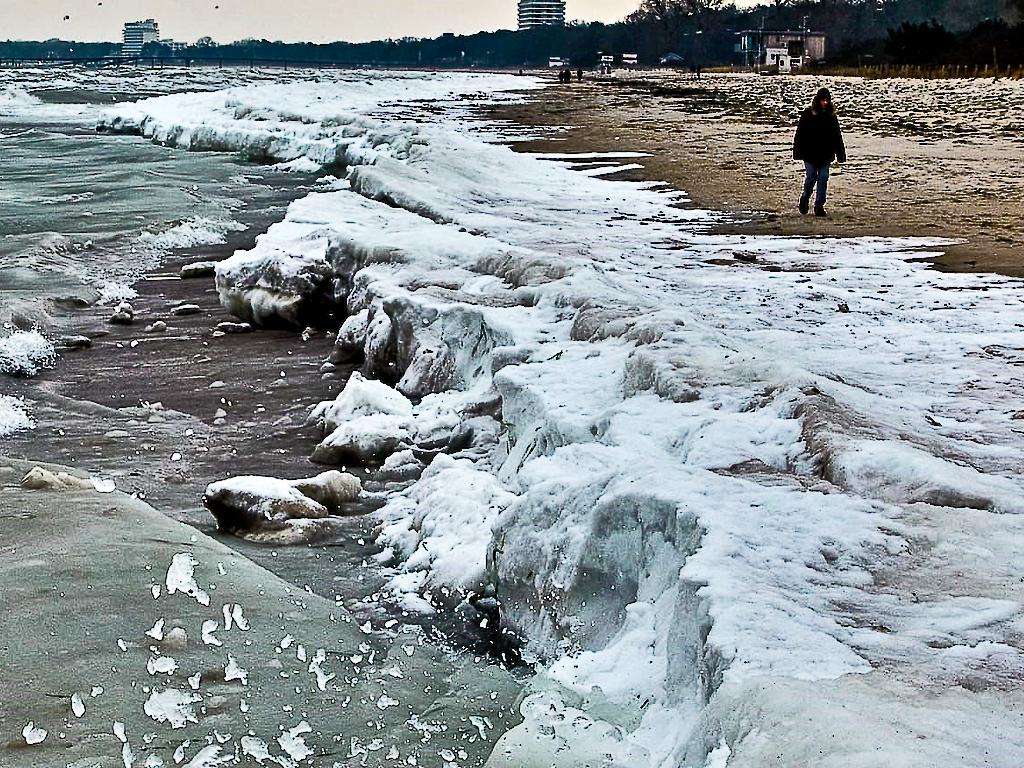
Une femme marche sur une plage de la mer Baltique recouverte de glace à Scharbeutz, en Allemagne, par un mercredi froid et venteux, le 4 février 2026 - © AP Photo/Michael Probst
Photo. A woman walks along an ice-covered beach on the Baltic Sea in Scharbeutz, Germany, on a cold and windy Wednesday, 4 February 2026 – © AP Photo / Michael Probst.
The comments from our readers (1)
 Thousands of trees were planted in the Sahara without success. Then 500 tortoises achieved what no one had expected, and the desert has begun to turn green again, visible even from space.
The [...]
Thousands of trees were planted in the Sahara without success. Then 500 tortoises achieved what no one had expected, and the desert has begun to turn green again, visible even from space.
The [...]  “Each of us uses around 18 kilograms of sand every day,” said Pascal Peduzzi, Director of UNEP’s Environmental Data Centre, during the presentation of the report in his Swiss city [...]
  It would be wrong and superficial to criticise the Conference on the grounds that no binding agreements were reached, since the Santa Marta Conference was explicitly not designed as a negotiation [...]
 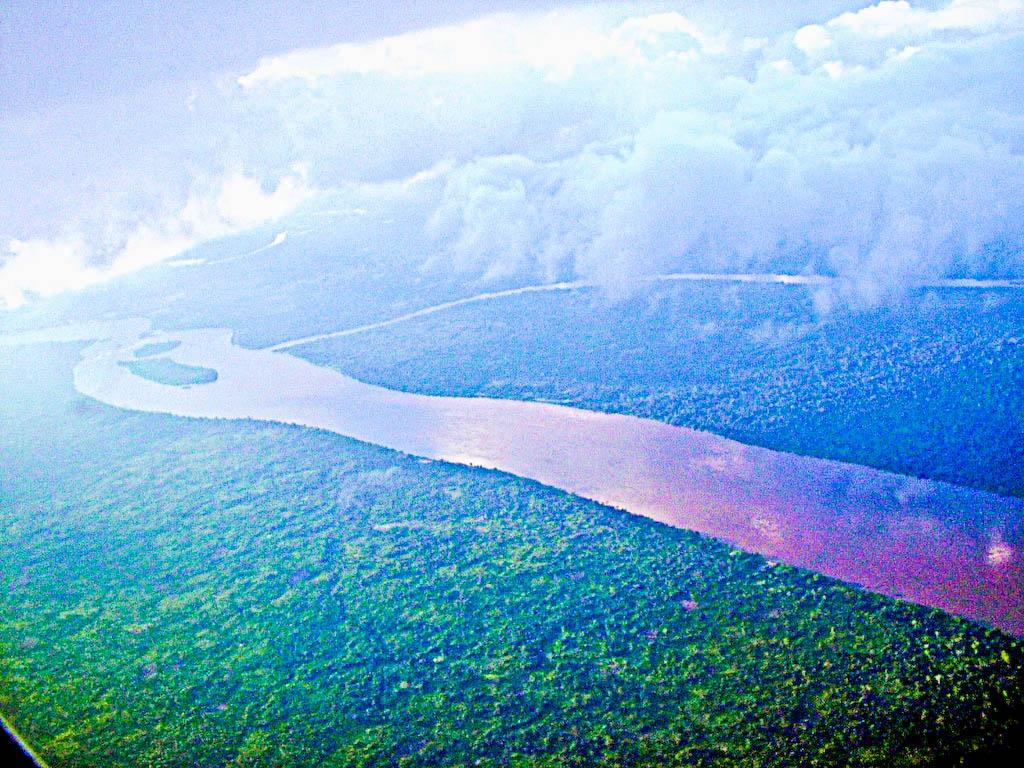 From Carbon Sink to Carbon Source: A Historic Reversal
Until only a few years ago, scientists believed they could rely on a natural climatic safety valve. Africa’s tropical forests were [...]
From Carbon Sink to Carbon Source: A Historic Reversal
Until only a few years ago, scientists believed they could rely on a natural climatic safety valve. Africa’s tropical forests were [...] 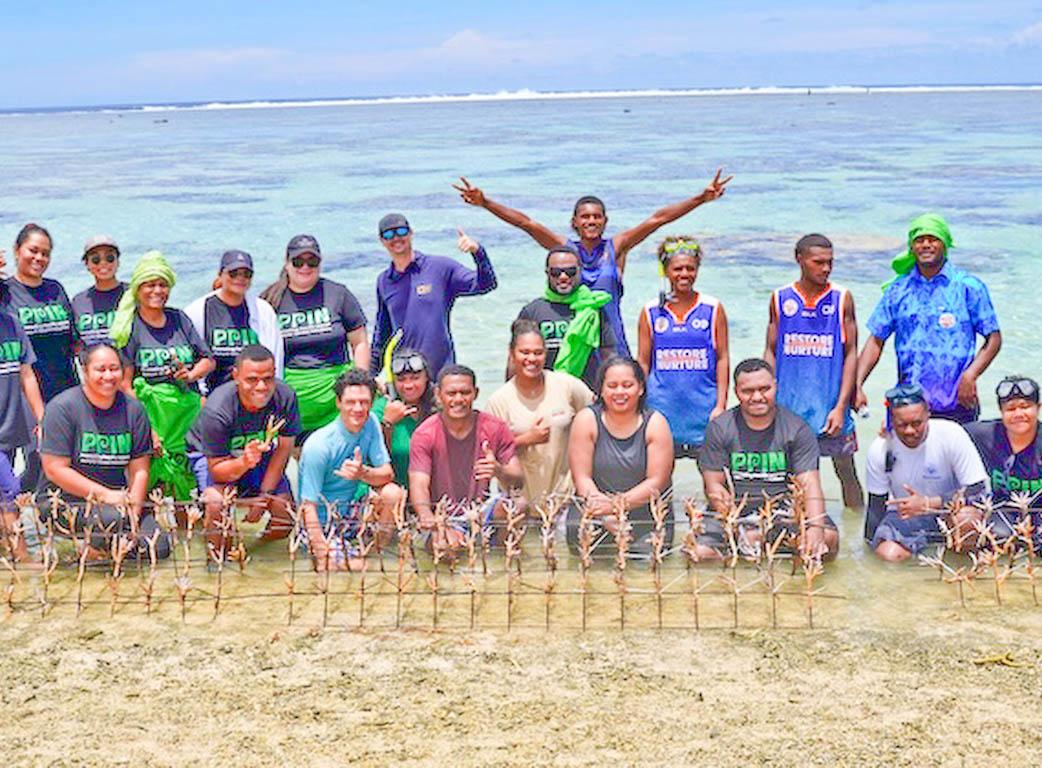 Climate change is no longer a distant threat. Across the Pacific, it has become an everyday reality, reshaping coastlines, livelihoods and the fragile balance between people and their environment. [...]
 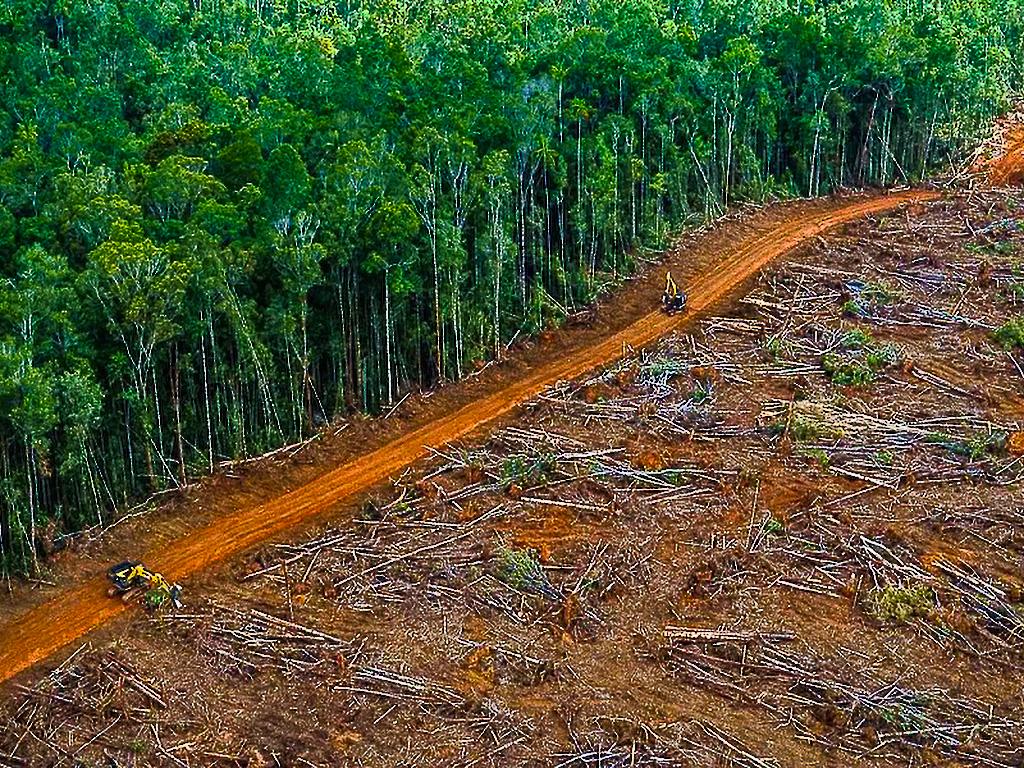 A study published a few weeks ago in Nature Climate Change concluded that deforestation has killed more than half a million people in the past two decades, between 2001 and 2020. A frightening [...]
  COP30, at the moment of its gathering, gives the impression of a shared desire to assemble declarations of principle and political frameworks to establish “good intentions” and [...]
  Let’s try an extremely difficult summary. During the first days, we all essentially deluded ourselves. The Brazilian presidency had indeed released draft texts that included “also” [...]
 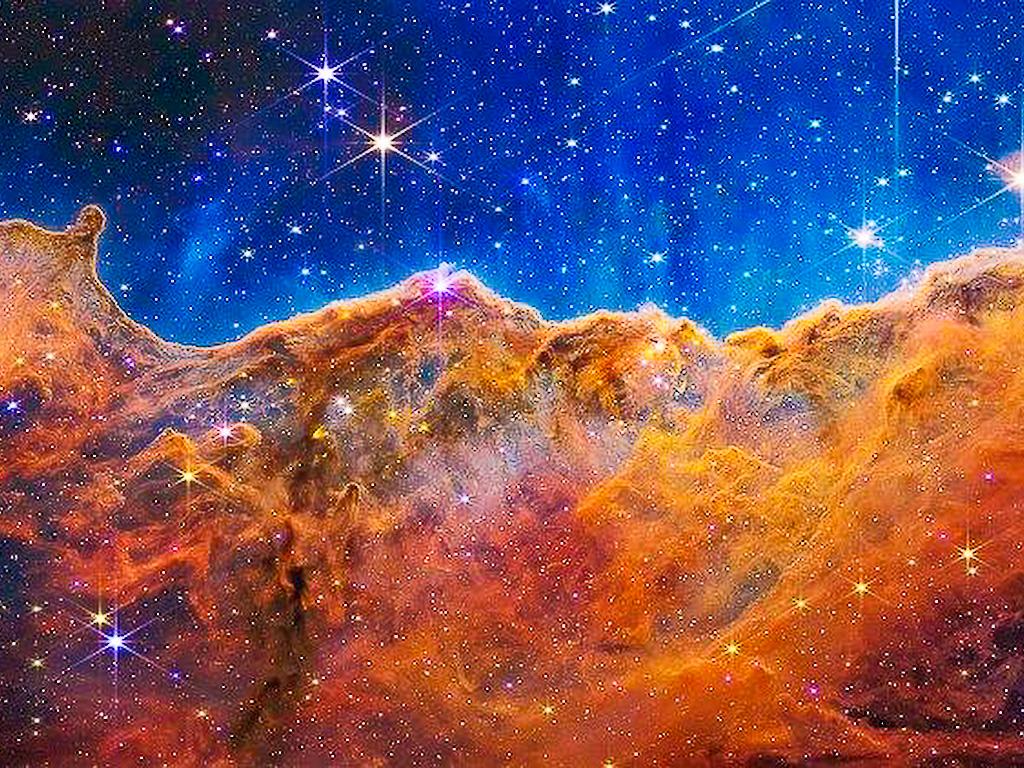 In a world shaken by crises, this exhibition reminds us that beauty — whether natural, artistic, or cosmic — remains a source of hope. As Dostoevsky said, “Beauty will save the [...]
  “A Call for Climate Justice and the Common Home: Ecological Conversion, Transformation and Resistance to False Solutions” is the title of the document presented at the Holy See Press [...]
 Info
Email: jampypezzi@gmail.com - tel. +39 328 732 6990 / +243 991 457 856
This blog is made in 4 languages: it en fr es



 EDitt | Web Agency
Leave a comment