Justice, Peace, Integrity
of Creation
Justice, Peace, Integrity
of Creation
By John Paul Pezzi, Mccj
Justice, Peace, Integrity
of Creation
By John Paul Pezzi, Mccj

Justice, Peace, Integrity
of Creation
By John Paul Pezzi, Mccj

Justice, Peace, Integrity
of Creation
By John Paul Pezzi, Mccj
Magnificent Humanity, Beyond Politics and the Churches
Rocca Cittadella 14.07.2026 Raniero La Valle Translated by: Jpic-jp.orgPope Leo XIV’s preaching for peace and justice reached its culmination at the Consistory of 26 June, when he declared that “the Creator has endowed us with intelligence and will so that we may resolve conflicts as human beings and not as beasts, even if those beasts are equipped with hyper-technological weapons”: “war is never worthy of man and is never blessed by God”.
All of Pope Leo XIV’s preaching for peace and justice, which has become increasingly urgent as his pontificate has progressed, and which had already denounced in the cathedral of Bevanda, Cameroon, on 16 April, how the world was being devastated by “a handful of tyrants”, reached its culmination at the Mass for the opening of the Consistory on 26 June. It was an extraordinary Consistory, since it was not intended for the appointment of new cardinals, but finally for the collegial exercise of the Petrine ministry.
There, concelebrating with 180 cardinals from every part of the world, whether they had been “electors” or “non-electors” at the last Conclave, the Pope affirmed the article of faith that “war is never worthy of man and is never blessed by God”. He gave as his reason that “the Creator has endowed us with intelligence and will so that we may resolve conflicts as human beings and not as beasts, even if those beasts are equipped with hyper-technological weapons.”
Thus the Church reaches the very heart of the problem over which the world today is heading towards ruin, from war to war, from genocide to genocide, from plunder to plunder. Going beyond political judgement and religious diagnosis, it places the anthropological question at the forefront: those who act today and determine the course of events, it observes, are not human beings using human intelligence and will, consistent with their nature, but human beings divided within their own identity and reduced, or alienated, to the condition of “beasts” which use, while still calling it “intelligence”, an artificial hyper-technology that, becoming ever more autonomous, claims to settle conflicts and manage history.
It is clear that at this point the Church — and we as well — have reached a decisive crossroads. For if human beings come to think of themselves no longer according to the image and likeness of God, but according to an image they have invented for themselves, alien to reason — with the Enlightenment itself having also fallen — then God is excluded from the equation. And if that is the case, what are the Church, religions and ethics there for? At this point the Pope raises the red alert. No one else is doing so, and we cannot pretend that nothing has happened, reducing the matter to one last “news item” on the day’s television bulletins.
We must therefore begin to climb back up the chain of causes, going far beyond Trump, Netanyahu or Zelensky. And perhaps we need to go back to the time when humanity, on the threshold of modernity, decided that it would no longer allow itself to be hindered by religions poorly received and poorly managed and, claiming that humanity had supposedly reached adulthood, chose from then on to pretend — “the hypothesis” — that “God does not exist and does not concern himself with humanity.” After all, it was thought, we can manage on our own.
The formula was brilliantly supplied by the deeply Christian Grotius, a Dutch Reformed Christian, in the seventeenth century, in Latin: “etsi Deus non daretur”, and so forth. It was quite a daring gamble to found an entire civilisation and all subsequent history upon a fiction. On the other hand, Christianity itself, having become the West’s greatest political institution, had not exactly covered itself in glory, from Constantine to Charlemagne and through to the religious wars of the sixteenth century. Yet instead of asking what God’s being truly was — after having been forgiven for centuries, through a misreading of the Bible, for ordering exterminations and even commanding Abraham to carry out the false capital execution of his son Isaac — it was preferred to adopt the hypothesis that God did not even exist. And for four centuries this worked, under a variety of names: natural law, legal positivism, secularism, secularisation, often producing excellent results despite the suffering and devastation involved.
After Grotius, many other Christians of profound spiritual insight rethought the faith in such a way as to make it compatible with the hypothesis adopted by modernity, leaving the excluded hypothesis — the existence of God — in the realm of secrecy, inwardness and private life.
Bonhoeffer, the martyr of Nazism, developed this into a moving and irresistible theology — not the “God of the gaps”. Among many Catholics, “post-theism” began to make headway; spirituality overshadowed faith. Even Ratzinger, by then no longer Pope, tried to suggest to a world he could no longer understand that it should accept the opposite fiction, “etsi Deus daretur”: the hypothesis that God exists, without thereby obliging oneself to faith.
But can one fiction compete with another? At this decisive ridge, can one hypothesis be interchangeable with the other?
The problem presents itself today in new terms compared with those that have prevailed until now. We have indeed reached the point at which we speak of intelligence, albeit artificial intelligence, as an intelligence capable of performing calculations beyond anything any human intelligence has ever been able to do, while lacking everything else.
It possesses a prodigious memory, but not freedom, feelings, ethics, love or compassion — qualities that are naturally joined to intellect and will if, as Dante sang, “you were not made to live as brutes, but to pursue virtue and knowledge”. Intelligence without “virtue” remains the intelligence of brutes. It cannot judge or decide; it cannot choose to love its enemies, nor choose not to kill, nor respect what belongs to others, nor care about the fate of the world.
This is Artificial Intelligence. Separated from humanity, manufactured by human artifice, human beings are unable to withstand it, crushed as they are by concentrations of wealth amounting to trillions in investment and profits, and by extraordinarily powerful ruling oligarchies whose numbers can be counted on the fingers of one hand.
Prophetically, a great German philosopher, emerging from the same philosophical tradition that had produced Hegel, Feuerbach and Marx with their scientific atheism — Martin Heidegger — shook the twentieth century in an interview with Der Spiegel by questioning whether democracy could confront technology, which “in its essence is something that man by himself is not capable of mastering. Modern technology is not an instrument and has nothing more to do with instruments. It tears man away from and uproots him from the earth more and more. There is no need for the atomic bomb: the uprooting of man has already taken place; philosophy will not be able to produce any immediate alteration in the present state of the world. And this applies not only to philosophy, but to everything that is merely a human undertaking. By now, only a God can save us. The only possibility left to us is to prepare ourselves for the appearance of God or for the absence of God at the moment of decline.”
Artificial Intelligence has taken it upon itself to provide a response to this thought which, as Heidegger concluded, sought “to think this unthinkable”.
It is at this point that Pope Leo enters the scene and identifies the true subject that must assume responsibility for deciding the future: not States, not the West or the East, but humanity as such: the “Magnifica Humanitas”.
Perhaps it can still make the decision to readmit the excluded hypothesis. Democracy, which has indeed liberated millions of human beings and will continue to do so, has no answer to the challenge we face today; it has no such answer on the agenda for the next elections.
Humanity as such, even before the Churches, religions and States, must decide whether to lift the embargo on the excluded hypothesis. For if we admit that God exists and that he cares about us, this could restore lost potential and reconnect intellect and freedom, intelligence and judgement.
Then the Pope would no longer be speaking into the wind, as those who point out that he has no power accuse him of doing. He would awaken billions of consciences, and perhaps the contest would once again be reopened — not with governments, but in public squares, gyms, homes and factories, on the seas around Crimea and Gaza. Cruelty would be put to shame, justice restored, and the daily plundering of truth brought to an end.
Perhaps this is what is meant, in confronting modern technology, by the words: “By now, only a God can save us”. A God, but in human flesh.
Beyond politics, beyond the Churches, it might then be possible to promote a great worldwide movement worthy of an epochal transformation, and to establish institutions for prevention and control, disarming the “beasts” and defending the impassable limits of this “magnificent human”. Institutions and grassroots organisations, supported by but independent of governments: a self-governing “Intelligens Humanitas”.
See: L’umanità magnifica, oltre la politica e le Chiese
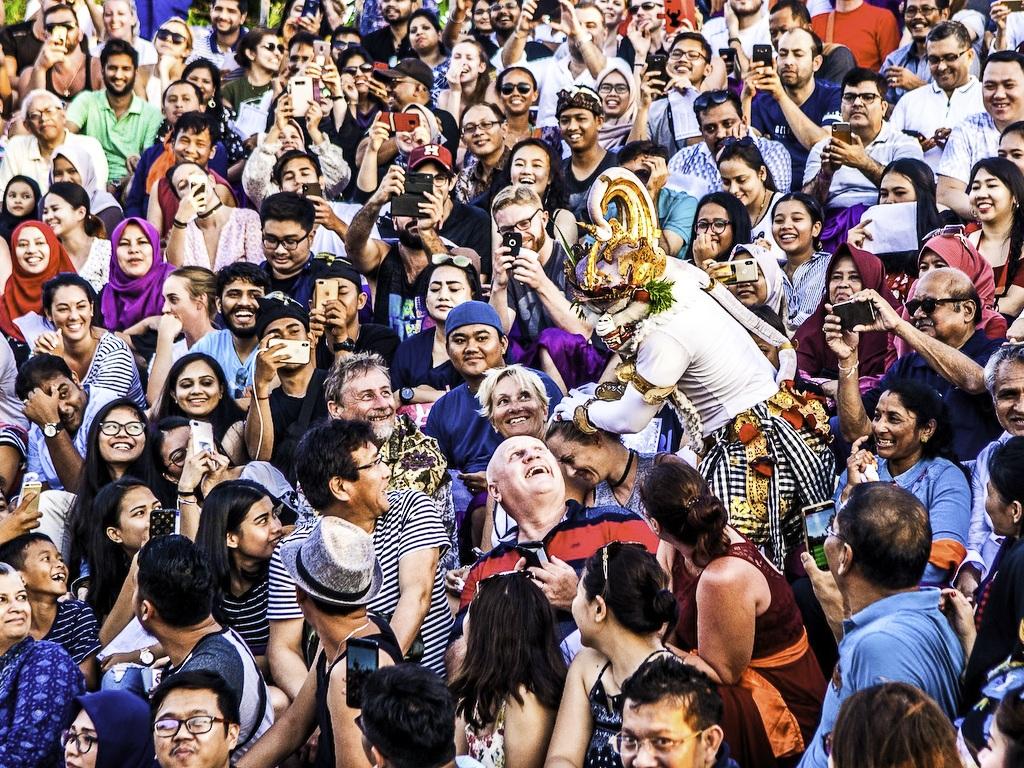
Photo - Suryawibisono on Pexels.com
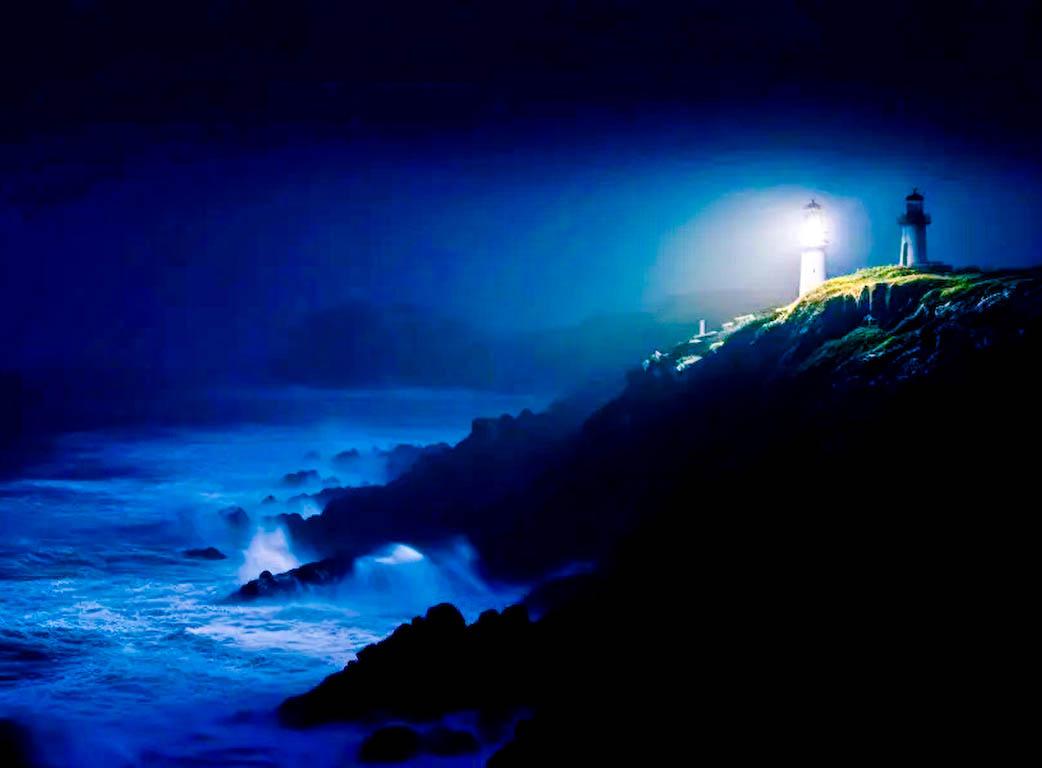 For several years now, the world has been living in a state of profound disorder. It is as though it had entered an entropic phase: order no longer regenerates spontaneously, connections multiply [...]
 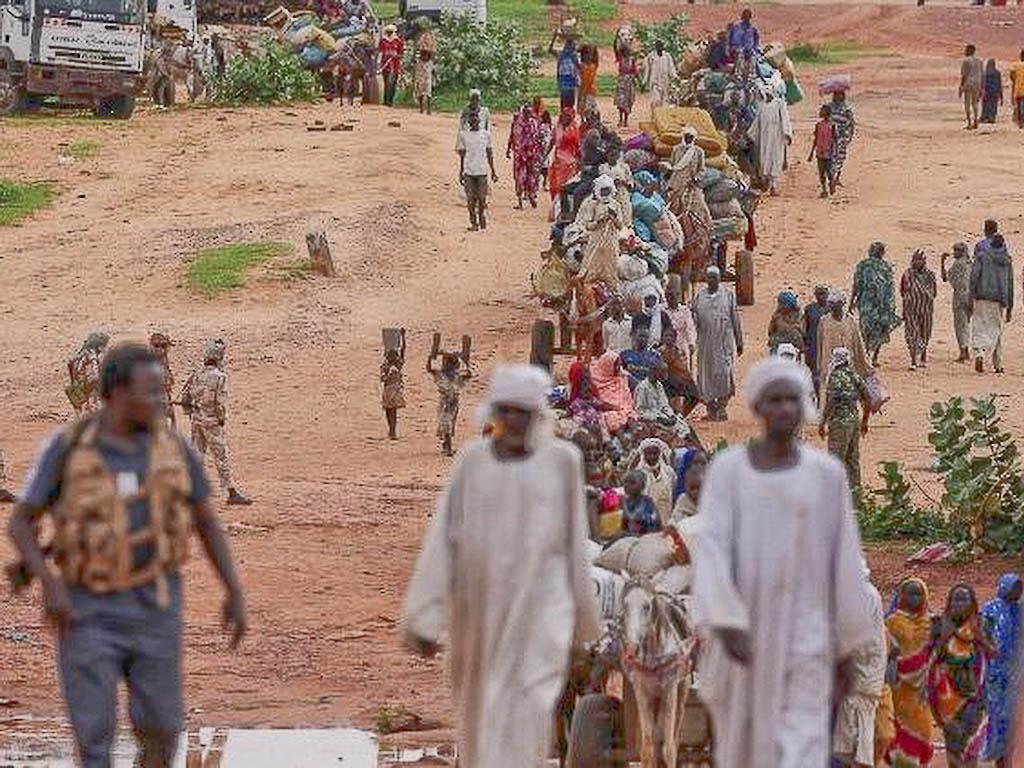 Those mornings—red earth and sand beneath bare feet, hunger’s ache in my stomach, my mother’s determined whisper that learning was freedom—have never left me. I have dwelled [...]
 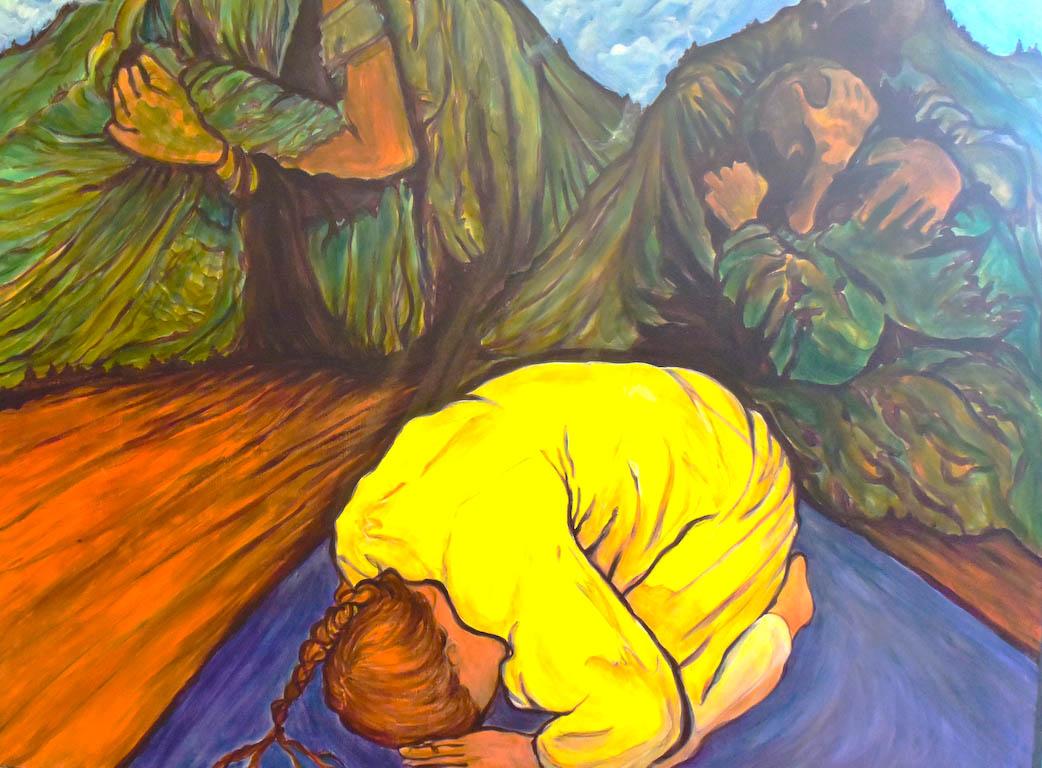 The recent military conflicts, especially the Russia vs Ukraine war, and the electoral propaganda in the USA—particularly the attack on former President Donald Trump—demand reflection on [...]
  Lesson 1: Prioritising personal well-being
Knowing how to take care of oneself is fundamental, a lesson that many underestimate until critical moments in their lives. Let us take a moment to [...]
Lesson 1: Prioritising personal well-being
Knowing how to take care of oneself is fundamental, a lesson that many underestimate until critical moments in their lives. Let us take a moment to [...] Info
Email: jampypezzi@gmail.com - tel. +39 328 732 6990 / +243 991 457 856
This blog is made in 4 languages: it en fr es



 EDitt | Web Agency
Leave a comment