
Justice, Peace, Integrity
of Creation
Justice, Peace, Integrity
of Creation
By John Paul Pezzi, Mccj
Justice, Peace, Integrity
of Creation
By John Paul Pezzi, Mccj
Justice, Peace, Integrity
of Creation
By John Paul Pezzi, Mccj
Justice, Peace, Integrity
of Creation
By John Paul Pezzi, Mccj
The Burundi I Had Never Seen
Butembo 05.08.2026 Gian Paolo Pezzi, mccj Translated by: Jpic-jp.org‘Our faith is not an idea, nor is it a philosophy: our faith is a history, the history of God's action in our lives.’ And again: ‘A Christian is a man or woman of memory.’ These words of Pope Francis have accompanied me many times in the years following my return from Burundi. They are the reason why I finally decided to put my own story into writing: Memory, Mission and the Re-reading of an Experience in the Light of Jean-Pierre Chrétien.
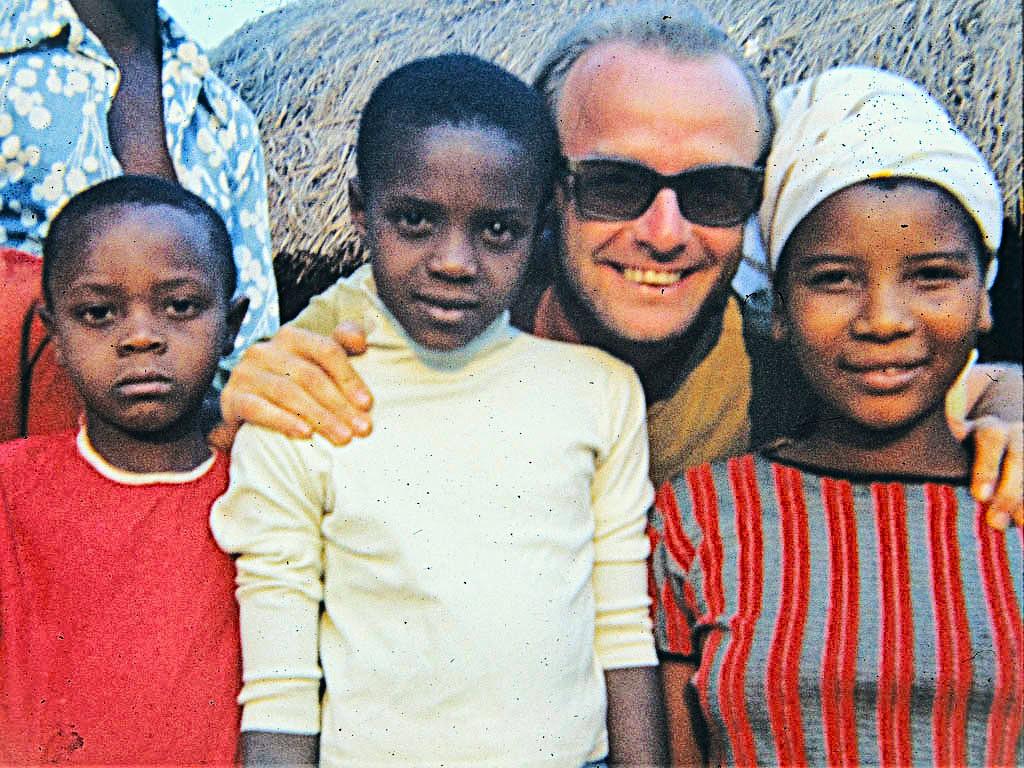
More than once, looking back on the eight years I spent in that country—my first real missionary experience—I have been told that the past is past, that history does not return, and that it is not worth dwelling too much on memories. Yet I have never been able to convince myself of that.
We do not return to the past out of nostalgia. We return because a part of ourselves has remained there, in the places, the people and the events that changed us. Until that part is recognised and integrated, it continues quietly to inhabit the present. To revisit one's own history is not to take refuge in memories, but to understand more deeply what we have become.
I have often found myself recalling an insight of Carl Gustav Jung. Interpreting it freely, I would express it like this: the past ceases to imprison us only when we have the courage to look it in the face. Memory, then, is not a burden but a liberation. It does not chain us to what has been; it finally sets us free to build something new.
It was in this frame of mind that, many years later, I came across the books of Jean-Pierre Chrétien. Far more than historical studies, they became for me a kind of return to Burundi. In particular, Burundi. L'histoire retrouvée. Vingt-cinq ans de métier d'historien en Afrique and Explorateurs et explorés au Burundi. Une vraie-fausse rencontre (1858–1900) reopened a chapter of my life that I had believed long settled.
It was anything but a detached reading. Every page brought back people, landscapes, words I had heard thousands of times, and apparently insignificant episodes that suddenly acquired a new meaning. I had the impression that these books were teaching me not only something about the history of Burundi, but also helping me to understand my own missionary experience more deeply.
I realised—perhaps with a certain unease—that we foreigners had travelled the length and breadth of that country without ever truly grasping its historical and cultural depth. We had learnt the language, walked the hills, shared the lives of the people, yet we often ignored the world of meanings hidden behind the very words we used every day.
Chrétien's two titles perfectly summarise what I lacked then and what I have been trying to recover.
L'histoire retrouvée—History Rediscovered. Not merely the chronicle of events, but the profound memory of a people, the memory that continues to live in names, proverbs, silences, landscapes and even in the most ordinary conversations.
Explorateurs et explorés—Explorers and Explored. A definition that reaches far beyond the age of the great European expeditions. Chrétien shows how the encounter between foreigners and the Barundi was at once genuine and incomplete: une vraie-fausse rencontre—a true-false encounter—in which each side viewed the other through its own cultural categories.
As I read, I could not escape one persistent question: had something similar not also happened to us missionaries?
I do not question the sincerity of our commitment. We were driven by the desire to share the Gospel, to build schools, dispensaries and Christian communities. We walked under the sun and in the rain, shared modest meals, celebrated festivals and lived through moments of fear alongside the people. Yet today I wonder whether all this is enough to say that we truly came to know one another. Perhaps we had learnt to love Burundi before we had really understood it.
It is a subtle distinction, but a decisive one.
Looking back today on those African years, I realise that some of the episodes I then experienced almost casually already contained the questions that only many years later I would be able to formulate. Small everyday events which, in the light of memory and of Chrétien's writings, now speak to me with a depth that I was then incapable of perceiving.
Three Episodes That Speak Differently Today
The first episode dates back to my first months in Burundi. I was walking across the hills to visit the sick when I met a man with a radiant smile. He greeted me warmly. Jokingly, I asked him: ‘Are you, by any chance, Euphrasia's father?’
He looked at me in surprise. ‘Yes. How did you know?’
‘Because you look exactly alike.’
Euphrasia was a beautiful young woman whom I had not seen for quite some time. I asked how she was. He replied with a single word: ‘Yicaye.’
Literally, it means, ‘She has sat down.’ I did not understand. Yet I immediately sensed that his answer had created an atmosphere of expectation among the people standing nearby. All eyes were fixed on me. It was obvious that the word carried a meaning of which I was completely unaware.
Instinct—or perhaps sheer good fortune—prompted me to reply with a smile: ‘And when will she stand up again?’
Everyone burst into laughter. I saw expressions of surprise and sympathy spread across their faces. ‘How does Gian Paolo, who has only just arrived, know these things?’
Only later did I understand the significance of what had happened. A young woman who had run away with the man she loved before marrying according to tradition would eventually return to her father's home. This return was described as kwicara—"to sit down": to pause, to reflect, to restore the proper order of family relationships and to begin the traditional process that would eventually lead to marriage.
Without realising it, my question had fitted perfectly into that cultural logic. ‘When will she stand up again?’ sounded to those present like: When will she resume her journey? When will she come to the mission to register for Christian marriage?
At the time, it seemed to me nothing more than an amusing anecdote. Today I see much more in it. Without yet being fully aware of it, I had discovered that a single word could contain an entire cultural universe. Behind an apparently simple expression lay a whole understanding of family, honour, reconciliation and marriage—something no dictionary could ever have explained.
It was probably my first real lesson in anthropology, received not from a professor, but from a peasant living among the hills of Burundi.
A Second Episode
A second episode took place a few years later at the mission of Cibitoke. In the evenings, some students from the nearby agricultural college had got into the habit of coming to my office. It was one of the few places in the area with electric light. They would study, chat and laugh together. More than catechetical meetings, they were moments of genuine friendship.
One evening I noticed that they were laughing more than usual. I asked them what was so amusing. One of them, rather hesitantly, said: ‘You won't be offended if we tell you something, will you?’
‘Not at all,’ I replied.
‘When we were little, if we were naughty, our mothers used to say: “Behave yourself, or the Muzungu will come and eat you!”’
Another added: ‘My father used to say: “Here comes the white ogre, and he'll carry you away.”’
They all burst into laughter. I laughed too. Then I told them that, when I was a child in Italy, something surprisingly similar happened. The few Africans who occasionally appeared in our villages often became mysterious figures in children's imaginations, whom adults would use to frighten us into behaving.
For a brief moment we looked at one another without feeling either European or African. We were simply children who had been frightened by the same fairy tales. At the time, this too seemed nothing more than an amusing anecdote. Today I see it in a very different light.
It has helped me to realise how deeply we had already entered the collective imagination of the Burundian people—not merely as missionaries or Europeans, but as symbolic figures. Whether we intended it or not, we represented something. We carried with us images, fears, hopes and stereotypes that had been formed long before we ever arrived.
Knowing Kirundi was not enough.
We also needed to understand the invisible world through which our presence was interpreted.
Many years later, while reading L'histoire retrouvée, I realised that Jean-Pierre Chrétien describes precisely this hidden dimension.
The foreign traveller, he writes, may cross a country without ever realising that every hill, every place name and every word preserves a memory. He may remain blind to the historical recollections that give depth and meaning to the landscape.
Those pages affected me profoundly. I too had walked thousands of kilometres across the hills of Burundi. I knew the footpaths, the families and the Christian communities. I believed that I knew the country.
Today I wonder whether I knew above all the Burundi that my own eyes could see, and much less the Burundi that lived in the memory of the Barundi.
The difference is immense. One may sincerely love a people without yet having learnt to listen deeply to their history.
What Chrétien Enabled Me to See
Among the many chapters of L'histoire retrouvée, one in particular forced me to question convictions that, almost without realising it, I had inherited from both the missionary tradition and the colonial culture.
For many years we had been taught, almost as an unquestionable fact, that the Tutsi were a people of Hamitic origin, having come from north-eastern Africa, perhaps Ethiopia: a people supposedly endowed by nature with a greater aptitude for leadership and therefore destined to exercise authority. It was a theory that appeared to explain everything and, precisely for that reason, explained almost nothing.
The colonial administration had made it one of the cornerstones of its political strategy. The missionary Church, although inspired by very different intentions, was not entirely immune from its influence, particularly in the formation of the first educated elites and of the future local hierarchy.
Only many years later did I realise how fragile that interpretation really was and how far-reaching its consequences proved to be.
Chrétien devotes illuminating pages to dismantling this ideological construction, aptly describing it as "the ethnic alibi." The categories of Hutu and Tutsi, which history had long known as fluid and permeable social realities, were progressively frozen into almost racial identities. What had originally emerged from economic, political and social relationships was transformed into what appeared to be a natural opposition between two distinct peoples.
It was, before anything else, a cultural construction. And, as so often happens, a cultural construction eventually produced dramatic political consequences.
Looking back on my years in Burundi, I realise how ill-prepared we were to grasp such complexity.
When, in 1972, the country was overwhelmed by the violence that the Barundi simply remembered as ivyabaye—what happened—we too tried to understand the events unfolding around us. Yet we did so with interpretative tools that were often inadequate.
Even the language we used unconsciously betrayed categories that we had never subjected to genuine critical examination.
Reading Chrétien again today, another aspect strikes me even more forcefully: his remarkable ability to show that the history of Burundi cannot be separated from that of Rwanda. They are two histories profoundly intertwined, yet all too often narrated in isolation and reduced—especially in the media—to the simplistic notion of "ethnic hatred": an explanation that may be reassuring in its simplicity, but is historically inadequate.
If L'histoire retrouvée enabled me to understand Burundi's past more clearly, Explorateurs et explorés touched something even more personal.
Its subtitle—Une vraie-fausse rencontre—stayed with me for weeks. A true-false encounter. A relationship that was genuine and yet, at the same time, incomplete.
It is an expression that extends far beyond the history of nineteenth-century European explorers. Almost inevitably, it also challenges the way we missionaries experienced our relationship with the people who had welcomed us.
I do not question the sincerity of our service. We shared hardships, fears, hopes and persecution. We learnt a difficult language. We spent hours walking across the hills. We ate the people's food, visited the sick and celebrated the faith with communities that were often materially poor yet rich in dignity.
And yet one question remains. How deeply did we truly know the inner world of the people we encountered? How well did we understand the way they saw us?
This question brings me back to an episode - the third - that, at the time, struck me only superficially.
At the end of the summer experience organised by several groups of the Africa '70 movement, we gathered in the cathedral of Bujumbura for a thanksgiving celebration.
They were young Italians, full of enthusiasm. During those few weeks they had worked in the missions, helping to build schools, dispensaries, chapels and agricultural facilities. They had come to share, to help and to build alongside the local people.
At the end of the celebration, a priest accompanying one of the groups said to me quite simply: ‘Did you notice? They thanked God for everything—for the work they had done, for the experience they had lived, for the spirit of fraternity... but they never thanked the people who had welcomed them.’
His remark stayed with me. At the time, I did not attach much importance to it. Today, however, it continues to challenge me.
Perhaps, without even realising it, we had retained a way of looking at things in which “we” remained the protagonists of the encounter. We were the ones who brought something: the Gospel, material assistance, expertise and organisation.
Far less often did we ask ourselves what we, in turn, were receiving. And even less frequently did we ask what the others thought of us. I myself never learnt to ask that question.
If evangelisation is not simply proclamation but also listening; if it consists not only in giving but also in allowing oneself to be transformed by the encounter, then, stripped of every trace of rhetoric, this seems to me today to be one of its most demanding challenges.
Perhaps this is the deepest meaning of the true-false encounter of which Chrétien speaks: two worlds living side by side, respecting one another, working together and even growing genuinely fond of one another, yet continuing, at least in part, to remain strangers to each other.
This is not intended as a criticism of the missionaries of the past. That would be too easy and, in the end, unfair. I would rather conclude with an acknowledgement that still echoes within me like a personal confession: I had learnt to speak Kirundi. I never learnt to ask the Barundi who I was in their eyes.
The comments from our readers (2)
 In reality, Tone La Maji is a rehabilitation centre run by the Koinonia Community, a Christian community founded in Kenya in the 1990s by Italian Comboni missionary Father Kizito. Its mission is to [...]
  A desert outing — in a landscape that is beginning to bloom — was organised for the children attending the nursery school of the Mihtawish Bedouin community, which lives in the villages [...]
  Yet, people work, sing, laugh, pray, bicker, marry and make plans. As if nothing is going on? Carefreeness, carelessness, superficiality, an effort to escape the present, resilience? Perhaps a bit of [...]
  The students, the school, the buzz of the packed classrooms, the religious services attended with "great joy" and the charitable work. On his return to Sudan ten days ago, Father Norberto [...]
  Assalamu Alaikum (‘Peace be upon you’) is the greeting with which we are greeted every time we visit the Bedouin communities in Palestine. Although the word ‘peace’ is part of [...]
  They arrived at the mission around nine in the evening on pickup trucks and started shooting and throwing grenades. One commando entered the nuns’ house, shooting at everything they saw. In the [...]
  On the morning of a splendid day, I left at dawn for Sunday Mass at the Ekango Chapel, Maboma Mission (DRC). Ekango is a modest Christian community, not very organized, where catechists and leaders [...]
 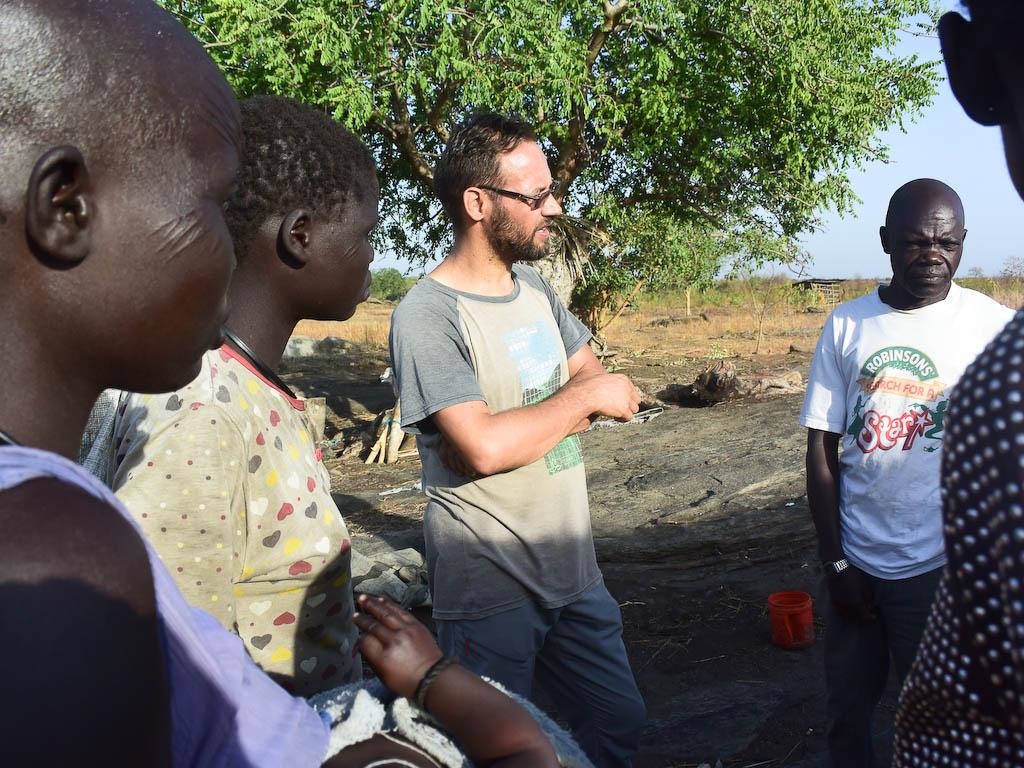 My confreres were very helpful and they were a continuous point of reference for me. I made friends with many Nuer youths who endeavoured to teach me their language. Every day I spent hours under the [...]
  I contemplate the borderless Wau’s land. While the ground passes behind, a cloud of memories suddenly brought me back to the past. Wau! A name I heard first long time ago, in 1957 when I joined [...]
 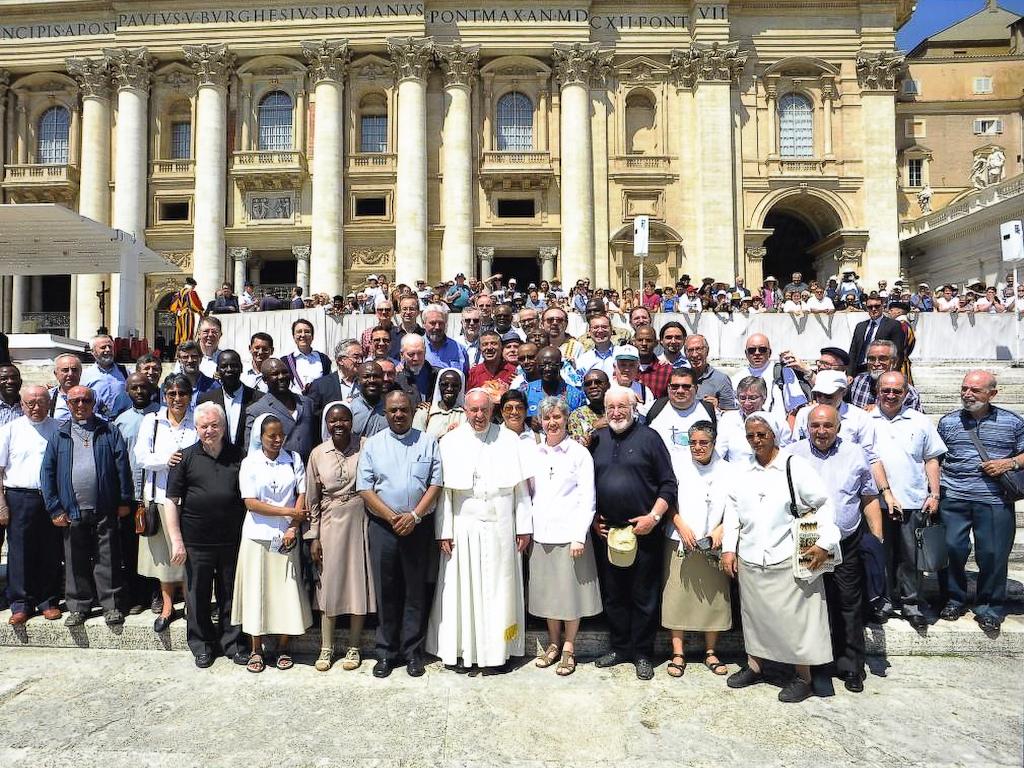 The birth of our Institute did not happen in a laboratory. Rather, it is the fruit of a long process of life and mission. It was a painful birth at a time of major change in the world. We were born [...]
 Info
Email: jampypezzi@gmail.com - tel. +39 328 732 6990 / +243 991 457 856
This blog is made in 4 languages: it en fr es

 EDitt | Web Agency
Leave a comment