Justice, Peace, Integrity
of Creation
Justice, Peace, Integrity
of Creation
By John Paul Pezzi, Mccj
Justice, Peace, Integrity
of Creation
By John Paul Pezzi, Mccj
Justice, Peace, Integrity
of Creation
By John Paul Pezzi, Mccj
Justice, Peace, Integrity
of Creation
By John Paul Pezzi, Mccj
The Death of the Ayatollah and the Earthquake on the Geopolitical Chessboard
Ethic 02.03.2026 Rubén Amón Translated by: Jpic-jp.orgThe weakening of the Shiite axis quietly encourages Sunni governments, unsettles Russia and China, and places the West before a moral dilemma that extends far beyond Tehran.
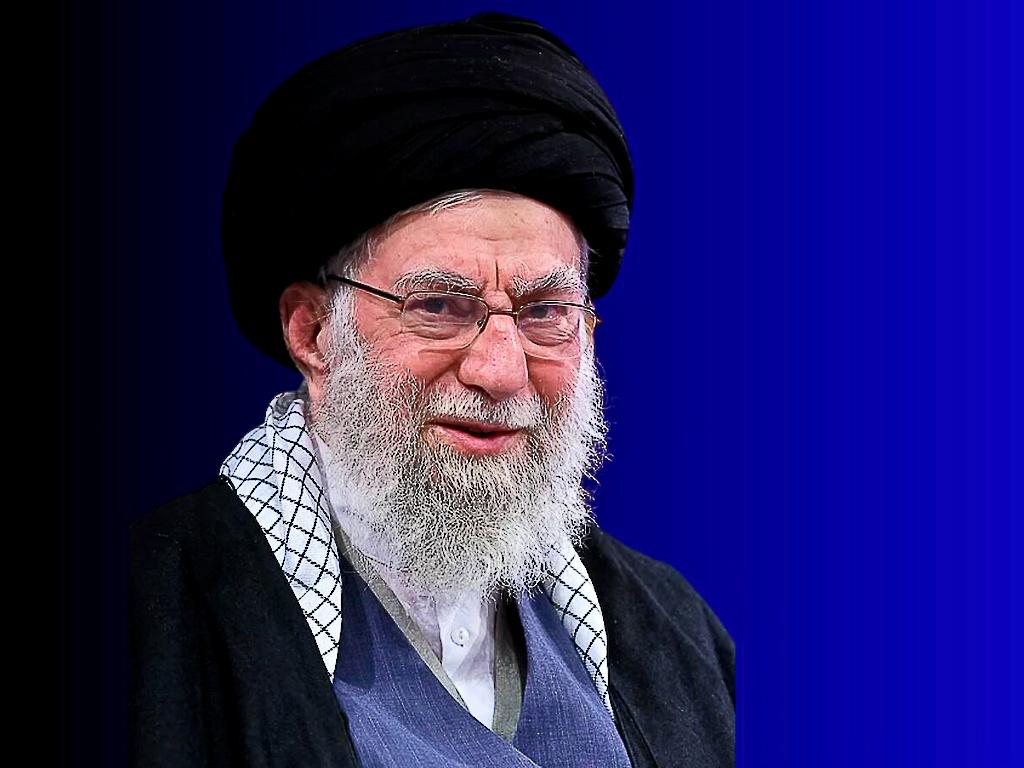
The death of Ali Khamenei does not close a chapter, yet it profoundly disrupts the Middle Eastern chessboard and forces us to ask whether such an assassination might unite a society that was previously divided or, on the contrary, accelerate the agony of the theocracy. For nearly half a century, the Islamic Republic transformed hostility towards Israel and the United States into the mortar of its revolutionary legitimacy. It was not merely a clerical regime but also a pedagogy of resistance, an identity constructed in opposition to the memory of the Shah supported by Washington, a promise of dignity in the face of external humiliation. Khamenei embodied that narrative to such an extent that it became almost indistinguishable from his own person. Eliminating him does not eliminate it.
The Western temptation is to interpret the strike as an act of geopolitical sanitation. The architect of a nuclear programme advancing towards a military threshold while maintaining ambiguity as a diplomatic shield has been neutralised. The brain of a network that financed and armed Hezbollah, sustained Hamas, encouraged the Houthis and projected influence across Iraq and Syria has been struck. The message is unequivocal: Iran’s persistence in pursuing nuclear deterrence had a limit, and that limit has now been crossed.
Yet the legitimacy of that boundary cannot be assessed solely through the prism of military effectiveness. If one accepts that a state may eliminate a foreign leader in the name of security, the precedent ceases to belong to the realm of exception and becomes embedded in strategic normality. Such normality does not discriminate according to ideological sympathies. Ethical consistency therefore requires asking whether the principle would remain unchanged if the target were not an ayatollah despised in the West but an inconvenient leader within another axis of power. Consider Trump. Or Putin. The question is not intended to equate trajectories but to measure the scope of the rule that is being inaugurated.
Iran was not experiencing a moment of unquestionable internal strength. Recent protests, massive repression, generational fractures and economic erosion had weakened the cohesion of the regime. Thousands of deaths in recent episodes exposed the growing distance between the urban youth and the clerical elite. Yet external aggression introduces a variable that reshapes the landscape. Nationalism, even in deeply divided societies, possesses the capacity to suspend domestic conflict temporarily when the threat comes from outside. Many Iranians who challenged their rulers may feel that American and Israeli interference represents not liberation but an additional humiliation. The consequence may not be the immediate implosion of the system, but rather its defensive consolidation.
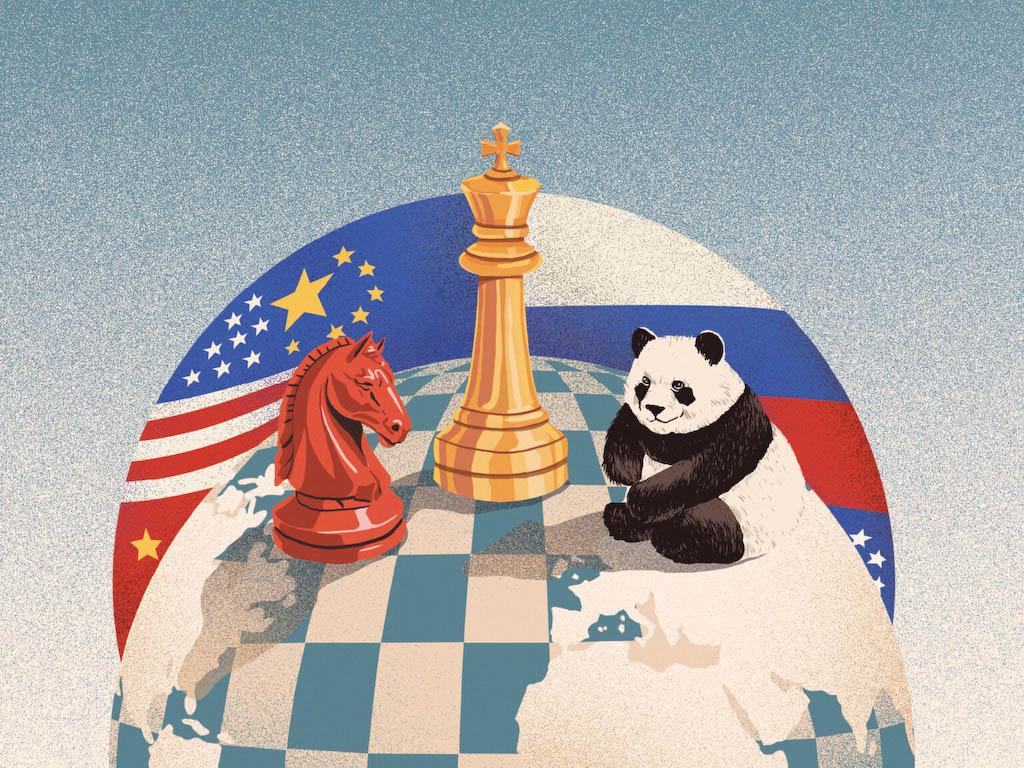
On the regional chessboard, the move acquires an irresistible dimension precisely because the Shiite constellation that for decades projected influence from Tehran to the Mediterranean is now experiencing its most fragile moment. The fall of the Syrian regime as a disciplined ally, the severe weakening of Hamas, the erosion of Hezbollah and now the visible vulnerability of the Iranian leadership are altering the sectarian balance. Sunni governments, which have never concealed their distrust of Iranian expansion, observe the episode with barely concealed pragmatism. Israel remains an uncomfortable actor, yet a weakened Iran reduces the strategic pressure that for years shaped the policies of Riyadh, Cairo and Ankara. The doctrinal rivalry between Sunnis and Shiites, more than public rhetoric concerning Palestine, explains much of this silent calculation.
Israel emerges strengthened. It has demonstrated both military reach and political determination. It may interpret the present moment as a historic opportunity to consolidate its regional superiority and redefine its security environment. It might even feel in a position to negotiate with the Palestinians from an unprecedented position of strength, should its own internal dynamics allow it. Yet the history of the Middle East reminds us that every blow contains the potential for retaliation. A wounded adversary does not always resign itself; sometimes it concludes that its only guarantee of survival lies in accelerating the path it had intended to pursue with caution.
This possibility is particularly troubling in the nuclear domain. If the Iranian elite conclude that negotiation offers no security and that agreements can be reversed unilaterally, the logical outcome may not be moderation but the decision to shield themselves with the ultimate deterrent capability. The operation intended to halt the programme might, in an extreme scenario, convince the most hard-line factions that nuclear weapons are not an ideological ambition but an existential necessity.
The risk of escalation is not limited to Tehran. Iran retains indirect instruments of pressure: militias in Iraq and Syria, the capacity to activate Hezbollah, influence over the Houthis in the Red Sea, and the latent threat over the Strait of Hormuz, a vital artery of global energy trade. Any expansion of the conflict would have immediate consequences for markets and for global economic stability. China and Russia have condemned the offensive not out of religious affinity but because each precedent of unilateral intervention erodes the strategic balance they consider conducive to their interests. The episode could become a broader point of friction between geopolitical blocs.
Europe, meanwhile, oscillates between rhetorical condemnation and practical impotence. It invokes international law and restraint, yet its room for manoeuvre largely depends on decisions taken in Washington. European strategic autonomy is being tested precisely at the moment when it is most loudly proclaimed. The gap between aspiration and capability once again becomes visible.
Khamenei’s disappearance does not guarantee a linear transition towards a more moderate model. It may open a process of internal competition between clerical factions and the Revolutionary Guard. It may encourage a more collegiate and less theocratic structure. Or it may lead to an even more security-driven leadership determined to close ranks in the face of external threat. Uncertainty is not a flaw in the analysis; it is the very condition of the moment.
To celebrate the elimination of the ayatollah as an unequivocal resolution is to simplify a complex reality. Strategic decisions generate chain reactions that rarely coincide with their initial expectations. Recent history offers numerous examples of interventions that promised stability but instead produced prolonged cycles of instability.
The Middle East is entering a different phase, marked by sectarian rebalancing, the redefinition of alliances and an implicit debate about the limits of the use of force. Khamenei’s death alters the chessboard, yet it does not eliminate the tensions that sustain it. The architecture of power built over nearly five decades does not vanish under the impact of a bombing. It transforms, retreats or hardens. Yet the irresponsibility of the actors involved — Trump and Netanyahu among them — and the cynicism with which Putin and Xi Jinping denounce the military ferocity of the United States suggest that the cage of serpents has been thrown wide open.
The comments from our readers (2)
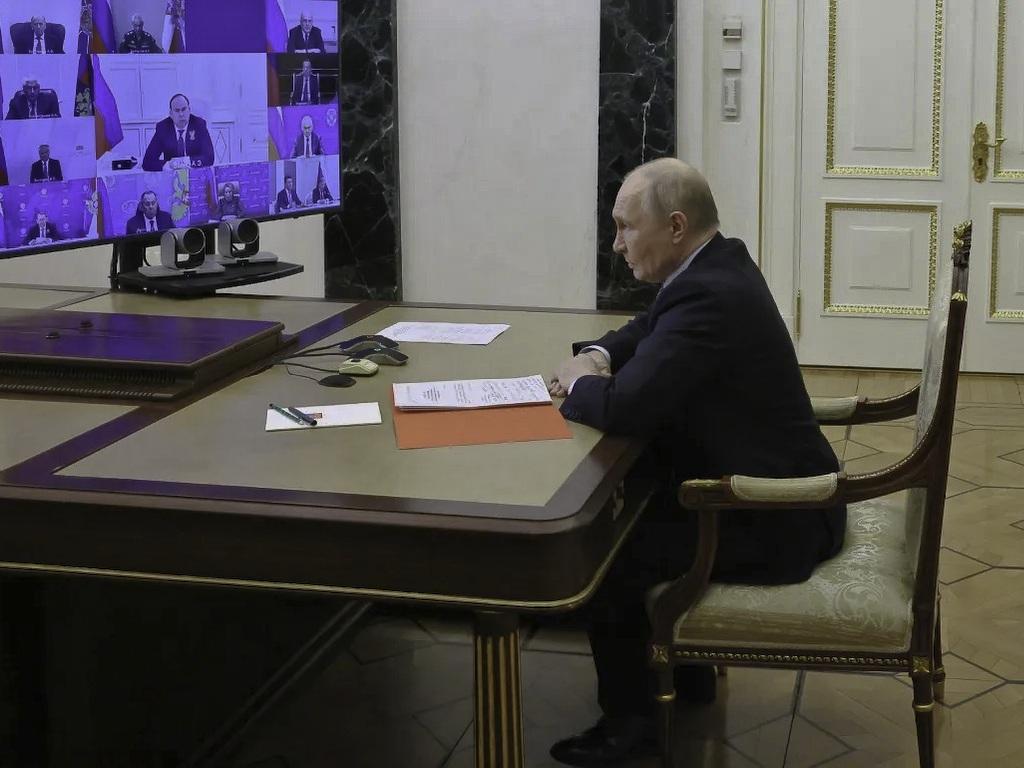 Russia’s war on Ukraine is entering a new phase. That does not mean the situation will change overnight, but the chances of escalation and the conflict spreading are growing.
The most [...]
Russia’s war on Ukraine is entering a new phase. That does not mean the situation will change overnight, but the chances of escalation and the conflict spreading are growing.
The most [...]  Recently, there was a summit between the United States and China, a meeting that had not taken place since 2017 and that brought together the leaders of the two powers competing for international [...]
 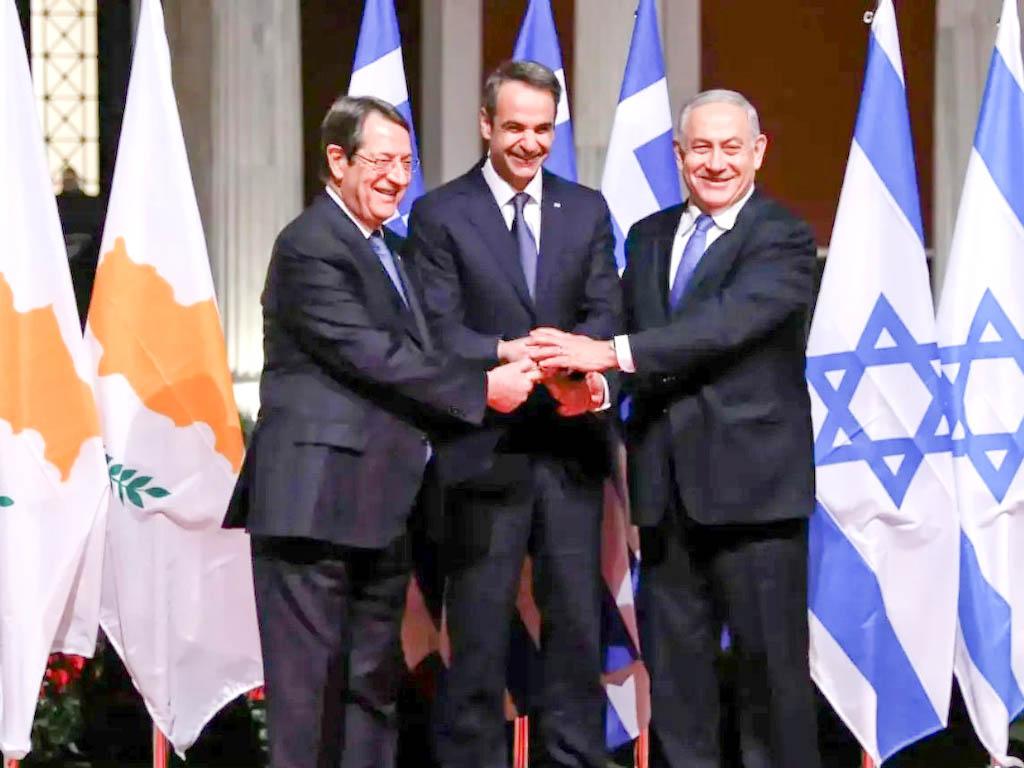 When, on 30 April, nearly 200 activists from the Global Sumud Flotilla were forcibly disembarked at a port on the southern coast of Crete after having been stopped by Israeli special forces, many [...]
  June 1944. Allied troops landed in Normandy to begin the liberation of Europe from Nazi rule. Operation Overlord, an unprecedented military offensive, paved the way to Victory in Europe Day in May [...]
  The situation is incredible, bordering on paradoxical, perhaps even ridiculous: in the midst of secularization, while individuals in their private lives do not care in the least about the dictates of [...]
  How do you assess the attack carried out by the United States and Israel against Iran? What will be its principal consequences?
The Middle East — and perhaps the rest of the world as well [...]
How do you assess the attack carried out by the United States and Israel against Iran? What will be its principal consequences?
The Middle East — and perhaps the rest of the world as well [...]  Until little more than a decade ago, the world order was based on a set of rules agreed by the Western bloc after the Second World War. Within that order, a hegemonic country — the United [...]
  Let us gather the legacy of Luca Attanasio “in order to continue building a world in which peace is more desired than war, in which kindness is more necessary than violence, in which solidarity [...]
  From North America to Africa, passing through Latin America and Oceania, no continent escaped the vast wave of European colonisation. Almost the entire globe experienced some form of European [...]
  There are moments in history when the decisive question is not who possesses the greatest strength, but whether an order still exists that is capable of containing it. When international law and the [...]
 Info
Email: jampypezzi@gmail.com - tel. +39 328 732 6990 / +243 991 457 856
This blog is made in 4 languages: it en fr es

 EDitt | Web Agency
Leave a comment