Justice, Peace, Integrity
of Creation
Justice, Peace, Integrity
of Creation
By John Paul Pezzi, Mccj
Justice, Peace, Integrity
of Creation
By John Paul Pezzi, Mccj
Justice, Peace, Integrity
of Creation
By John Paul Pezzi, Mccj
Justice, Peace, Integrity
of Creation
By John Paul Pezzi, Mccj
The Global Financial System and Eternal Inequalities
valori.it 08.01.2026 Antonio Piemontese Translated by: Jpic-jp.orgThe third edition of the “World Inequality Report,” the largest database on the historical evolution of inequalities, has been released. The “World Inequality Report” confirms that the nations most exposed to climate change are those that have contributed the least to generating it. The global financial system is designed to make inequalities eternal.
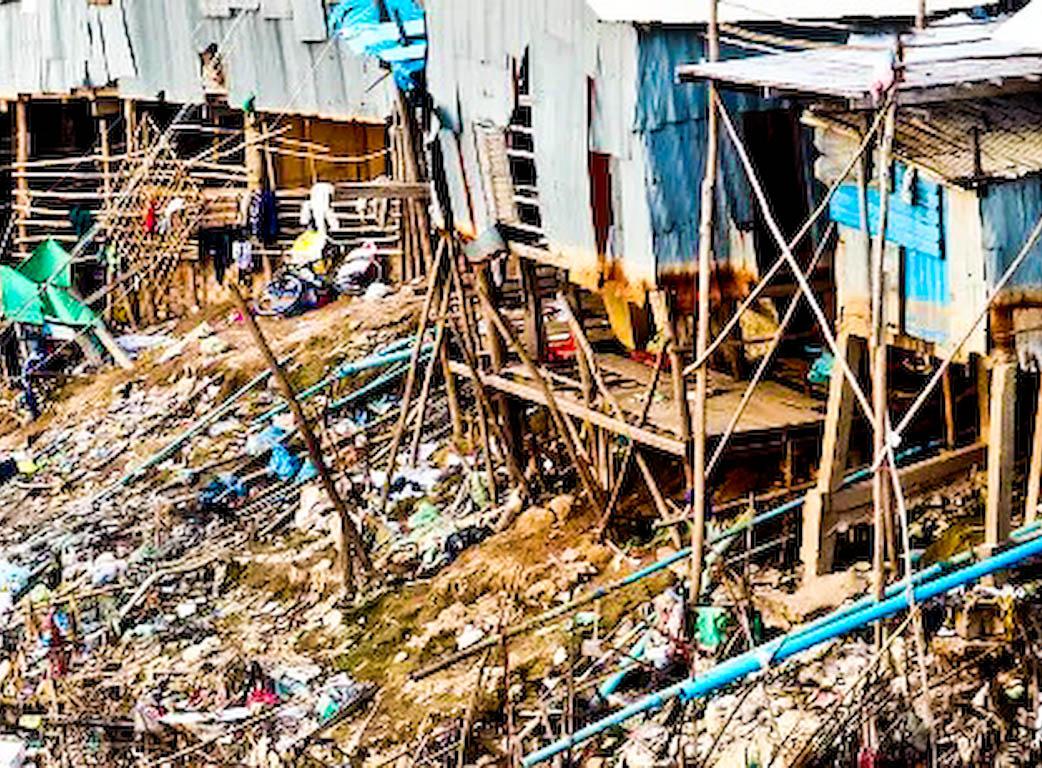
Approximately two hundred euros, at purchasing power parity: this is what, on average, is spent on the education of a child in Sub-Saharan Africa every twelve months. In Europe, the figure is around 7,400 euros; in the United States and Oceania, it is approximately nine thousand. A gap of 1 to 40, roughly three times the disparity found in per capita income.
The third edition of the World Inequality Report has been published, following the first two in 2018 and 2022, and this is but one of the data points it presents. The study is authored by a group of two hundred researchers from across the globe, affiliated with the World Inequality Lab, an international think tank founded by various stakeholders and based at the Paris School of Economics. Together, they have contributed to creating the largest database on the historical evolution of inequalities. Reading it, and extracting it from the background noise, is vital to understanding our prospects.
Climate Crisis and Wealth Concentration
The report, which is freely available to consult and download, contains further interesting considerations. Let us take the climate. The climate crisis is inseparable from the concentration of wealth. "Focus is always placed on emissions associated with consumption," the scholars write, "but new studies have revealed that those who hold capital play a key role in emission inequality." In other words, blaming those who make choices—and often do so because they are exposed to advertising and media influence without possessing critical tools—is too easy. And, perhaps, it is also a deliberate attempt to shift attention. Looking at the "masters of the engine" (economic power-holders), the picture changes decisively.
"The wealthiest 10% of individuals," it reads, "account for 77% of global emissions associated with the ownership of private capital, underscoring how the climate crisis is inseparable from the concentration of wealth." The poorest half of the global population accounts for only 3%. Furthermore: the top 1% of the wealthy alone accounts for 41% of emissions. Nearly half. For those familiar with reporting, the data just cited refers to Scope 1 emissions (direct emissions) attributable to companies and assets owned by individuals.
The issue, given that producing goods and services carries environmental and climate costs regardless of who the entrepreneur is, remains that it is one thing if profits go to many, and another if they are enjoyed by only a few. These particularly capable (or lucky, or both) individuals must therefore be called to account. A view, some might object, that is almost Marxist. And there is certainly some truth in that. But Marx was primarily an economist.
Climate Crisis and Social Inequalities
Even in the face of the climate crisis, we are not all equal. To understand better, it is useful to examine consumption, as the picture is very different. Take, for example, the data on greenhouse gas emissions for the top 1% of the population by consumption. In this case, they reach 15% of the total, a third compared to the other table. It is quite clear how looking at things through this lens can, by a sleight of hand, lighten a substantial portion of the burden of responsibility. That is not all.
Those who emit the least—the populations of the poorest countries—often coincide with those most vulnerable to climate shocks. Meanwhile, those who emit the most (and often reside in rich countries) also possess greater resources to implement the fundamental adaptation works required for protection, and thus to avoid the most disastrous consequences of climate change. "An unequal distribution of risk," as the report puts it.
Reforming the Financial System to Defuse the Causes of Inequality
What is to be done, then? Resolving the situation, the scholars warn, "requires a targeted realignment of the financial and investment structures that fuel both emissions and inequalities." This is because "inequality is deeply embedded in the global financial system," which generates it "systematically."
One of the keys is the demand (legitimate and understandable, moreover) for safe investments. Countries that issue reserve currencies can borrow money at lower rates, lend it at higher rates, and attract larger shares of savings. The exact opposite applies to poorer countries, for whom debt is expensive, loans yield little, and—in short—a continuous outward flow is created.
To be sure, compared to the early 1970s, when the dollar was practically hegemon, the role of the euro has slightly gained traction, along with other Western currencies such as the Swiss franc (though still much lower). There has been an undeniable broadening. However, the system remains extremely Western-centric. This explains the widespread discontent in the "Global Majority," as the former Global South is now called. It is worth remembering that it includes giants such as China. The report is clear: "Privileged countries face lower costs for their liabilities not due to market dynamics, but by political design."
The demand (defined as "persistent") for safe assets such as American and European bonds, reinforced by central bank reserves, by regulatory standards such as Basel III, and by the role of credit rating agencies' judgements, effectively "locks in" this advantage ad aeternum. "The result is that rich countries borrow money more cheaply and invest it in high-yield assets abroad, ending up living on rents at the expense of poorer nations." And, just as at the individual level, if rents increase between states, economical mobility decreases.
Inequalities are a Political Choice
"Inequalities are a political choice," the scholars conclude. "It is the result of our policies, institutions, and governance structures." The costs, it is stated, are clear: from social costs to the fragility of democracies, through to climatic costs. But the tools to reduce them are also clear: "Where redistribution is strong, taxation is fair, and social investments are prioritised, inequality narrows." Economics—oikos, nomos, the art of governing the household, so to speak—is important: but politics is even more so.
See, Il sistema finanziario globale è progettato per rendere eterne le disuguaglianze
 Right and left presupposed a common space: constitutional democracy, the rule of law, and the mutual recognition of political actors as legitimate opponents. The current crisis, by contrast, operates [...]
  Did you know that Saudi Arabia and the United Arab Emirates, despite their deserts, import millions of tonnes of sand every year? Why do they rely on imported sand for their mega-projects? [...]
  In a report presented on 19th January 2026 at the opening of the World Economic Forum in Davos, the British organisation Oxfam reported that global billionaires’ fortunes increased by 16% in [...]
  Economic growth is not a statistical abstraction; it is the most powerful lever humanity has ever known for the tangible improvement of well-being. Over recent decades, its impact has been [...]
  Undoubtedly, there has never been an era of true free trade. International trade has always been only partially and unevenly free and, in most cases, regulated. Most so-called neoliberal advocates [...]
  In an age marked by individualism, social fragmentation, and a crisis of human bonds, rediscovering the value of the common good is not just a cultural exercise, but an ethical and political [...]
  Liberalism is a doctrine that does not claim to have answers for everything, unlike Marxism, and welcomes divergence and criticism within its framework, based on a small but unmistakable core of [...]
  Despite the apparent variety of brands on supermarket shelves, much of the food and drink we consume every day is controlled by a small group of large multinationals. According to an analysis made [...]
  In your most recent book, Power and Progress, you mention that we are at a critical moment regarding the relationship between technology, equality and democracy. What consequences do you foresee if [...]
  The economic gerontocracy is in control of the planet. The numbers sparkle like diamonds in a jeweller's window. The infinitely cited BRICS (Brazil, Russia, India, China and South Africa), [...]
 Info
Email: jampypezzi@gmail.com - tel. +39 328 732 6990 / +243 991 457 856
This blog is made in 4 languages: it en fr es




 EDitt | Web Agency
Leave a comment