Justice, Peace, Integrity
of Creation
Justice, Peace, Integrity
of Creation
By John Paul Pezzi, Mccj
Justice, Peace, Integrity
of Creation
By John Paul Pezzi, Mccj
Justice, Peace, Integrity
of Creation
By John Paul Pezzi, Mccj
Justice, Peace, Integrity
of Creation
By John Paul Pezzi, Mccj
Europe between Donald Trump, Vladimir Putin and Xi Jinping
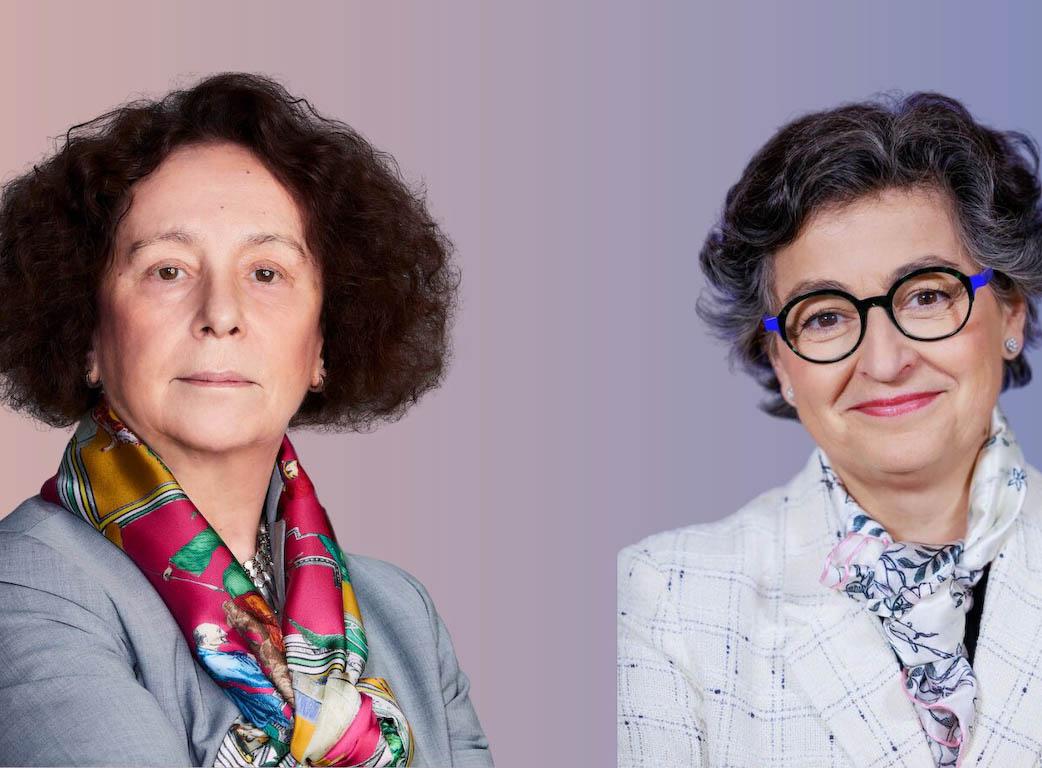
Ethic 16.10.2025 Carmen Gómez-Cotta Translated by: Jpic-jp.orgAna Palacio, a lawyer specialising in international and European Union law and a former Minister of Foreign Affairs, and Arancha González Laya, Dean of the Paris School of International Affairs at Sciences Po and former Minister of Foreign Affairs, European Union and Cooperation, engage in a dialogue on Europe, its situation in the world, and what it can do to navigate this decisive moment of transformation now under way.
Until little more than a decade ago, the world order was based on a set of rules agreed by the Western bloc after the Second World War. Within that order, a hegemonic country — the United States — guaranteed its security and balance, among other reasons because it had an interest in a world organised in its own image.
With the outbreak of the 2008 financial crisis, the rules of the game began to change and new actors started to raise their voices to demand a greater role on the international stage. Not only that, but the organisations that set the rules governing international relations ceased to impose authority, and the world as we had conceived it for more than 80 years began to falter.
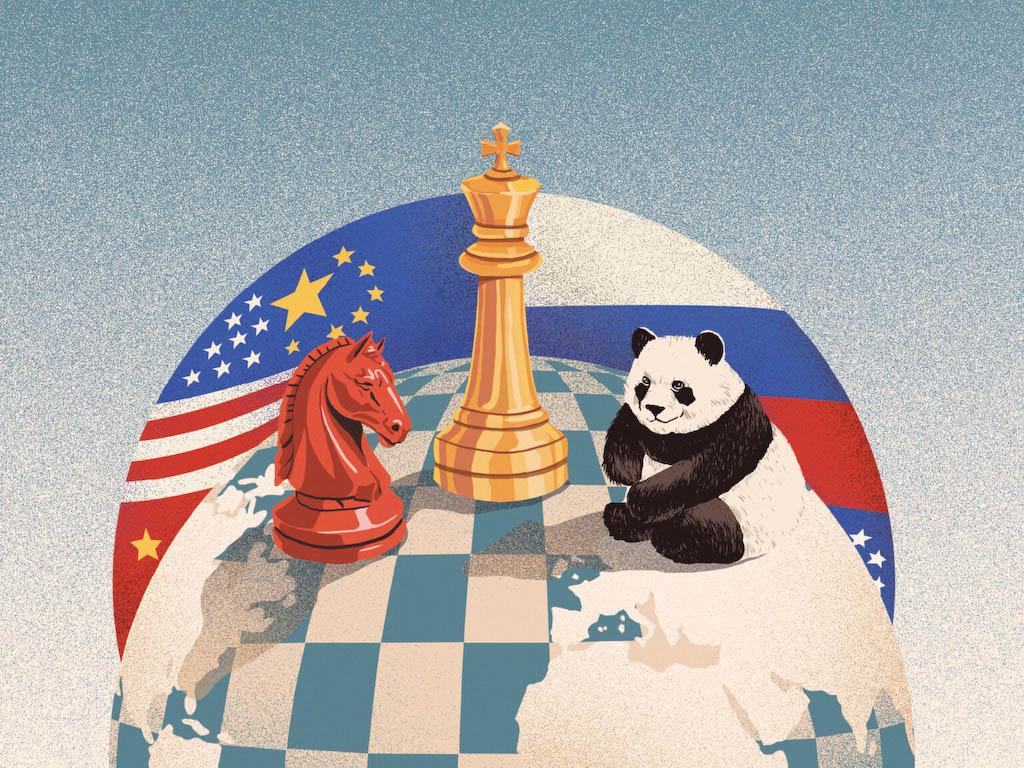
The United States and China are now competing to win the technological race and secure global leadership, while Russia continues striving to gain ground and the Global South gathers momentum. And at the centre of it all, Europe. The Old Continent is being tested in a world that is no longer based on rules but on power — something that is difficult to reconcile with a project that was founded on the defence and maintenance of peace and that has solidarity as one of its fundamental principles. Moreover, the political complexity of the European Union makes it difficult to consolidate its leadership. And it is leadership — not theories of international relations — that determines wars.
Milestones of the 21st century that help explain the shift in the world order
2008.
The Great Recession. The housing bubble bursts in the United States, causing one of the largest global financial crises. It highlights the cost of poorly regulated globalisation and calls liberal economics into question.
Beijing Olympic Games. A sporting event through which China, for the first time, demonstrates its strength and its desire to carry weight in the international order.
War in South Ossetia between Russia and Georgia. A prelude to the instability that would follow in the European Union. Oil and gas routes, NATO expansion and the EU’s fifth enlargement (with Romania and Bulgaria) intersect.
2014.
Sochi Olympic Games. Russia emulates China in what would become the most expensive Olympic Games in history.
Russia’s invasion of Crimea. A consequence of the Euromaidan: demonstrations by the Ukrainian population against their president, Viktor Yanukovych, expressing their desire to belong to the European Union. It occurs just days before the end of the Sochi Games.
ISIS (Daesh) caliphate. A Salafist group occupying territory in Iraq and Syria. Due to an international coalition gradually reducing its territorial control, it shifts towards the Sahel — Mozambique and the Horn of Africa.
Israeli and Hamas offensive. The backdrop is a possible agreement between the Palestinian Authority and Hamas to form a national unity government in the West Bank and Gaza. The offensive results in more than 2,000 deaths in Gaza and the expansion of Israeli settlements in the West Bank.
Umbrella Revolution in Hong Kong. The beginning of the weakening of the “one country, two systems” principle aimed at guaranteeing a certain space for freedom and democracy in the region.
2015.
Paris Agreement on climate change.
Sustainable Development Goals to reduce extreme poverty by 2030.
Joint Comprehensive Plan of Action to ensure a peaceful Iranian nuclear programme.
Major multilateral international agreements in which, for the first time, alongside states, institutions, individuals and companies also sign.
2016.
Brexit in the United Kingdom and the first term of Donald Trump in the United States give rise to a populist wave that has continued to grow, calling for sovereignty over borders and the recovery of control.
NATO. The United States questions its defensive alliance with Europe, subordinating it to increased financial contributions from European countries.
2020.
The COVID-19 pandemic, an unprecedented challenge to the welfare state, economic prosperity and international leadership. Global governance through the G20 proves insufficiently effective in the face of the health crisis.
2022.
Russia’s invasion of Ukraine. Russia continues with its ambition to restore its empire and seeks to intensify the pressure it exerts on the European continent.
2025.
Second term of Donald Trump. A President of the United States emerges with a predatory economic agenda, opportunistic geopolitics and a direct challenge to American democracy.
The unmistakable shift in power taking place on the international stage can be observed from three distinct angles, notes Arancha González Laya. First, economic: “In 2000, China accounted for 4% of global wealth; today, 19%; and the United States, 32%, compared with 15% today. In addition, the economies of Southeast Asian countries (ASEAN) were worth $4 billion and are now worth $1.3 trillion.” Second, military: “The United States accounts for 37% of global military spending, compared with China’s 12%.” Third, geopolitical: power today is held not by states, but by technology companies.
The dominance of the United States in technology is a fact, as is China’s rapid advance. So much so that its technological progress and strong exports have positioned it as the world’s second-largest economy. That economic power is already visible in the political and military spheres, as demonstrated by the modernisation of its armed forces. China is thus ceasing to be an emerging power and becoming a leading international actor capable of challenging the United States and calling its hegemony into question. This is the “Thucydides Trap” outlined by political scientist Graham Allison.
One of the main consequences of this shift in power is the weakening of the international institutional framework, “which today has a very strong epicentre in the United States”, notes González Laya. Under the leadership of Donald Trump, the United States has withdrawn from the multilateral order, making clear its preference for power over rules and creating one of the most significant ruptures with the European Union, which continues to base its functioning on regulations. European concern is considerable, since “we know how to deal with those who do not respect the rules when they are called Russia or China, but not when they are called the United States”. After all, the latter have always been key partners in trade and defence, in addition to sharing democratic values and principles.
Russia is not China
Although the United States differs from China and Russia, the Dean of Sciences Po stresses that these two powers should not be lumped together. “Russia has an economy — geared towards war and in decline — roughly the size of Italy’s, but with nuclear weapons, whereas China accounts for 19% of global GDP. Moreover, China benefits from a benign and stable international environment, while Russia thrives on instability, living in constant confrontation.” A view shared by Ana Palacio, who adds: “In rebuilding the multilateral system, China adopts different approaches: where the current system focuses on the individual, it prioritises the group; where we prioritise freedom, it prioritises security; and where the West emphasises critical rationality, it emphasises obedience.”
A communist China — with a capitalist economy — and a Russia with Tsarist ambitions (to which must now be added a populist United States) have been key trading partners for the European Union in its strategic growth plans.
One of Europe’s most significant strategies in recent years has been the European Green Deal, a policy of energy transition that promised a cleaner and climate-neutral Europe. However, “it was devised in 2019, and in 2022 we woke up to Russia’s invasion of Ukraine. The world changed, and it is no longer sustainable, as the Green Deal does, to take energy security — that is, the smooth flow of supply — for granted,” recalls Ana Palacio. The war in Ukraine revealed that the interdependence fostered by globalisation could lead to unforeseen vulnerability. The energy imported from Russia and the Chinese technology on which Europe heavily depends have proved to be two major weaknesses. To these must now be added issues of security and defence, particularly since the return of Donald Trump to the White House. “The world has changed and is not the one the European Union had anticipated. It is a world of power and force, where one cannot rely solely on soft power,” says Palacio, while noting that “China has taken ownership of the soft power narrative among major powers — a narrative the United States has abandoned.”
In the background lies a division that cannot be ignored. “The great divide is political: between those who pursue economic interest and good governance and those who play on emotion and geopolitical irrationality,” argues the former minister. This has led to “a doctrine of emotion and grievance, which is Trump’s politics” and which we are now witnessing in both Europe and the United States. Brexit is a case in point, she notes: it did not arise from economic interest, but from a search for identity.
European leadership
Faced with a situation of this magnitude, both former ministers agree that Europe must adapt to the new reality and increase its weight on the international stage, which requires deeper integration. “Europe has sufficient assets to matter” in the new world order; “trade is one of our strengths,” acknowledges Ana Palacio, but what is lacking is leadership and a capacity for sacrifice. Why did the Atlantic Charter of 1941, signed by Churchill and Roosevelt, or the Schuman Declaration of 1950 succeed? Because “there was American leadership” in the first case, and because “French and German societies were willing to make sacrifices” in the second.
Today, however, these two engines that drove the European project are faltering, which makes it necessary not so much to replace them as to find new ones. “They should be Spain, Italy and Poland,” argues González Laya. “Politically we are different, but the sum of the five works: when one fails, another can compensate,” because objectives are shared. “It is about conducting European politics with variable geometries and collective leadership,” she adds.
For the time being, the European Union has set its course: it is clear that it must invest more in security and defence, deepen the single market and strengthen its strategic autonomy if it is to become an actor with real decision-making power in the new international framework. Perhaps what is lacking is simply greater speed to arrive in time at this decisive historical juncture.
See, Europa entre Donald Trump, Vladimir Putin y Xi Jinping
Ilustración: Natalia Ortiz
The comments from our readers (1)
 Russia’s war on Ukraine is entering a new phase. That does not mean the situation will change overnight, but the chances of escalation and the conflict spreading are growing.
The most [...]
Russia’s war on Ukraine is entering a new phase. That does not mean the situation will change overnight, but the chances of escalation and the conflict spreading are growing.
The most [...]  Recently, there was a summit between the United States and China, a meeting that had not taken place since 2017 and that brought together the leaders of the two powers competing for international [...]
  When, on 30 April, nearly 200 activists from the Global Sumud Flotilla were forcibly disembarked at a port on the southern coast of Crete after having been stopped by Israeli special forces, many [...]
  June 1944. Allied troops landed in Normandy to begin the liberation of Europe from Nazi rule. Operation Overlord, an unprecedented military offensive, paved the way to Victory in Europe Day in May [...]
  The situation is incredible, bordering on paradoxical, perhaps even ridiculous: in the midst of secularization, while individuals in their private lives do not care in the least about the dictates of [...]
  How do you assess the attack carried out by the United States and Israel against Iran? What will be its principal consequences?
The Middle East — and perhaps the rest of the world as well [...]
How do you assess the attack carried out by the United States and Israel against Iran? What will be its principal consequences?
The Middle East — and perhaps the rest of the world as well [...] 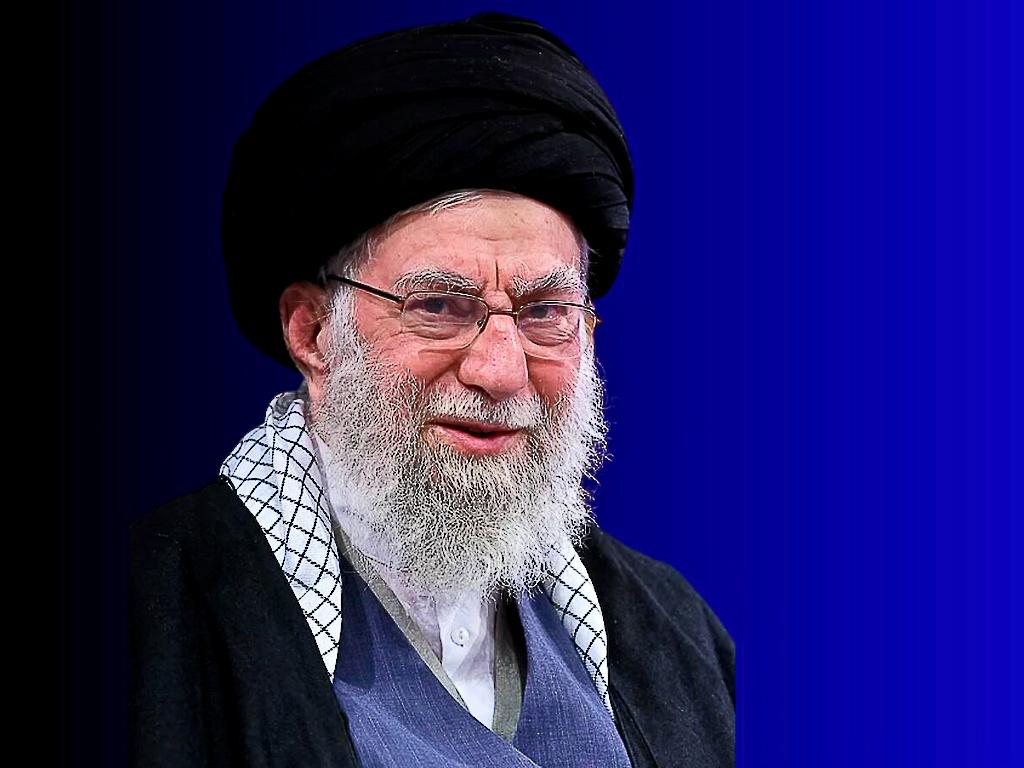 The death of Ali Khamenei does not close a chapter, yet it profoundly disrupts the Middle Eastern chessboard and forces us to ask whether such an assassination might unite a society that was [...]
 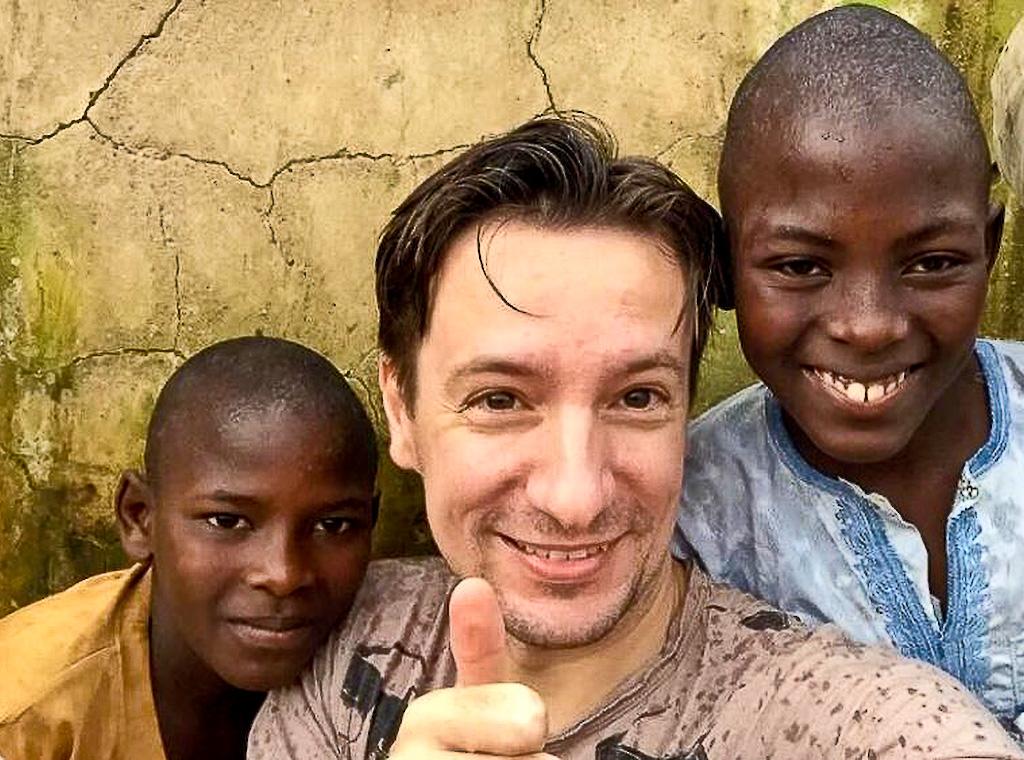 Let us gather the legacy of Luca Attanasio “in order to continue building a world in which peace is more desired than war, in which kindness is more necessary than violence, in which solidarity [...]
 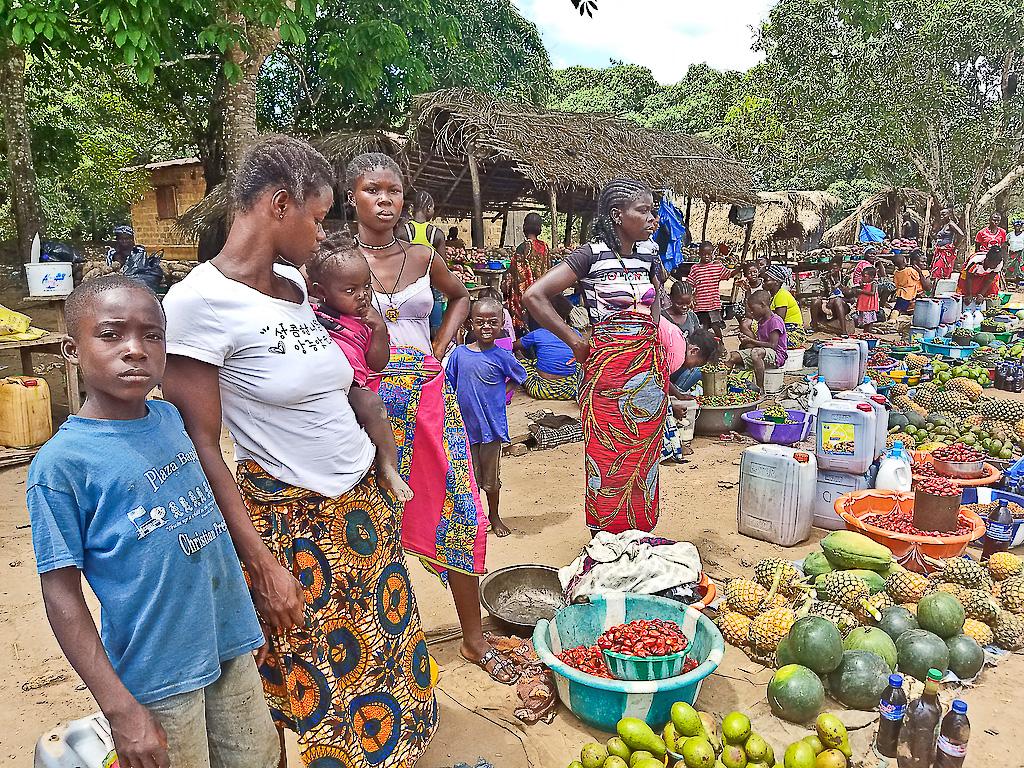 From North America to Africa, passing through Latin America and Oceania, no continent escaped the vast wave of European colonisation. Almost the entire globe experienced some form of European [...]
 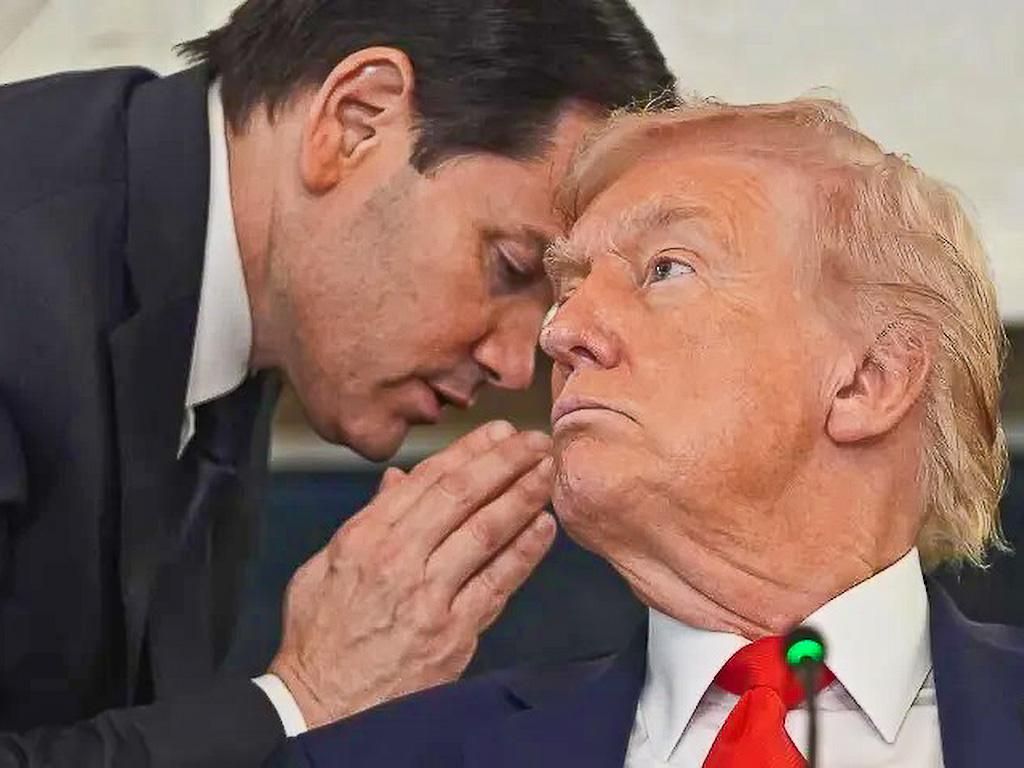 There are moments in history when the decisive question is not who possesses the greatest strength, but whether an order still exists that is capable of containing it. When international law and the [...]
 Info
Email: jampypezzi@gmail.com - tel. +39 328 732 6990 / +243 991 457 856
This blog is made in 4 languages: it en fr es

 EDitt | Web Agency
Leave a comment