Justice, Peace, Integrity
of Creation
Justice, Peace, Integrity
of Creation
By John Paul Pezzi, Mccj
Justice, Peace, Integrity
of Creation
By John Paul Pezzi, Mccj
Justice, Peace, Integrity
of Creation
By John Paul Pezzi, Mccj
Justice, Peace, Integrity
of Creation
By John Paul Pezzi, Mccj
A “new global climate democracy” is born
https://valori.it 05.04.2026 Andrea Di Turi Translated by: Jpic-jp.orgThe curtain has fallen on the first international Conference on the phase-out of fossil fuels, held from 24 to 29 April in Santa Marta, Colombia. It is now time to assess the results it produced. But this must be done from the right perspective. The next meeting will take place in Tuvalu in 2027.
It would be wrong and superficial to criticise the Conference on the grounds that no binding agreements were reached, since the Santa Marta Conference was explicitly not designed as a negotiation space. Instead, one must begin from the fact that this was an unprecedented event. Never before had so many countries in the world – nearly sixty – gathered outside the COP framework to discuss the climate crisis. And this took place in the midst of the well-known, highly charged geopolitical context. The first fundamental outcome is therefore simply that the event was held at all.
The journey launched by the Santa Marta Conference will continue
It should also be noted that the Santa Marta Conference risked remaining a one-off event. COPs have been held for more than thirty years, and the expectation is that they will continue indefinitely, at least as long as the world chooses to comply with the United Nations Framework Convention on Climate Change (UNFCCC) that established them. The International Conference on the Phase-Out of Fossil Fuels, however, is different: it was the product of a coalition of willing, courageous and visionary countries, starting with its two co-organisers, Colombia and the Netherlands.
The fact that it has already been decided that there will be a second Conference is therefore another major achievement. It will take place in 2027 in Tuvalu, in the Pacific. A pre-Conference will be held in Ireland, the co-organising country. “The momentum from Santa Marta is encouraging: we must continue to build on it,” said Mary Robinson, former President of Ireland and founding member of the prestigious group of world leaders The Elders. The Conference website opens with a fittingly celebratory line: “The journey continues.”
The principles for phasing out fossil fuels in the People’s Declaration
The Santa Marta Conference was characterised by the strong voice of civil society. A voice which, unlike what too often happens at COPs, was given the space and importance it deserves in the event’s agenda. It was above all an event of the people, emphasising that they no longer accept decisions being made over their heads. Unlike COPs, once again, which are often “contaminated” by hordes of fossil fuel lobbyists. In Santa Marta, they were absent. The “People’s Declaration for a rapid, fair and just transition to a fossil-free future” can be considered the true programme manifesto of the event.
The Declaration sets out 15 principles on which to base the fossil fuel transition. These include strict adherence to climate science, recognition of the historical responsibility of the Global North in the climate crisis, the centrality of human rights, the removal of financial barriers and the cancellation of illegitimate debts. It also calls for the rejection of false solutions, international solidarity and cooperation (including support for a binding fossil fuel treaty), and the need for systemic change – economic, political and social – in order to bid farewell to extractivist capitalism.
The text also calls for a series of “concrete and immediate” actions, including a full, fair and just phase-out of fossil fuels, and a “rapid” transition towards 100% renewable energy.
The Scientific Panel for the energy transition and progress on the Fossil Fuel Treaty
The Scientific Panel for the Global Energy Transition (SPGET) was also established in Santa Marta, another first of its kind. It will be composed of world-renowned scientists and experts in climate, economics and technology, and will guide public policy by proposing concrete actions for the fossil fuel phase-out. Among the coordinators of the initiative is Johan Rockström, Director of the Potsdam Institute for Climate Impact Research and “father” of the planetary boundaries framework.
Another achievement Santa Marta can claim is that France chose the Colombian event to announce its national roadmap for phasing out fossil fuels. The announcement was made by Benoît Faraco, Special Envoy for climate negotiations.
Colombia also marked another point in favour of the Fossil Fuel Treaty initiative, the proposal for a global non-proliferation treaty on fossil fuels. At a meeting chaired by Colombia’s Environment Minister Irene Vélez Torres, ten new countries joined the eighteen already officially participating as observers, in order to invite the Conference to formally recognise the need to negotiate a new international legal instrument for the phase-out of fossil fuels.
Government commitments at the Santa Marta Conference
The two host countries, Colombia and the Netherlands, published their final reflections on the outcomes of the Conference. The document outlines a series of key commitments, beginning with the organisation of the aforementioned second Conference in Tuvalu in 2027. It also speaks of strengthening ties and mutual support among countries committed to advancing the fossil fuel phase-out agenda, while avoiding duplication. A coordination group will oversee the process leading to the next Conferences, seeking maximum complementarity with efforts undertaken under the UNFCCC.
Three working groups will be launched. The first will be tasked with developing and coordinating national and regional energy transition roadmaps aligned with NDCs (Nationally Determined Contributions under the Paris Agreement), while also addressing the unresolved issue of emissions linked to fossil fuels destined for export.
A second group will support the necessary changes in the financial architecture (investment flows, debt constraints, incentives, subsidies) in support of the transition.
A third will focus on aligning trade policies in order to reduce the role of fossil fuels in global trade.
In the coming months, the official report of the Santa Marta Conference will be published and shared ahead of the preparatory UNFCCC meetings for COP31, due at the end of the year in Turkey. This demonstrates that those who gathered in Colombia are not seeking to oppose the COP process; rather, they are attempting to accelerate it and make it more democratic.
“Today,” declared Irene Vélez Torres, “a new global climate democracy is beginning.”
See, Alla Conferenza di Santa Marta è nata una «nuova democrazia climatica globale»
The comments from our readers (1)
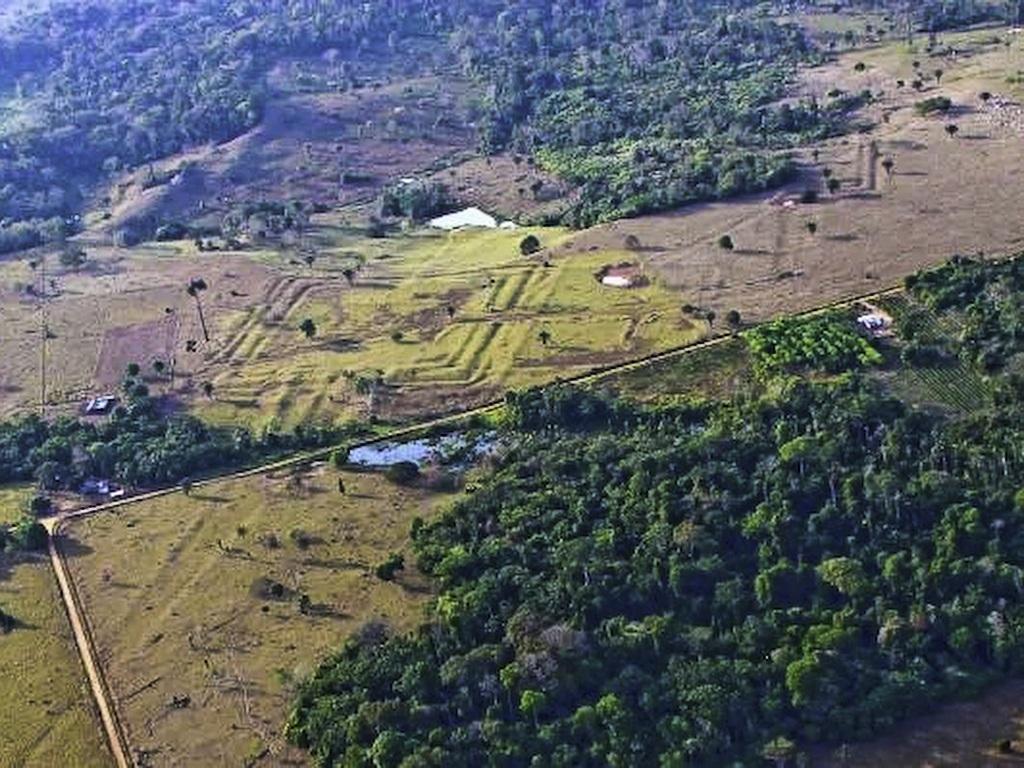 The Amazon was not always the wild forest we know today. Between approximately 600 BC and AD 850, a civilisation known as Aquiry profoundly reshaped the south-western Amazon basin. Its inhabitants [...]
  Thousands of trees were planted in the Sahara without success. Then 500 tortoises achieved what no one had expected, and the desert has begun to turn green again, visible even from space.
The [...]
Thousands of trees were planted in the Sahara without success. Then 500 tortoises achieved what no one had expected, and the desert has begun to turn green again, visible even from space.
The [...]  “Each of us uses around 18 kilograms of sand every day,” said Pascal Peduzzi, Director of UNEP’s Environmental Data Centre, during the presentation of the report in his Swiss city [...]
  From Carbon Sink to Carbon Source: A Historic Reversal
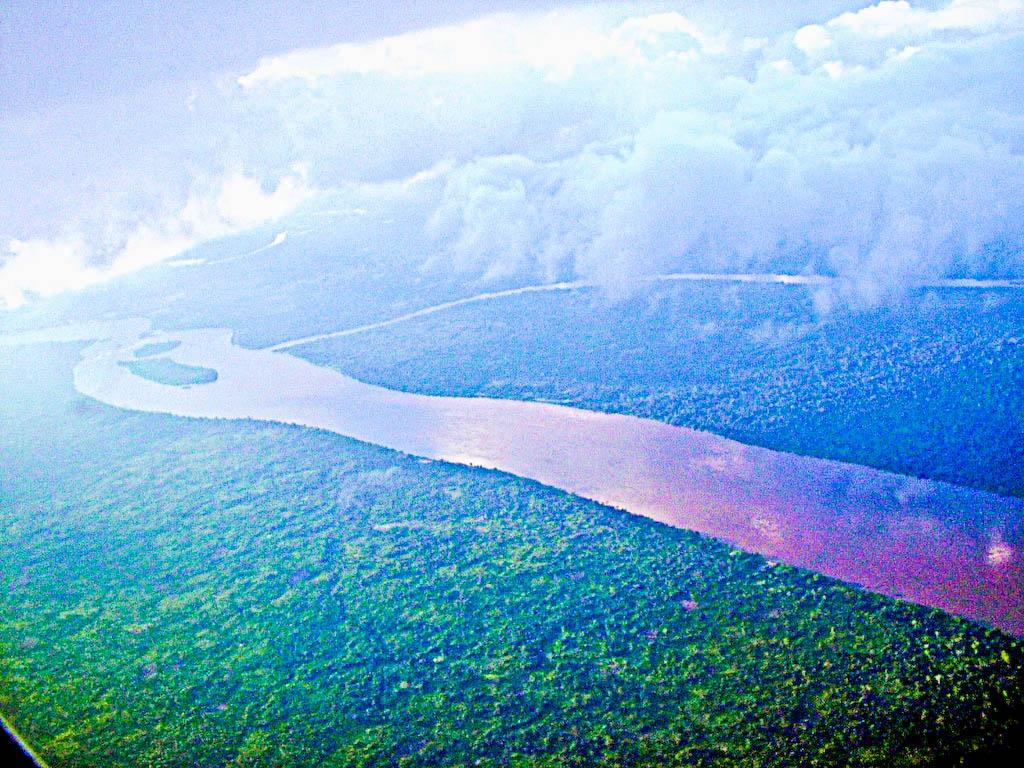
Until only a few years ago, scientists believed they could rely on a natural climatic safety valve. Africa’s tropical forests were [...]
From Carbon Sink to Carbon Source: A Historic Reversal
Until only a few years ago, scientists believed they could rely on a natural climatic safety valve. Africa’s tropical forests were [...]  Climate change is no longer a distant threat. Across the Pacific, it has become an everyday reality, reshaping coastlines, livelihoods and the fragile balance between people and their environment. [...]
 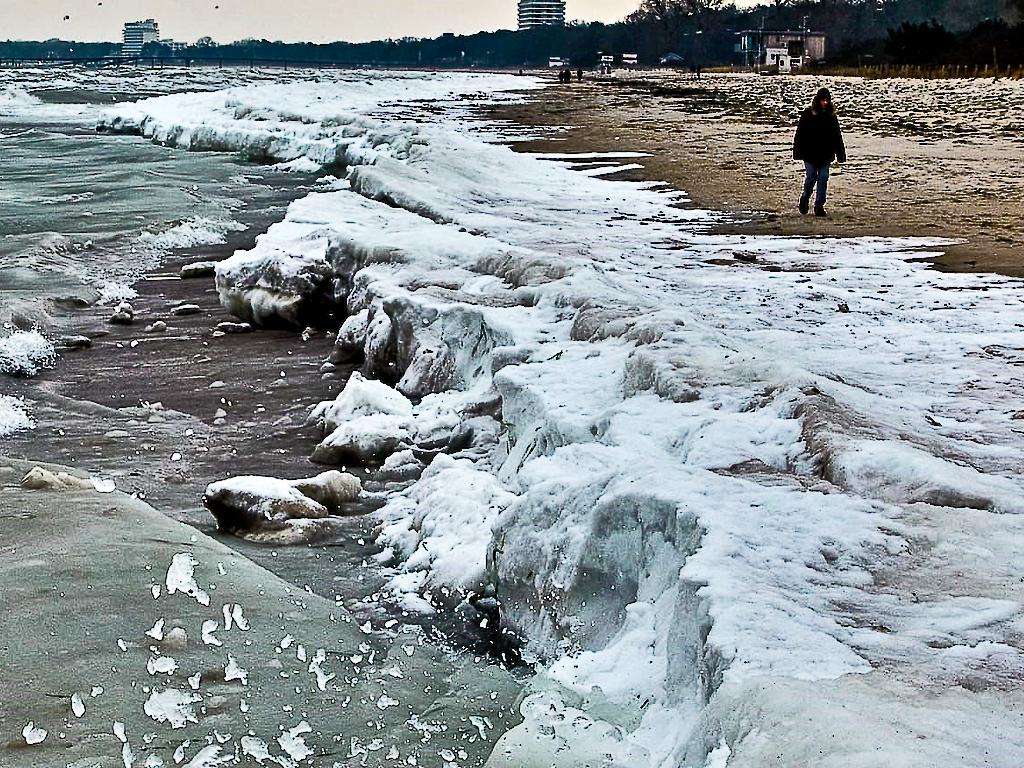 The seabed of the Baltic Sea is only one example of how wars have contaminated the oceans. After the Second World War, between 40,000 and 60,000 tonnes of chemical weapons were abandoned in the [...]
 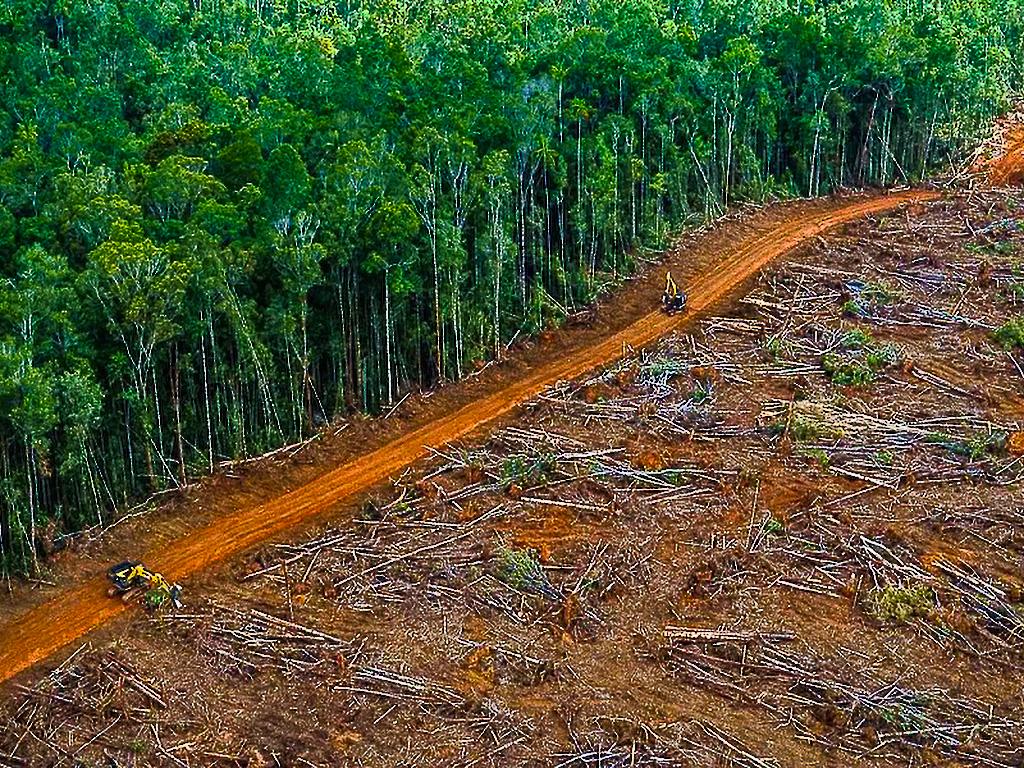 A study published a few weeks ago in Nature Climate Change concluded that deforestation has killed more than half a million people in the past two decades, between 2001 and 2020. A frightening [...]
 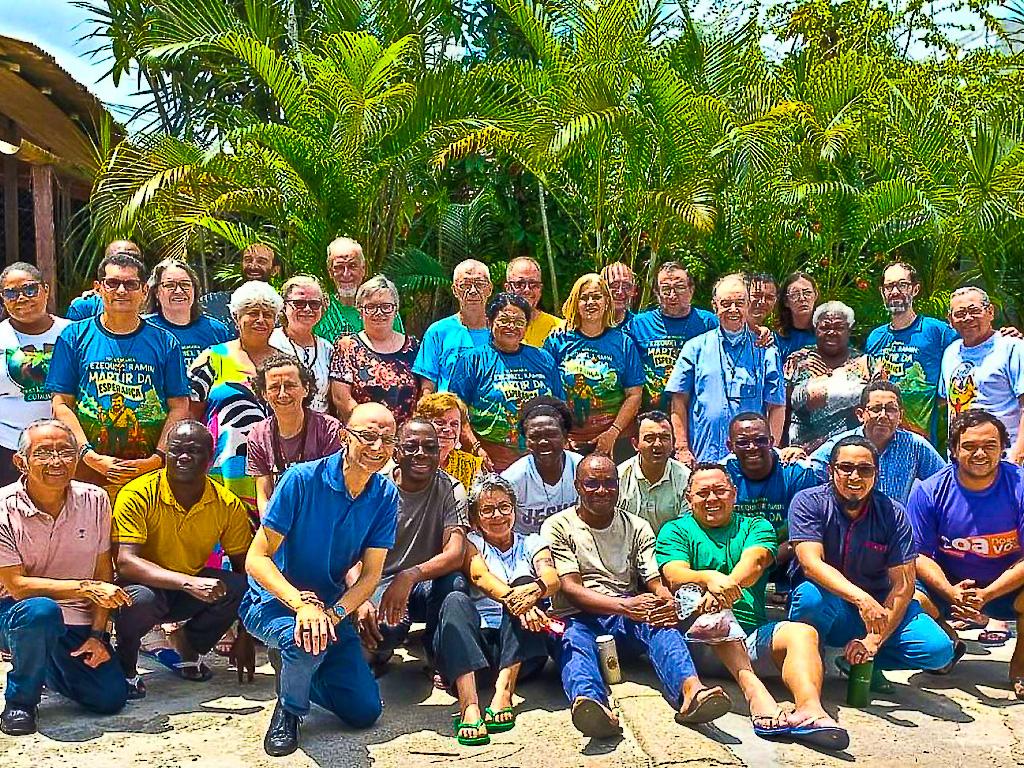 COP30, at the moment of its gathering, gives the impression of a shared desire to assemble declarations of principle and political frameworks to establish “good intentions” and [...]
 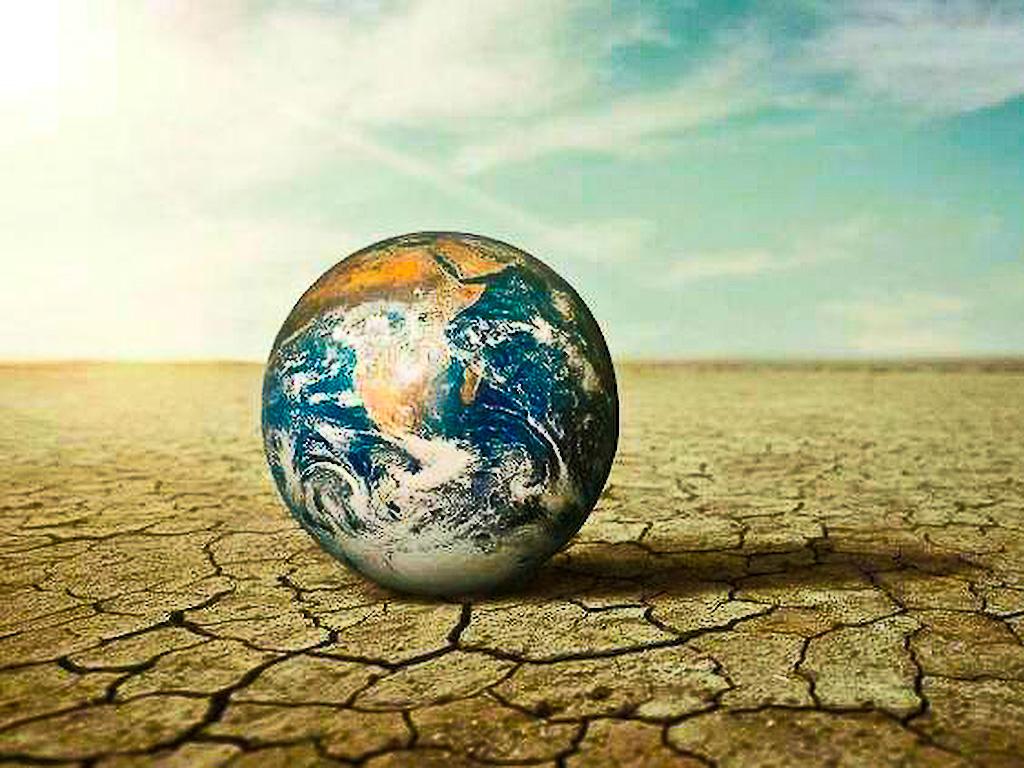 Let’s try an extremely difficult summary. During the first days, we all essentially deluded ourselves. The Brazilian presidency had indeed released draft texts that included “also” [...]
  In a world shaken by crises, this exhibition reminds us that beauty — whether natural, artistic, or cosmic — remains a source of hope. As Dostoevsky said, “Beauty will save the [...]
 Info
Email: jampypezzi@gmail.com - tel. +39 328 732 6990 / +243 991 457 856
This blog is made in 4 languages: it en fr es



 EDitt | Web Agency
Leave a comment