Justice, Peace, Integrity
of Creation
Justice, Peace, Integrity
of Creation
By John Paul Pezzi, Mccj
Justice, Peace, Integrity
of Creation
By John Paul Pezzi, Mccj
Justice, Peace, Integrity
of Creation
By John Paul Pezzi, Mccj

Justice, Peace, Integrity
of Creation
By John Paul Pezzi, Mccj
Sand Is Also Under Threat Around the World
IPS 12.05.2026 Corrispondente IPS Translated by: Jpic-jp.orgThe rapidly growing global demand for sand, the most extracted solid material on the planet, is transforming rivers, degrading marine ecosystems and weakening natural defences against flooding and rising sea levels, according to a report by the United Nations Environment Programme (Informe del Programa de las Naciones Unidas para el Medio Ambiente UNEP).
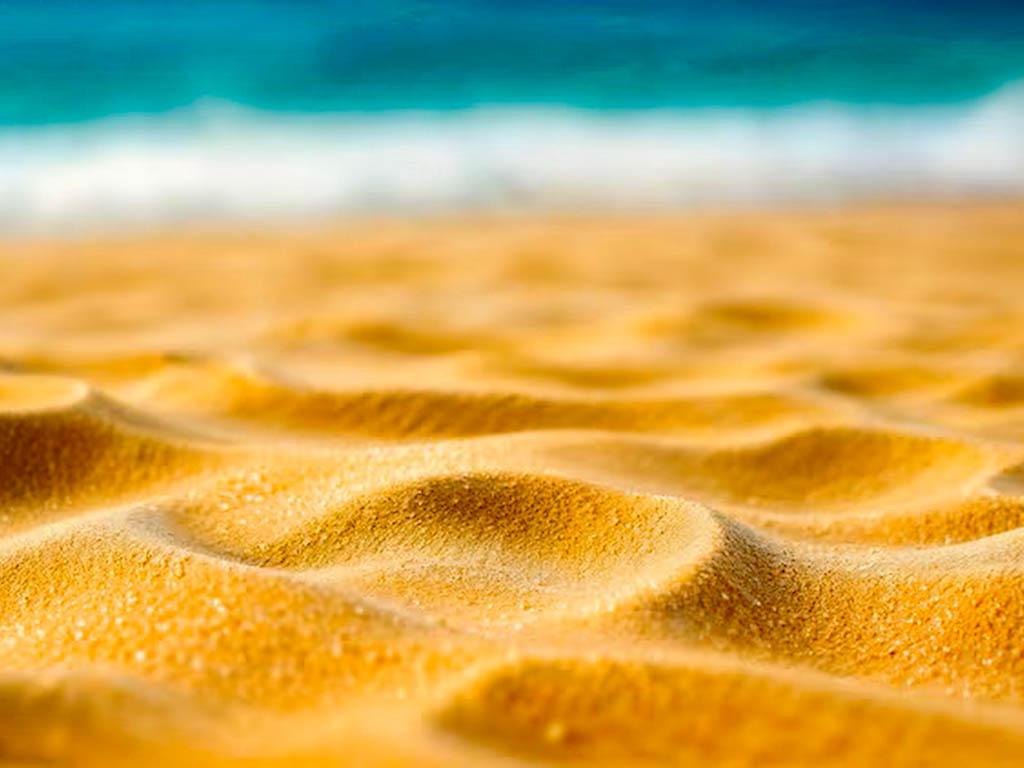
“Each of us uses around 18 kilograms of sand every day,” said Pascal Peduzzi, Director of UNEP’s Environmental Data Centre, during the presentation of the report in his Swiss city on Tuesday, 12 May.
For decades, sand has been regarded as a cheap, abundant and virtually inexhaustible resource, despite the fact that nature has taken hundreds of thousands of years to produce it through gradual processes of geological erosion.
“However, we are using it at a staggering pace and extracting it faster than it can naturally be replenished. This is the sand deficit,” warns the UNEP report, Sand and Sustainability: A Resource Essential for Nature and Development (Arena y sostenibilidad: un recurso esencial para la naturaleza y el desarrollo).
Global demand for sand tripled between 2000 and 2020, driven primarily by urbanisation and infrastructure expansion.
The report estimates that around 50 billion tonnes are extracted every year, and that demand will continue to rise as countries invest in climate adaptation, urban expansion and renewable energy infrastructure.
The scale of extraction has reached such proportions that, in 2020, the total mass of human-made materials exceeded the entire living biomass of the planet. Furthermore, the use of sand for construction alone is projected to increase by a further 45 per cent by 2060.
Against this backdrop, UNEP points out that the very material used to build cities and infrastructure designed to adapt to climate change also performs vital functions in nature: regenerating beaches, stabilising coastlines, filtering water and supporting habitats for fish, birds, turtles and countless other species.
Sea walls, artificial beaches, ports and flood protection barriers require enormous quantities of sand and gravel. Yet extracting excessive amounts of sand from rivers, deltas and coastal systems can undermine precisely those ecosystems that naturally protect communities from storms, erosion and saltwater intrusion.
“That is the dilemma,” Peduzzi said. “We want both living sand and dead sand.”
Once it has been turned into concrete or asphalt, he explained, sand is permanently removed from natural systems. However, when it remains in rivers and coastal ecosystems, it continues to regulate water flows, buffer wave energy and sustain biodiversity.
In many parts of the world, the consequences are already becoming apparent. Riverbeds are deepening. Deltas are sinking. Beaches are shrinking. Coastal aquifers are becoming increasingly saline.
Stephanie Chuah, co-author of the report, said that researchers are only just beginning to understand the cumulative impacts that sand extraction is having on interconnected ecosystems.
“Sand not only provides essential ecosystem services, but is also closely linked to climate resilience, food security, water security and soil stability,” she explained.
The expert also warned of the human cost, with increasing risks for regions where tourism, fisheries and access to fresh water depend on stable coastlines and healthy marine ecosystems.
The report highlights several examples from the Caribbean. In Trinidad, sand extraction has destroyed native vegetation that is vital for pollinators, while in Saint Kitts and Nevis heavy machinery has disturbed sea turtle nesting sites.
In Jamaica, the loss of seagrass meadows and coral reef systems associated with coastal degradation has accelerated beach erosion, weakening natural protection against storms in areas that rely heavily on tourism.
Freshwater ecosystems are also under considerable pressure. The report notes that sandy riverbeds and floodplains serve as feeding and breeding grounds for fish, amphibians, reptiles and migratory birds.
Sand dunes and sandbars help absorb wave energy and encourage the growth of mangroves and seagrass meadows.
According to the report, many governments continue to regard sand merely as a cheap construction material rather than recognising it as a strategic resource linked to biodiversity, water security and climate resilience.
Nevertheless, some countries are beginning to rethink this approach. The report highlights the case of Colombia, whose government formally classified sand, gravel and clay as “minerals of strategic interest” in 2023.
The measure is intended to strengthen environmental oversight and improve coordination in a sector frequently characterised by fragmented regulation and informal extractive activities.
In the Brazilian state of Minas Gerais, in the south-east of the country, mining companies are expanding the use of “mineral sand”, a by-product of mineral processing that can reduce pressure on rivers and coastal ecosystems traditionally exploited for natural sand extraction.
Elsewhere in the region, however, the environmental consequences associated with poorly regulated extraction are becoming increasingly difficult to ignore.
United Nations researchers have developed a monitoring platform that uses satellite data and artificial intelligence to track marine dredging vessels, which extract sand, sediment, mud and rock from the seabed using specialised machinery.
Preliminary findings suggest that around 15 per cent of all marine dredging activities take place within protected marine areas.
The report calls for stronger environmental monitoring, greater transparency in extraction permits and an end to procurement practices based solely on the lowest cost, which often overlook long-term ecological damage.
Chuah said that UNEP researchers are currently developing models to help governments estimate future sand demand and identify opportunities for recycling and the use of alternative materials.
“Sand is our first line of defence against sea-level rise, storm surges and the salinisation of coastal aquifers, all hazards made worse by climate change,” Peduzzi concluded.
See: La arena también está en peligro en el mundo
Photo: A man fishes while sitting on sandbags protecting the coastline of Tuvalu, a Pacific island nation, from coastal erosion. © Lasse Bak Mejlvang / UNICEF.
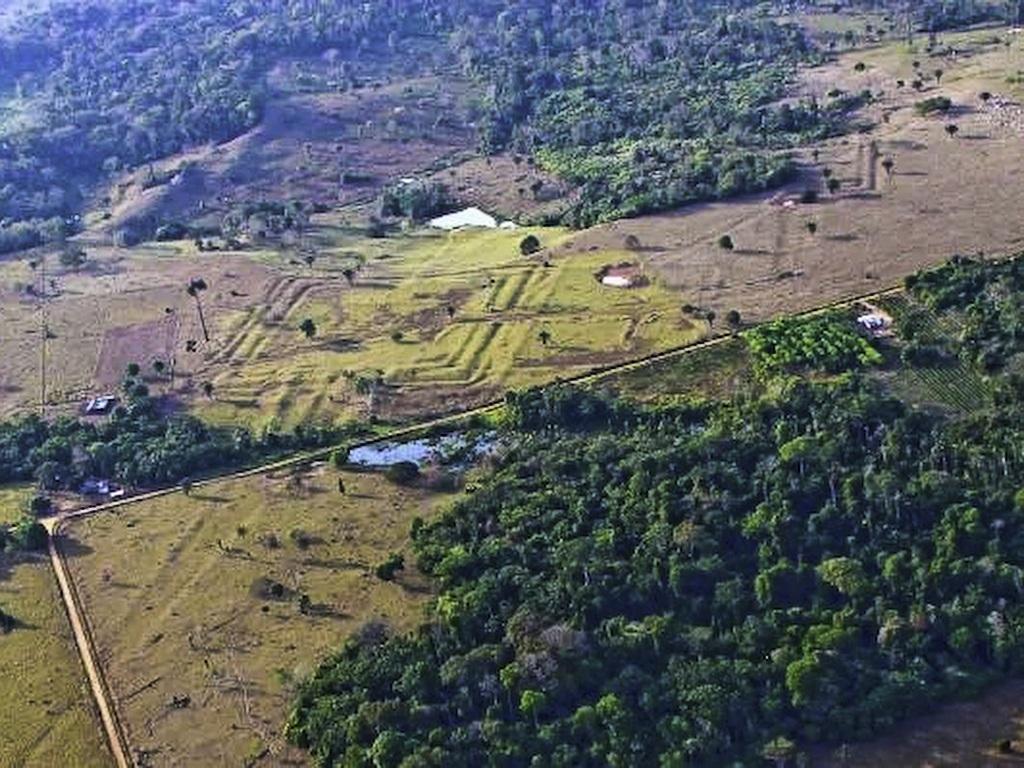 The Amazon was not always the wild forest we know today. Between approximately 600 BC and AD 850, a civilisation known as Aquiry profoundly reshaped the south-western Amazon basin. Its inhabitants [...]
  Thousands of trees were planted in the Sahara without success. Then 500 tortoises achieved what no one had expected, and the desert has begun to turn green again, visible even from space.
The [...]
Thousands of trees were planted in the Sahara without success. Then 500 tortoises achieved what no one had expected, and the desert has begun to turn green again, visible even from space.
The [...]  It would be wrong and superficial to criticise the Conference on the grounds that no binding agreements were reached, since the Santa Marta Conference was explicitly not designed as a negotiation [...]
 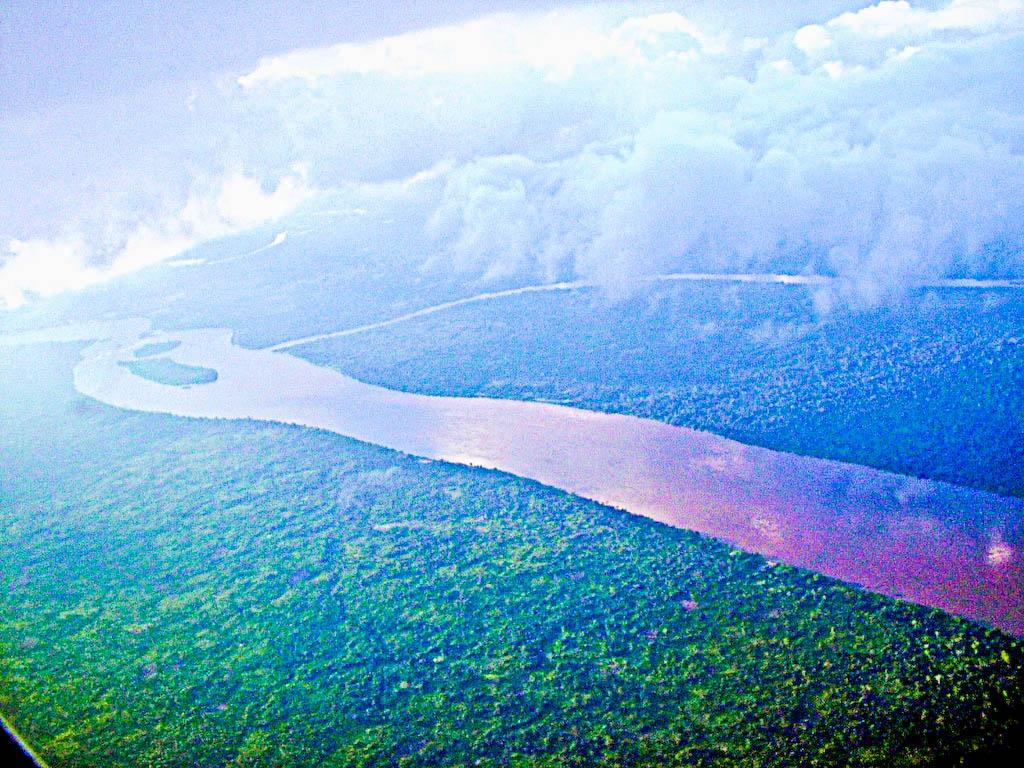 From Carbon Sink to Carbon Source: A Historic Reversal
Until only a few years ago, scientists believed they could rely on a natural climatic safety valve. Africa’s tropical forests were [...]
From Carbon Sink to Carbon Source: A Historic Reversal
Until only a few years ago, scientists believed they could rely on a natural climatic safety valve. Africa’s tropical forests were [...]  Climate change is no longer a distant threat. Across the Pacific, it has become an everyday reality, reshaping coastlines, livelihoods and the fragile balance between people and their environment. [...]
  The seabed of the Baltic Sea is only one example of how wars have contaminated the oceans. After the Second World War, between 40,000 and 60,000 tonnes of chemical weapons were abandoned in the [...]
  A study published a few weeks ago in Nature Climate Change concluded that deforestation has killed more than half a million people in the past two decades, between 2001 and 2020. A frightening [...]
  COP30, at the moment of its gathering, gives the impression of a shared desire to assemble declarations of principle and political frameworks to establish “good intentions” and [...]
  Let’s try an extremely difficult summary. During the first days, we all essentially deluded ourselves. The Brazilian presidency had indeed released draft texts that included “also” [...]
  In a world shaken by crises, this exhibition reminds us that beauty — whether natural, artistic, or cosmic — remains a source of hope. As Dostoevsky said, “Beauty will save the [...]
 Info
Email: jampypezzi@gmail.com - tel. +39 328 732 6990 / +243 991 457 856
This blog is made in 4 languages: it en fr es





 EDitt | Web Agency
Leave a comment