Justice, Peace, Integrity
of Creation
Justice, Peace, Integrity
of Creation
By John Paul Pezzi, Mccj
Justice, Peace, Integrity
of Creation
By John Paul Pezzi, Mccj
Justice, Peace, Integrity
of Creation
By John Paul Pezzi, Mccj

Justice, Peace, Integrity
of Creation
By John Paul Pezzi, Mccj
280 stone circles discovered in a little-known region of the Sahara
Butembo 15.06.2026 Rieditato da Jpic-jp.org Translated by: Jpic-jp.orgWhat do these mysterious stone circles in the Sudanese desert reveal? Long shrouded in mystery, strange stone circles discovered in the Atbaï Desert are now providing new clues about the resilience of early pastoral societies in the face of the Sahara’s increasing aridification.
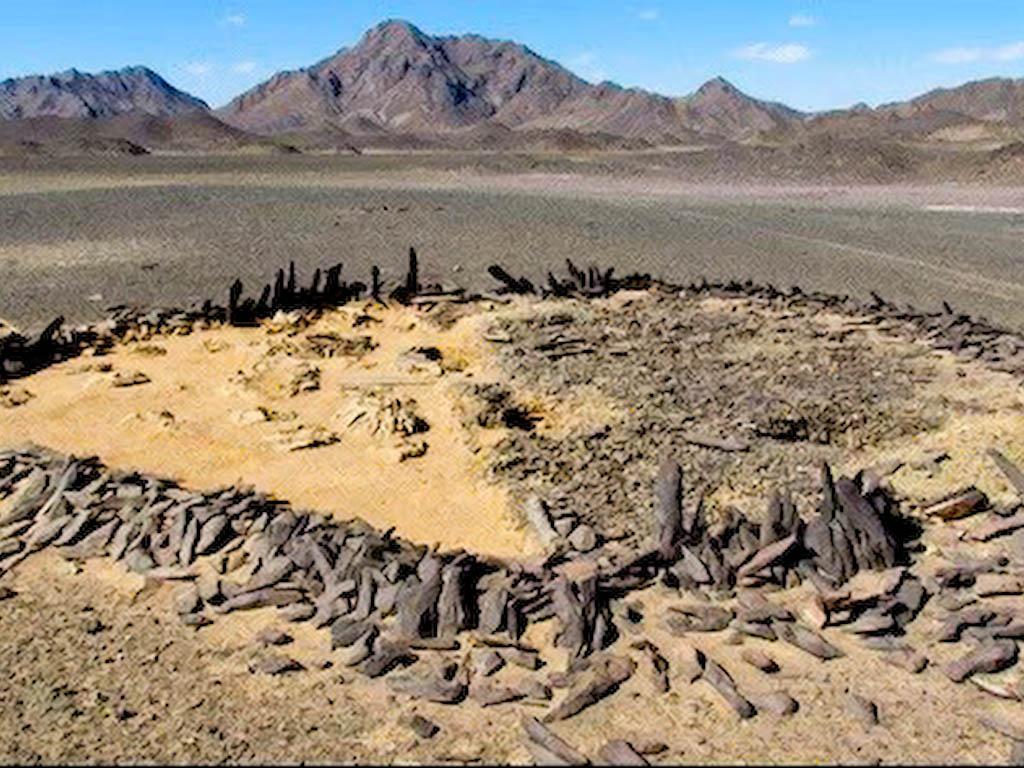
Between the Nile and the Red Sea lies the Atbaï Desert, one of the least explored regions of north-eastern Africa from an archaeological point of view. Long hidden beneath the sands, the remains of an ancient pastoral society have now re-emerged thanks to satellite remote sensing technologies.
An international team bringing together researchers from Macquarie University, the HiSoMA laboratory and the Polish Academy of Sciences has identified nearly 280 circular stone enclosures spread across almost 1,000 kilometres through the Sudanese desert. Dated between 4,500- and 2,500-years BCE, these monumental structures measure between 5 and 82 metres in diameter and are among the earliest evidence of human occupation in the region.
A major discovery in the Atbaï Desert
From space, these monuments appear as almost perfect circles drawn in the sand. Their number and their distribution across such a vast territory constitute an exceptional discovery. While a few examples were already known in the eastern deserts of Sudan and Egypt, they had never been recorded on such a scale.
The study published on 13 May 2026 in the journal African Archaeological Review therefore sheds new light on a Saharan nomadic culture whose territorial footprint had previously been largely underestimated. These remains represent a little-known chapter of history predating the emergence of the kingdoms of Nubia and ancient Egypt.
Burial enclosures linked to the earliest Saharan pastoralists
To understand the function of these structures, archaeologists analysed their location and contents. Most are situated near ancient water sources, while several contain burials combining human and animal remains, particularly livestock.
These discoveries, combined with the presence of rock art depicting herds, indicate that the builders belonged to pastoral populations practising animal husbandry as early as the 6th millennium BCE. Although pastoral populations had been present in the region since the 6th millennium BCE, the burial enclosures identified by archaeologists were constructed later, between approximately 4,500 and 2,500 BCE.
The researchers refer to these monuments using the English term “enclosure burials”. In several cases, the graves are arranged around a central burial, most likely that of a leader or an important individual. Around this main tomb, other human and animal burials are distributed in a carefully ordered layout.
Evidence of an ancient social hierarchy
Radiocarbon dated between 4,000 and 3,000 BCE, these burials are contemporary with predynastic Egypt. Yet they belong to a very different world from that of the early agricultural societies of the Nile Valley.
The populations of the Atbaï lived mainly from livestock herding and practised neither writing nor agriculture. Despite this, the organisation of the graves suggests the existence of a well-established social hierarchy. The privilege of being buried at the centre of the enclosure, surrounded by other deceased individuals, most likely reflects a position of authority recognised by the community.
Livestock also plays a crucial role in these funerary practices. Cattle, sheep and goats were sometimes buried alongside the dead. In a context where the Sahara was gradually becoming drier and grazing land increasingly scarce, owning large herds represented a clear sign of wealth and prestige. Being buried with part of one’s livestock therefore constituted one of the strongest symbols of social status.
For archaeologists, these hundreds of sites offer a unique opportunity to study the emergence of social inequality within a culture that has left very little material evidence. They demonstrate that a nomadic elite already existed in the Atbaï Desert long before the formation of the major political hierarchies of ancient Egypt.
A once more hospitable Sahara
It is difficult today to imagine intense pastoral activity in such an extremely arid environment. Yet around 6,000 years ago, the landscape was very different.
At the end of the African Humid Period, the climate was still relatively favourable, although the Sahara was already undergoing aridification. New data suggest, however, that this desertification was not uniform. Some regions, such as the Atbaï, appear to have retained favourable conditions for human life and animal husbandry for longer.
This resilience in the face of climate change may explain why these pastoral communities were able to thrive in the region for several millennia.
A heritage now under threat
This discovery comes at a time when the archaeological remains of the Atbaï Desert are facing serious threats. The region is rich in gold resources and was already subject to mining activity in Pharaonic times.
Today, unregulated artisanal gold mining is destroying numerous sites at an alarming rate. The mapping carried out by researchers could help to protect them, but the civil war that has affected Sudan since April 2023 has severely weakened the institutions responsible for safeguarding this heritage.
Having survived six millennia of history and the rise and fall of several empires, these remarkable witnesses of the past now risk disappearing before they have revealed all their secrets.
And also, Les satellites ont parlé : 280 cercles de pierre découverts dans une région méconnue du Sahara gs :
© MG, AI-generated image
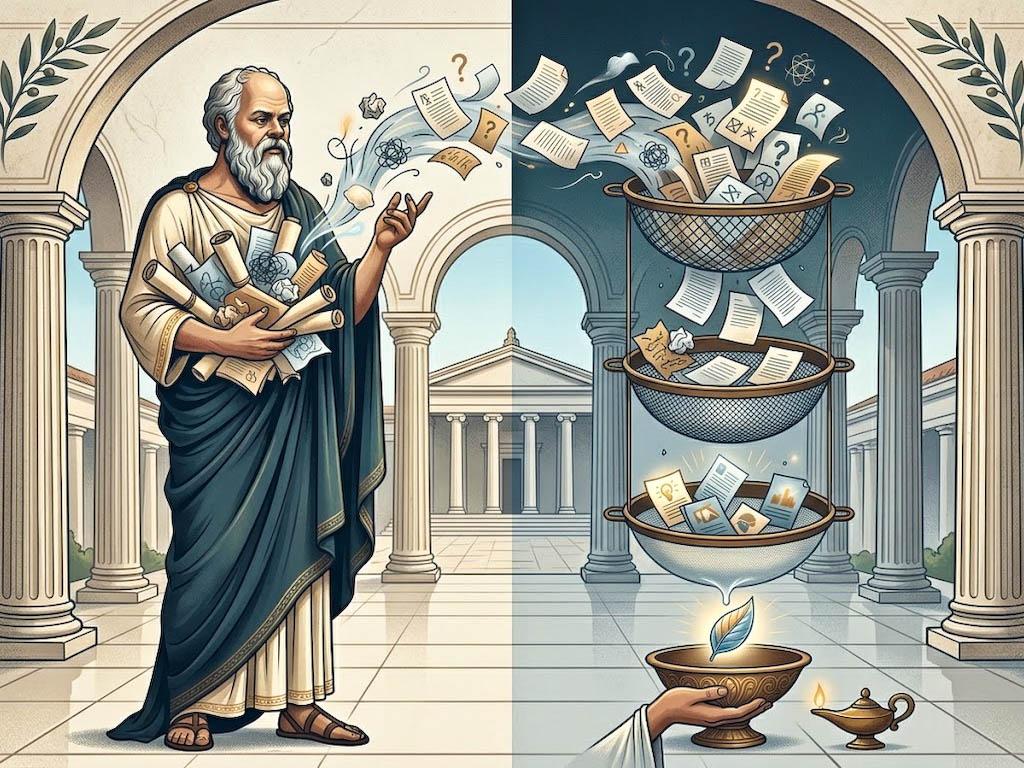 Faced with this avalanche of unverified information, how can we preserve our critical thinking and avoid becoming unwitting channels for spreading lies? The answer lies in an ancient wisdom that [...]
 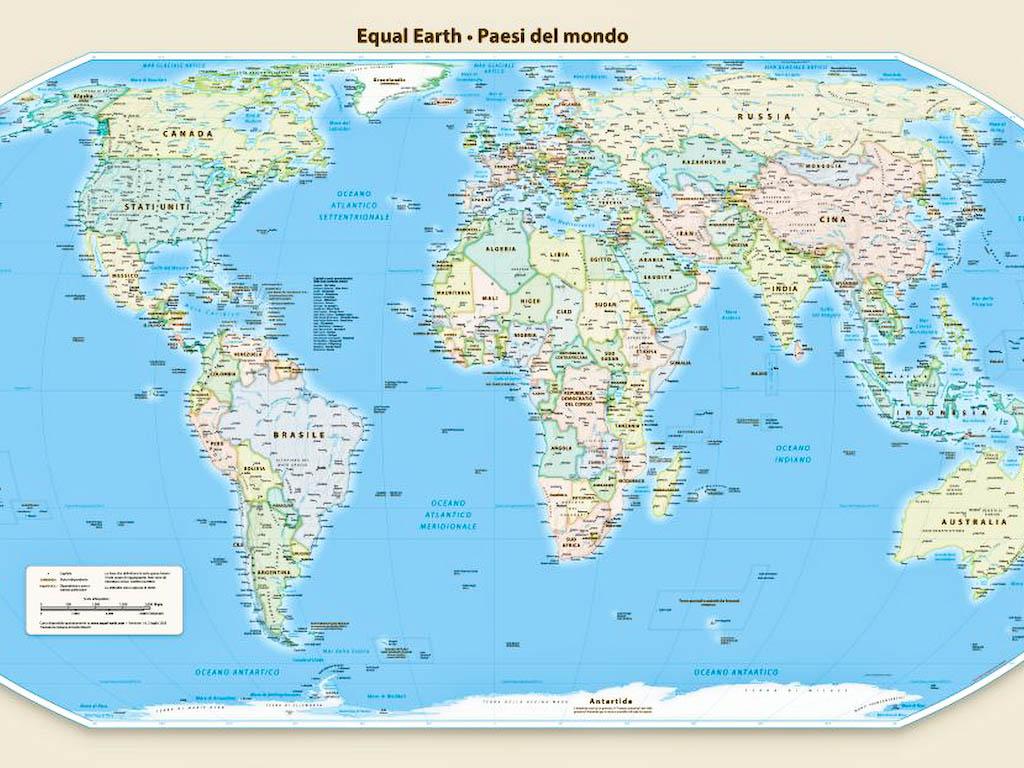 The African Union (AU) has officially endorsed a campaign to replace the Mercator map, widely used since the sixteenth century, with a geographically more accurate projection. According to the [...]
  One day, a man sat down beside his son and said to him in a solemn voice: “My boy, in our lives there is only one true crime: murder. Always stay away from that path. Never lay a hand on [...]
 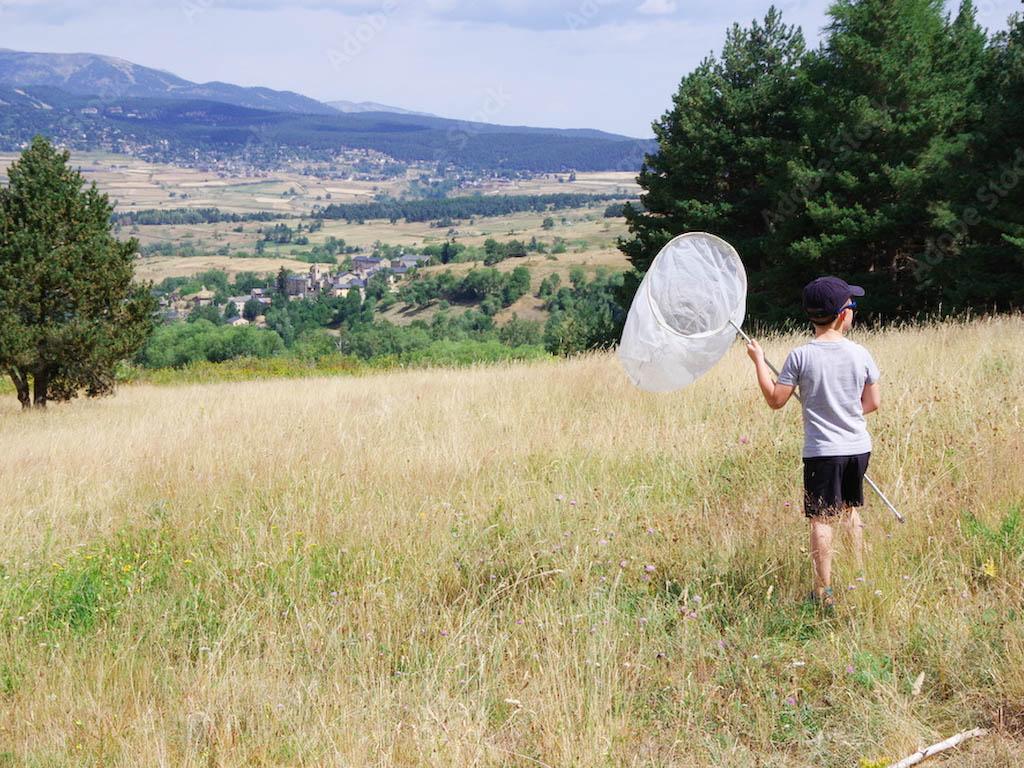 Once upon a time, in a village at the foot of a green mountain, there lived a boy called Elijah.
Elijah had a passion: butterflies. Not for studying them, nor for admiring them, but for keeping [...]
Once upon a time, in a village at the foot of a green mountain, there lived a boy called Elijah.
Elijah had a passion: butterflies. Not for studying them, nor for admiring them, but for keeping [...]  Once upon a time, in a small and peaceful village, there stood a carpenter’s workshop. Inside were many work tools: the saw, the plane, the hammer, the nails, the sandpaper, the file, the axe, [...]
  My friends, I am going to tell you a story that speaks to the heart, a story like clear water flowing gently through the soul, a lesson for a joyful life.
Once upon a time, there lived side by [...]
My friends, I am going to tell you a story that speaks to the heart, a story like clear water flowing gently through the soul, a lesson for a joyful life.
Once upon a time, there lived side by [...]  Let us listen carefully—both with intellect and discernment—to the story of the mwelele tree (a species of Ficus sycomorus) and the blind men in search of an elephant, for it is truly [...]
  For several years now, the world has been living in a state of profound disorder. It is as though it had entered an entropic phase: order no longer regenerates spontaneously, connections multiply [...]
  If I were to ask God for a gift, a single gift, a heavenly gift, I would ask Him, I believe without hesitation, to grant me the supreme art of the smile. It is what I most envy in certain people. It [...]
 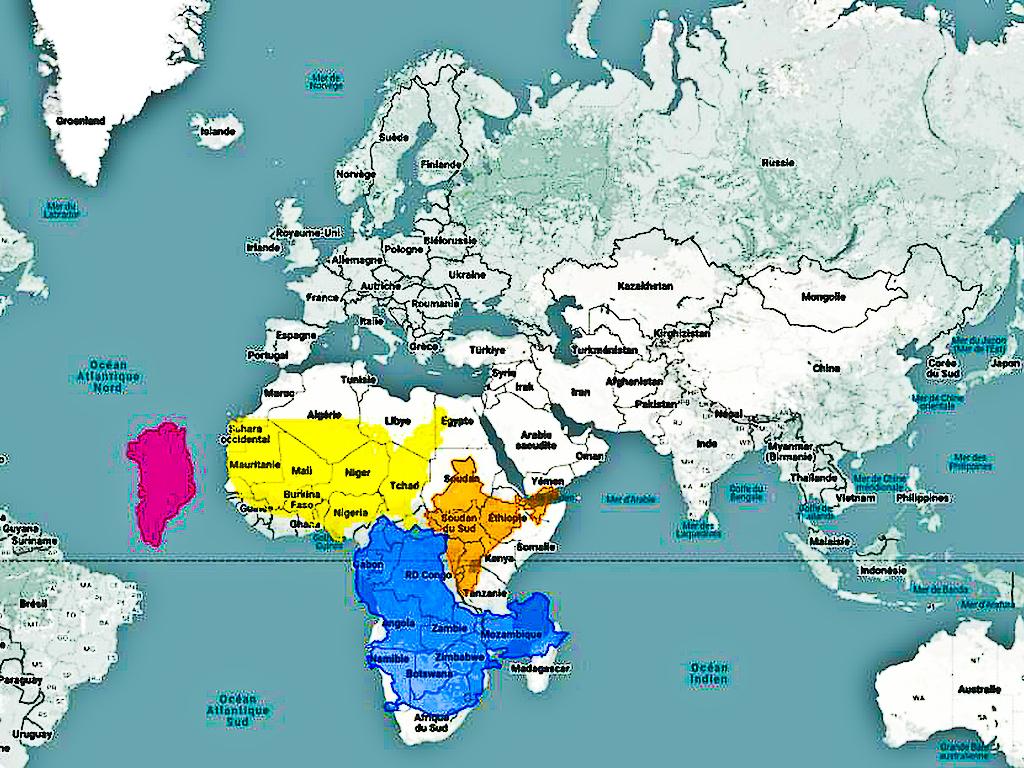 Greenland suffers from a serious case of the frog that wants to be as big as the ox. When you look at it on Google Maps, it parades with all the grandeur of a continent, appearing almost as large as [...]
 Info
Email: jampypezzi@gmail.com - tel. +39 328 732 6990 / +243 991 457 856
This blog is made in 4 languages: it en fr es

 EDitt | Web Agency
Leave a comment