Justice, Peace, Integrity
of Creation
Justice, Peace, Integrity
of Creation
By John Paul Pezzi, Mccj

Justice, Peace, Integrity
of Creation
By John Paul Pezzi, Mccj

Justice, Peace, Integrity
of Creation
By John Paul Pezzi, Mccj

Justice, Peace, Integrity
of Creation
By John Paul Pezzi, Mccj
The alliance between Greece, Israel and Cyprus is not a simple alliance
Pagine Esteri 06.07.2026 Marco Santopadre* Translated by: Jpic-jp.orgEnergy, military and technological cooperation are cementing an alliance between Greece, Israel and Cyprus that has now taken on a strategic character
When, on 30 April, nearly 200 activists from the Global Sumud Flotilla were forcibly disembarked at a port on the southern coast of Crete after having been stopped by Israeli special forces, many wondered how it was possible that Athens had so passively accepted an act of international piracy carried out so close to its own shores.
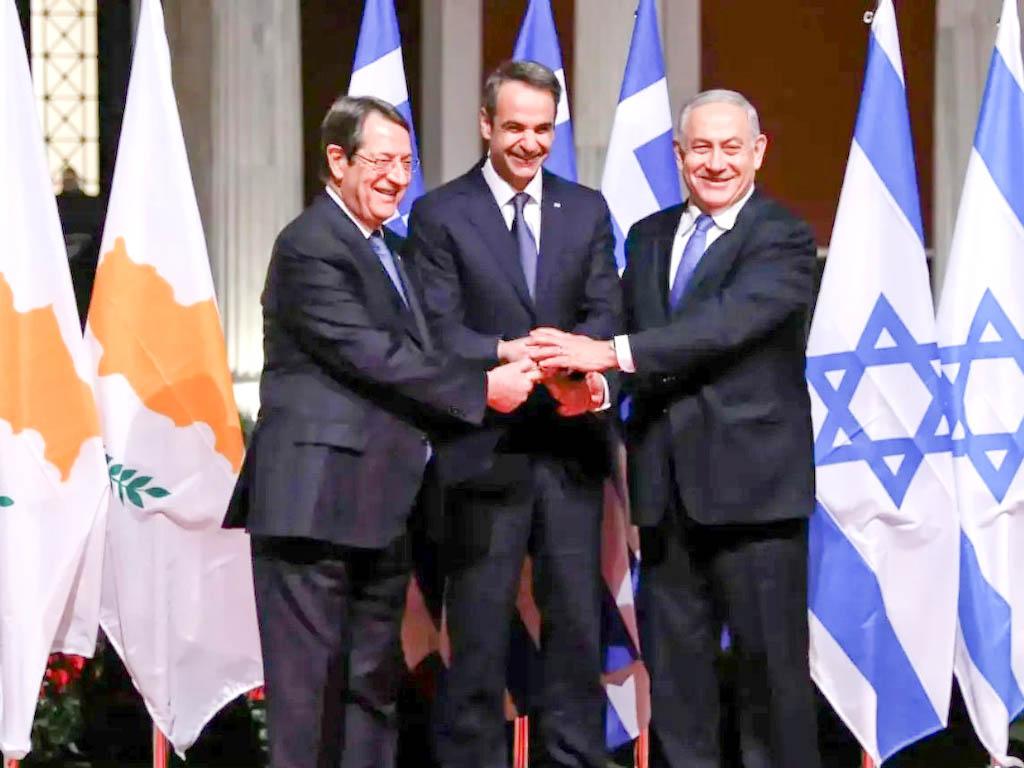
The answer must be sought in the evolution of relations between Greece and Israel, which together with the Republic of Cyprus have established, in recent years, much more than a simple alliance. The three countries now constitute a genuine bloc that cooperates on several fronts in the name of numerous shared interests, first and foremost countering Turkish influence in the Mediterranean.
As we have explained in previous articles, relations between Athens and Tel Aviv have not always been idyllic, quite the opposite. For decades Greece was among the countries most hostile towards Israel, which Athens only officially recognised in 1990. For another twenty years, however, that step remained largely formal. It was only in 2010 that the Greek government began seeking new economic partners to cope with the financial crisis aggravated by the harsh austerity memoranda imposed by the IMF, the European Central Bank and the European Commission, while Israel sent its commandos to block the first Freedom Flotilla heading towards Gaza, killing ten Turkish activists aboard the Mavi Marmara.
The crisis in relations with Ankara pushed Tel Aviv to seek new partners, and Greece proved willing to respond. It was during the governments of Alexis Tsipras – leader of a left-wing movement traditionally supportive of the Palestinian cause – that, paradoxically, good relations were transformed into an alliance.
Athens signed with Tel Aviv a treaty – the Status of Forces Agreement (SOFA) – which grants the Israeli military the right to station itself on Greek territory and conduct military exercises. From that moment onwards, the air force of the “Jewish state” began using the mountains of the Peloponnese and Crete to train pilots for combat operations on Iranian territory.
Greek governments began purchasing Israeli technological and surveillance systems as well as weapons, acquisitions justified by the need to monitor hostile Turkish movements in the Aegean Sea and to equip themselves with an arsenal capable of confronting their historic rival.
Under the government of Kyriakos Mitsotakis (Nea Dimokratia, centre-right), precisely while the “Jewish state” was carrying out the war in Gaza, invading and occupying Syria and Lebanon and launching two attacks against Iran, cooperation with Israel became organic, structural and systematically extended to Cyprus in the name of exploiting gas fields discovered in recent decades off the Mediterranean island and protecting them from Turkish claims.
What particularly changed the regional balance was the discovery, in 2011, within Cyprus’s Exclusive Economic Zone, of a first major natural gas field known as Aphrodite, followed in 2022 by the discovery of the Calypso and Cronos fields, which together are expected to yield around 70 billion cubic metres of hydrocarbons.
In 2019, Turkey and Libya’s Government of National Accord signed an agreement aimed at creating a Turkish-Libyan maritime corridor crossing the eastern Mediterranean, conflicting with Greek and Cypriot interests and interrupting their territorial continuity.
Athens, Cyprus and Israel responded by launching the EastMed project, designed to transport gas extracted by Israelis and Cypriots towards the eastern Mediterranean, creating an alternative energy corridor to those controlled by Ankara.
Energy cooperation and competition accelerated the development of new military infrastructures. In April 2019, the three countries began creating an interconnected radar system deployed across all three territories. In 2023, Israel Aerospace Industries acquired 90% of the Greek company Intracom Defense for €60 million, while the Israeli company Elbit Systems completed the Kalamata aviation training centre in the Peloponnese, the result of a 2021 agreement worth €1.6 billion.
In 2025, the Israeli SK Group purchased ELVO in Thessaloniki, a producer of military and civilian vehicles. The three countries also signed a new military cooperation plan and now intend to transform the eastern Mediterranean into Europe’s energy hub through the Great Sea Interconnector, a 1,200-kilometre submarine electricity cable that should connect Athens, Tel Aviv and Nicosia.
To defend the economic and energy interests of this geopolitical bloc, Greece intends to deploy an anti-aircraft and missile defence system – the “Achilles Shield” – which, based on the technology supporting the Israeli Iron Dome, should protect the entire Greek territory.
On 4th December, the Greek Defence Affairs Committee approved the purchase of 36 PULS missile artillery systems at a cost of 760 million dollars – the largest acquisition of Israeli weapons ever carried out by Athens – aimed at creating a medium-range protection system designed particularly to strengthen the north-eastern border with Turkey and the Aegean islands.
Although Greece is already a member of the European Sky Shield initiative, created by Germany in 2022 to promote the sale of mainly German air defence systems, in recent weeks the Greek Defence Ministry has established negotiating committees for the purchase of three additional missile defence systems – Spyder, Barak and David’s Sling, produced by the Israeli companies Rafael and Israel Aerospace Industries, worth €3.1 billion – which should complete the “Achilles Shield”.
However, Defence Minister Nikos Dendias told the Greek press that his government’s objective “is for Greece to move from being a customer and purchaser of defence systems to becoming a co-producer of innovative, dual-use and low-cost products”.
On 2 February, the Hellenic Aerospace Industry announced that it had taken a step in this direction by combining its Centaur anti-drone electronic warfare system with the Barak anti-drone missile system developed by Israel Aerospace Industries.
Meanwhile, according to the Greek newspaper Ta Nea, Greece, Cyprus and Israel are reportedly considering the creation of a joint rapid-response military force consisting of 2,500 soldiers. The plan would involve approximately 1,000 soldiers each from Israel and Greece and 500 from Cyprus.
The force would have an integrated structure, with land, air and naval components, operating through facilities located in Israel and Cyprus, as well as on the Greek islands of Rhodes and Karpathos. Operationally, the proposal under consideration would include the participation of an Israeli Air Force squadron and a Greek Air Force squadron, supported by naval assets.
The Greek government considers its own security so inseparably linked to that of Israel that, in a recent interview with the newspaper To Vima, Dendias’ deputy, Alexandra Papadopoulou, stated: “Imagine how Greece could survive on the margins of Europe, in a completely Muslim region, if Israel were to cease to exist.”
Little importance is given to the fact that Athens has handed over to the Israeli government, military and intelligence services control of its surveillance systems and its anti-aircraft and anti-missile shield, as well as the training of its military pilots.
As if this were not enough, since 2023 Israeli capital has entered the Greek real estate sector, and Israeli purchases of hotels, luxury villas and apartments have been growing rapidly, together with tourist flows. So much so that in 2025 Greece became the leading destination for Israeli travellers, with 2.2 million visitors.
The same is happening in Cyprus, where in four years Israeli residents have increased from 4,000 to 15,000, fuelling controversy and protests.
The massive purchase of land, property and economic activities suggests that Tel Aviv’s objective is strategic in nature, going far beyond the “normal” activities of speculative capital.
According to several analysts, the “Jewish state” is creating genuine fortified and self-managed enclaves in order to extend its influence and make use of real “safe areas”: zones where its elites and financial assets can be protected in case of need.
See, Quella tra Grecia, Israele e Cipro non è una semplice alleanza
*Marco Santopadre is a journalist and essayist specialising in geopolitics and social movements. He also writes about Spain and national liberation movements. He collaborates with Pagine Esteri, il Manifesto, Terzo Giornale, El Salto Diario and Berria.
The comments from our readers (1)
 Russia’s war on Ukraine is entering a new phase. That does not mean the situation will change overnight, but the chances of escalation and the conflict spreading are growing.
The most [...]
Russia’s war on Ukraine is entering a new phase. That does not mean the situation will change overnight, but the chances of escalation and the conflict spreading are growing.
The most [...]  Recently, there was a summit between the United States and China, a meeting that had not taken place since 2017 and that brought together the leaders of the two powers competing for international [...]
  June 1944. Allied troops landed in Normandy to begin the liberation of Europe from Nazi rule. Operation Overlord, an unprecedented military offensive, paved the way to Victory in Europe Day in May [...]
  The situation is incredible, bordering on paradoxical, perhaps even ridiculous: in the midst of secularization, while individuals in their private lives do not care in the least about the dictates of [...]
  How do you assess the attack carried out by the United States and Israel against Iran? What will be its principal consequences?
The Middle East — and perhaps the rest of the world as well [...]
How do you assess the attack carried out by the United States and Israel against Iran? What will be its principal consequences?
The Middle East — and perhaps the rest of the world as well [...]  Until little more than a decade ago, the world order was based on a set of rules agreed by the Western bloc after the Second World War. Within that order, a hegemonic country — the United [...]
 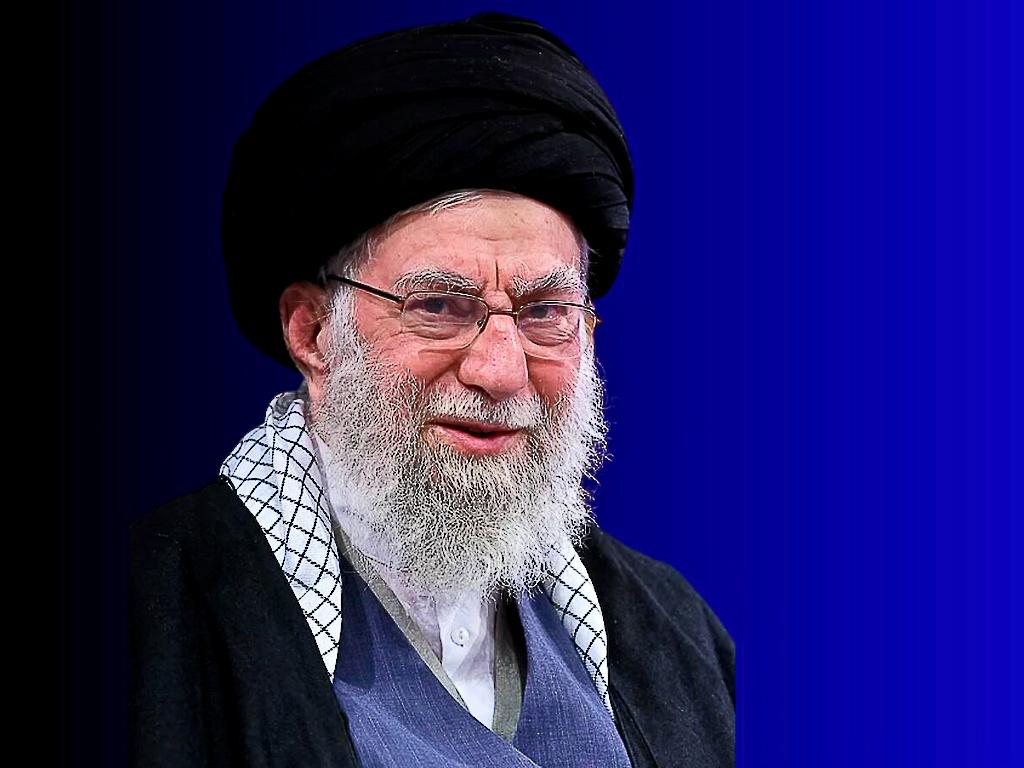 The death of Ali Khamenei does not close a chapter, yet it profoundly disrupts the Middle Eastern chessboard and forces us to ask whether such an assassination might unite a society that was [...]
  Let us gather the legacy of Luca Attanasio “in order to continue building a world in which peace is more desired than war, in which kindness is more necessary than violence, in which solidarity [...]
  From North America to Africa, passing through Latin America and Oceania, no continent escaped the vast wave of European colonisation. Almost the entire globe experienced some form of European [...]
  There are moments in history when the decisive question is not who possesses the greatest strength, but whether an order still exists that is capable of containing it. When international law and the [...]
 Info
Email: jampypezzi@gmail.com - tel. +39 328 732 6990 / +243 991 457 856
This blog is made in 4 languages: it en fr es


 EDitt | Web Agency
Leave a comment