Justice, Peace, Integrity
of Creation
Justice, Peace, Integrity
of Creation
By John Paul Pezzi, Mccj
Justice, Peace, Integrity
of Creation
By John Paul Pezzi, Mccj
Justice, Peace, Integrity
of Creation
By John Paul Pezzi, Mccj

Justice, Peace, Integrity
of Creation
By John Paul Pezzi, Mccj
The Monkey and the Crocodile
Newsletter Missionari Comboniani 18.11.2026 Redazione Missionari Comboniani Translated by: Jpic-jp.orgIn Swahili, people say: Akili ni mali – Intelligence is wealth - Hekima ni bora kuliko nguvu – Wisdom is better than strength. An African folktale – South Sudan A little story full of wisdom
The two Swahili sayings remind us that physical strength is not everything. A strong body does not necessarily mean a wise mind. Sometimes, a little intelligence and good judgement can overcome even the greatest strength.
There is a universal lesson here: the biggest and strongest are not always the wisest. A small animal can outwit a much larger one, just as a humble person can sometimes find a way through difficulties that seem impossible to overcome.
The story
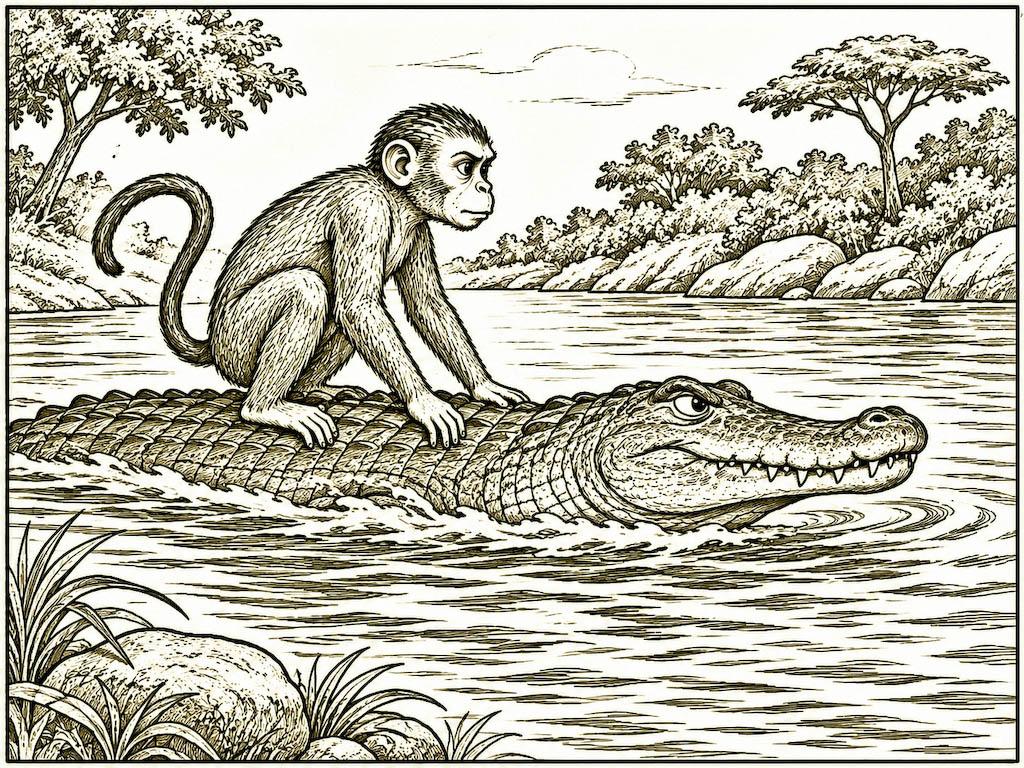
Once upon a time, a monkey and a crocodile were good friends. Every day at midday, the monkey would go to the riverbank and call out to his friend: “Crocodile, come! Let us sit together and have a chat!”
The crocodile would hear him and come out of the water. They would spend some pleasant time together, talking and enjoying each other's company.
One day, however, the chief of all the crocodiles became seriously ill. Several doctors tried to cure him, but none could find a remedy. Finally, they suggested trying an old traditional cure: the chief should eat the heart of a monkey.
The crocodiles immediately began looking for a monkey whose heart could save their chief.
The following day, the crocodile met his monkey friend at the riverbank. He greeted him warmly and said: “My dear friend, I would like you to come with me. There is a friend of mine living on the other side of the river whom I would love you to meet.”
The monkey replied: “I would be happy to come, but I cannot swim!”
“Do not worry,” said the crocodile. “Climb onto my back, and I will carry you safely across the river.”
The monkey trusted his friend and climbed onto his back. The crocodile began swimming towards the middle of the river.
When they were far from the riverbank, the crocodile suddenly spoke: “My dear friend, I must tell you the truth. It is good that we are going to visit my chief. He is seriously ill, and the doctors have told us that only the heart of a monkey can make him better. I was hoping that, in the name of our friendship, you would give him your heart.”
The monkey was frightened, but he did not lose his head. He quickly thought of a way to save himself.
“My dear friend,” he replied calmly, “I am very sorry to hear about your chief. Of course, I would like to help him. But there is one problem: I left my heart hanging on a branch of the tree where I live! If you take me back to the riverbank, I will gladly give it to you.”
The crocodile believed him. He was delighted and immediately turned around, swimming back towards the riverbank.
As soon as they reached the shore, the monkey jumped off the crocodile's back and swiftly climbed up into his tree.
From the safety of a high branch, he shouted: “You foolish crocodile! How could you believe that someone could leave his heart behind? Everyone knows that the heart belongs inside the body! You wanted to betray our friendship and take my life. Now go and look for another monkey who is foolish enough to believe you. As for me, I shall keep my heart, because it is precious!”
The crocodile realised that he had been tricked. But it was too late. The monkey was safe in his tree, far beyond the crocodile's reach.
And from that day onwards, the monkey learned to be more careful about whom he trusted.
A little lesson comes for every one’s life
The crocodile was much bigger and stronger than the monkey. He could swim faster, had powerful jaws and could easily have caught his little friend in the water. Yet he lacked the intelligence to see through the monkey's clever answer.
The monkey, on the other hand, had neither strength nor weapons to defend himself. What saved him was his ability to think quickly, remain calm in danger and find a way out of a seemingly hopeless situation. Strength is not the same as wisdom, and power is not the same as intelligence. Those who rely only on their physical strength or position of power may underestimate others and make serious mistakes.
On the other side, this story also teaches us that friendship requires honesty and loyalty. A person who betrays the trust of a friend may gain an advantage for a moment, but loses something much more precious. There is an Ethiopian proverb that says: “When spider webs unite, they can tie up a lion.” And an old biblical saying reminds us: “Wisdom is better than strength” (Ecclesiastes 9:16).
Indeed, even the smallest creature can overcome a giant when it knows how to use its head. We should therefore never despise the weak, underestimate the little ones or believe that power alone makes us wise. True wisdom does not consist in being stronger than others, but in knowing how to use our strength without harming them.
The comments from our readers (1)
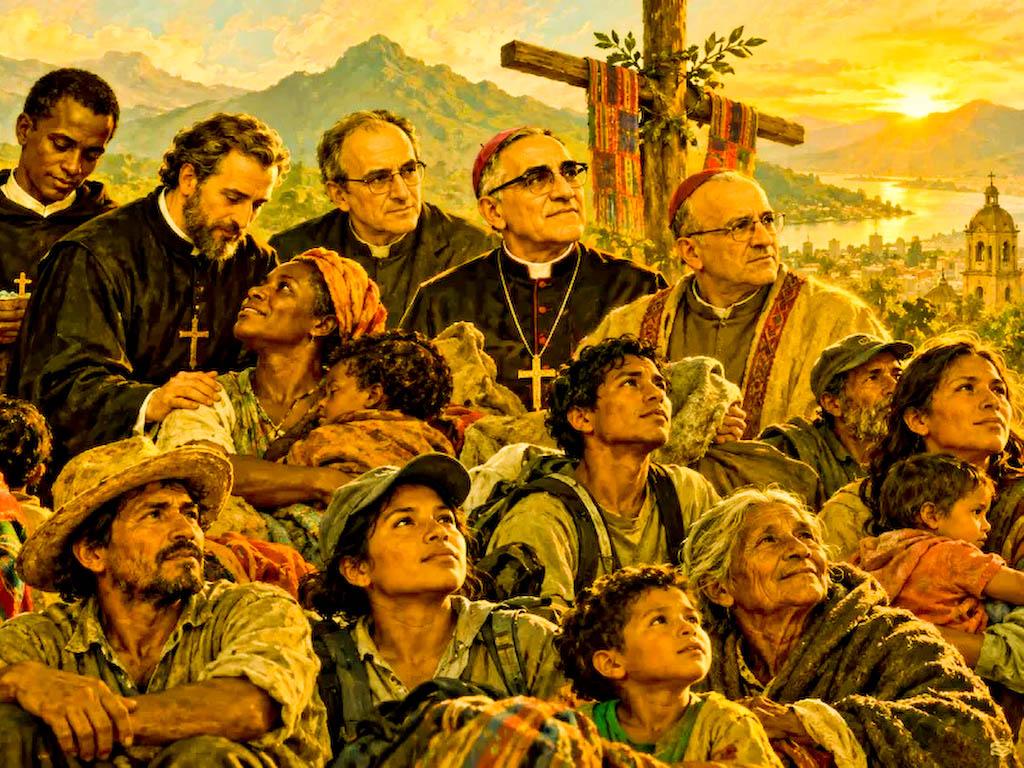 The witnesses to a new world are not there merely to adorn our altars: they are there to remind us that this world has yet to be built and to show us where the Kingdom of Heaven lies. Hence the [...]
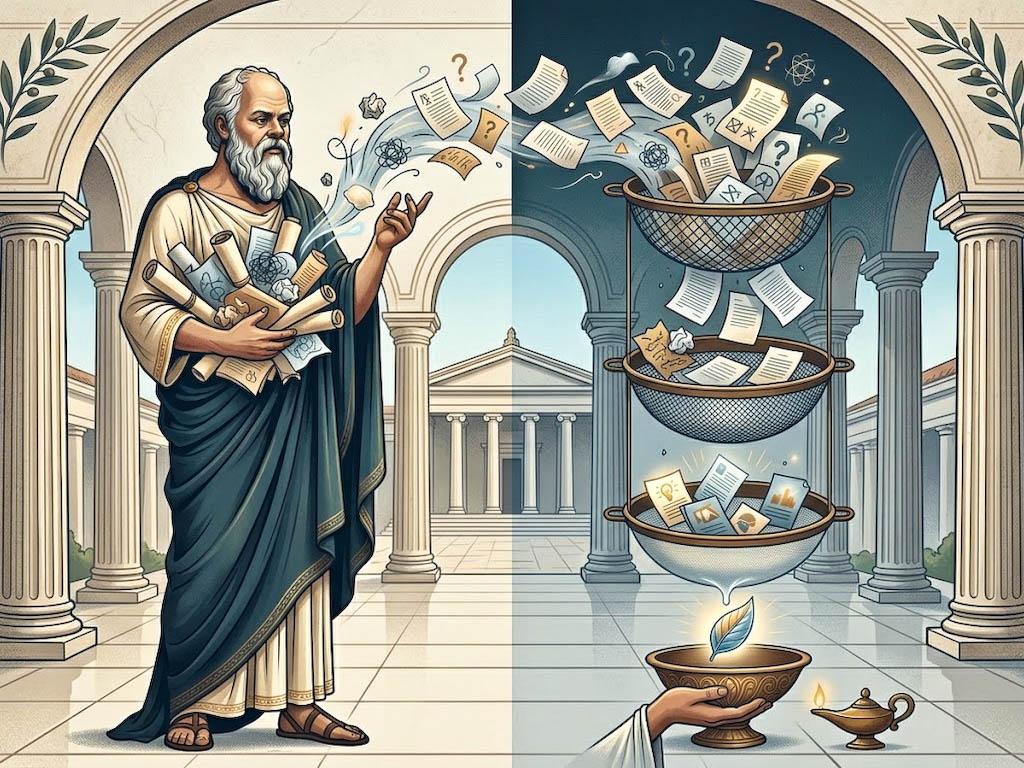 Faced with this avalanche of unverified information, how can we preserve our critical thinking and avoid becoming unwitting channels for spreading lies? The answer lies in an ancient wisdom that [...]
 The African Union (AU) has officially endorsed a campaign to replace the Mercator map, widely used since the sixteenth century, with a geographically more accurate projection. According to the [...]
 One day, a man sat down beside his son and said to him in a solemn voice: “My boy, in our lives there is only one true crime: murder. Always stay away from that path. Never lay a hand on [...]
 Once upon a time, in a village at the foot of a green mountain, there lived a boy called Elijah.
Elijah had a passion: butterflies. Not for studying them, nor for admiring them, but for keeping [...]
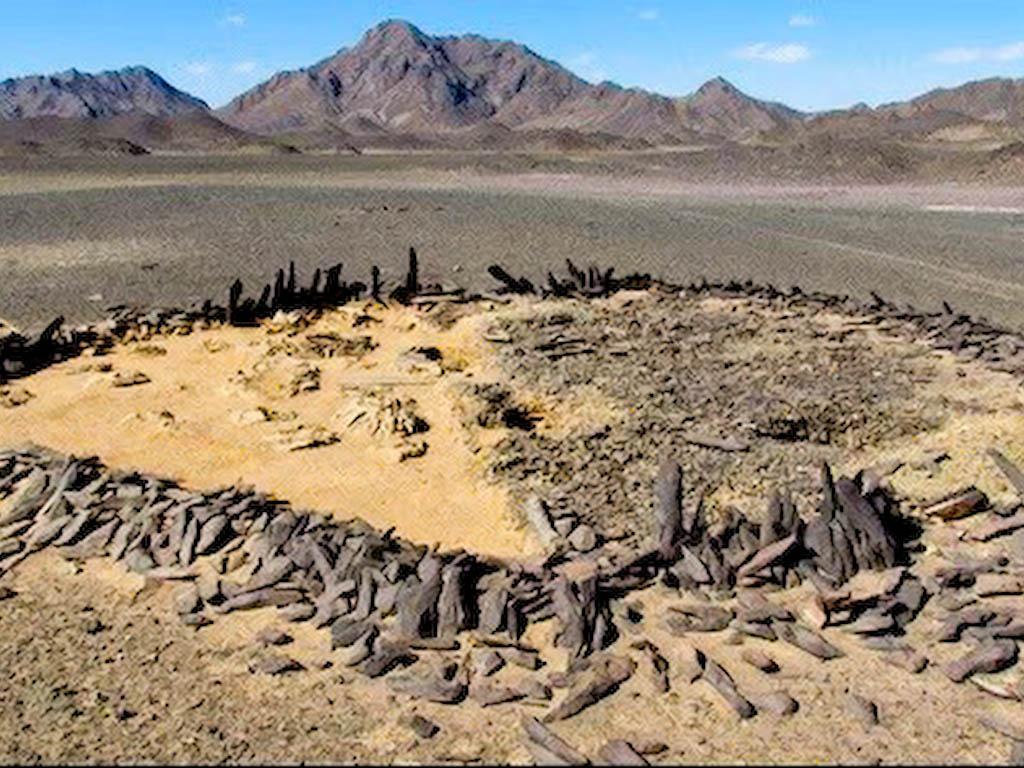 Between the Nile and the Red Sea lies the Atbaï Desert, one of the least explored regions of north-eastern Africa from an archaeological point of view. Long hidden beneath the sands, the remains [...]
 Once upon a time, in a small and peaceful village, there stood a carpenter’s workshop. Inside were many work tools: the saw, the plane, the hammer, the nails, the sandpaper, the file, the axe, [...]
 My friends, I am going to tell you a story that speaks to the heart, a story like clear water flowing gently through the soul, a lesson for a joyful life.
Once upon a time, there lived side by [...]
 Let us listen carefully—both with intellect and discernment—to the story of the mwelele tree (a species of Ficus sycomorus) and the blind men in search of an elephant, for it is truly [...]
 For several years now, the world has been living in a state of profound disorder. It is as though it had entered an entropic phase: order no longer regenerates spontaneously, connections multiply [...]
Info
Email: jampypezzi@gmail.com - tel. +39 328 732 6990 / +243 991 457 856
This blog is made in 4 languages: it en fr es





 EDitt | Web Agency
Leave a comment