Justice, Peace, Integrity
of Creation
Justice, Peace, Integrity
of Creation
By John Paul Pezzi, Mccj
Justice, Peace, Integrity
of Creation
By John Paul Pezzi, Mccj
Justice, Peace, Integrity
of Creation
By John Paul Pezzi, Mccj
Justice, Peace, Integrity
of Creation
By John Paul Pezzi, Mccj
Socrates’ 3 Sieve Test Today
Butembo 10.10.2026 Jpic-jp.org Translated by: Jpic-jp.orgIn the digital age, information circulates at an unprecedented speed. Yet this rapidity is often accompanied by the spread of fake news on an international scale. Whether they take the form of conspiracy theories surrounding major geopolitical events, false global health alerts or manipulated economic misinformation, these unfounded narratives create panic, destabilise communities and distort our collective perception of reality.
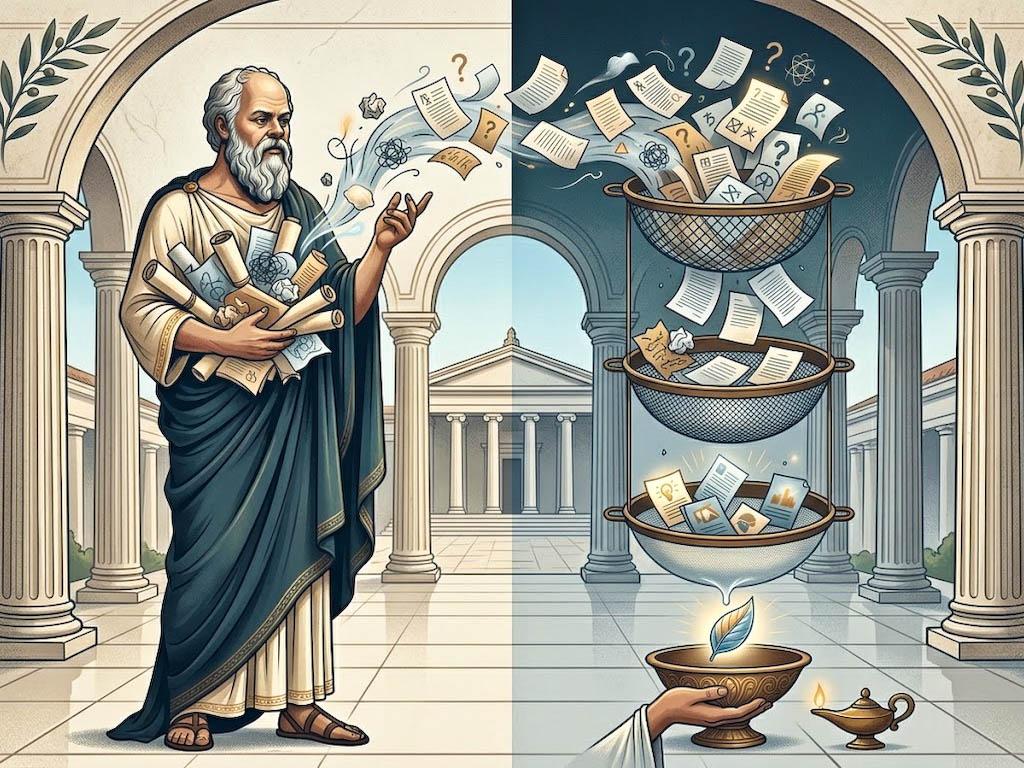
Faced with this avalanche of unverified information, how can we preserve our critical thinking and avoid becoming unwitting channels for spreading lies? The answer lies in an ancient wisdom that remains remarkably relevant today: Socrates’ 3 Sieve Test. Here is the tale that has come down from afar.
One day, someone came to the great philosopher and said to him: Do you know what I have just heard about your friend?
– Just a moment, Socrates replied. Before you tell me, I would like you to take a test, the test of the 3 sieves. The 3 sieves?
– Yes, Socrates continued. Before telling me all sorts of things about other people, it is good to take the time to filter what we would like to say. That is what I call the three-sieves test.
The first sieve is the sieve of truth.
– Have you checked whether what you want to tell me is true? No. I have simply heard it...
– Very well. So, you do not know whether it is true. Let us try filtering it in another way, using a second sieve, the sieve of goodness. What you want to tell me about my friend, is it something good? Oh no! Quite the opposite.
– So, Socrates continued, you want to tell me bad things about him and you are not even certain that they are true. Perhaps you can still pass the test, because there is one sieve left, the one of utility.
– Is it useful for you and me to tell me what my friend supposedly did? No. Not really.
– Then, Socrates concluded, if what you have to tell me is neither true, nor good, nor useful, why do you want to tell me?
Socrates’ three-sieves test offers a remarkably clear framework for an ethics of communication. Each sieve corresponds to an essential criterion:
§ Truth: Check the facts at source before sharing them. In the age of the Internet, this means fact-checking and verifying the reliability of media sources.
§ Goodness: Consider the intention and goodwill behind sharing a piece of content. Is the information intended to harm or destroy?
§ Usefulness: Assess whether disseminating the information provides genuine value or merely feeds sterile and anxiety-inducing media noise.
If international fake news concerns major issues affecting society, the phenomenon becomes particularly devastating when it targets a known or public figure. Whether it is a false announcement of the death of a famous artist, entirely fabricated defamatory accusations against a political figure, or manipulated scandals targeting a media personality, an individual rumour can spread with devastating fury.
In such situations, the three Socratic sieves are cruelly absent:
§ The information is not true, because it is based on gossip or a malicious fabrication.
§ It is not good, because its purpose is to tarnish an individual’s reputation and cause them moral and personal harm.
§ It is not useful, because it serves only to fuel collective voyeurism and malice.
As an African proverb reminds us: «Maneno mazuri ni akiba, maneno mabaya ni msiba» (Good words are a treasure; bad words are a calamity). It is crucial to remember, another proverb says, that «Ulimi huna mfupa, lakini unavunja mifupa» (The tongue has no bones, but it can break several).
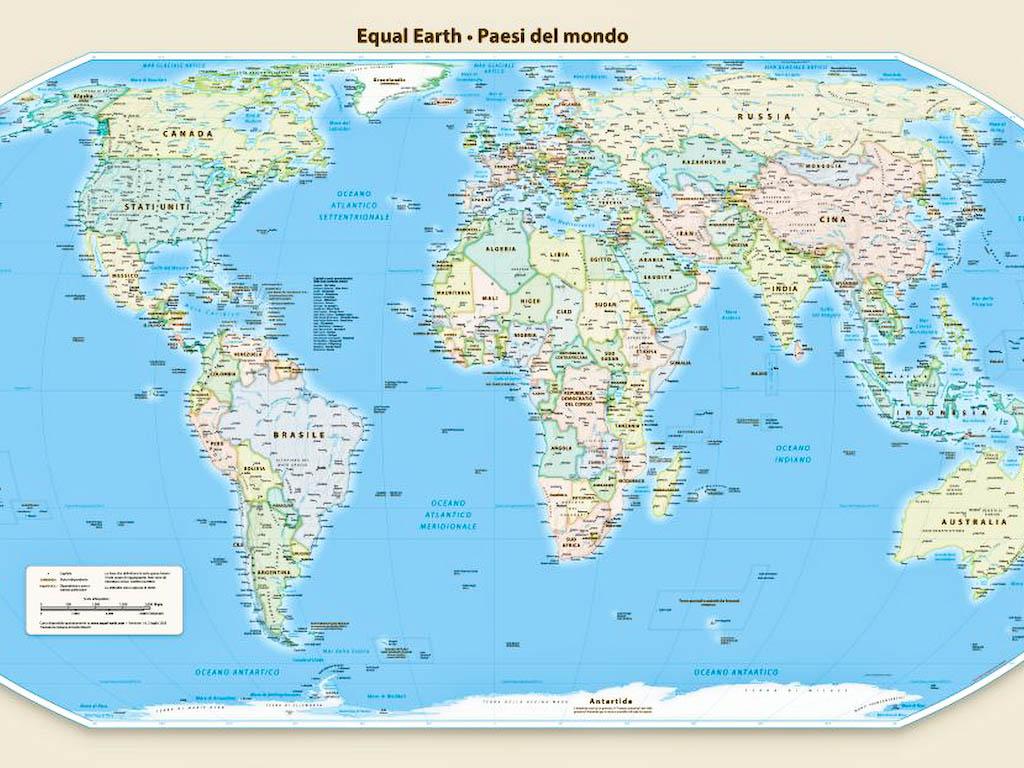 The African Union (AU) has officially endorsed a campaign to replace the Mercator map, widely used since the sixteenth century, with a geographically more accurate projection. According to the [...]
  One day, a man sat down beside his son and said to him in a solemn voice: “My boy, in our lives there is only one true crime: murder. Always stay away from that path. Never lay a hand on [...]
 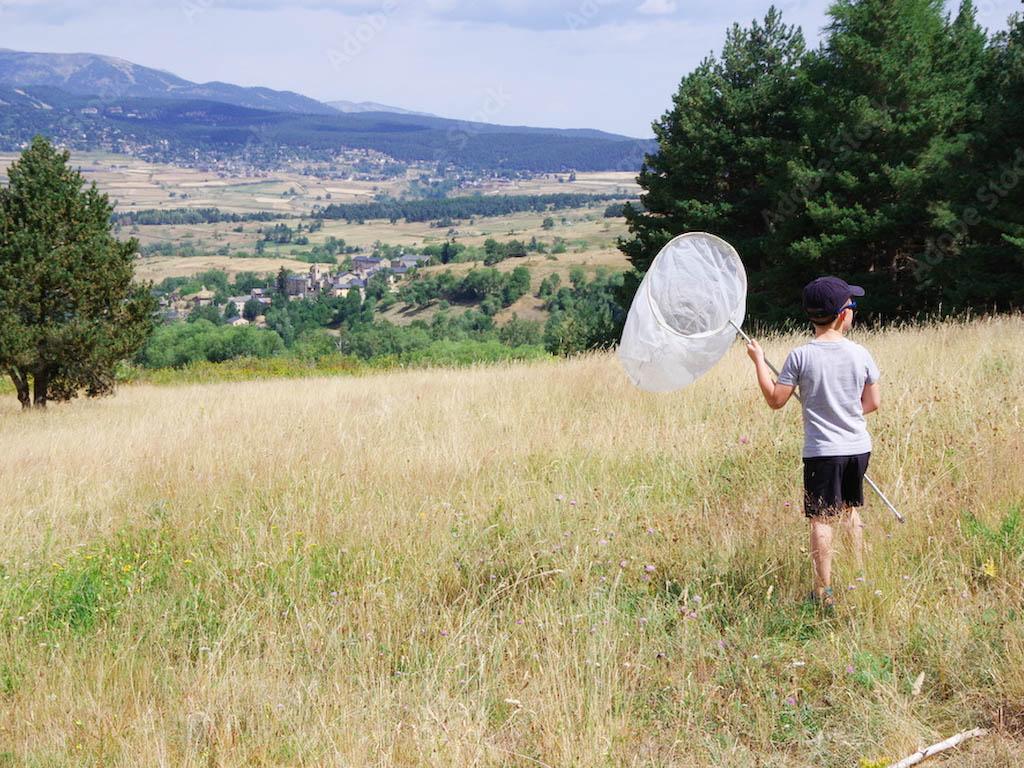 Once upon a time, in a village at the foot of a green mountain, there lived a boy called Elijah.
Elijah had a passion: butterflies. Not for studying them, nor for admiring them, but for keeping [...]
Once upon a time, in a village at the foot of a green mountain, there lived a boy called Elijah.
Elijah had a passion: butterflies. Not for studying them, nor for admiring them, but for keeping [...] 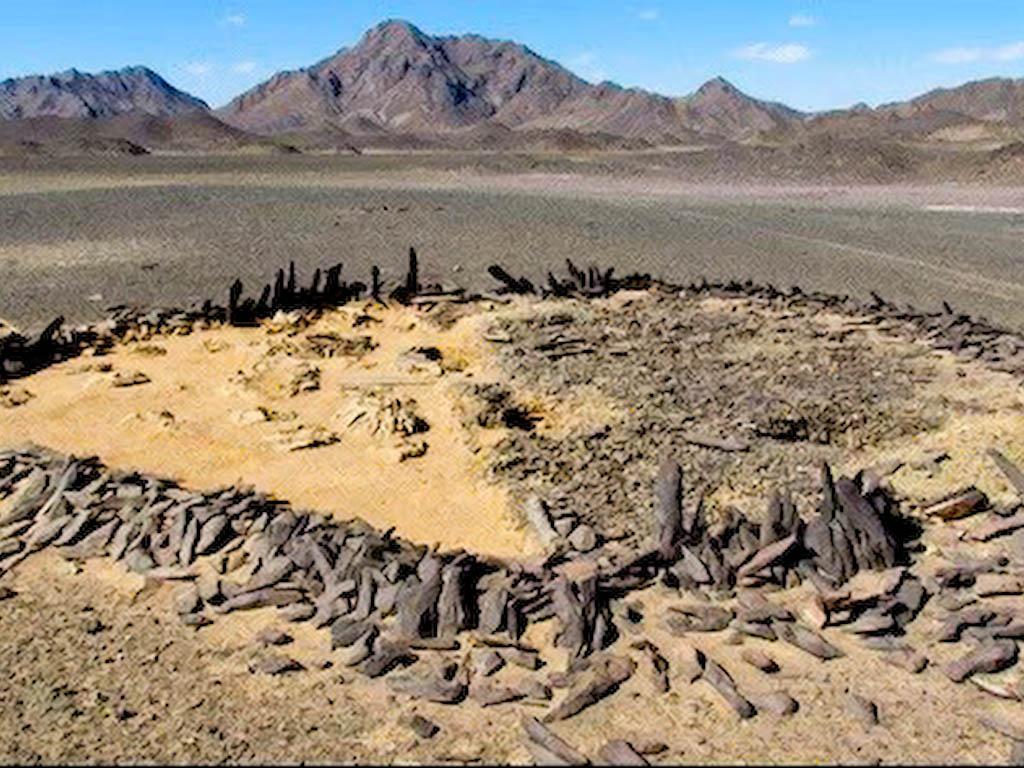 Between the Nile and the Red Sea lies the Atbaï Desert, one of the least explored regions of north-eastern Africa from an archaeological point of view. Long hidden beneath the sands, the remains [...]
  Once upon a time, in a small and peaceful village, there stood a carpenter’s workshop. Inside were many work tools: the saw, the plane, the hammer, the nails, the sandpaper, the file, the axe, [...]
  My friends, I am going to tell you a story that speaks to the heart, a story like clear water flowing gently through the soul, a lesson for a joyful life.
Once upon a time, there lived side by [...]
My friends, I am going to tell you a story that speaks to the heart, a story like clear water flowing gently through the soul, a lesson for a joyful life.
Once upon a time, there lived side by [...]  Let us listen carefully—both with intellect and discernment—to the story of the mwelele tree (a species of Ficus sycomorus) and the blind men in search of an elephant, for it is truly [...]
  For several years now, the world has been living in a state of profound disorder. It is as though it had entered an entropic phase: order no longer regenerates spontaneously, connections multiply [...]
  If I were to ask God for a gift, a single gift, a heavenly gift, I would ask Him, I believe without hesitation, to grant me the supreme art of the smile. It is what I most envy in certain people. It [...]
 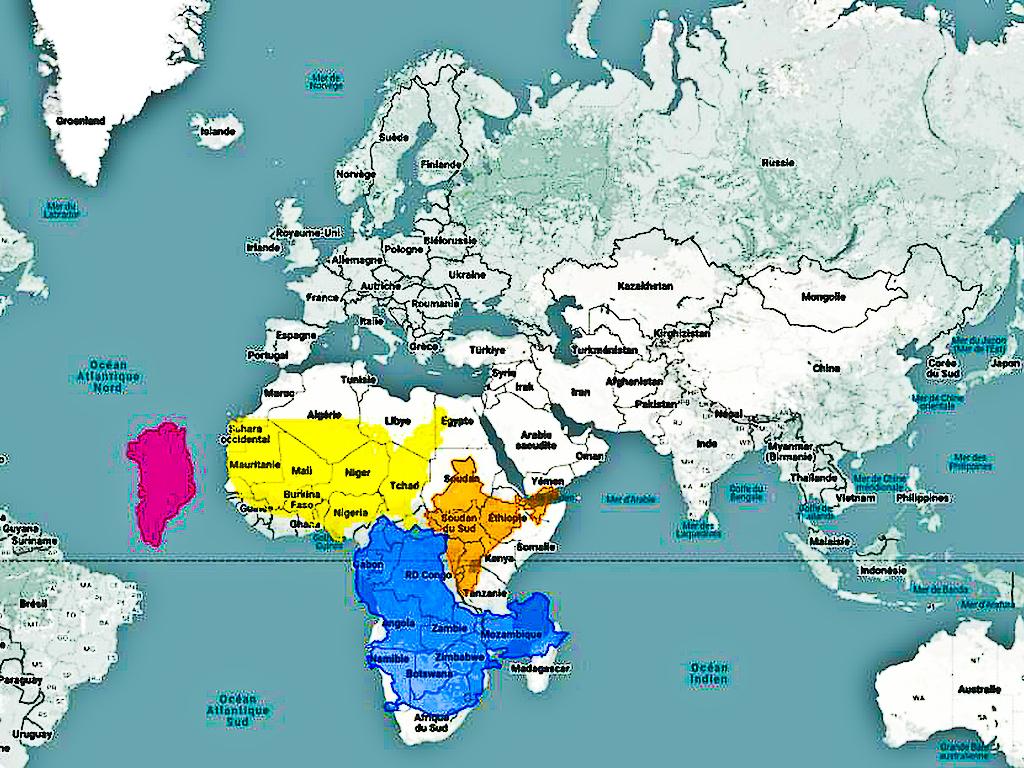 Greenland suffers from a serious case of the frog that wants to be as big as the ox. When you look at it on Google Maps, it parades with all the grandeur of a continent, appearing almost as large as [...]
 Info
Email: jampypezzi@gmail.com - tel. +39 328 732 6990 / +243 991 457 856
This blog is made in 4 languages: it en fr es

 EDitt | Web Agency
Leave a comment