Justice, Peace, Integrity
of Creation
Justice, Peace, Integrity
of Creation
By John Paul Pezzi, Mccj

Justice, Peace, Integrity
of Creation
By John Paul Pezzi, Mccj
Justice, Peace, Integrity
of Creation
By John Paul Pezzi, Mccj

Justice, Peace, Integrity
of Creation
By John Paul Pezzi, Mccj
Uncomfortable Saints to Give Birth to a New World
https://www.religiondigital.org 10.10.2026 Guillermo Jesús Kowalski Translated by: Jpic-jp.orgIf the Church wants to regain credibility, it should stop looking for religious influencers obsessed with their own image and give the floor back to those who, from Montesinos to Romero, understood that evangelisation does not consist in conquering souls, but in liberating bodies, consciences and peoples from those who seek to dominate in the name of God.
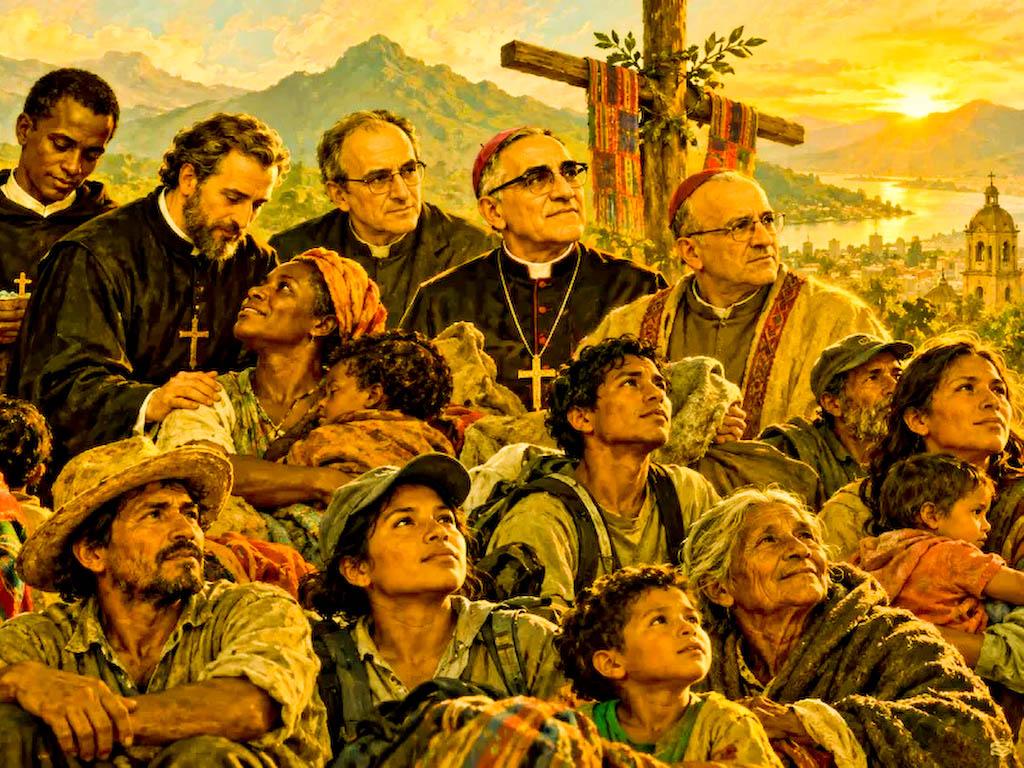
The witnesses to a new world are not there merely to adorn our altars: they are there to remind us that this world has yet to be built and to show us where the Kingdom of Heaven lies. Hence the Genealogy of Prophets for 12 October.
Every year, 12 October draws us into an exhausting battle of narratives: discovery versus conquest, the rosy legend versus the black legend, civilisational pride versus anti-colonial indignation. But Christianity can offer another service to this act of remembrance. Not that of retrospectively blessing some or condemning others on the basis of their historical lineage, but rather that of seeking, within that contradictory history, those witnesses who understood, before many of their contemporaries, that the Gospel could not be proclaimed by humiliating others. Men and women recognised as saints, blessed or simply as Christians, whose memory makes us uncomfortable because they dared to listen to the cry of the victims when it would have been far easier to blend into the triumphant narrative.
These are the witnesses to Christianity whom the Church should bring back into the spotlight. For there is a subtle way of betraying them after their death: hagiographical domestication. This means preserving their private virtues, their fasting, miracles and devotions, while diluting what made them liberating prophets. There is no need to imagine an institutional conspiracy; it is enough to venerate the prophet rather than allow ourselves to be challenged by him. A canonisation can restore a prophetic memory or turn it into a holy card. We can light a candle to Romero and forget why he was killed; admire Pedro Claver for his charity without asking ourselves what kind of system produced those enslaved bodies; celebrate Martín de Porres, ‘Friar Broom’, for his humility while forgetting the racist stratification of colonial society, which he denounced precisely through that humility.
This genealogy begins to emerge during the Advent of 1511, when Friar Antonio de Montesinos denounced the encomenderos (Spanish colonists who controlled Indigenous labour and collected tribute under the colonial encomienda system) in Hispaniola and posed the essential question: ‘Are these not human beings? Do they not have rational souls?’ He was not debating some secondary matter of colonial bureaucracy. He was denouncing the contradiction between professing Christ and subjecting human beings to servitude, exhaustion and death in order to obtain gold. He spoke on behalf of the Dominican community and caused an uproar because he challenged the conquistadors' narrative – what today would be the narrative of the market, or some other dominant narrative.
Bartolomé de las Casas, deeply moved, followed his example, despite the contradictions involved in his own conversion. His greatness lay in moving from being an exploitative encomendero (as were many priests and bishops too) to becoming a liberating prophet, even against his own financial interests. His faith linked the exploitation of the victims to the Crucified Christ: ‘I am moved by seeing you mocked upon a cross; your insults and your death move me.’ His denunciation of the destruction of the Indies and the legal farce of the Requerimiento (A Spanish colonial ultimatum requiring Indigenous peoples to submit to the Crown and accept Christianity) exposed the hypocrisy of a system of oppression operating under the Christian banner. The contemporary Church has moved forward by acknowledging the papal bulls used to legitimise conquest, in violation of the dignity and rights of indigenous peoples, and by expressly repudiating the so-called ‘Doctrine of Discovery’, a synthesis of the ideology of conquest.
The School of Salamanca also reacted. Francisco de Vitoria challenged the idea that religious unbelief, a papal donation or imperial claims could confer rights over American lands, recognising their inhabitants' ownership and natural rights. He was not an advocate of decolonisation in the modern sense, since he retained certain ‘just titles’ for intervention, but, motivated by his faith, he set in motion a new legal path.
Recovering these protagonists of the Kingdom amid the evil of the world is essential if history is to remain a History of Salvation.
Something similar can be said of Saint Peter Claver. Cartagena de Indias was one of the great American ports of the slave trade, the largest the world had ever known. There, while an economy run by ‘Christians’ regarded the buying and selling of human beings as normal, Claver chose to call himself ‘the slave of the slaves for ever’. He went aboard the ships, cared for the sick, fed people, treated wounds and defended the dignity of those who had been turned into commodities. He was not an abolitionist in the terms we use today. But his life was a living, flesh-and-blood denunciation: if those men were brothers in Christ, the structure that treated them as things was abhorrent.
Then there is Martín de Porres, the son of a Spanish man and a Black woman, himself shaped by the racial hierarchies of colonial society. Devotional tradition easily turned him into a model of humility, which is true but insufficient. His life was also a practical challenge to a society that distributed dignity according to origin and skin colour. When Pope John XXIII canonised him, he explicitly linked his memory to a universal charity ‘without distinction of colour or race’. To recover Martín today means taking a different stand against racism and the new social classifications that manufacture marginalised groups.
This prophetic current continued at the Medellín Episcopal Conference (1968), where the preferential option for the poor and liberation theology once again placed an ancient Christian question at the centre: from what standpoint do we read the Gospel when a society produces victims? Gustavo Gutiérrez, Leonardo Boff, Jon Sobrino, Ignacio Ellacuría and many others did not invent Christian concern for the poor; they renewed a biblical tradition of prophets, the Beatitudes and Matthew 25, seeking to understand the historical causes that produce poverty rather than merely limiting themselves to alleviating its consequences.
Here the threat of domestication reappears. Saint Óscar Romero can be turned into a beautiful figure of episcopal goodness if we forget that he was murdered after declaring that ‘nothing is more important than human life, above all the lives of the poor and the oppressed’. Jon Sobrino warned of the danger of ‘qualifying’ or watering down the option for the poor when it ceases to be unsettling. Romero did not die because he was kind to the poor, but because their suffering transformed his ministry and his words ultimately became intolerable to those who needed religious silence and complicity in the face of injustice.
Ignacio Ellacuría took that insight further with his proposal for a ‘civilisation of shared austerity’, not as the universalisation of poverty, but as an alternative to a civilisation of accumulation. He proposed that the universal satisfaction of basic needs and solidarity should be the criteria by which Christianity's humanising power is measured. He paid for that denunciation with his life, alongside his fellow members of the University of Central America (UCA). In Argentina, meanwhile, Blessed Enrique Angelelli summed up his understanding of what it means to be Church in a phrase that continues to challenge both disembodied spiritualism and activism without the Gospel: ‘one ear tuned to the people and the other to the Gospel’. He was murdered in 1976 by those who proclaimed themselves ‘saviours of the Christian West’ and was beatified as a martyr in 2019.
These are the witnesses we need to remember every 12 October if we want the world to become a better place. Not to replace one gallery of conquistadors with another of morally impeccable heroes, but to discover that even amid structures of domination there were people capable of imagining and becoming the leaven of different relationships. And that is what makes their memory a source of the future.
For the new world we need does not lie behind us. It is not an indigenous, European, Christian or nationalist retrotopia, nor an impossible return to a pure civilisation that existed before the encounter with others. Five centuries of cultural mixing, wounds, resistance, migration and learning make such a journey backwards pure fantasy. Our task is more demanding: to build an encounter between civilisations in which none needs to disappear for another to exist; where evangelisation does not mean colonisation, where encountering one another does not mean appropriating one another, and where recognising historical injustice does not condemn us to resentment, but commits us to reparation and fraternity.
More than five hundred years ago, Montesinos asked: ‘Are these not human beings?’ The question remains open whenever a migrant, a poor person, an indigenous people or any human being is once again turned into a problem, a commodity or a threat.
See, 12 de octubre: santos incómodos para parir un mundo nuevo
 The two Swahili sayings remind us that physical strength is not everything. A strong body does not necessarily mean a wise mind. Sometimes, a little intelligence and good judgement can overcome even [...]
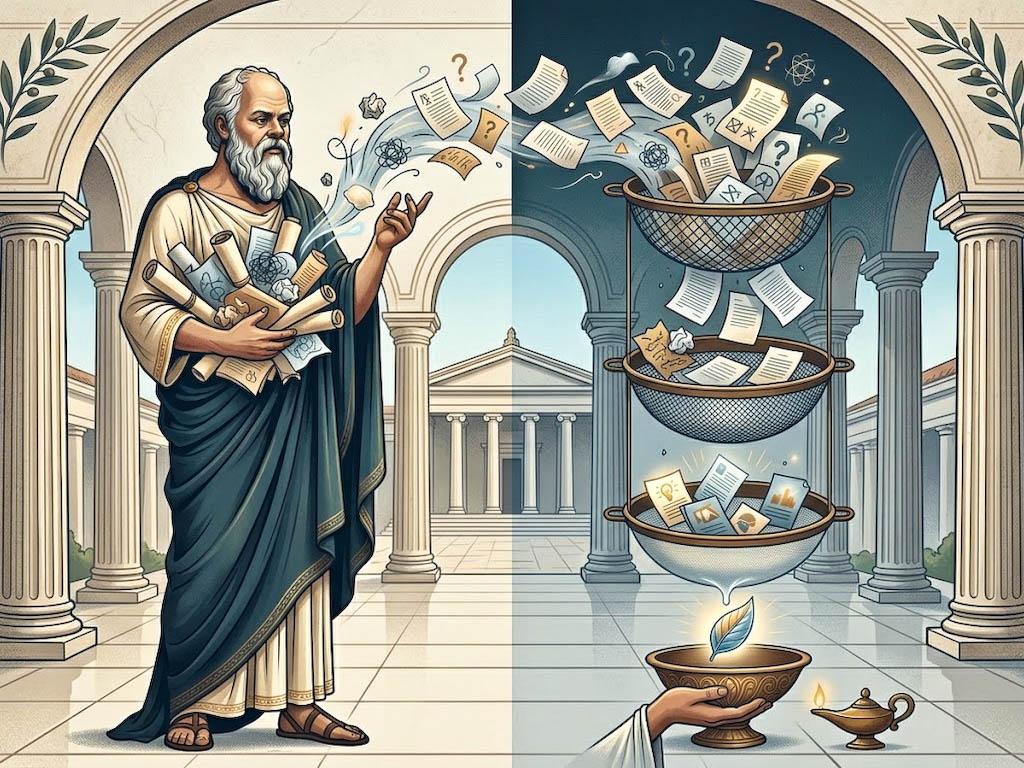 Faced with this avalanche of unverified information, how can we preserve our critical thinking and avoid becoming unwitting channels for spreading lies? The answer lies in an ancient wisdom that [...]
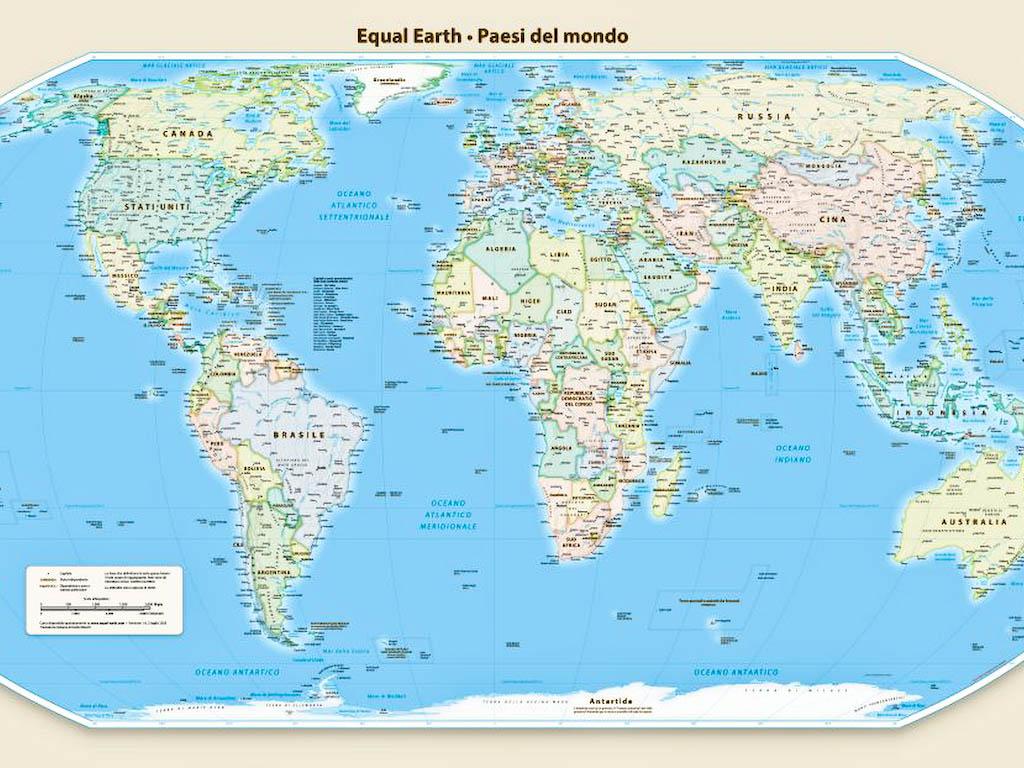 The African Union (AU) has officially endorsed a campaign to replace the Mercator map, widely used since the sixteenth century, with a geographically more accurate projection. According to the [...]
 One day, a man sat down beside his son and said to him in a solemn voice: “My boy, in our lives there is only one true crime: murder. Always stay away from that path. Never lay a hand on [...]
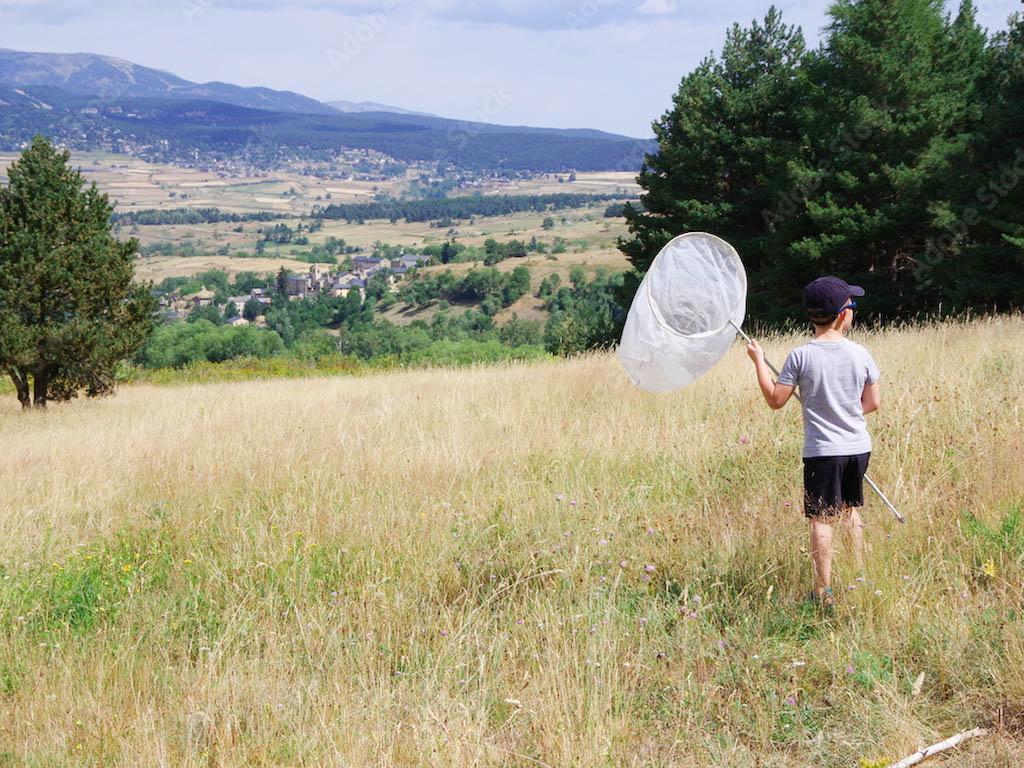 Once upon a time, in a village at the foot of a green mountain, there lived a boy called Elijah.
Elijah had a passion: butterflies. Not for studying them, nor for admiring them, but for keeping [...]
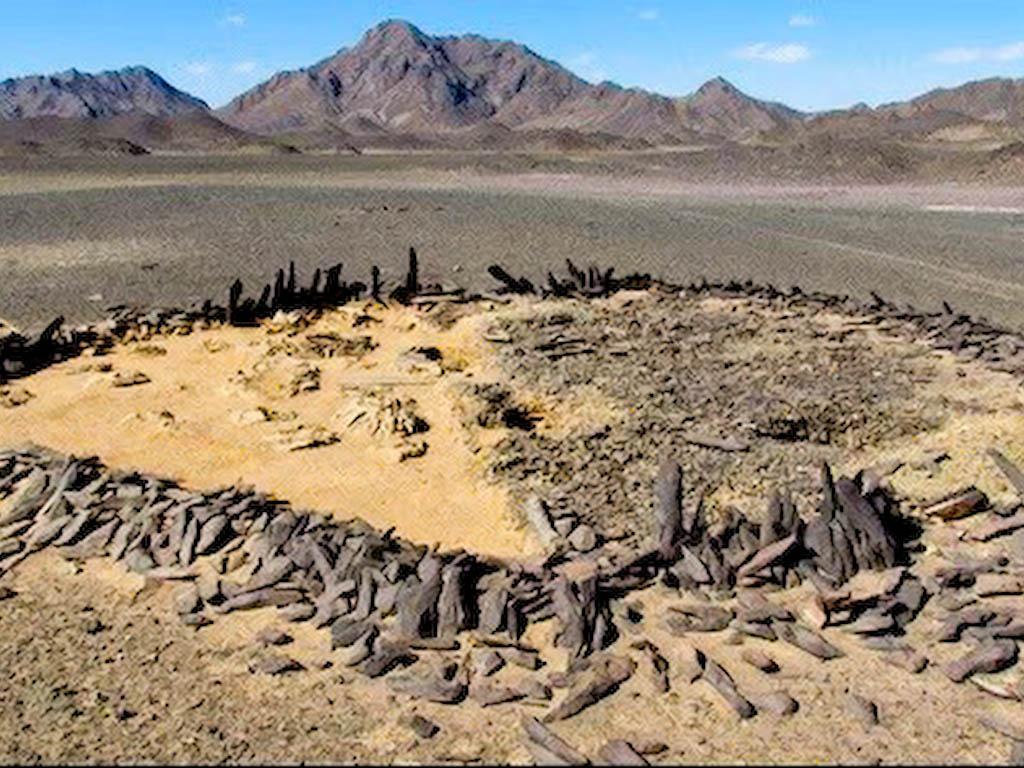 Between the Nile and the Red Sea lies the Atbaï Desert, one of the least explored regions of north-eastern Africa from an archaeological point of view. Long hidden beneath the sands, the remains [...]
 Once upon a time, in a small and peaceful village, there stood a carpenter’s workshop. Inside were many work tools: the saw, the plane, the hammer, the nails, the sandpaper, the file, the axe, [...]
 My friends, I am going to tell you a story that speaks to the heart, a story like clear water flowing gently through the soul, a lesson for a joyful life.
Once upon a time, there lived side by [...]
 Let us listen carefully—both with intellect and discernment—to the story of the mwelele tree (a species of Ficus sycomorus) and the blind men in search of an elephant, for it is truly [...]
 For several years now, the world has been living in a state of profound disorder. It is as though it had entered an entropic phase: order no longer regenerates spontaneously, connections multiply [...]
Info
Email: jampypezzi@gmail.com - tel. +39 328 732 6990 / +243 991 457 856
This blog is made in 4 languages: it en fr es

 EDitt | Web Agency
Leave a comment