
Justice, Peace, Integrity
of Creation
Justice, Peace, Integrity
of Creation
By John Paul Pezzi, Mccj

Justice, Peace, Integrity
of Creation
By John Paul Pezzi, Mccj

Justice, Peace, Integrity
of Creation
By John Paul Pezzi, Mccj

Justice, Peace, Integrity
of Creation
By John Paul Pezzi, Mccj
Just War and Jihad
Butembo 15.07.2026 jpic-jp.org Translated by: Jpic-jp.orgLast month our Newsletter featured an insightful article by Daniele Rocchetti, "Modern Warfare without Limits", recalling the long development of the Just War tradition, a concept already present in Cicero, developed by St Ambrose and St Augustine, and later systematised by St Thomas Aquinas. In this article we return to that subject, offering some reflections inspired by John Kelsay's important study Islam and War: A Study in Comparative Ethics.
As Daniele Rocchetti clearly points out, Just War theory did not arise in order to justify war but rather to limit it. From its very beginnings, it sought to subject the use of armed force to strict moral and legal criteria, identifying the conditions under which war might be considered legitimate while at the same time restricting the exercise of violence.
This perspective also invites us to ask how the Islamic tradition has approached the questions of war, jihad, and the relationship between the Muslim community and the rest of the world.
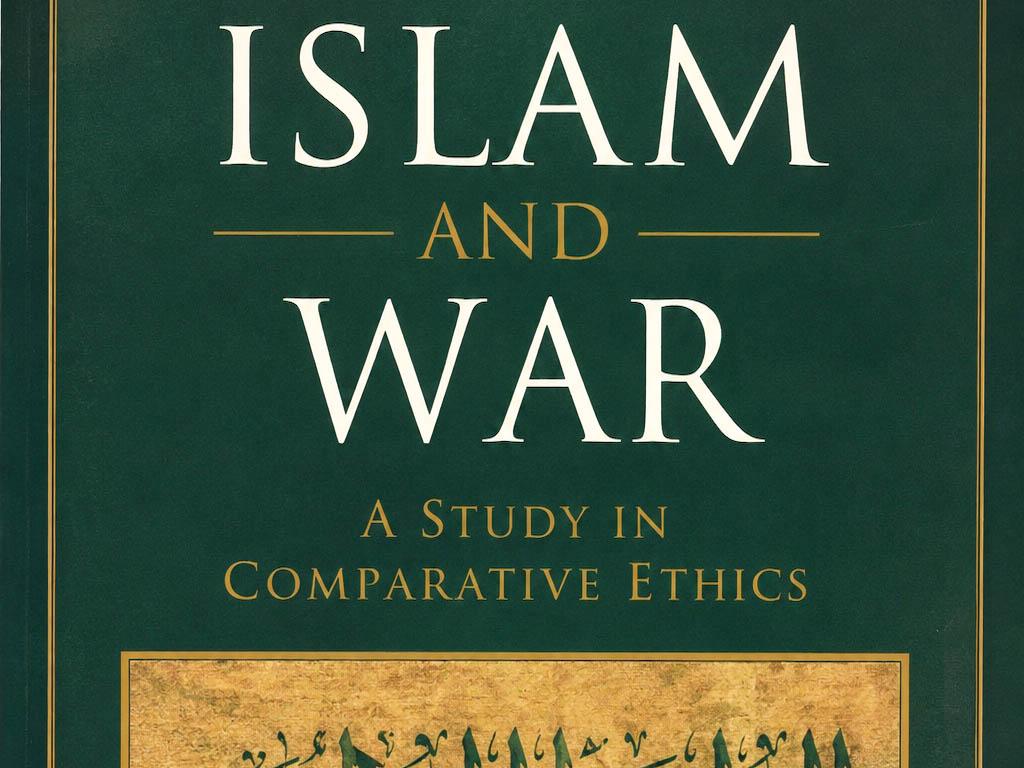
Among the most authoritative studies on the subject is John Kelsay's Islam and War: A Study in Comparative Ethics, published by Westminster/John Knox Press in 1993.
Written in the aftermath of the First Gulf War, the book compares three major traditions of ethical reflection:
- The Islamic understanding of jihad;
- The Christian tradition of Just War;
- The moral questions concerning the legitimacy of the use of force.
According to Kelsay, jihad, as understood in the classical Islamic legal tradition, is far more complex than the simplistic Western notion of "holy war". Rather than referring simply to armed conflict, it represents an elaborate body of religious, legal and political reasoning developed over many centuries by Muslim jurists.
For this reason, Kelsay examines the Qur'an, the Hadith, the writings of the great medieval jurists and modern reinterpretations in order to address several fundamental questions:
- When may a war legitimately be fought?
- Who has the authority to declare it?
- What moral limits govern military action?
- How should religion relate to the international order?
- What distinguishes offensive from defensive jihad?
Kelsay would later develop these themes more fully in his subsequent work, Arguing the Just War in Islam, generally regarded as his most mature contribution to the subject.
As he himself observes, the Islamic tradition cannot simply be understood in terms of a contrast between "peace" and "war". Rather, it constitutes a distinctive way of reasoning about the justice of using force through the categories of fiqh, or Islamic jurisprudence.
The Classical Islamic Conception of International Order
Particularly significant is the following passage (pp. 61–62), reproduced here in translation.
“We must recall the Sunni scholars' division of the world into dar al-islam, the territory where Islamic norms had official recognition, and dar al-harb, the territory where the willful human tendency toward heedlessness (jahiliyya) and ignorance of God prevailed. The latter was, by
definition, the sphere of war, disorder, and injustice. Even when these factors were mitigated, as in the case of a Christian empire or state, there was the danger of misguidance. And thus the territory of Islam-really, the world-could not be a secure place until and unless Islamic hegemony was acknowledged everywhere. To secure such hegemony was the goal of the jihad, or "struggle in the path of God." According to the Sunni theorists, war or jihad by means of killing is justified when a people resists or otherwise stands in opposition to the legitimate goals of Islam.
In the "normal" circumstance, such resistance is indicated by a refusal to acknowledge Islamic hegemony. Following the example of the Prophet, Muslims are to invite their enemies either to become Muslims or to submit to Islamic hegemony by paying tribute. Acceptance of the
invitation indicates a willingness to live under the norms of Islam. But if neither invitation is accepted, the state of war becomes actual.
Thus, in answer to the question, Against whom (is war fought)? one must say, The people who refuse to submit; the people living in the territory of war, individually and collectively. They have refused to acknowledge Islam and so become the "people of war" (ahl al-harb).
The sole exception would be those who reside in the territory of war but are themselves Muslims-say, merchants traveling among the "people of war." As I shall show, these are not considered legitimate targets for direct attack by brought about indirectly."
Understanding the Historical Context
This passage provides a remarkably clear summary of the international order as conceived by classical Sunni jurisprudence.
It is important to remember that Kelsay does not present this doctrine as the only possible interpretation of Islam, nor as the position held by contemporary Muslims. Rather, he describes the way in which the principal Sunni jurists, between the eighth and the twelfth centuries, constructed a theory of international relations based upon the distinction between Dar al-Islam, the territory under Islamic sovereignty, and Dar al-Harb, the territory that had not yet recognised that sovereignty.
Alongside these two principal categories, classical Islamic jurisprudence also developed intermediary concepts such as Dar al-'Ahd ("the Abode of Covenant") and Dar al-Sulh ("the Abode of Peace"), referring to territories linked to the Muslim community through treaties or peace agreements. Their existence demonstrates that classical Islamic legal thought was considerably more nuanced than a simple binary division of the world might suggest.
Kelsay repeatedly stresses that Islamic law is an argumentative tradition. Its interpretations have evolved over time and have continually been debated, refined and reinterpreted by successive generations of Muslim scholars.
Islam's Universal Mission
Like Christianity, Islam was born with a universal vocation. The Qur'an presents the mission of the Prophet Muhammad as being addressed to the whole of humanity rather than to the Arab people alone.
For the classical Muslim jurists, this universal vocation had important religious and political implications. It meant that:
- Islam represented God's final revelation;
- The ideal society was one governed by the Shari'ah;
- In principle, the political order of the world ought ultimately to acknowledge the sovereignty of Islam.
It is within this framework that one must understand the distinction—developed by medieval Islamic jurisprudence rather than explicitly stated in the Qur'an—between Dar al-Islam ("the Abode of Islam") and Dar al-Harb ("the Abode of War"). This distinction did not simply describe a military situation; rather, it expressed a comprehensive vision of the world in which religion, law and political authority were inseparably linked.
As Kelsay explains, these categories were legal constructions developed during the formative centuries of Islam in order to regulate the relationship between the Muslim community and those political entities that did not recognise Islamic authority.
The Options Offered to Non-Muslim Peoples
Within this framework, a legal pattern frequently found in medieval juristic literature becomes easier to understand.
Before military action was undertaken, three alternatives were generally presented:
- Conversion to Islam;
- Political submission to Muslim authority through payment of the jizyah, the poll tax normally required of the "People of the Book";
- Armed conflict.
Here again, however, Kelsay urges historical caution.
Actual practice varied considerably from one period to another and from one political context to another. Decisions were often shaped as much by diplomatic and administrative considerations as by the theoretical models elaborated by the jurists.
The gap between legal theory and political practice was frequently substantial.
Jihad as a Legal and Political Institution
One of the most significant contributions of Kelsay's work is his insistence that classical jihad should not be understood primarily as an emotional or purely religious impulse. Rather, it functioned as a legal and political institution within the framework of Islamic jurisprudence.
For the leading medieval jurists, armed jihad formed part of the legitimate responsibilities of political authority. Accordingly,
- It had to be proclaimed by a recognised ruler;
- It was governed by precise legal rules;
- It imposed limits on the use of force;
- It distinguished between combatants and non-combatants;
- It did not authorise indiscriminate violence.
In this respect, Kelsay argues, classical Islamic law developed its own ethical reflection on the use of force.
Its point of departure, however, differed significantly from that of the Christian Just War tradition.
Whereas Christian Just War theory sought principally to establish the moral conditions under which resort to armed force might be justified, classical Islamic jurisprudence generally understood warfare within the broader framework of Islam's universal mission and of the ordering of political society according to divine law.
It is precisely this difference in underlying assumptions that makes comparison between the two traditions so illuminating.
From Medieval Jurisprudence to Modern International Law
The classical doctrine developed between the eighth and twelfth centuries has not remained unchanged.
From the nineteenth century onwards—and even more markedly following the collapse of the Ottoman Empire and the emergence of the modern nation-state—many Muslim scholars have proposed a thorough reinterpretation of the traditional legal categories.
A considerable number now argue that:
- The distinction between Dar al-Islam and Dar al-Harb no longer corresponds to contemporary political realities;
- Modern international law has fundamentally altered the legal context in which those categories originally arose;
- Armed jihad is legitimate only in self-defence;
- The spread of Islam should take place through preaching, dialogue and personal witness rather than military conquest.
According to these scholars, the contemporary international order, based upon the mutual recognition of sovereign states, has rendered the medieval legal framework historically obsolete.
An Ongoing Debate
Yet these reinterpretations have by no means brought the discussion to an end.
Alongside reformist approaches, there remain movements and scholars who continue to draw upon elements of the classical juristic tradition, sometimes assigning renewed normative authority to medieval doctrines.
For this reason, it is misleading to speak of "the Islamic position" on jihad or war as though a single, universally accepted doctrine existed.
On the contrary, contemporary Islamic thought encompasses a broad spectrum of views. Some scholars emphasise the historical character of medieval jurisprudence and advocate its reinterpretation in the light of present-day realities; others continue to regard important aspects of that tradition as permanently normative.
Consequently, the relationship between Islam, jihad and warfare remains one of the most debated issues both within the Muslim world and among Western scholars of religion, ethics and international law.
Conclusion
John Kelsay's work represents a major contribution to the study of Islam and war because it avoids both apologetic simplifications and polemical generalisations. His analysis demonstrates that the concept of jihad has undergone a long process of religious, legal and political development and that the Islamic tradition, no less than the Christian one, has produced a sophisticated ethical reflection on the use of force.
Understanding this historical development does not mean identifying contemporary Islam with the formulations of medieval jurists. Rather, it enables us to understand the origins of concepts and legal categories that continue, in different ways, to influence present-day debates within the Muslim world and the language employed by certain Islamist movements.
Like Christianity, Islam has never spoken with a single voice on the relationship between religion, political authority and warfare. Throughout its history, different schools of thought have interpreted these issues in different ways. To reduce a religious tradition spanning more than fourteen centuries to a single doctrine would therefore be historically misleading.
At the same time, a comparison between the Christian Just War tradition and the classical Islamic doctrine of jihad reveals an important difference in their respective ethical foundations.
The Christian Just War tradition, gradually developed from St Augustine and given its classical formulation by St Thomas Aquinas before being further refined through later moral theology and international law, sought above all to restrict the use of armed force by subjecting it to increasingly demanding moral criteria.
Classical Islamic jurisprudence also imposed legal and ethical restraints upon warfare. Nevertheless, it generally understood armed struggle within a broader theological vision in which the extension of Islamic political authority formed part of the universal mission entrusted to the Muslim community.
It is precisely this difference in first principles that constitutes one of the most significant insights offered by Kelsay.
In Chapter Three of Islam and War, devoted to the question of jus ad bellum, he writes: "It will probably find strange the Islamic contention that religion is in fact the only just cause for military action. And yet I believe that just war thinkers will find the Islamic reasoning on this point has considerable connection with historic experience."
He then recalls the Qur'anic text (Qur'an 2:216), which has played an important role in the Islamic understanding of warfare: "Warfare is ordained for you, though it is hateful unto you; but it may happen that you hate a thing which is good for you, and it may happen that you love a thing which is bad for you. Allah knows, you know not."
These texts illustrate how, in classical Islamic thought, the use of armed force was understood within a theological vision of history and of Islam's universal mission, rather than being grounded primarily in natural law or in the defence of the common good, as became characteristic of the Christian Just War tradition.
This comparison also raises a broader historical question.
The systematic development of the Christian doctrine of Just War predates much of the mature legal reflection of the medieval Islamic jurists. It is therefore legitimate to ask whether, alongside the well-documented influence of Greek philosophy—particularly Aristotelian thought transmitted through Arabic scholarship—there may also have been points of contact or indirect influence between Christian and Islamic legal and ethical reflection on war.
This remains an open historical question requiring further comparative research.
More generally, the comparison between the Christian doctrine of Just War and the classical Islamic doctrine of jihad shows that both traditions sought to regulate the use of force by moral and legal principles, although they proceeded from profoundly different theological and juridical assumptions.
Recognising these differences should not foster ideological confrontation. Rather, it should encourage a more historically grounded understanding of both traditions and contribute to a more informed and balanced dialogue between Christians and Muslims.
The comments from our readers (1)
 We no longer seem capable of genuine dialogue. One reason is that we can no longer bear silence, which confronts us with ourselves even before it confronts us with others, and which is the [...]
  1. The Violence of the Allied Bombing
Every single darkened stone bears witness, in the most tangible way, to a deeply painful wound that has never fully healed, inflicted in February 1945. Only [...]
1. The Violence of the Allied Bombing
Every single darkened stone bears witness, in the most tangible way, to a deeply painful wound that has never fully healed, inflicted in February 1945. Only [...]  For several years, and through many public meetings, I have explained how meaningless it has become to speak of a “just war” after the atomic bombings of Hiroshima and Nagasaki. I have [...]
 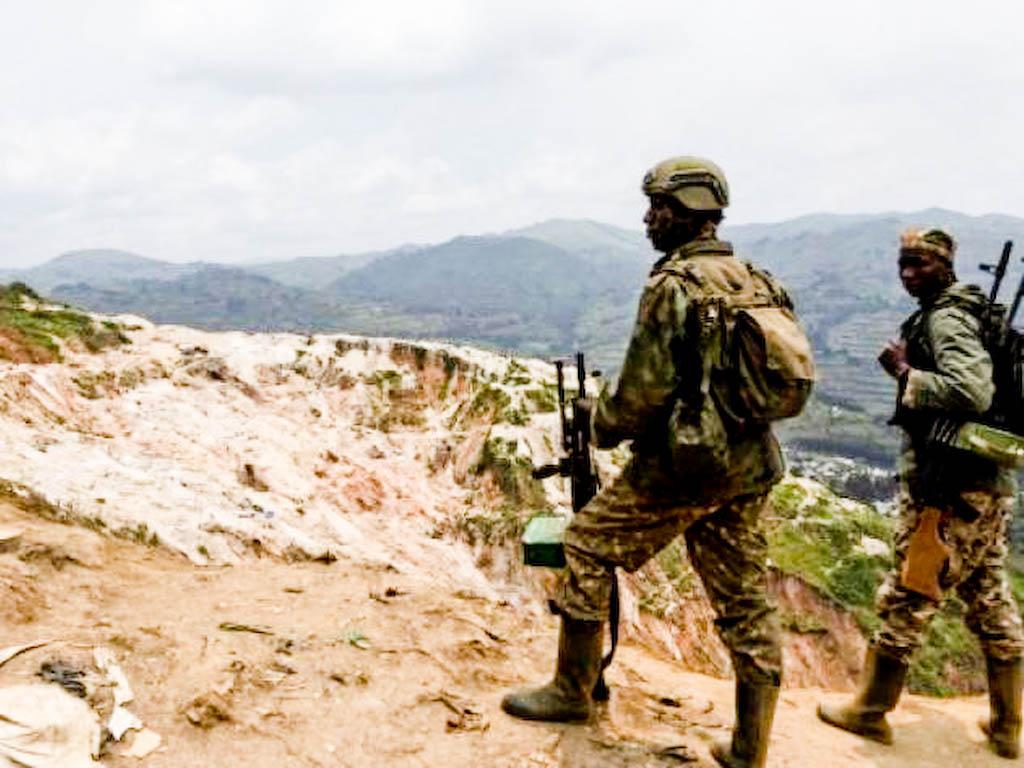 “Thanks” to the war in the Middle East, the AFC/M23 movement, supported by Rwanda and occupying part of eastern Democratic Republic of the Congo, can no longer export smuggled gold to [...]
  On an ordinary morning in El Obeid, Azza al-Amin kneads bread dough in her narrow kitchen as a drone buzzes angrily in the distance. She keeps working. Hundreds of people are counting on her. [...]
  Global military spending has experienced a significant acceleration in recent years, reaching levels not seen since the end of the Second World War. The latest data from the International Monetary [...]
 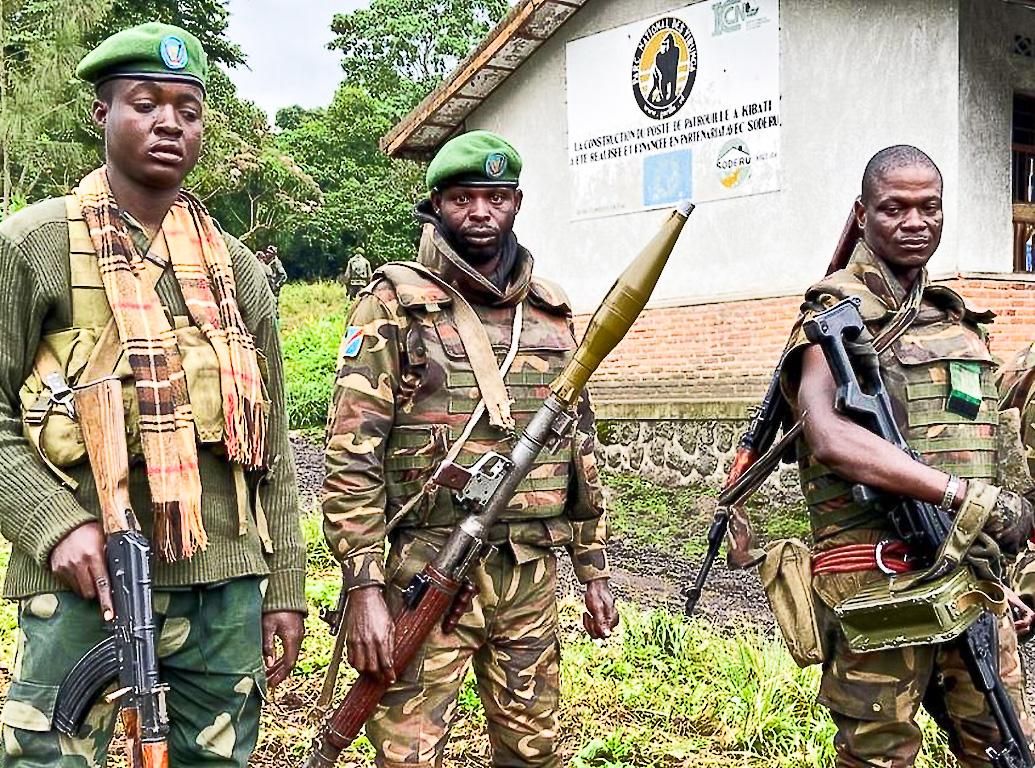 “The territorial expansion of the Congo River Alliance/March 23 Movement (AFC/M23),” the report states, “has reached unprecedented levels, jeopardising regional stability.” [...]
  A small booklet published posthumously in 1933 by the biologist René Quinton, Maximes sur la guerre, appreciated and used by Mussolini, has at its core this sentence: “War is killing, to [...]
  How can a soldier recite the Lord’s Prayer in battlefield liturgies? O reckless man!
You call God Father while you place the knife at your brother’s throat.
Hallowed be thy name. What [...]
How can a soldier recite the Lord’s Prayer in battlefield liturgies? O reckless man!
You call God Father while you place the knife at your brother’s throat.
Hallowed be thy name. What [...]  The list drawn up this year includes Amazon, Anduril Industries, Meta, Northrop Grumman, Palantir Technologies, Space Exploration Technologies and Vanguard. These computing and technology giants are [...]
 Info
Email: jampypezzi@gmail.com - tel. +39 328 732 6990 / +243 991 457 856
This blog is made in 4 languages: it en fr es




 EDitt | Web Agency
Leave a comment